Cities concerned after Everett hikes utility tax, proposes rate increase
Published 1:30 am Friday, July 24, 2026
EVERETT — Everett’s decision to raise utility taxes and propose an increase in wholesale water rates that would lead to higher utility bills across much of Snohomish County has left some cities in the area with sticker shock.
The decision to increase the utility tax, affecting all of Everett’s customers, including those outside of city limits, drew backlash from the Alderwood Water and Wastewater District — the largest water and sewer district in Snohomish County — and multiple cities in south Snohomish County.
The practice of Everett raising general fund dollars through taxes on people outside of its city limits, officials at other cities and the water district said, could be considered “taxation without representation.”
The jump in wholesale water rates, which would lead to further increases on customers’ water bills, has also led to an ongoing dispute between Everett and the water district, with no timeline as to when negotiations may end.
‘Taxation without representation’
Cities charge utility taxes because the utilities rely on city services — like roads, sidewalks, fire and police departments, and city staff — to do their work, but municipal utilities don’t pay property tax or business and occupation taxes to make up the cost.
Everett first created a fee on its water and sewer utility beginning in 1983, when it implemented a 6% “payment in lieu of taxes” fee on its services. That fee — with its revenues going into the city’s general fund — operated essentially identically to a tax, officials previously said.
Everett decided to pursue a removal of its “payment in lieu of taxes,” replacing it with a 12% utility tax, because its general fund is struggling amid an ongoing structural deficit. It needs to close a gap as large as $15 million in the 2027 budget, a tall ask for a city that has consistently cut services for years due to rising costs and stagnant revenues.
Over the past few years, Everett has laid off dozens of employees, lost its municipal swimming pool and an animal farm, cut its library hours, eliminated its park rangers, and reduced its street repair fund to close budget gaps.
Everett approved the utility tax on May 27 and subsequently raised water and sewer rates to give the utility the funding to pay for the tax. Ratepayers will pay an extra $12 per month on average, according to the city, due to the increase when it goes into effect Aug. 1.
The utility tax is expected to raise about $7.5 million that will go into the city’s general fund, according to the city’s interim finance director, Mike Bailey, closing about half of the city’s looming budget gap.
Many cities in Washington charge a utility tax as a way to garner general fund revenue. Mukilteo has a 6% utility tax; Lynnwood’s is 10%; Edmonds, temporarily, is charging 20%. Bailey said at a May council meeting that increasing Everett’s utility tax rate to 12% would bring it more in line with comparable cities.
But the difference with Everett’s municipal utility is that it provides water services to about three quarters of the residents and businesses across Snohomish County, not just within its city limits. And its utility tax, like its previous payment in lieu of taxes, applies to customers outside of the city of Everett.
The tax increase drew strong rebukes from the Alderwood district and cities that purchase water from Everett.
On June 22, the Edmonds City Council, along with the city’s mayor, Mike Rosen, sent a letter to the Everett City Council expressing its concerns about imposing a utility tax on non-resident customers, asking the council to limit the tax to Everett ratepayers.
“We are troubled by the prospect of Everett imposing a utility tax on water service provided outside Everett’s municipal boundaries when the proceeds are intended to support Everett’s General Fund rather than the operation, maintenance, or capital needs of the water utility itself,” the letter said.
At a July 6 Lynnwood council meeting, Lynnwood Mayor George Hurst said he sent a letter to the Everett council ahead of its vote to increase the utility tax, urging its members to reconsider the measure.
An attorney for the Alderwood Water and Wastewater District, Joe Bennett, also told the Everett City Council before it approved the tax in May that the district would “consider all of its legal remedies to oppose this unlawful tax” as it was a “pure case of taxation without representation.”
Everett’s acting city attorney, Ramsey Ramerman, said that outside counsel had vetted the ordinance and that the courts have looked at the issue, finding that utility taxes charged to customers outside the city don’t violate the principle of taxation without representation. He also noted that customers outside the city had already been paying the existing 6% payment in lieu of tax fee.
As of Friday, no legal challenges have been brought to court against Everett over the tax, records show. On Tuesday, Michael Kundu, an Alderwood district spokesperson, wrote that “we are exploring our options regarding Everett’s new utility tax,” but the district declined to comment further.
Edmonds council members also wrote in their letter that they hoped to correct the record about a statement Everett Mayor Cassie Franklin made during a council meeting, in which she inaccurately stated that Edmonds charges utility taxes on people outside its city boundaries.
During the May 27 council meeting in which the Everett City Council approved its utility tax increase, Franklin used Edmonds as an example of a city that provides utility services to customers outside of its city limits and said those customers pay the city’s current 20% utility tax.
“They have a 20% utility tax and that also impacts residents outside of Edmonds that receive services through Edmonds utility,” Franklin said. “Same as Seattle, same as anyone who provides regional-level service, those taxes are impacting residents and entities outside of their jurisdictions as well.”
Edmonds provides utility services to some people outside city limits through the Olympic View Water & Sewer District. The city’s interlocal agreement with the district states that the utility tax only applies to customers within Edmonds city limits, Edmonds spokesperson Natasha Ryan confirmed Thursday.
Edmonds council members argued in the letter that Franklin’s statement could have influenced the council’s ultimate decision to approve the tax.
An Everett spokesperson declined to comment on Franklin’s statement and the utility tax increase, citing a potential for litigation.
In an interview Thursday, Mukilteo Mayor Joe Marine said the idea of outside cities contributing to Everett’s general fund “doesn’t make sense” and that the practice could amount to taxation without representation.
“It has to just be a fair system, and if it’s not, I would expect, again, that it’ll probably be challenged. And I would expect the outcome that the rest of us don’t pay for Everett’s individual stuff,” Marine said. “But we’re more than happy to help pay for the infrastructure we all use.”
‘It was shocking’
Every year in March, Everett delivers its proposed rate increases to its wholesale customers, including Alderwood. The new rate goes into effect in August of that year. Typically, these increases are about 3% to 5% higher than the previous year, said Jared Bond, Lynnwood’s public works director, at a July 6 work session.
But in 2025, Everett delivered a proposed rate increase that was 125% higher than the previous year, Bond said. The price per 100 cubic feet — or 748 gallons, commonly referred to as a CCF — jumped from about $1 to $2.26. Including both the proposed rate increase and Everett’s higher utility tax, the base rate on a bimonthly water bill in Lynnwood would increase by approximately $16.
“It was shocking,” Bond said. “There was no advance notice given on this.”
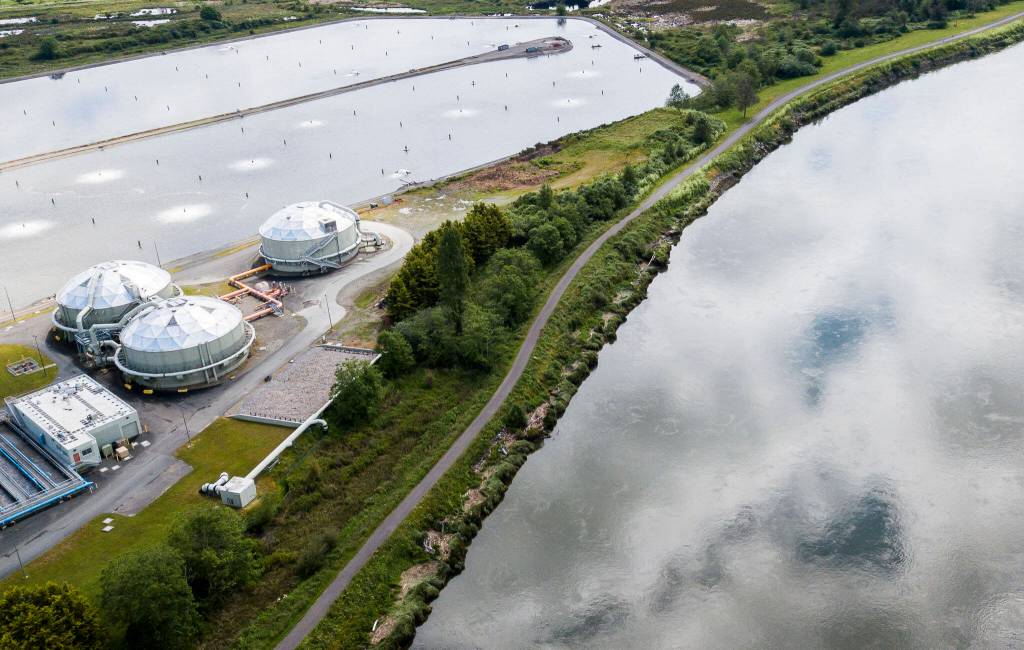
One of the main drivers of the rate increase, Bond said, is an $80 million project that will replace Reservoir 3, a 100-year-old, in-ground reservoir built with the help of horses and plows that was at risk of collapse if a major earthquake were to strike, according to Everett officials. About 540,000 people rely on the drinking water from the reservoir.
Everett determined that wholesale customers will be responsible for 80% of the reservoir cost, with the city’s residents paying the other 20%, according to the city’s website.
While Everett is funding its portion through 25-year bonds, the city chose not to finance the other 80%, Bond said. Alderwood cannot finance or bond for another entity’s project, he added.
Everett and Alderwood are currently in non-binding arbitration over the proposed rate increase, Bond said. In non-binding arbitration, an impartial arbitrator issues a ruling regarding a dispute, but dissatisfied parties can appeal it and take the case to court if they wish.
The two main issues Everett and Alderwood are discussing in arbitration, Bond said, are whether wholesale customers should be responsible for 80% of the cost and whether Everett should bond for the entirety of the project.
The two parties met in June and were scheduled to meet again in July, Bond said. He was unsure of how long the dispute will last.
While Alderwood and Everett are in arbitration, Alderwood is still paying the 2024-25 rate.
Both the Alderwood Water and Wastewater District and the city of Everett declined requests for interviews regarding the rate dispute, citing the ongoing negotiations between the two parties.
In a statement Tuesday, the Alderwood district wrote that it is “engaged in ongoing discussions with Everett” to resolve the ongoing rate dispute, Kundu wrote. The district did not comment further.
An Everett spokesperson declined to comment on the continued discussions with the water district over the rate increase.
In its letter, Edmonds raised concerns about Everett’s financing approach for the reservoir, saying that by not using bonds for the entire project, current ratepayers would disproportionately pay for a project that will provide services for many years into the future.
On July 8, Ramerman sent a reply to Edmonds, thanking the council members and mayor for their letter while declining to provide a substantive response, citing litigation with Alderwood.
At the July 6 meeting, Hurst said he and other mayors from south Snohomish County met with Franklin about Everett’s decision to only bond its portion of the reservoir project.
“Obviously that didn’t go very far, as far as that conversation, but we did try,” Hurst said.
Marine said he saw the need for the reservoir’s replacement and understands that other cities that use Everett’s water will have to contribute to the cost of the project. But he also said the group of mayors asked the city of Everett to look for ways to reduce the sudden impact of the significant rate increase.
“You know, nobody pays off a mortgage in five years, right?” Marine said Thursday. “You usually do it over time. So, is there a way to bond that large expense and meter that into the payments that way, so your increase isn’t so high?”
Impact on ratepayers
If, after arbitration, Everett maintains the rate increase, Alderwood would have to retroactively pay the difference between the new rate and the 2024-25 rate it’s currently paying.
As of April, if Alderwood had been paying the increased rate, Lynnwood would have owed an additional $1.7 million out of its utility fund, Bond said. He said he has set aside about $1.5 million in the fund to pay the retroactive increase if necessary.
“We do have money there, sitting, waiting, earning interest on our behalf,” he said.
With the utility tax and rate increase, the base rate for bimonthly utility bills in Lynnwood would go from about $356 to $372.50, Bond said.
In 2022, Lynnwood set its water rates through 2028, which included slight increases each year. Because the city is still paying the 2024 rate, the city may be able to absorb some of Everett’s increase so ratepayers wouldn’t see as high of a jump in their utility bills, Bond said.
For Edmonds, the wholesale rate increase would result in a more than $1.4 million annual impact to its utility fund, the council and mayor’s letter said. In addition, the higher rate would raise prices for water used at parks, public facilities, irrigation systems and other municipal operations, Ryan said. Some of these services are paid for via the general fund, which is running low as the city is in its third year of a declared fiscal emergency.
“If implemented as currently structured, these measures may require Edmonds to increase local utility rates, issue additional debt, or defer other critical community priorities to accommodate costs over which Edmonds residents have no direct representation,” the letter said.
Ryan said the city does not yet know how much water rates would increase for Edmonds customers, as the city is currently conducting its regularly scheduled water rate study.
Will Geschke: 425-339-3443; william.geschke@heraldnet.com; X: @willgeschke.
Jenna Peterson: 425-339-3486; jenna.peterson@heraldnet.com; X: @jennarpetersonn.