Whidbey talk features man who’s seen the dawn of the galaxies
Published 1:30 am Sunday, October 11, 2020
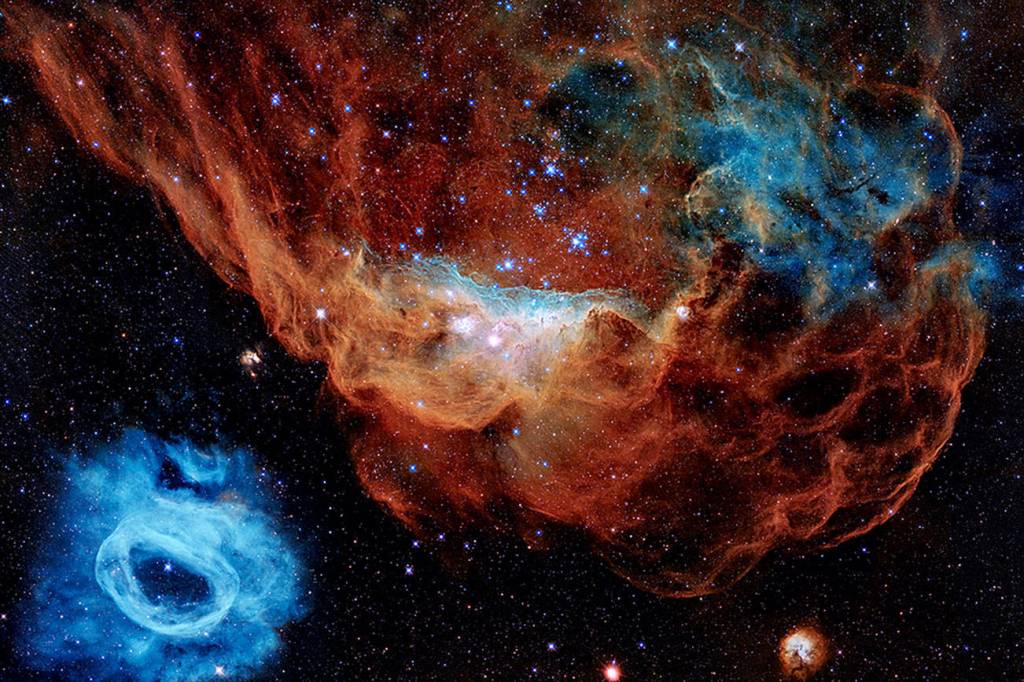
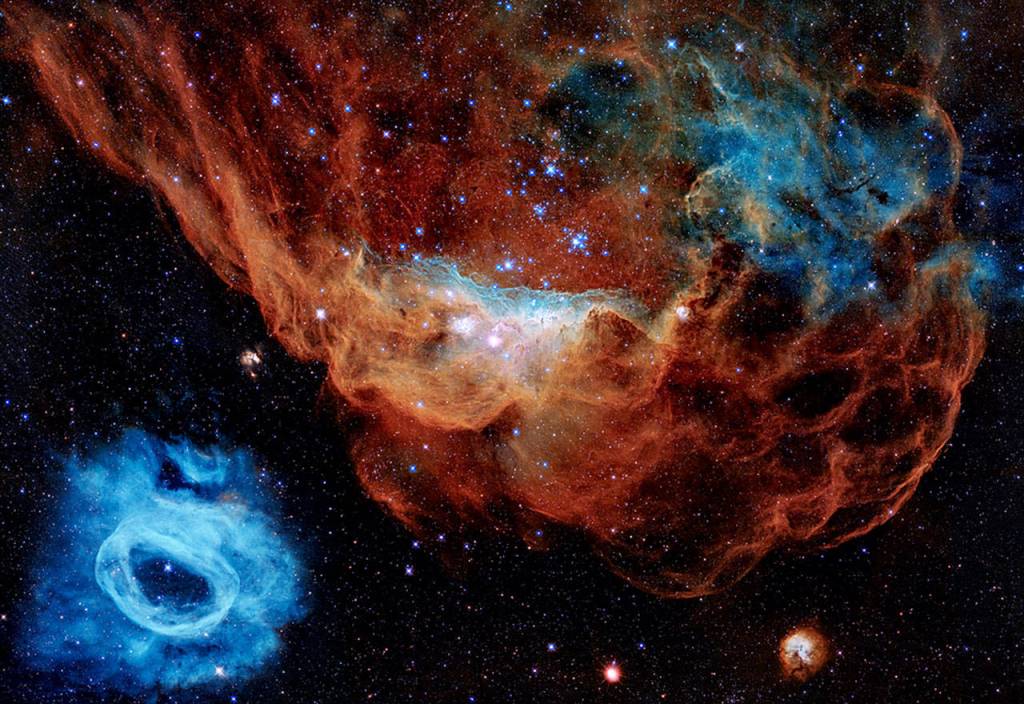

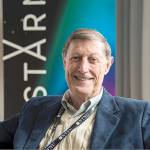
Bob Williams is one of the bright minds who gets to look back in time with the Hubble telescope.
Williams, astronomer emeritus at the Space Telescope Science Institute, is this year’s speaker for Sno-Isle Libraries’ Trudy Sundberg Lecture Series.
He served as director of the Space Telescope Science Institute, which operates the Hubble Space Telescope for NASA, from 1993 to 1998.
His lecture titled “Probing the Distant Universe with Hubble Space Telescope” will live-stream Oct. 16 via Zoom. He will be speaking from his home in Baltimore.
As the director, Williams devoted time on the Hubble telescope in 1995 to the study of distant galaxies. His work led to the Hubble Deep Field project, a landmark in the study of the early universe.
Because light takes billions of years to reach Earth from distant galaxies, we see them as they were billions of years ago. Hubble extends the scope of such research to increasingly distant galaxies, allowing a better understanding of how they evolve.
For Hubble Deep Field — which revealed in remarkable detail the evolution of galaxies in the early universe — Williams was awarded the 1998 Beatrice M. Tinsley Prize, the 1999 NASA Distinguished Public Service Medal and the 2016 Karl Schwarzschild Medal.
His lectures on the discoveries of the Hubble telescope have taken him to six continents.
“I still have astronomy in my bones,” Williams, 79, said. “I really love everything about it.”
Williams’ Trudy Sundberg lecture is timely, because the Hubble telescope is celebrating its 30th year in orbit in 2020.
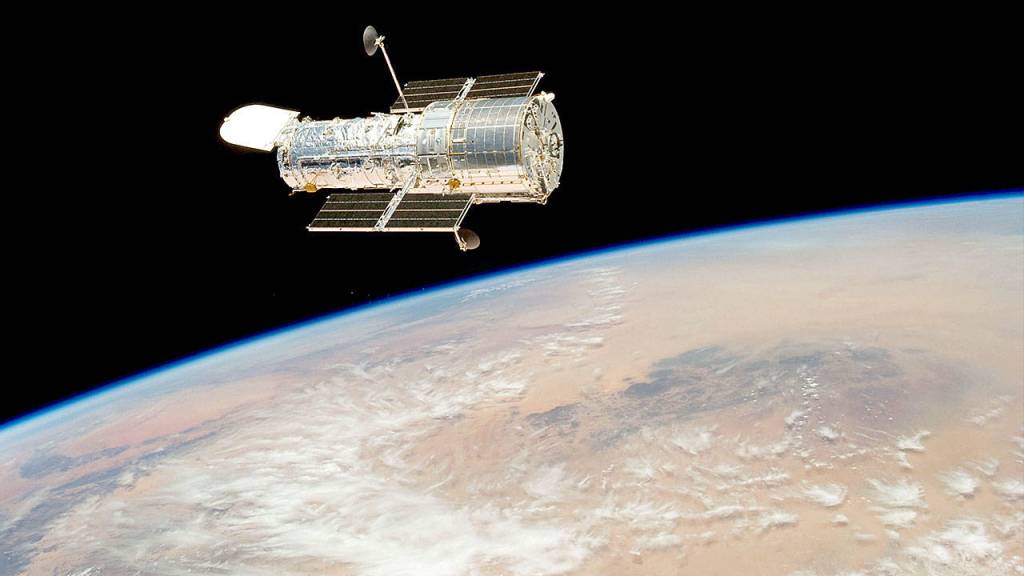
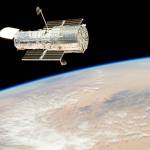
The Hubble Space Telescope, named for trailblazing American astronomer Edwin Hubble (1889-1953), was launched into Earth’s orbit by the Discovery space shuttle in 1990. Since then, Hubble has provided a crystal-clear view of the universe, helping scientists observe some of the most distant stars and galaxies, as well as the planets in our solar system.
Five astronaut servicing missions, from 1993 to 2009, replaced and upgraded Hubble’s aging parts to expand its capabilities and extend the telescope’s lifetime.
“For the last 10 years, since the shuttle is retired, there have been no servicing missions, and so the telescope is slowly aging,” said Williams, who served as president of the International Astronomical Union from 2009 to 2012. “Although it’s working great right now, it’s living on borrowed time. One of these days, there will be some failure.”
According to NASA, Hubble’s top accomplishments include measuring the expansion and acceleration rate of the universe; finding that black holes are common among galaxies; characterizing the atmospheres of planets around other stars; monitoring weather on planets in our solar system; and looking back in time across 97% of the universe to chronicle the evolution of stars and galaxies.
“When you look out in space, you’re looking back in time,” Williams said. “Astronomy is the only human endeavor that enables one to truly look into the past. The farther out you look, the further back in time you can look.”
The farthest the Hubble telescope has seen is about 13 billion light-years away. This means that the light that the telescope detected had been traveling for 13 billion years and showed what the galaxies looked like 13 billion years ago — just under 1 billion years after the universe itself came into existence.
The James Webb Space Telescope, Hubble’s successor set to launch next year, will be able to see even further back in time.
Williams was an astronomy professor at the University of Arizona for 18 years and the director of Cerro Tololo Inter-American Observatory in Chile for eight years before he was hired on at the Space Telescope Science Institute.
He is an adjunct professor at John Hopkins University in Baltimore and a visiting professor at the University of California-Santa Cruz. A member of the American Academy of Arts & Sciences, Williams’ research specializes in astrophysics, exploding stars and distant galaxies.
Williams has loved astronomy since he was 12 years old. He received his bachelor’s degree in astronomy from the University of California-Berkeley in 1962, and a Ph.D. in astronomy from the University of Wisconsin in 1965.
“I never changed my wish to be an astronomer,” he said. “Since I was 12 years old, there’s never been a day in my life where astronomy wasn’t a really important part of it. I’m fascinated with looking up at the sky and wondering what is going on out there and wanting to understand it.”
The Sno-Isle Libraries Foundation hosts the annual Trudy Sundberg Lecture Series on Whidbey Island. It honors the memory of Trudy Sundberg (1925-2013), a teacher and prominent community activist in Oak Harbor.
The lectures typically are held in May and include a visit to one of the three high schools on the island. Williams’ talk was rescheduled to October because of the coronavirus.
“With her eclectic interests, we thought we could bring just about anybody in who had something to say, who had made a difference, and she would be smiling on us for the effort,” said Marshall Goldberg, chairman of the Trudy Sundberg Lecture Series Planning Committee. “That’s true even up to today.”
Sara Bruestle: 425-339-3046; sbruestle@heraldnet.com; @sarabruestle.
If you stream
Bob Williams, astronomer emeritus at the Space Telescope Science Institute, will give a lecture on “Probing the Distant Universe with Hubble Space Telescope” at 4 p.m. Oct. 16 via Zoom. Williams is this year’s speaker for Sno-Isle Libraries’ Trudy Sundberg Lecture Series. A Q&A with Willams will follow the free presentation. Registration is required. A Zoom link will be emailed to you. Space is limited. Go to sno-islefoundation.org/events/trudy-sundberg to sign up.
Trudy Sundberg Lecture Series
Watch all of the lectures online at sno-islefoundation.org/events/trudy-sundberg. Mark your calendar for the 2021 lecture, scheduled for May.
2016: “Who Stole the American Dream?” by Hedrick Smith, two-time Pulitzer Prize-winning journalist and bestselling author of “Who Stole the American Dream?”
2017: “Climate Action: What Now?” by KC Golden, executive director of Climate Solutions, and Xiuhtezcatl Martinez, youth director of Earth Guardians
2018: “Her Story,” by Jill Tietjen, former CEO of the National Women’s Hall of Fame and bestselling author of “Her Story”
2019: “The Albatross on Midway Island” by Chris Jordan, filmmaker of the 2017 documentary “Albatross”
2020: “Probing the Distant Universe with Hubble Space Telescope” by Bob Williams, astronomer emeritus at the Space Telescope Science Institute
2021: “What’s in your Water?” by Dr. Mona Hanna-Attisha, who exposed the Flint water crisis in 2014