Kovels Antiques and Collecting: Carl Worner found art at the bottom of a bottle
Published 1:30 am Tuesday, August 4, 2026
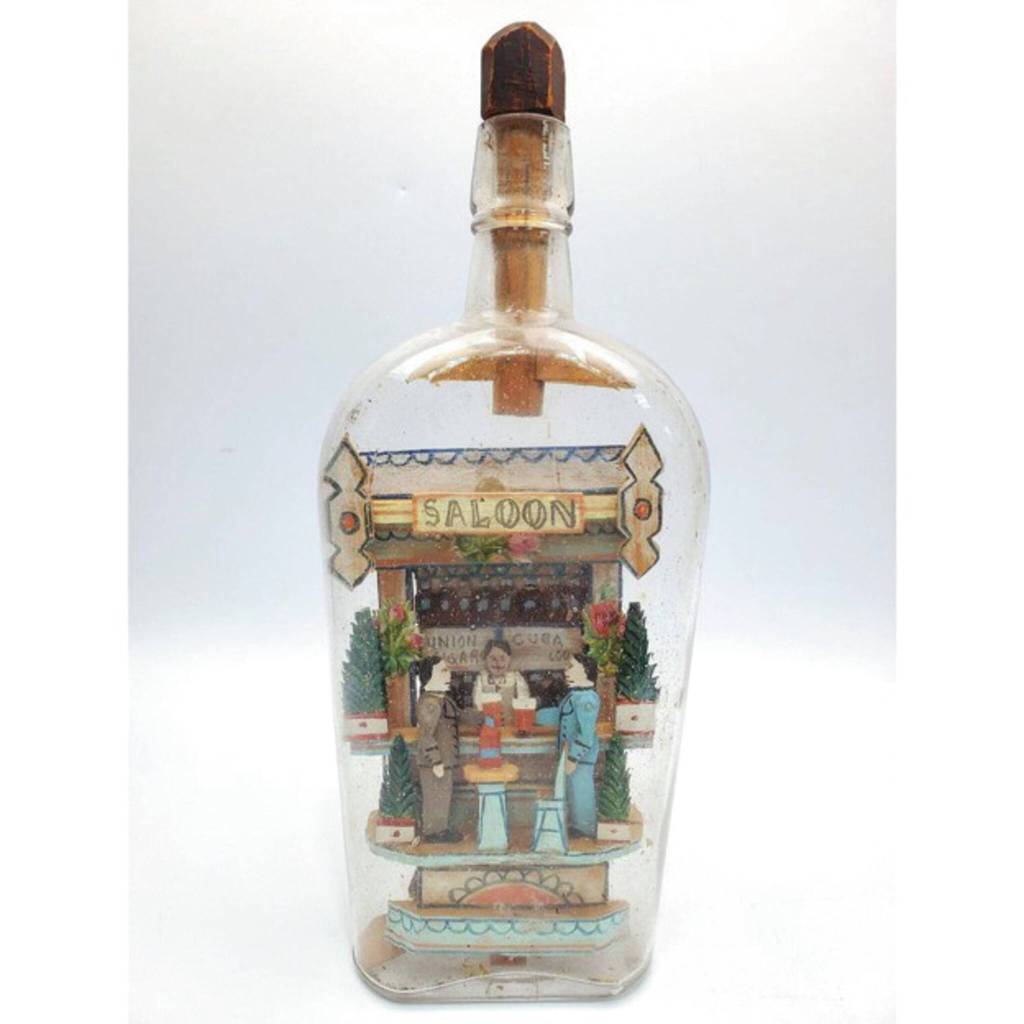
Very little is known about folk artist Carl Worner, and much of what is known comes from his art. He lived from about 1860 to 1930 and, during his lifetime, made more than 100 carved and painted wooden dioramas inside glass bottles. He is said to have asked for empty bottles and cigar boxes at saloons to gather his materials, turning trash into treasure. His best-known and often best-selling works are saloon scenes.
One example sold for $1,950 at World Auction Gallery, well over its high estimate of $800. These bottles follow similar themes, usually with two men standing in front of the bar, the bartender behind it, rows of bottles, and an advertising sign in the background. As with any art form, there was room for variation. He might include more figures, even some seated at a table, if there was room for them. Some of these bottles were puzzles, with a sign in front reading, “Find the Missing Man,” and a hidden figure, usually under the bar floor.
Like many folk artists, Worner recorded bits of his life story in his bottles. Some of his earliest works include German words or place names, indicating that he was born in Germany and immigrated to the United States. The few dated bottles show when he was working, from about 1890 to 1919. The names of the saloons and businesses he represented can be matched to known locations, tracing his travels throughout the United States, including Missouri, Illinois, New York, and New Jersey.
* * *
Q: I have a Rogers silver teapot that belonged to my mother. How can I find out what it is worth?
A: There were dozens of silver companies named Rogers in New England in the 19th century, so finding information on your teapot based on the name alone may be difficult. Many of these companies, such as F.B. Rogers, which was established in Massachusetts in 1883 and became a division of the National Silver Co. in 1955, or the Rogers Brothers Company, formerly Rogers & Mead in Hartford, Connecticut, made silver plate, which usually has a lower value than sterling silver.
Silver plate teapots marked for Rogers companies have sold for about $20 to $100 at recent auctions. Size, pattern, and condition will influence the price. Sterling silver teapots have sold for much higher prices, up to $1,000. Sterling silver pieces will always be worth at least their melt value.
Check the marks on your teapot to find out if it is silver plate. The letters “EP,” such as “EPNS” (which stands for “Electroplated on nickel silver”), indicate silver plate. So do marks like “A1” (which means standard plate, or 2.5 ounces of silver for 144 teaspoons), “triple plate,” or “quadruple.” American sterling silver is usually marked with “925” (925 parts silver per 1,000 parts metal, the standard for sterling silver) or the word “sterling.”
It is also possible to identify whether a piece is solid silver or silver plate by its pattern. There are plenty of print and online resources to identify silver mark patterns. Check your local library or look for online guides on Kovels.com or on sites like The Online Encyclopedia of Silver Marks at 925-1000.com.
* * *
Q: What, exactly, is “Old Paris” Porcelain? I have seen it sell for high prices, but I can’t tell whether it’s a brand name, a style, or just porcelain made in Paris.
A: Old Paris porcelain refers to porcelain made in Paris, France, in the 18th to 19th centuries. It is also called Paris porcelain or the French term Vieux Paris. The term was first used in the late 1800s. It was made by many factories and is usually unmarked, though some pieces bear an artist’s signature, which increases their value.
Paris porcelain is known for its high quality and intense white color. It is often decorated with gilding and frequently painted with realistic scenes or portraits. Other favorite decorations include openwork and three-dimensional features. Shapes and styles changed over time, along with fashions in decorative arts, but the best-known pieces among today’s collectors feature Classical decoration.
As Paris porcelain grew more popular, French manufacturers outside the city began making comparable porcelains. Today, some well-made porcelain from Limoges, France, and even from other countries like Germany, is collected as Paris porcelain. The most important part is the quality. Prices can range from about $50 for a fairly simple vase to thousands of dollars for a pair of large urns with elaborate relief decorations.
* * *
TIP: Sunlight and heat can harm most antiques. Wood, paper, textiles, glass, ivory, leather, and many other organic materials will discolor, fade, or crack. Cover sunny windows with blinds or curtains or apply a sun-filtering plastic coating to the windows. These coatings can be found at hardware and window stores or installed by special companies.
* * *
Kovels answers readers’ questions sent to the column. Send a letter with one question describing the size, material (glass, pottery) and what you know about the item. Include only two pictures, the object and a closeup of any marks or damage. Be sure your name and return address are included. By sending a question, you give full permission for use in any Kovel product. Names, addresses or email addresses will not be published. We do not guarantee the return of photographs, but if a stamped envelope is included, we will try. Questions that are answered will appear in Kovels Publications. Write to Kovels, (Name of this newspaper), King Features Syndicate, 300 W. 57th Street, 41st Floor, New York, NY 10019, or email us at collectorsgallery@kovels.com.