$25M has been spent studying US 2 trestle. Are we any closer to a fix?
Published 6:30 am Saturday, October 19, 2024
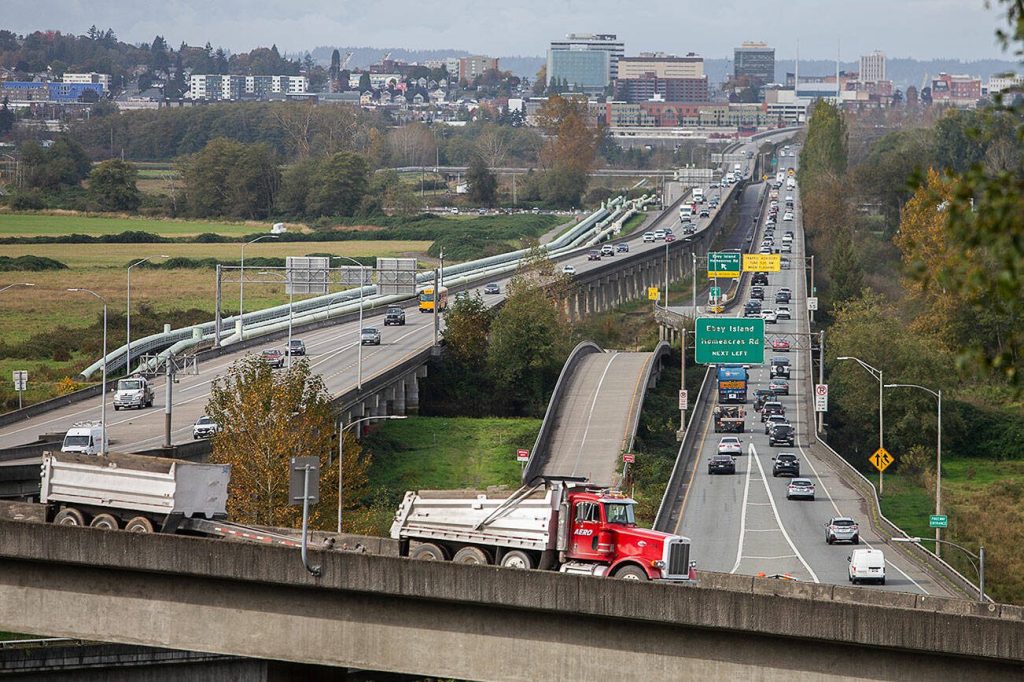
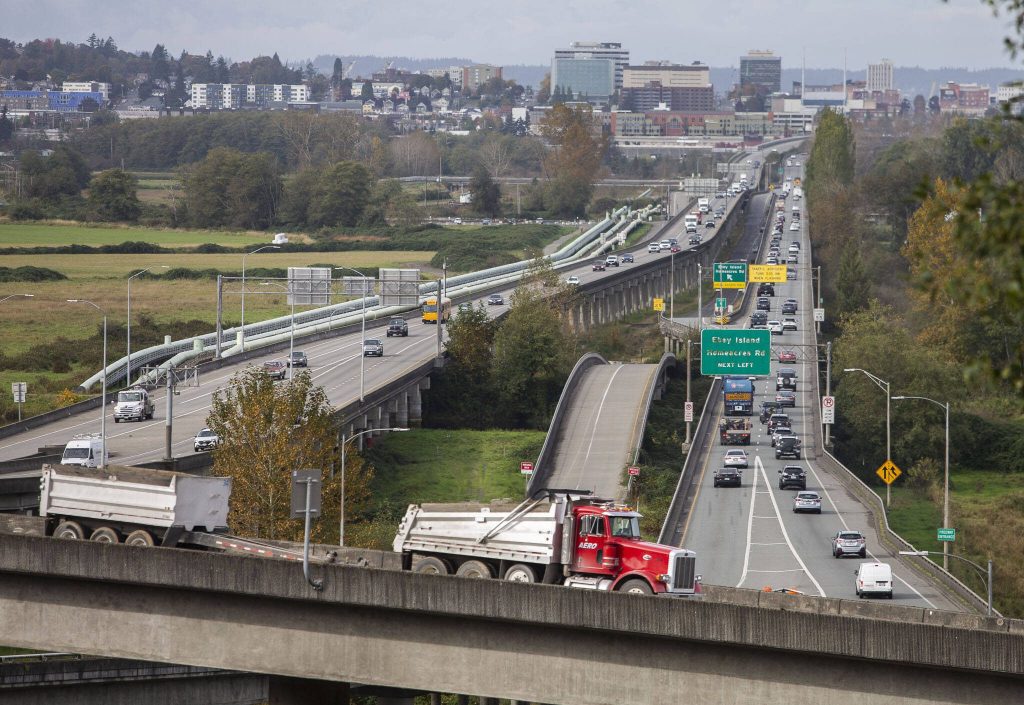
EVERETT — For long portions of the day, the U.S. 2 trestle across the Ebey Slough is relatively innocuous.
But during the morning rush, the westbound road connecting Everett and Lake Stevens — which for much if its life was known as the Hewitt Avenue Trestle — turns into a monstrosity.
And that monstrosity has been a problem discussed for years, with the state once again looking for solutions. The state Department of Transportation has collected feedback from an ongoing study into the trestle problem and created what’s called a Purpose and Need statement to help guide the planning process.
It can also be reused during environmental review and “can speed things up” with federal approval on projects, according to a transportation department blog post.
“It’s been a long, long haul to get to this point, but we’re in a good spot,” state Rep. Sam Low, R-Lake Stevens, said in an interview.
Over the past 10 years, at least six studies and reports have looked into how to fix the trestle, with its incessant bottlenecks and potential seismic concerns. That work has cost about $25 million, with some analyses ongoing. The westbound trestle, as well as the intersections at both ends of the causeway, have been the focus of much of these efforts. No more studies are planned, according to the transportation department.
The department is currently in the process of a two-year study, taking a closer look at issues noted in a 2021 examination of the westbound trestle.
The in-progress study is looking at the number of lanes on the westbound trestle, issues with the southbound I-5 on-ramp, the possibility of HOV lanes and access into Everett. It’s also focused on multimodal options, considering both transit and bike usage.
“Our buses face the same challenges as all other vehicles crossing the trestle,” Community Transit spokesperson Monica Spain said in an email. “If traffic isn’t moving freely, then each trip requires additional time to operate, which within a fixed pool of resources, means tradeoffs and less overall service.”
The draft statement also added the trestle’s stormwater system is “undersized and failing.”
The current look follows other studies and reports over the past 10 years. One explored construction costs and funding options. Another studied the interchange of U.S. 2 and Highway 204. And yet another examined population growth and traffic patterns between Snohomish and Everett.
The city of Everett is also finalizing a separate study on the I-5/U.S. 2 interchange.
“If you want federal funding, there’s certain hoops and stuff you have to jump through,” said Low, who is also a Snohomish County Council member. “And these studies, these federal studies, are very important to the project.”
A 2018 financing study found “base cost estimates range from $880 million to $1 billion” for the three- and four-lane westbound trestle replacement options, but cautioned “these costs include levels of risk and uncertainty.”
That number is now expected to be somewhere between $1.6 billion and $2 billion for replacement, officials said. The state Legislature has earmarked about $200 million toward replacing the trestle.
“This is due to inflation and environmental regulation changes that have increased mitigation requirements and stricter stormwater treatments,” explained Doug McCormick, the county’s deputy Public Works director and county engineer, in an email.
McCormick is part of a work group tasked with providing input into potential solutions for the westbound trestle.
The leading plan appears to be a four-lane westbound trestle, including a carpool lane, though state transportation officials caution it’s still too early in the process to make broad declarations about what they’ll do.
‘Busy and deteriorating’
The trestle issue is hardly new, nor are long looks into the arterial.
“Trestle busy and deteriorating, but not enough for a quick fix,” read a headline in The Daily Herald’s April 18, 1985, edition, which ran above a story discussing the eastbound, wooden causeway. Money looked to be hard to come by for the trestle, the story continued.
The money problem hasn’t changed, though the trestle has. Opened in 1936, the trestle was originally one timber and concrete structure, complete with a drawbridge. It was a two-lane road, with the westbound trestle eventually completed in 1968, splitting east and westbound traffic.
A project to replace the eastbound trestle with a new 2.5-mile section of reinforced concrete began in 1991. Replacing the old, wooden structure took a decade and $100 million. More recently, the state spent $15 million in 2011 on westbound trestle renovations to extend its life to 2045. The eastbound trestle’s estimated 75-year lifespan extends into the mid-2040s.
Studies into the trestle have explored a variety of potential solutions, from a wildly unpopular tolling option to adding a carpool lane. While gathering feedback on the recent Purpose and Need Statement, 75% of respondents opposed tolling the trestle, the state found.
Officials have even discussed extending Highway 526 to Highway 9 to give commuters another east-west option, though the ecological implications of that would likely be harsh.
This highlights the major problem: Drivers have very few ways to get from eastern Snohomish County to Everett and the Seattle sprawl. And that would be devastating in the event of a natural disaster.
The “Big One,” a projected 9.0 megaquake, is overdue for the Cascadia Subduction Zone. If it hits, Snohomish County could be split into a jigsaw of 58 population islands.
The trestle is the boundary of some of those populations. If the the trestle was damaged, it could take nearly three years to replace.
“Government as a whole doesn’t have the money that it would take to rebuild all of the infrastructure that’s vulnerable to the level of shaking that we could experience,” said Lucia Schmit, director of emergency management for Snohomish County. “I’ve been looking a lot at the stories coming out of Helene, and I think that’s kind of the closest correlation we’ve seen of a disaster that creates the isolation that we could anticipate.”
The new study gives a stark warning on the matter: “Based on currently available information, none of these structures meet current seismic standards.”
A state transportation spokesperson did not specifically answer a question on whether seismic retrofits to the eastbound trestle are being considered.
‘People want a quick solution’
Another consideration is the high number of solo drivers, contributing to the trestle’s congestion.
A 2018 study found 77% of drivers motoring across the trestle were riding solo. Over half of those respondents said they seek, “at least some of the time” alternate routes to crossing the trestle.
Another study found Boeing’s Everett plant had 3,880 employees living east of the trestle. It found about 18% carpool or use transit. Boeing is Everett’s largest employer.
Between 1980 and 2010, annual daily traffic volumes increased from 33,572 to 73,167, according to state data. Average daily traffic on the trestle now is about 81,000 trips, according to county data.
But more lanes wouldn’t solve congestion, according to the state’s 2021 westbound trestle replacement study. The state Department of Transportation says it’s too early in the process “to have any final considerations, justifications, solutions, plans or priorities” and declined to answer why it was considering a larger footprint of the trestle if it wasn’t going to help traffic congestion.
“I think people want a quick solution to something that is going to take kind of personal decisions and personal changes to our life,” said Emily Wicks, a former state representative in the 38th Legislative District who was involved with the trestle projects while in office. “Driving with people, maybe moving closer. I know that not everybody can just move closer to the city, but to where they work. But that is something that’s important.”
Prior to a 2016 study, transportation stakeholders met four times between 2009 and 2011 in an effort to create a vision for U.S. 2 between Everett and Highway 9.
That vision essentially stated development of U.S. 2 needed to be based on maintaining a strong connection between Everett and “residential communities east of the Snohomish River,” while accommodating “environmental objectives” and supporting the region’s growing economic activity.
The 2016 study suggested two alternatives that were later scrapped: Use a road under the trestle as a bypass, and add ramp metering on the Highway 204 and 20th Street SE on-ramps.
Rebuilding the westbound trestle as a three-lane road, in phases, was also presented as an option in 2016, though has been discussed since at least 2010.
Major projects like this simply take a long time.
“We have a lot of great people involved in this, and I think everybody understands how important this is and that we can’t just let this slip through the cracks,” Low said. “I’m encouraged that we’re going in the right direction, because there’s a lot of good people who have laid the groundwork along the way.”
Jordan Hansen: 425-339-3046; jordan.hansen@heraldnet.com; X: @jordyhansen.