After rough spring start, Snohomish County farmers see mixed results in harvests
Published 1:30 am Thursday, November 3, 2022
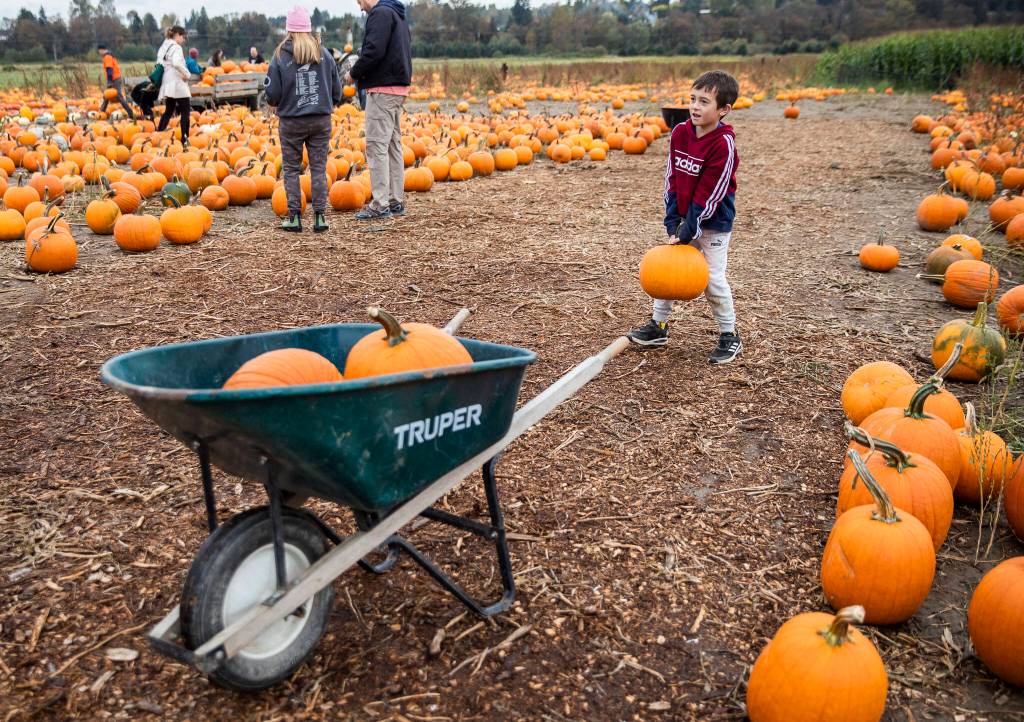


SNOHOMISH — The spring planting season at Swans Trail Farms started with as many as 30 acres of pumpkins underwater.
Owner Ben Krause doubted he’d recover his pumpkin crop, the main staple at the farm northwest of Snohomish, after record-breaking rains in early June put farmers across Snohomish County weeks behind.
Swans Trail Farms came up with a solution to still open a pumpkin patch this fall. In late June, it replanted the crop under sheets of black plastic mulch, which heated up the soil by about 5 degrees and helped recoup lost growing time. The expensive and time-consuming fix paid off.
“We did about 12 acres (of pumpkins) that way and they turned out beautiful,” Krause said.
The farm has closed its pumpkin patch for the season as the harvest season winds down. This year’s weather brought a mixed bag for the county’s agriculture industry. There were noticeable decreases in yields while other crops got a boost from the unusually dry start to fall, farmers said.
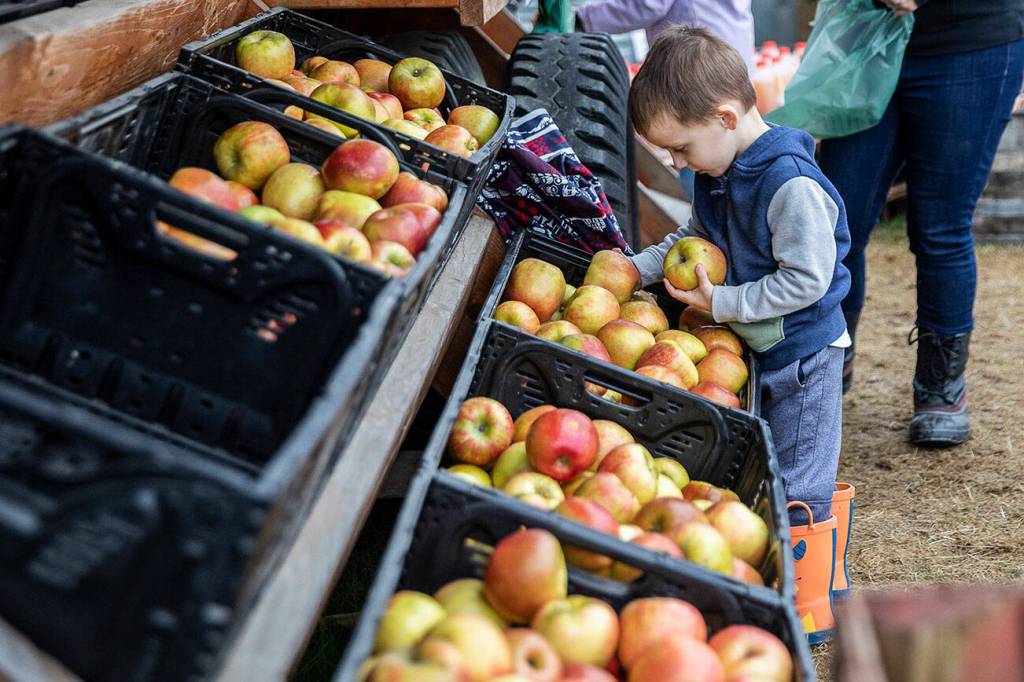
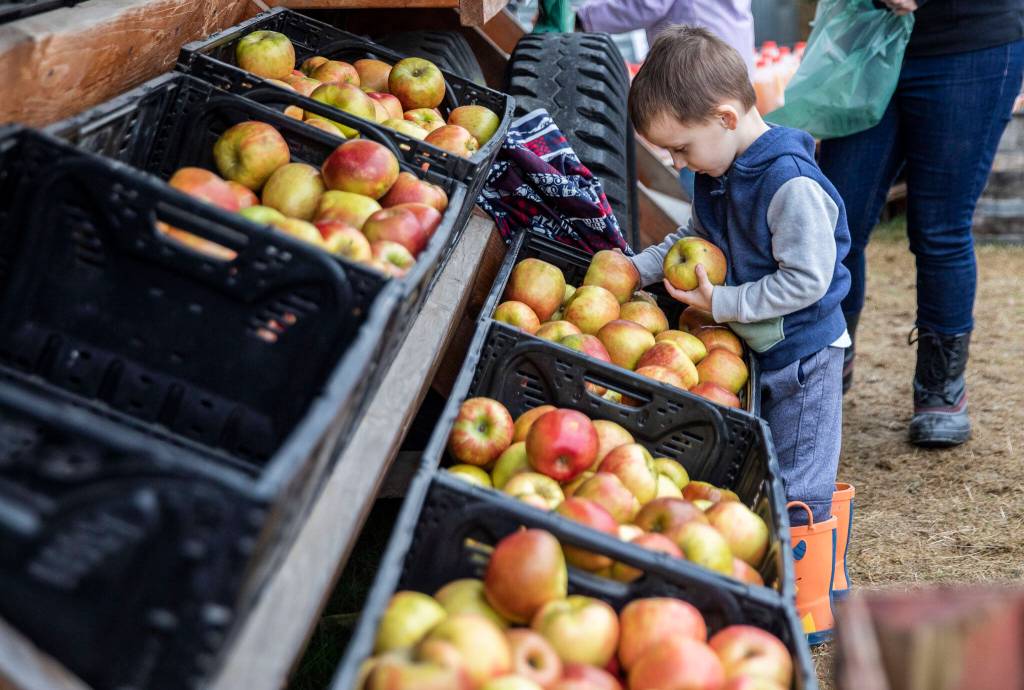
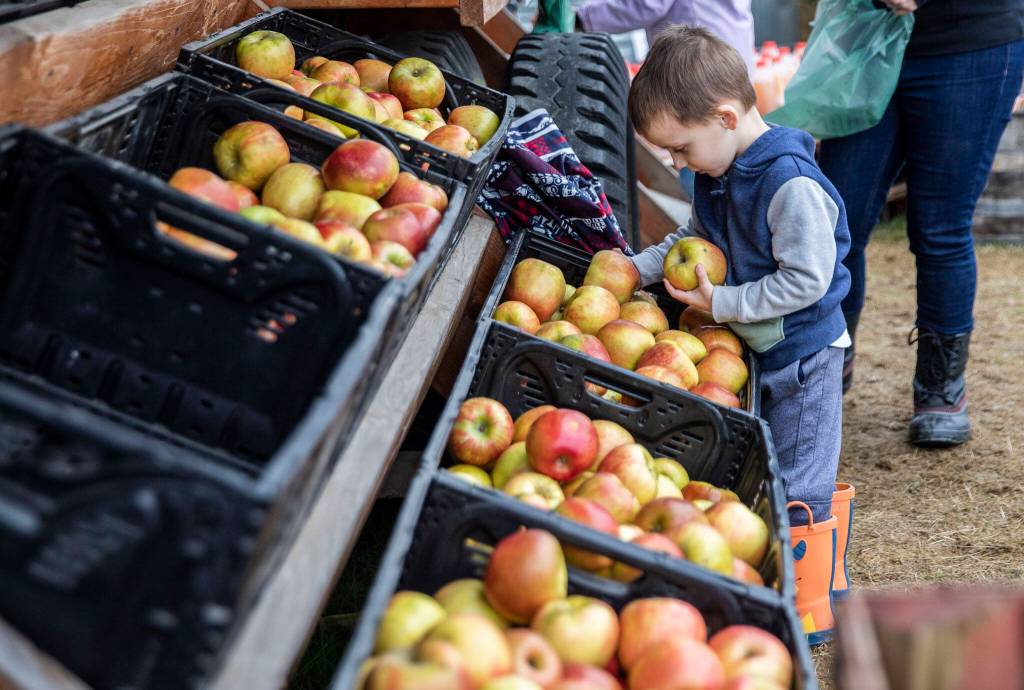
A wet and cold spring took a toll on the Honeycrisp apple crop at Swans Trail Farms. Krause said the chilly spring affected pollination.
“I walked into the orchard and there were all these blooms and it was gorgeous and not a bee flying,” he said. He said the farm’s honeycrisp apple crop was down about 30%, though other varieties like Cosmic Crisp fared better.
Bailey Farm south of Snohomish had more success with apples this year.
“We ended up with plenty of apples and had a good season,” said Anne Bailey Freeman, who manages the farm’s U-pick strawberries, apples and pumpkins.
She said the biggest impact of a cool spring was the late ripening of strawberries.
“The public has certain expectations,” she said. “The demand is there in early June, and by the time you get to July, they are moving onto other things.”
Bailey Freeman said the farm feels lucky none of its crops were drowned out, compared to neighboring farms on lower ground.
In August, the Washington State Tree Fruit Association estimated about an 11% decrease in the state’s apple crop including in key growing areas in Central and Eastern Washington, according to a news release.
In Snohomish County, warmer than usual early fall weather benefit some crops.
Willie Green’s Organic Farm south of Monroe saw “bumper strawberry yields,” said owner Jeff Miller. “They were the best strawberries I’ve grown,” he added.
“We usually get rains in September and it softens up the berries and they start to rot. Not this year,” Miller said. “The dry weather extended our harvest. (Berries) were super sweet because of the heat.”
And a sunny first three weeks of October brought out visitors to farms.
“We couldn’t ask for a better fall, so very thankful for that,” Krause said.
Now, La Niña conditions are expected to return for a third, consecutive year, according to a winter weather outlook from the NOAA’s Climate Prediction Center. In a La Niña year, the Pacific Northwest can expect another cold and wet winter.
Jacqueline Allison: 425-339-3434; jacqueline.allison@heraldnet.com. Twitter: @jacq_allison