Trump stops deal for Bothell’s Ventec to produce ventilators
Published 5:59 am Friday, March 27, 2020


By Geoff Baker / The Seattle Times
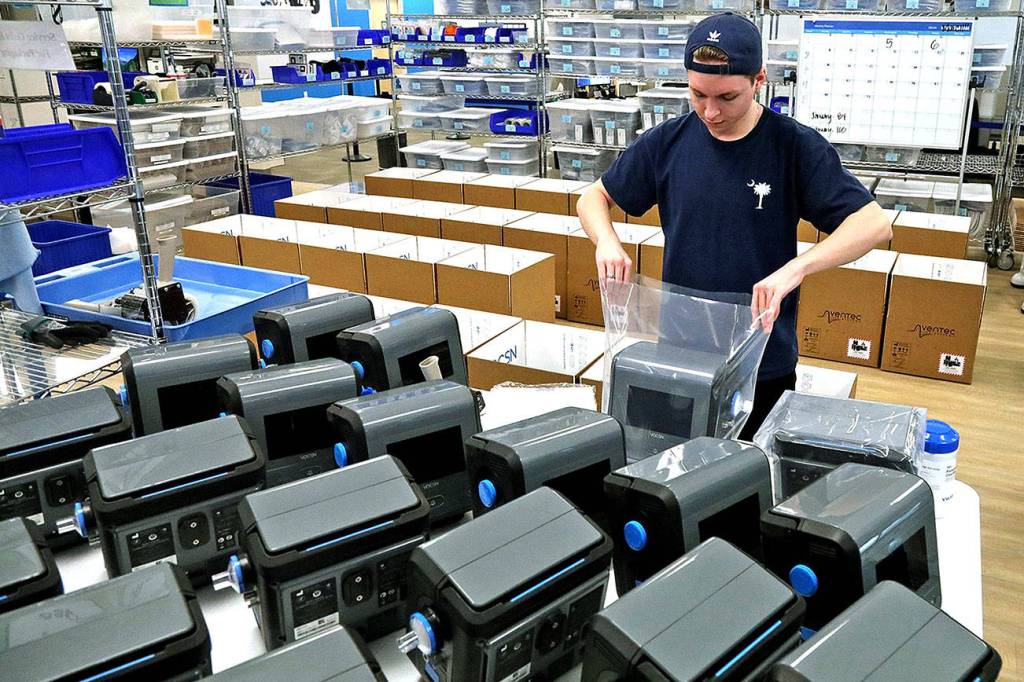
Bothell-based Ventec Life Systems was at the center of a national storm late Thursday when it was reported the Trump administration pulled back from a deal for the company and General Motors to begin producing what one supplier said would soon be “up to 20,000” life-saving ventilators a month.
The “Project V” deal, brewing since last week in response to the coronavirus crisis, would have launched in early April at the automaker’s electronics assembly plant in Kokomo, Indiana, and taken Ventec from a monthly production capacity of 250 to more than 1,000 during a ramp-up phase. By May, the goal was several thousand more machines in what one source close to the process — who wasn’t authorized to speak publicly — described as a “historic” effort to rapidly meet escalating demands as hospitals become overwhelmed by patients with COVID-19, the illness caused by the novel coronavirus.
The deal was to have been announced Wednesday, but by Thursday afternoon the source indicated the federal government might be delaying the rollout. By Thursday night, the New York Times, quoting unnamed government officials, reported the Federal Emergency Management Agency wanted more time to assess whether the $1 billion price tag for the venture was prohibitive.
Those officials said the deal isn’t dead, but the government is weighing “a dozen or more” other proposals and questioning whether the 20,000 monthly target is reachable. Multiple sources familiar with the situation, requesting anonymity, later confirmed to The Seattle Times that the Trump administration had indeed delayed the Wednesday announcement.
GM spokesman Daniel Flores said in a release Thursday night that all parts for the ventilators have been acquired “through a Herculean effort” and efforts are underway to reconfigure the Kokomo plant. “The Ventec and GM team is working around the clock to meet the need for more ventilators,” Flores said.
According to sources, the Trump administration on Sunday put out a Request for Information (RFI) seeking ventilator production on a mass scale with an “unheard of” deadline the following day. The tight 24-hour turnaround time was met by the Ventec-GM team with multiple scenarios of varying production amounts and costs, after which the federal government extended the RFI deadline until Tuesday to attract competing offers.
Top GM purchasing agents had been dispatched Sunday from Warren, Michigan, to visit Ventec’s Bothell plant and by Tuesday — working with Ventec’s purchasing team — had arranged for the acquisition of 95% of parts needed to build the ventilators on a mass scale. The final 5 percent were acquired by Wednesday.
Todd Olson, CEO of Minneapolis-based Twin City Die Castings — an automotive and medical parts maker supplying about 20 of those ventilator components — said Thursday the project’s goal is to produce thousands of the machines within a month or two and 200,000 total.
“We’ve looked at a number of different scenarios up to 20,000 a month,” Olson said, adding he’s been told the companies have targeted August for reaching that high-end figure. “I don’t know where it’s going to end up…. There are a number of different scenario plannings. It’s going to be big. It’s going to be thousands a month for sure.”
Olson cautioned that such a massive expansion in production can’t happen overnight. “It’s going to take a period probably through the summer to get to maximum capacity,” he said. “But they’ll make a meaningful difference within a month or two.”
The United States has between 160,000 and 200,000 ventilators, but the Society of Critical Care Medicine in New York has warned that up to a million machines could be needed over the course of the pandemic. GM announced last Friday it would collaborate with Ventec to help it increase production of its highly portable VOCSN ventilators, but had stopped short of committing to use any of its plants now shuttered due to coronavirus concerns.
At a news conference Thursday, Gov. Jay Inslee described a morning call with President Donald Trump, Vice President Mike Pence and other governors during which he pushed for Trump and his administration to be “more assertive and aggressive and more organized” on getting manufacturers across the country to pitch in.
“Today we’re in a mad scramble with 50 states competing against each other for crucial supplies,” he said. “We need a federal system … just like we used in World War II.”
Inslee added that he has personally enlisted a neighbor with ties to China to seek ventilators there.
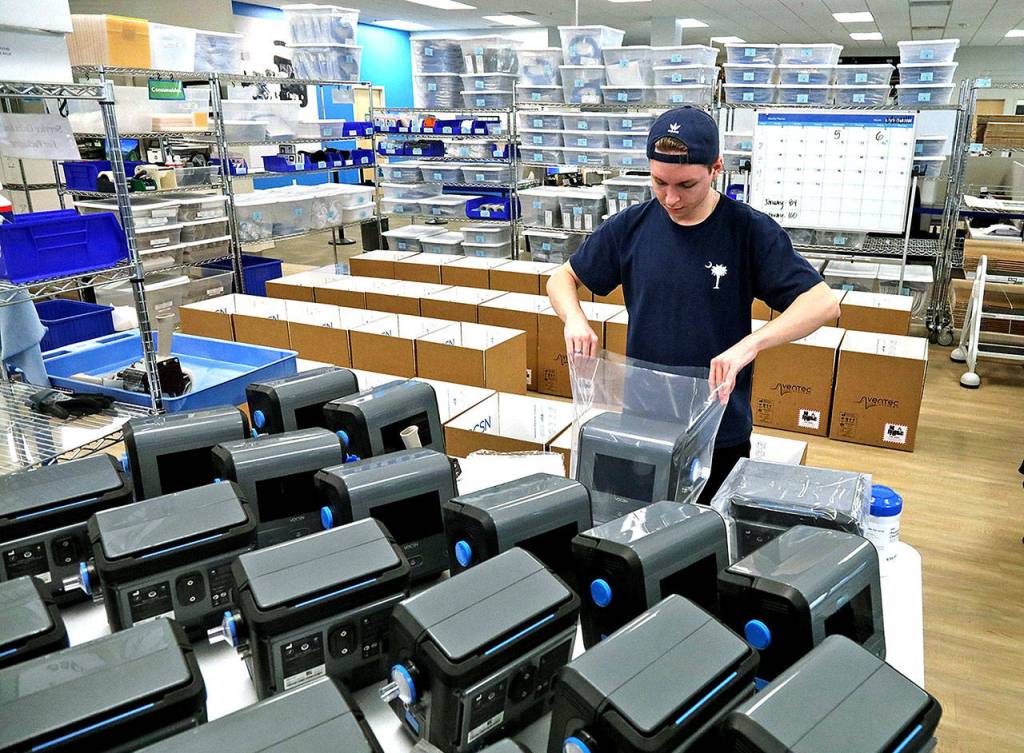
Ventec produced 250 units last month but in recent weeks had explored partnerships to ramp up production in anticipation of a nationwide ventilator shortage.
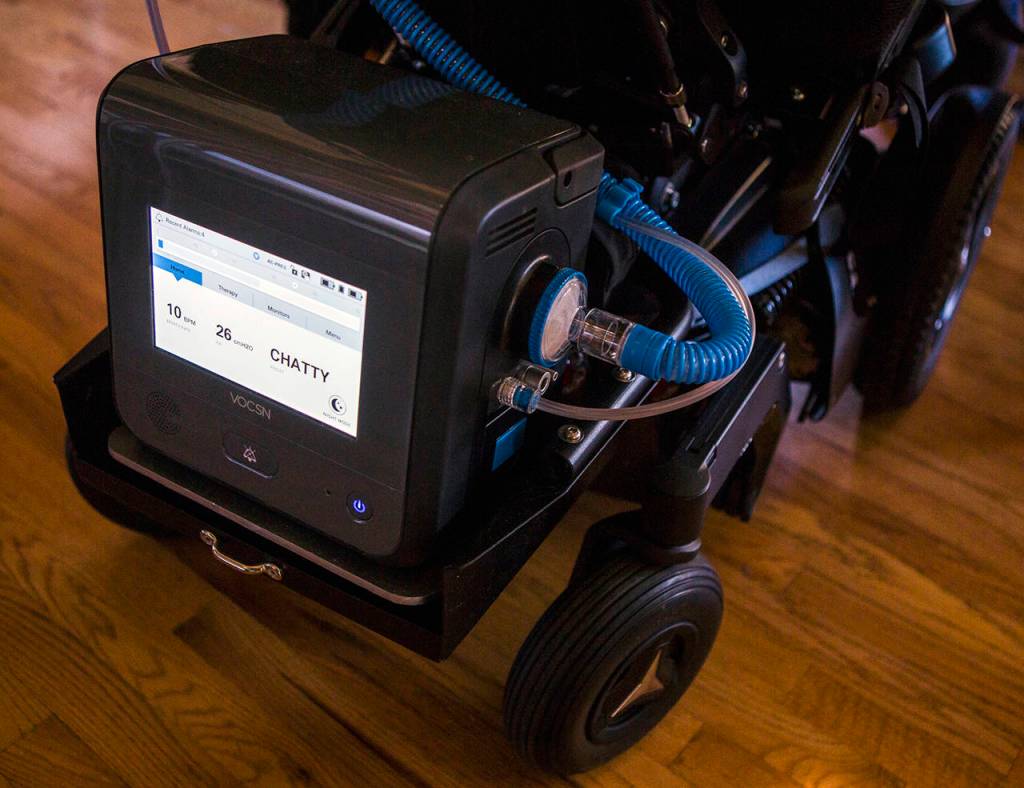
The VOCSN, approved by the FDA two years ago, is a multifunction ventilator, priced midway between the $5,000 for a typical home-care device and $50,000 for top-end intensive care unit (ICU) hospital models. At 18 pounds with a nine-hour battery, it combines five separate pieces of equipment — a ventilator, oxygen source, cough assist pump, suction unit and medication-delivery nebulizer — into one, making it practical for rapid deployment to remote locales or triage centers.
VOCSN’s combined equipment also reduces the medical personnel needed to manage patients — especially beneficial in more confined emergency spaces. A typical ICU device requires a critical care doctor, respiratory therapist and a nurse to monitor multiple pieces of equipment.
The airflow delivered by cheaper home ventilators is insufficient to deal with COVID-19 cases, while top ICU machines are largely made overseas, and nations such as Germany have prioritized the machines for their own use. While VOCSN isn’t as powerful as those ventilators, some medical equipment experts feel they are good enough to help serious COVID-19 cases while leaving the top-end ICU units for the most critical patients.
Erik Gordon, a University of Michigan professor specializing in entrepreneurship and technology commercialization — who closely follows GM and the automotive industry — said it would be “an accomplishment that deserves high praise” if the two companies can scale production by such a vast amount so quickly. Gordon said merely acquiring the needed parts — many from overseas suppliers — would be a stunning accomplishment given how governments and companies elsewhere would probably want such parts for ventilators used within their own nations.
“It’s somewhat surprising that many parts are available,” he said.
And the rest of the challenge, he said, is just as daunting.
“Having the parts is half the battle,” he said. “The other battle is getting the machines built from the parts — at scale and at quality.”
Existing GM plants, he said, are configured to produce a specific type of car; swapping out machinery to begin mass-producing medical devices will require a lot of work in short order. Gordon added that while carmakers can fix mistakes that become evident in some vehicles, there’s no such margin for error in highly-complex ventilators — where defects could cost lives.
“They can’t work and not work,” he said. “They have to work.”
That said, he stopped short of calling it impossible.
“If I was going to pick people who have the best shot of making it, it would be the top-tier automakers,” he said. “It would be GM and Ford and Honda, Toyota … the people who are very good at manufacturing. But even for them, there are a lot of moving parts in assembling all the moving parts you need to build ventilators.”
Olson agreed that he would’ve never imagined a venture like this could work.
“Two weeks ago, I would have fired our salespeople for committing to it,” he said. “They would have walked in and I would have said, ‘You are absolutely insane — you’ve put us in the worst position ever.’ “
But now, he’s changed his tune because of the speed at which things are happening.
On Wednesday night, his company of 225 employees received the first of what will be five 3,000-pound steel mold-type devices — known as “toolings” that are used to mass produce components — from his Die-Tech supplier in Grand Rapids, Michigan. The devices typically take eight weeks to build but this time were designed in six days.
“I’ve never seen anything move this fast in my life,” he said.
But for now, at least, the process of finalizing the deal has slowed considerably.