Editorial: Hobbs looks to build on past election chief’s work
Published 1:30 am Saturday, March 19, 2022


By The Herald Editorial Board
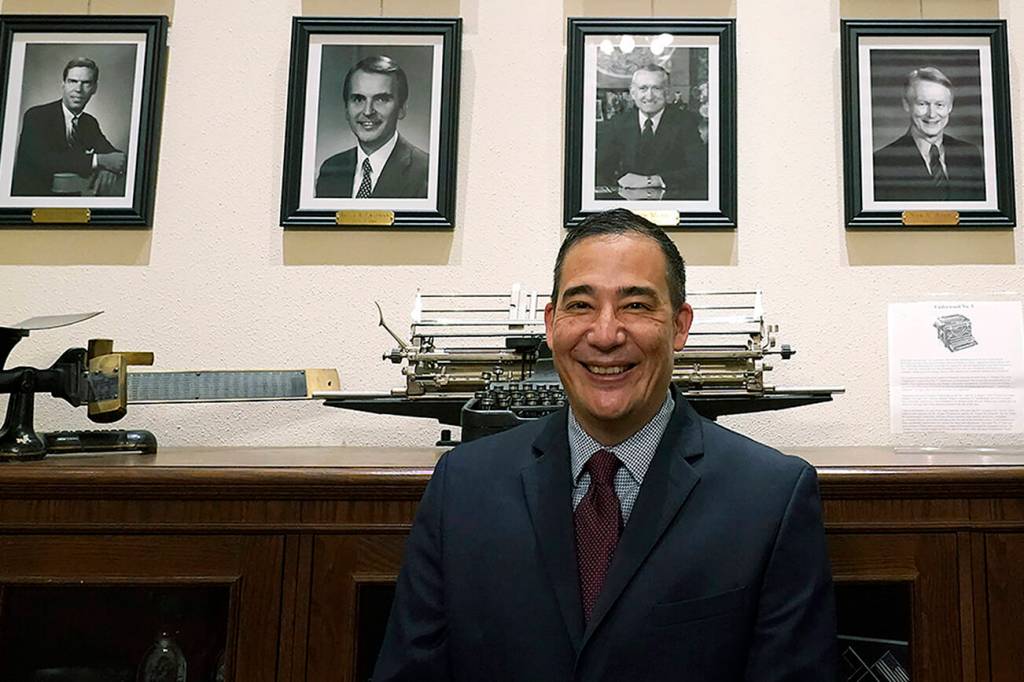
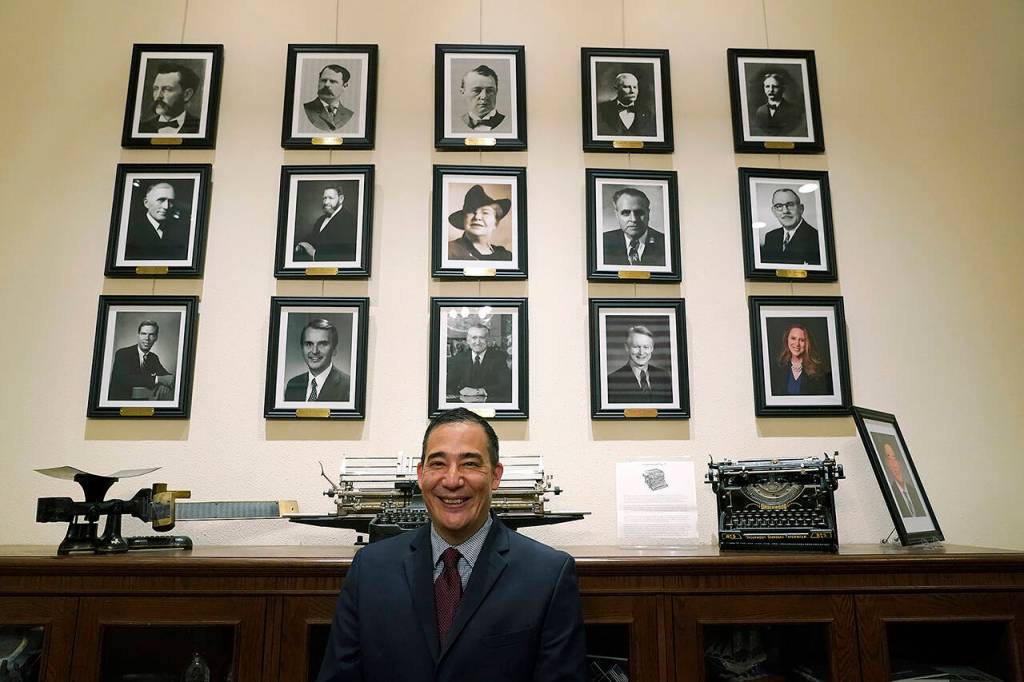
Steve Hobbs, the former Lake Stevens state senator who was tapped to serve as secretary of state when the Biden administration drafted Washington’s chief election official, Kim Wyman, for a federal elections post, knows the former secretary is a tough act to follow.
Wyman, who was less than a year into her third term when hired to lead federal election security, had built a reputation as an elections expert and had been called on by numerous states scrambling to secure voter access in the 2020 elections in the middle of the pandemic. Wyman, the only Republican serving in a state-level office on the West Coast, had successfully launched the state’s online VoteWA system, aiding election records accuracy and security while encouraging greater access by registering voters and encouraging voter participation.
That’s left Hobbs — who faces election this year to keep his new post — with a system that’s already in good shape.
“The great thing is that Kim Wyman when she was secretary of state — and the previous secretaries of state before her — they set the precedent of having elections that are accessible, mail-in and transparent,” Hobbs said during an interview last week. “And if you look at the Voting Rights Act that Congress is trying to pass in Washington, D.C., we already follow about 90 percent of it.”
Hobbs, who will have only a few months to make his case to voters before the Aug. 2 primary and Nov. 8 general elections, sees opportunity to build on what Wyman and her predecessors put in place.
He has outlined his and his agency’s plans to protect and strengthen public trust in the state and county-run election systems, focusing on three areas:
Security operations: Further protecting the online parts of election systems from cyberattacks by malicious actors, foreign or domestic;
Information integrity: Answering the unintentional misinformation and intentional disinformation that can crop up regarding elections, candidates and issues that can create doubt and discourage voter participation, fighting it with fact-checking and information from legitimate sources; and
Equity in voter outreach: Deploying resources that can serve all counties to make sure eligible voters have the education and resources necessary to register and vote.
Wyman, Hobbs said, was an early advocate of elections cybersecurity, fostering a relationship with the state’s National Guard to strengthen and even run simulated attacks on computer systems to test their defenses. Hobbs said he hopes to build on that relationship with the Guard, and also was successful in the recently competed legislative session in securing additional funding for his office to hire more cyber technicians for the agency’s Security Operations Center.
But the threat to election security — and voter trust — Hobbs said, has advanced past hackers and now includes concerns regarding false information, whether intentional or unintentional, that could cast doubt on candidates, ballot measures and the state’s elections themselves, the very foundation of government representation at all levels, local, state and national.
“We cannot allow a tweet to become a retweet to become a meme. And all of a sudden this false narrative is perceived as reality,” Hobbs said.
Prior to the session, Gov. Jay Inslee, had his own solution to confronting election lies, requesting state lawmakers pass a bill that would have made it illegal to traffic in lies about elections and their results that could lead to violence. The bill did not advance, but the problem — evidenced by former President Trump’s continued allegations that election fraud cost him the election, leading to the Jan. 6, 2021, insurrection at the U.S. Capitol — remains.
The solution, Hobbs said, is simple fact-checking, confronting misinformation and disinformation with facts and the truth.
One example he gave as to how quickly a misunderstanding can turn into a conspiracy was an incident where a county elections office called another county’s auditor, asking to borrow a couple of spare ballot drop boxes. The election official picked up the boxes in his private pickup, stopped at a fast-food restaurant for lunch, and the boxes in the pickup’s bed were photographed and tweeted out as proof of ballot stuffing.
The tweet became a meme, then a conspiracy.
Hobbs said he wants to work with social media platforms to be more responsive in taking down inaccurate and misleading posts and to encourage local election officials and others to confront misinformation with facts and explanations. Some general outreach to the public about election systems and the protections in place can help as well.
“The public’s lack of knowledge about how voting works is a vulnerability to us because malign actors take advantage of that,” he said. That can extend, Hobbs said, beyond elections to include education about how social media works — and doesn’t work — by encouraging skepticism about what shows up on their screens and advising people to check other sources to confirm or debunk what they’ve been told.
That’s an investment in time and effort, one that can be difficult for some counties with smaller staffs. “So we have to be able to help them out with cyber security and other issues,” Hobbs said of his office.
The third area of concern, voter equity, is being addressed, Hobbs said, through the creation of a department of voter outreach. Hobbs said the plan is to have staff present at naturalization ceremonies to register new voters, but outreach also is planned to the state’s tribal and other under-represented communities to encourage registration, voting and voter information.
A recent report by the state Auditor’s Office found a higher percentage of ballot rejection — over problems with signatures and other discrepancies — among younger voters, especially younger males and voters from certain ethnic and racial groups.
With some of the state’s more rural counties, Hobbs noted, it can be more difficult for smaller staffs to reach out to voters with rejected ballots to correct problems so the ballot can be counted. Again, his office hopes to offer assistance to voters through education so fewer ballots are rejected.
Hobbs no doubt will need to defend his proposals and their effectiveness as he faces challengers for his position, then voters, later this year. But voters themselves have work to do in informing themselves about the state’s election systems, the candidates and issues on the ballot, discerning accurate information from falsehoods, and then in making certain they participate in each election.