Seahawks teach rookies about life off the field in NFL
Published 7:09 pm Monday, June 20, 2016
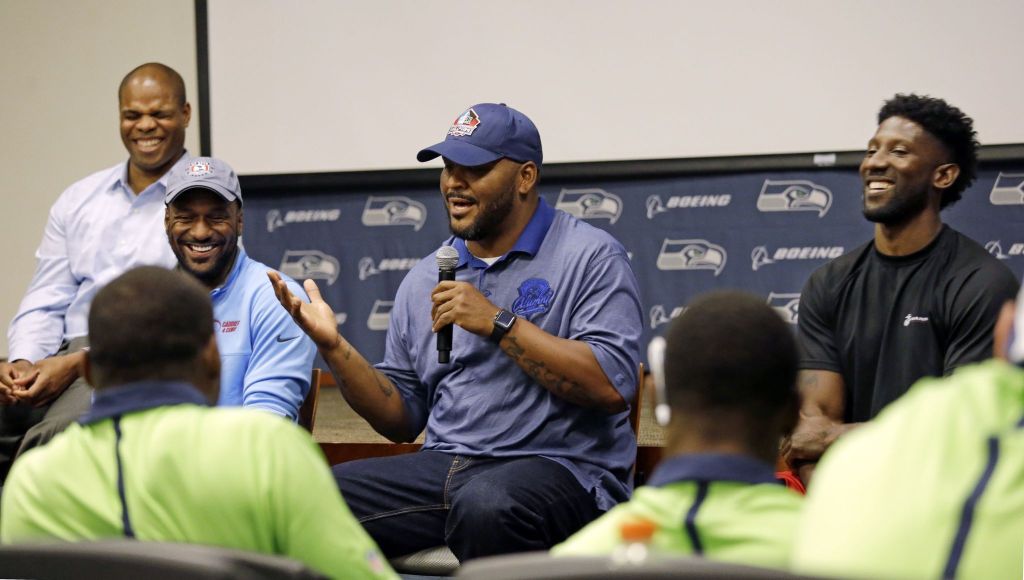
RENTON — On Monday afternoon the auditorium at the Virginia Mason Athletic Center played host to 24 young men wearing neon-green Seattle Seahawks polo shirts. Sitting in front of them were four former Seahawks, including Hall of Fame tackle Walter Jones, taking questions and dispensing advice on how to navigate life in the NFL.
Not on the field, but off of it.
On-field offseason activities may have ended for the Seahawks with the conclusion of last week’s veteran minicamp, but for Seattle’s rookies the work continues. Yet this work has little to do with the football field and much to do with life off of it, as the newest Seahawks go through the team’s rookie transition program.
“It’s always important for them to get the information,” said Seahawks vice president of player engagement Maurice Kelly, who’s in charge of Seattle’s program. “More so right now because it’s their last couple of days before school’s let out, and they have some money in their pocket now. This stuff we’re talking to them about, it’s not made up. This is from years of dealing with players and situations.”
Monday was the first day of the three-day program, which is mandated by the NFL. In addition to the mandatory three-day program, the Seahawks also conducted regular classes with their rookies since they first arrived for rookie minicamp in early May.
It’s all designed to ease the transition from being an amateur player into a professional.
“Most of it is stuff you’d expect,” guard Germain Ifedi, the team’s first-round draft pick, said following Monday’s session. “It’s the financial side of things, taking care of finances, dealing with family, dealing with friends, dealing with people around town, dealing with women. It’s things rookies need to hear and keep having reiterated to them, that these are important things they need to think about.”
On Monday the Seahawks opened one of the sessions to the media. During that session the rookies were first given a history of the Seahawks franchise courtesy of Gary Wright, who was a member of Seattle’s public relations department from the time the team began play in 1976 through 2008. That was followed by a panel discussion with Jones and three other former Seahawks: Marcus Trufant, Jordan Babineaux and Bryce Fisher.
Jones, Trufant, Babineaux and Fisher first addressed issues put forth by Kelly, such as how to deal with friends and family now that they’ve come into fame and fortune.
“You need someone to help you,” Trufant said. “Somebody has to be in your corner who’s going to help you through that process, who can kind of be that shield at times to tell people, ‘No,’ for you, because it’s tough.”
Said Kelly: “I think the No. 1 thing is friends and family. Nobody thinks they have to worry about managing that, they think they’ve got that under wraps. They go from being the small kid, the young one, to now being the person in their family that everybody turns to and asks questions to. Now they have to have a PhD in their finances. Everybody is asking about spending money or getting money from them. Dealing with family and friends I think is tough because it’s close to the vest. We can talk about it, but until you live it and are put in a situation like that, it’s hard to understand.”
The former players had plenty of other tidbits of advice. It included:
¦ Be a student of the game and learn the playbook. Players have made careers out of knowing their assignment and being on time. Also, get with veterans who know the game who can show you how it’s done.
¦ Avoid giving the team an easy reason to send you home by messing up off the field, because there are a lot of players who want your job, and teams turn over a third of their rosters every season.
¦ Come back for training camp in six weeks in shape, because if you’re not in shape it’s easy to be left behind.
¦ It’s OK to treat yourself, but do so in moderation. That applies to both food (It’s OK to eat what you want, but eat less of it) and material possessions (you only need one car).
In previous years the rookie transition program was administered by the league, with all the NFL’s rookies gathering for a three-day symposium in Canton, Ohio. This year the responsibilities were transferred to the teams. Therefore, the players found themselves in a group of 24 Monday, instead of the crowds in the hundreds in past years.
“It was kind of overwhelming,” Trufant said about his experience at the NFL’s symposium when he was a rookie in 2003. “They had the lights down low, so half the guys were probably asleep. The speeches get a little long, and when you’re young, your attention span can be kind of short. Doing it like this you’re kind of forced to be engaged in the situation.”
Kelly agreed that doing the program as a team rather than the league as a whole is better for the players.
“I think it highlights what we have going on here in the Seattle area,” Kelly said. “We get a chance to touch bases with the people we have in our building, as well as in the community. I think that going away to Ohio is a great idea, but it’s not conducive for learning. You’re talking about three days, the last three days before they get ready to take a break, and we want to give them all this information in a short period of time. It’s not conducive to learning. So if you spread it out you can educate them from the first day they walk into the building. They’ve been transitioning since they walked in, and they’re going to be transitioning when they walk out of the building.”
Check out Nick Patterson’s Seattle Sidelines blog at http://www.heraldnet.com/seattlesidelines, and follow him on Twitter at @NickHPatterson.