Nishikori outlasts Murray in five sets, reaches semifinals
Published 9:55 pm Wednesday, September 7, 2016


By Chuck Culpepper
The Washington Post
NEW YORK — The invisible little cloud that sometimes seems to dwell above Andy Murray managed to get indoors and lurk all through a stirring Wednesday afternoon at Arthur Ashe Stadium. As the Wimbledon and Olympic champion kept upbraiding himself even more gloomily than usual during a manic quarterfinal with gong sounds from malfunctioning speakers and a fame-seeking moth, the cloud stayed.
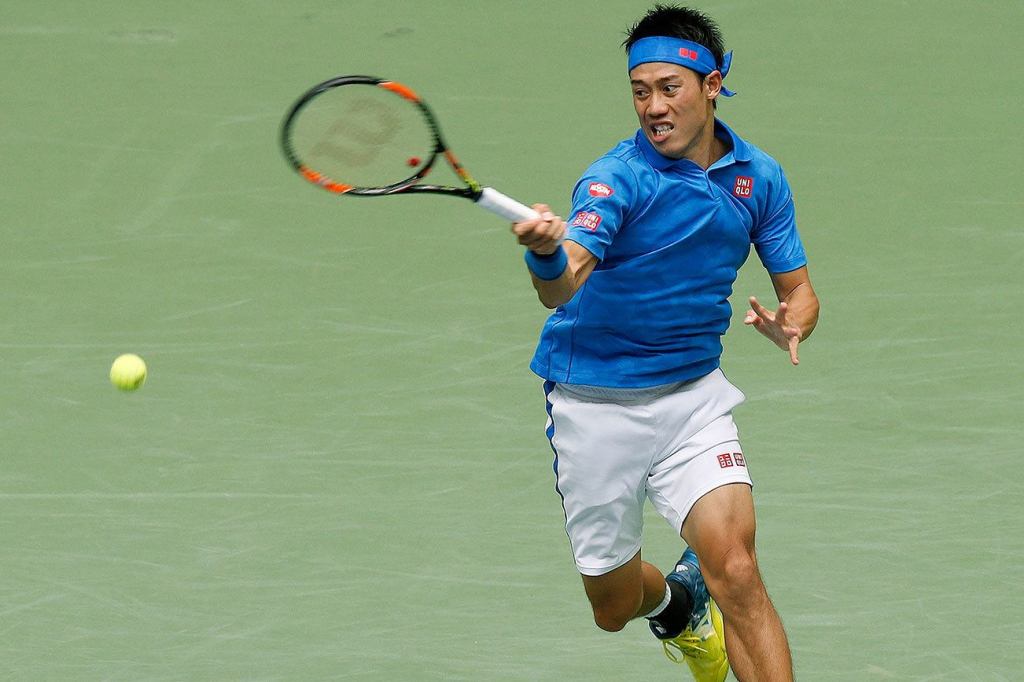
In fact, it stayed to the end, and to Murray’s inconceivable exit, which he christened on his last of nine broken services by smashing his racket down on top of the net. One hold of serve more from the oft-dazzling Kei Nishikori, and the hip pick to win this U.S. Open based on all recent empirical evidence was gone, by the zigzagging score of 1-6, 6-4, 4-6, 6-1, 7-5.
“I was feeling the ball really well,” said Nishikori, the No. 7 seed who will meet either No. 3 seed Stan Wawrinka or resurgent 2009 U.S. Open champion Juan Martin del Potro in the semifinals (their match ended too late for this edition).
If the Murray-Nishikori match defied every assumption along its way, it also helped ratify the unusual excellence that starred in the night match that followed. Stretching all the way back to Wimbledon 2014, Serena Williams has reached final fours in all nine Grand Slams, constantly averting the normal reality that struck Murray.
When she eluded a thicket with No. 5-ranked Simona Halep and won 6-2, 4-6, 6-3, Williams gave good evidence of the mending of her injured right shoulder, as well as good evidence of somebody who knows the way through these haunted grounds. Where she faced one break point in her first four rounds, she faced nine against the Romanian, losing two. Where she hasn’t shown much capacity for missing out on break points on her way to an Open-era record-tying 22 Grand Slam titles, she went 0-for-12 on them in the second set, seven in an 18-point second game, and five in a 22-point 10th game. “I think this was the best match I ever had against her,” Halep said.
None of that mattered ultimately, and 18 aces and 32 unreturned serves helped. “I’m not at a 100 percent, but I’m all right,” Williams said on her way to a bout with debut Grand Slam semifinalist Karolina Pliskova, a surging Czech ranked No. 11.
Again, she had floated above the kind of normal human fray that tennis presents so brutally in this era. She did so right after an elite and hot No. 2-ranked Murray lost after leading by a set and a break. He also led by two sets to one before losing seven games in a row, then trailing 4-2 in the fifth set, then leading 5-4, then losing 7-5.
Even after his lone exit pre-final in this Grand Slam year, he pronounced himself “not too disappointed in a way” and later also said, “You know, if someone had offered me the summer that I have had before Wimbledon, I probably would have signed for that.”
He probably would have opted out of the fourth set, when he battled the moth and the gong. The latter struck during a break point in the 1-1 game, as Murray prepared to return serve and had to halt because an oblivious man in a blue blazer, seated down near the court, suddenly got up to walk the steps. The point did get going, and Murray led it when the bum speaker gonged and chair umpire Maria Cicak halted the point for a replay.
Nishikori held on, and Murray stayed rattled for a few more games, complaining to Cicak and tournament supervisor Wayne McKewen. “It was the fourth time that happened in the match, and that was the first time we stopped the point, and I was just curious why that was, and that was it,” Murray said.
Japan’s Nishikori, a U.S. Open finalist in 2014, had been on his own uneven ride.
When rain delayed play amid the second set, he met with coaches Dante Bottini and Michael Chang, the 1989 French Open champion, and all decided he should stop rushing. “Yeah, I tried to change something. It worked well,” Nishikori said.
In the last two sets, he played the role of lead aggressor. For one thing, he wound up winning 27 of 39 net points, to 14 of 25 for Murray. For another, he repeatedly sent returns ringing by Murray and revving the pro-underdog crowd. “I think, definitely under the roof he was able to dictate more of the points,” Murray said. “He was playing a bit closer to the baseline than me and taking the ball on a little bit more. At times, I was obviously doing a little more of the running.”
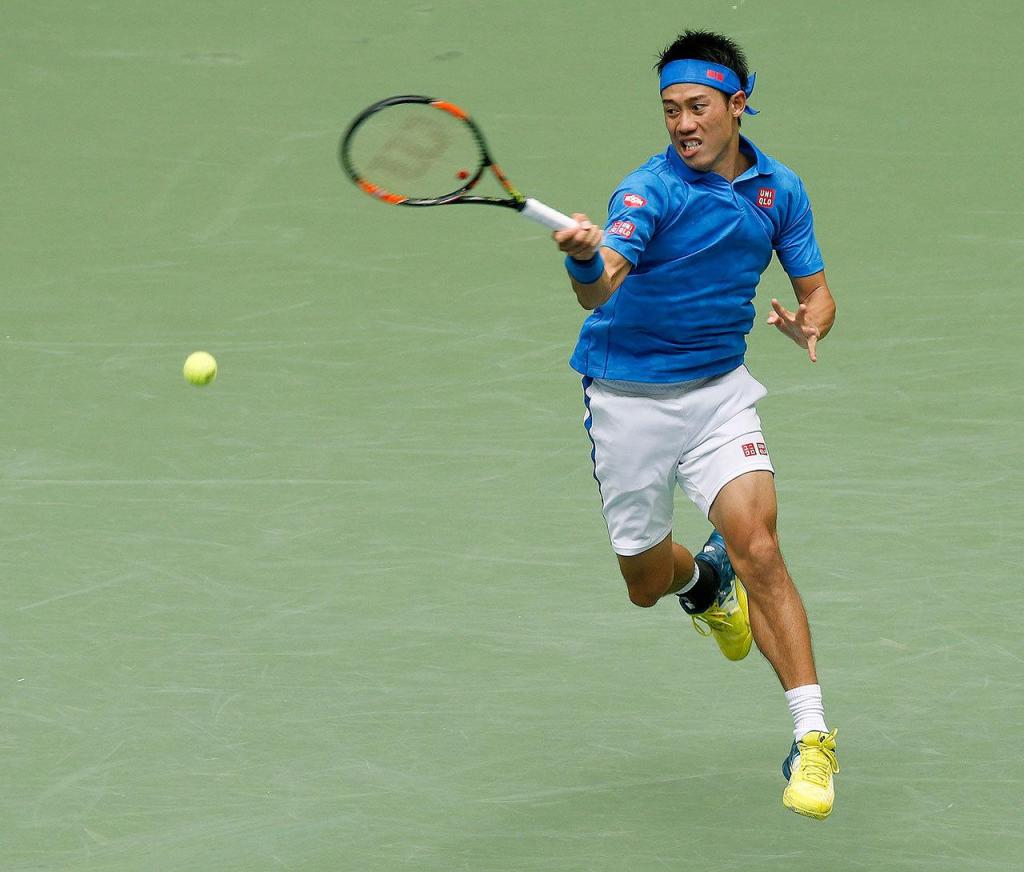
“I’m not the loudest guy on tour for sure,” Nishikori said, who fought to stay calm until he walked calmly in his bright-blue bandanna to serve for a match three hours, 55 minutes old. Three steady minutes and four Murray errors later, after holding at 15, the quiet man had clambered out of the chaos.