Small creatures inspire expensive jewelry
Published 1:30 am Thursday, November 24, 2016
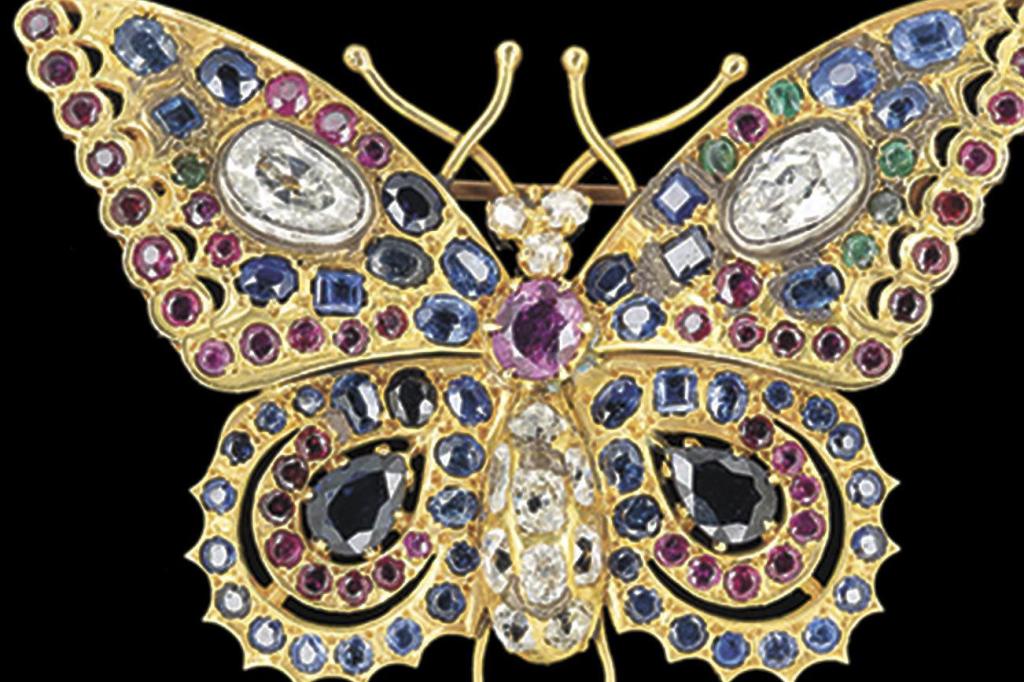
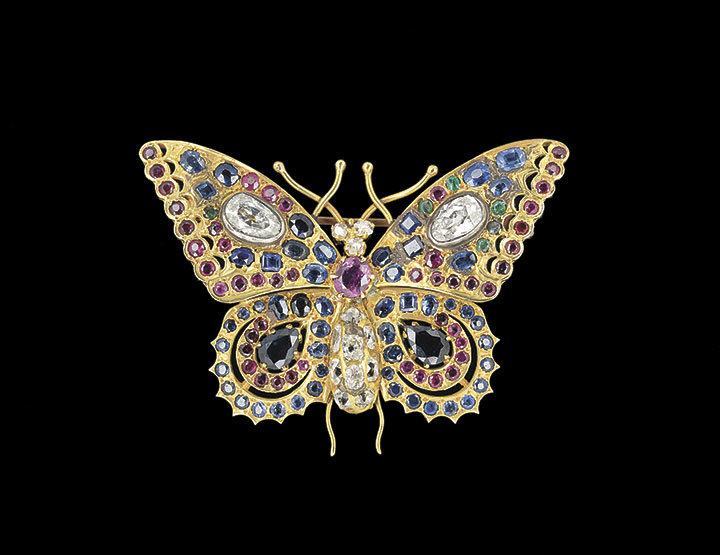
Colorful butterflies are admired and even the inspiration for expensive, valuable jewelry.
But, many people are annoyed or even afraid of “bugs,” and few would want a caterpillar pin or bracelet. In earlier centuries, all sorts of insects and small creatures found in nature were popular.
Ladybugs bring luck. Frogs are most appropriate as gifts for travelers. They bring good luck and a safe return. Snakes, perhaps because they shed their skins each year, represent fertility and health.
The snake still is used as a symbol for medical groups. A snake biting its tail represents eternity. Queen Victoria was given a snake ring in 1839 as an engagement ring. There are many antique or vintage gold and jeweled snake bracelets, rings or necklaces. But the butterfly is perhaps the most popular because of the beauty of the design. And, the butterfly represents change and a free spirit. A 4 ½-inch Russian butterfly pin, made in the early 1900s, sold at the New Orleans Auction Gallery in 2016 for $5,000. It is made with rubies, sapphires, emeralds, and old mine-cut diamonds set in 14-carat gold.
Q: I’m looking for information on the mark on the bottom of my teacup. I have been told that it was used by Porzellanfabriken Schneider &Co. between 1926 and 1937, but I haven’t been able to find any marks like it or to verify the information. The Royal Devon name is marked on top of the glazing, and everything else is under it, including the number “406” stamped into the porcelain.
A: This mark was used by J. Schneider &Co., which was in business in Altrohlau, Bohemia (now Stara Rola, Czech Republic) from 1904 to 1945. Your mark includes the word “Czechoslovakia.” Altrohlau didn’t become part of Czechoslovakia until after World War I, so your tea cup was made between 1918 and 1938, when Hitler annexed part of Czechoslovakia and occupied the rest of it. Royal Devon may be the name of the pattern.
Q: My parents bought a portable electric lamp in Canada in the 1940s. The base has a big plaster elephant and a glass ball-shaped globe that holds the bulb. The bottom is stamped “Nerlich &Co. of Toronto.”
A: Nerlich &Co. was founded by Henry Nerlich (1828-1901), who emigrated from Germany in 1848 and worked as a watchmaker. In 1858, he started his own company, selling watchmakers’ materials and jewelry. He soon expanded his business and imported “fancy goods” from Germany. In 1869, tobacco and “druggists’ sundries” were added, and the company no longer sold jewelry and watchmakers’ materials. After he died, his sons ran the business and by 1908 imported goods from Europe, Japan and the U.S. The name of the company changed over the years and was Nerlich &Co. by 1875. It was still working in the late 1950s. Figural lamps with globes were popular in the 1920s.
Q: I have two “Rain Check” tickets for the 1948 World Series between the Cleveland Indians and the Boston Braves. Are they worth anything?
A: Full, unused tickets are worth more than ticket stubs or rain checks. A full ticket for the 1948 World Series in “near mint” condition could be worth more than $600, while a stub in near mint condition could be worth about $250-$400. Those in “very good” condition are worth much less, about $200 for a full ticket and $100 or less for a ticket stub. Rarity also determines price, and prices for some game day tickets are worth more than those for other days in the same series. PSA, the Professional Sports Authenticator (www.psacard.com) authenticates and grades baseball tickets, cards and other sports memorabilia.
Q: I’d like information about the N.S. Gustin Co. When I bought my cookie jar many years ago, the seller wrote down the name as “gusstan.”
A: The company was founded by Nelson S. Gustin in Los Angeles in 1941. Very little is known about the company, but it seems to have been a distributor. Gustin bought molds from Los Angeles Potteries and other companies and also had the pottery made by another company. Gustin was in business until at least the early 1960s.