‘My Cousin Rachel’ tantilizes with every mysterious smile
Published 1:30 am Thursday, June 8, 2017

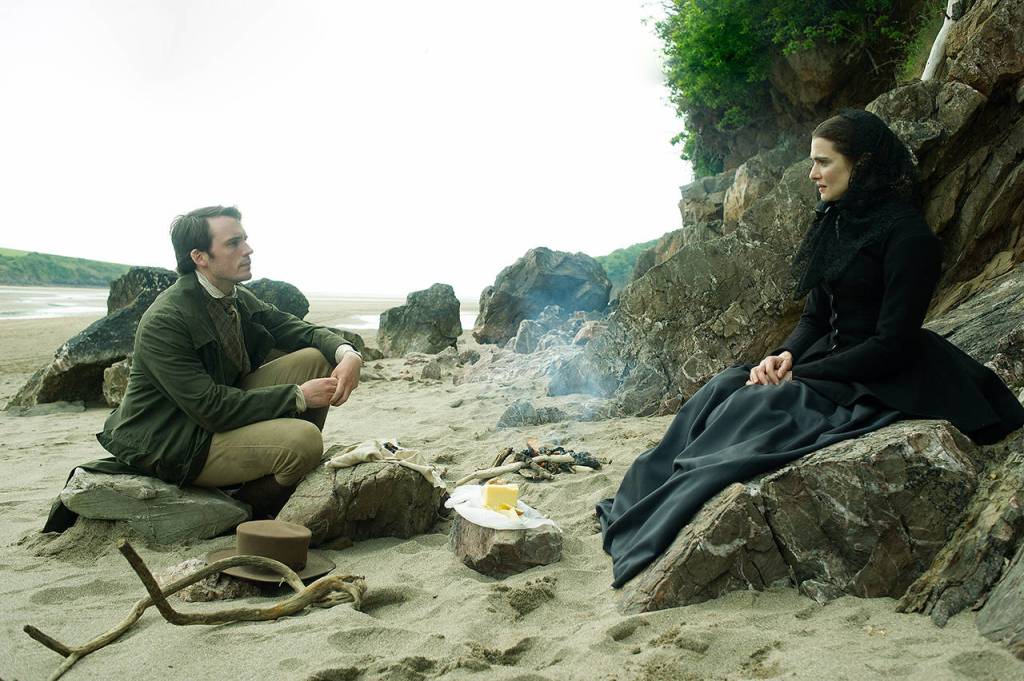


Is she or isn’t she?
This is the question, and the tantalizing draw, of “My Cousin Rachel,” a new adaptation of a Daphne du Maurier novel.
The story is the sort of genteel-gothic potboiler that Du Maurier mastered in “Rebecca,” and like that novel it features a woman arriving at a mansion where mystery awaits. But this woman is far from the meek, unnamed bride of “Rebecca.” Here, the forceful new arrival is herself the source of mystery.
The story, previously filmed in 1952 with Olivia de Havilland and Richard Burton, is narrated by a young man named Philip (Sam Claflin), who has been raised from his orphaned childhood by his wealthy cousin Ambrose. When Ambrose holidays in Italy and falls for a woman, his letters home give a conflicting portrait of enchantress and predator.
That’s Rachel (Rachel Weisz), a distant cousin to them both. Poor Ambrose never does make it back to England, but Rachel, now his widow, arrives to a deeply suspicious welcome from Philip. In short order, Philip evolves from hostile skeptic to devoted puppydog, as Rachel brews her exotic Italian teas and works her seductive wiles.
Or are they wiles? Everybody else seems to think so, from Philip’s concerned godfather (Iain Glen) to the pleasant but decidedly non-exotic young woman everybody seems to think Philip will marry (Holliday Grainger gets a great deal more into this role than you might expect — no simpering spurned fiance she).
The enjoyment of the thing is sifting through the ambiguity of Du Maurier’s set-up — because Philip narrates, we never have an objective view of Rachel, whose every smile might be manufactured for effect.
And because of Rachel Weisz’s skillful performance, we can relish a top-notch actress leading us by the nose in much the same way she bamboozles Philip. This kind of thing might be easier to pull off in a novel, but on film an actress has to present facial expressions and vocal intonations so that they carry multiple possibilities.
Claflin, who knocked around in the “Hunger Games” franchise, does well at suggesting Philip’s impulsiveness, and rather bravely allows himself to look foolish (one can imagine how many image-conscious actors would pass on a role that invites this degree of audience exasperation).
Speaking of the audience, I saw “My Cousin Rachel” at a preview screening with a full house, and the reaction was audible: derision for love-struck Philip, and scorn for Rachel. It was as though people were primed for a “Fatal Attraction”-themed amusement-park ride — I almost thought I detected a couple of cries of “Lock her up!” somewhere in the response. The way Du Maurier’s story takes ambiguity itself as the subject went a little underappreciated.
To be fair to the audience, director Roger Michell (who also scripted) does hint a little in the direction of Rachel-as-black-widow. Michell directed a beautiful adaptation of Jane Austen’s “Persuasion” in 1995, so he’s at home in the world of candle-lit drawing rooms and English propriety, although Du Maurier’s story offers gaudier plot turns than Austen would have imagined.
It’s not quite true that we get no objective look at Rachel: Michell offers one at a key moment, when she has allowed Philip to expend his ardor while the two of them lie in a field of bluebells. Michell moves in from above to a close-up on her face, and what we see looks grim — surely this is a schemer in the midst of a nefarious plan.
On the other hand, maybe it’s a woman disappointed, or humiliated or resigned. Weisz’s face is actually blank. We project feeling onto it.
However well-executed, “My Cousin Rachel” is basically a chewy exercise in melodrama, but it’s also up to something interesting here. The audience is being set up for a test: Can we accurately read and interpret the clues of a movie, or will we be influenced by rumor and first impressions and our own prejudices? Most lessons in critical thinking aren’t this much pulpy fun.
“My Cousin Rachel” (3 stars)
An enjoyable melodrama based on a Daphne du Maurier novel, about a mystery woman (Rachel Weisz) who may or may not be a black widow-type. Her lovestruck cousin (Sam Claflin) is about to find out. Director Roger Michell stirs this potboiler with skill, and Weisz is a study in ambiguity.
Rating: PG-13, for language, subject matter
Showing: Alderwood Mall, Lincoln Square, Meridian, Sundance Cinemas, Thornton Place Stadium