British satire ‘The Death of Stalin’ draws blood
Published 1:30 am Thursday, March 15, 2018


If satire doesn’t draw blood, what’s the point? For years that was the problem with “Saturday Night Live,” which tended to make its political caricatures into lovable clods, figures of fun rather than fury. (Things have been more barbed around there lately.)
In Britain, there’s a long tradition of going for the jugular rather than the jocular, and Scottish writer-director Armando Iannucci is one of the prime scalpel-wielders. His Oscar-nominated 2009 comedy “In the Loop” was a scathing look inside U.K. politics, and he co-created Steve Coogan’s long-running character Alan Partridge, an acidly sketched broadcaster whose first TV talk show was canceled when its host accidentally and fatally shot a guest. More recently, Iannucci created “Veep” for American TV, which has six seasons under its belt thus far.
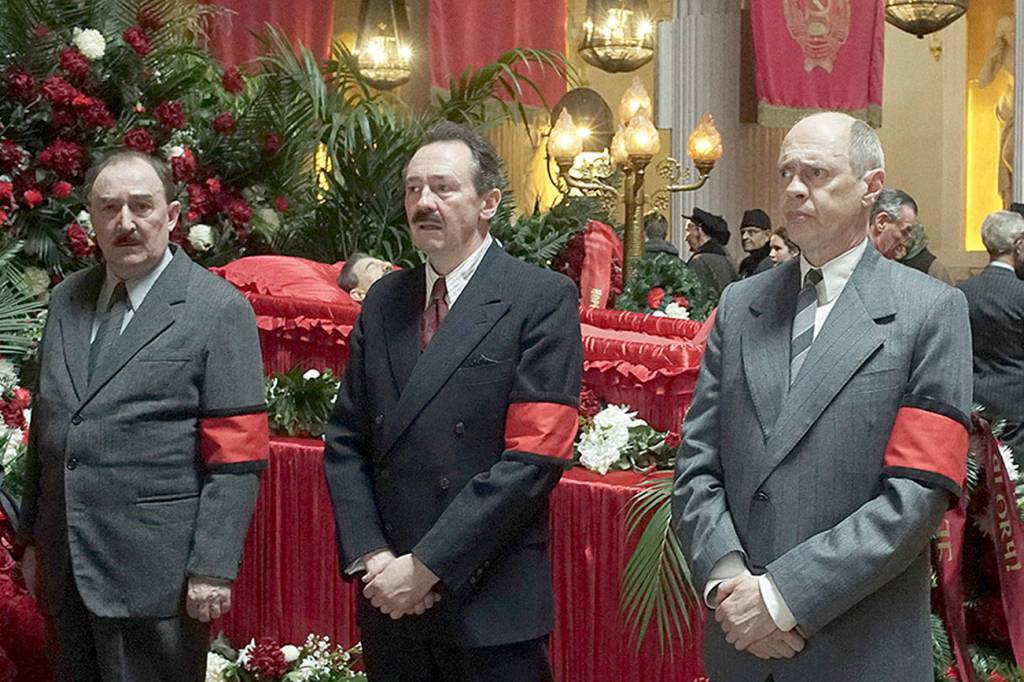
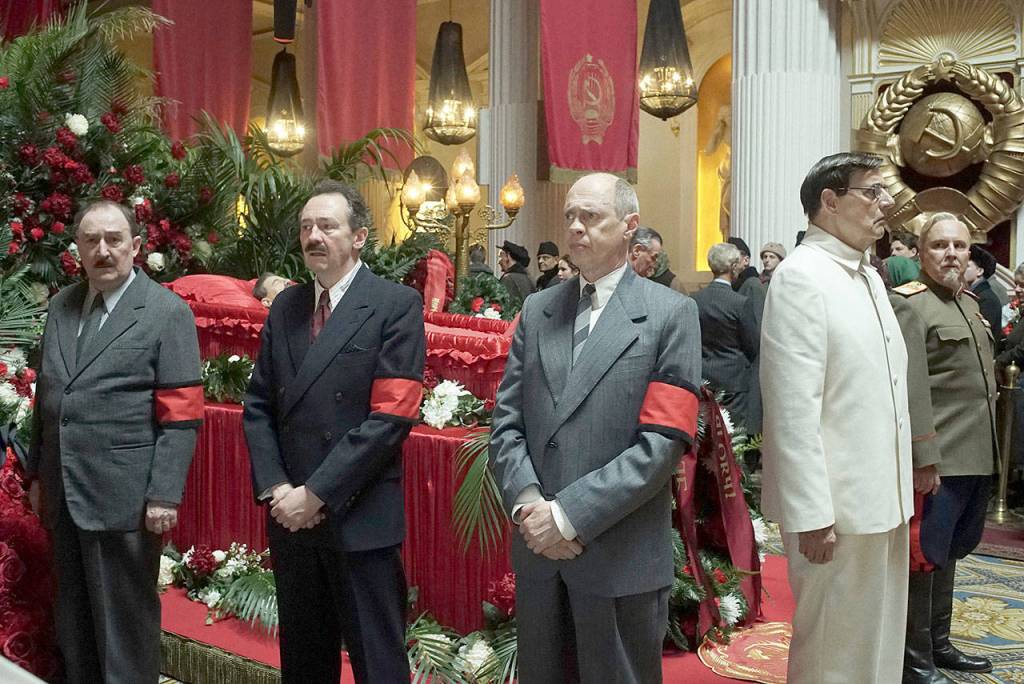
For his latest big-screen project, Iannucci comes close to perfectly balancing comedy and savagery. “The Death of Stalin,” based on a French graphic novel, looks at the power-jockeying among Josef Stalin’s toady underlings following the 1953 demise of the Soviet Union’s dictator.
In much the same way that Stanley Kubrick drew upon actual policies of nuclear gamesmanship for “Dr. Strangelove,” Iannucci and his writers seize on real history and cleverly embellish it.
For instance, it’s true that Stalin’s staff had to scramble to find a good doctor in Moscow to treat his comatose body: “All the best doctors are in the Gulag,” as one character says, thanks to one of Uncle Joe’s paranoid purges.
Stalin’s deputies are steeped in self-preservation and backstabbing, so it doesn’t take long for factions to develop. Nikita Khrushchev (Steve Buscemi, inspired casting) is stuck arranging Stalin’s funeral, but uses his position to undercut his rivals.
Lavrentiy Beria (a vicious Simon Russell Beale) is chief of the secret police and seems to be outflanking Khrushchev, but over-confidence is not a good strategy in this kind of shark tank. In between them is Deputy Chairman Georgy Malenkov, the heir apparent, but a man so wishy-washy (especially in Jeffrey Tambor’s weak-kneed performance) that he’s clearly going to be chewed up by his colleagues.
Also mixed into the cocktail are Vyacheslav Molotov (the very welcome Monty Python genius Michael Palin) and Red Army Field Marshal Georgy Zhukov (Jason Isaacs), whose array of chest-crowding medals might be a little over the top even for a North Korean general.
Awkwardly, Stalin’s daughter (Andrea Riseborough) hangs around, as does her alcoholic brother (Rupert Friend), who would really like to speak at the funeral, a calamity that can be avoided only by a well-timed flyover by some Russian fighter jets.
“The Death of Stalin” is busy and crowded, requiring your full attention just to keep up. This includes noticing the way a torture victim might be hurled down a flight of stairs in the background as comic dialogue unfolds in the foreground.
Iannucci knows that the stupidity of tyranny almost always has an absurd edge, but he also reminds us that some people get crushed by that. It’s a tricky balance; it would have been easier to merely poke fun at leaders who seem unaware of their own ridiculousness. But this movie won’t let us forget that the actions of powerful fools have consequences. It’s death — and comedy — by a thousand cuts.
“The Death of Stalin” (3½ stars)
A British satire that draws blood, about the lethal power-jockeying that followed the demise of the Soviet Union’s dictator in 1953. A great cast, led by Steve Buscemi as Nikita Khrushchev, draws out the black humor and horror of paranoia run amok. With Simon Russell Beale and Michael Palin.
Rated: R, for language, violence
Opening: Egyptian theater