Everett’s Drone as First Responder program underway
Published 1:30 am Saturday, March 14, 2026
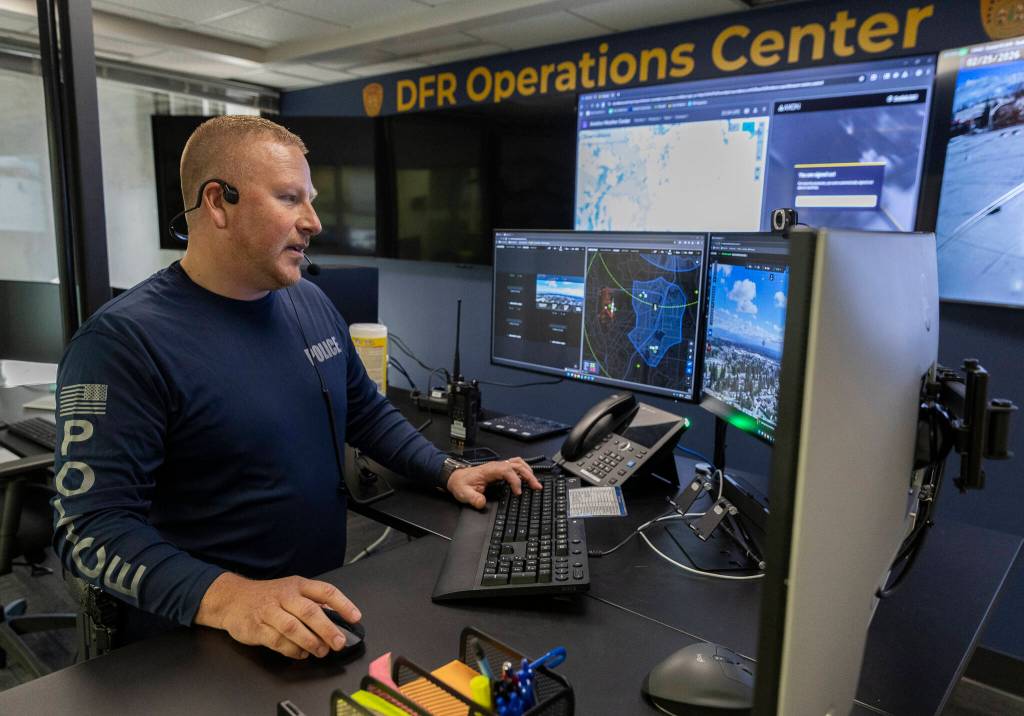
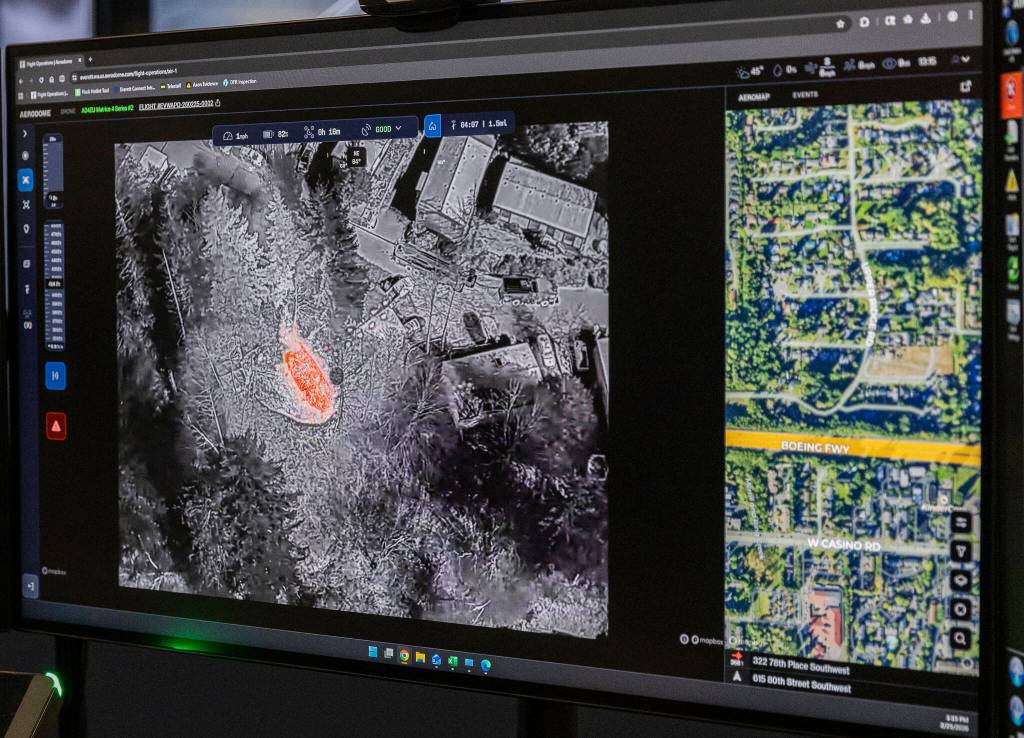
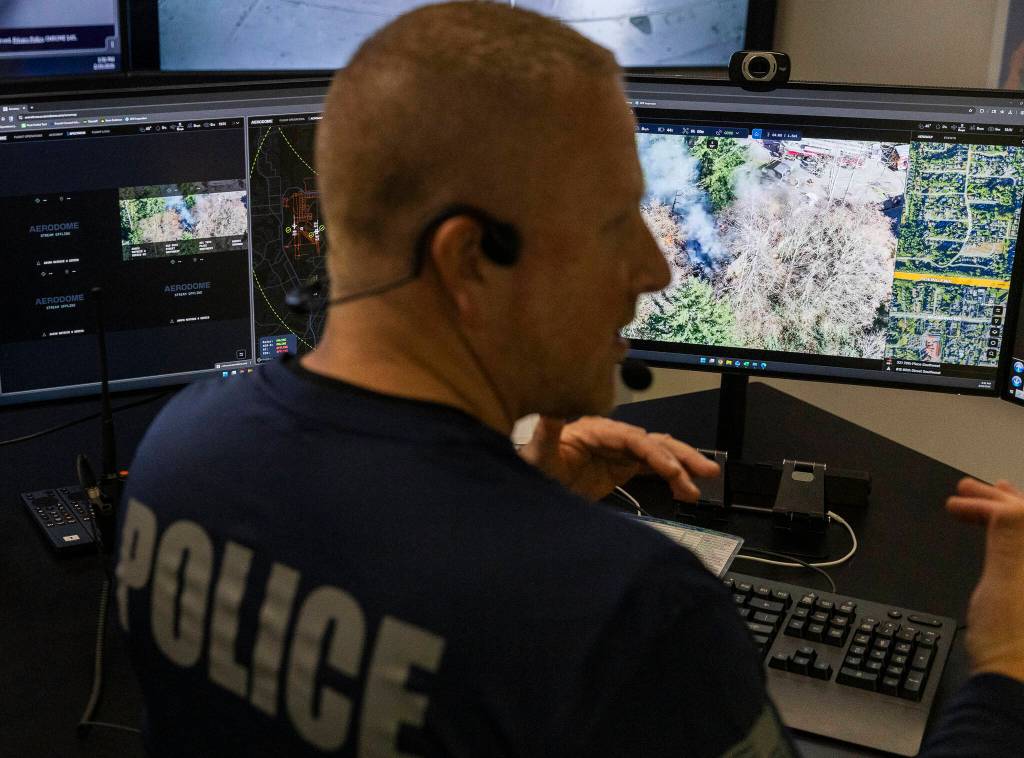
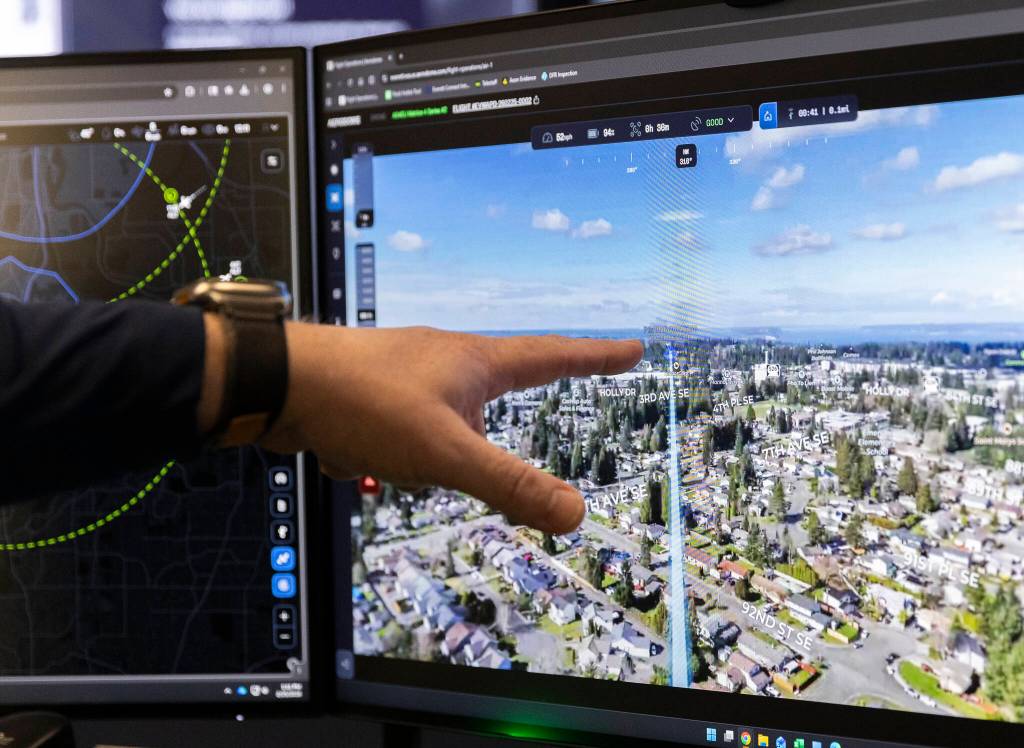
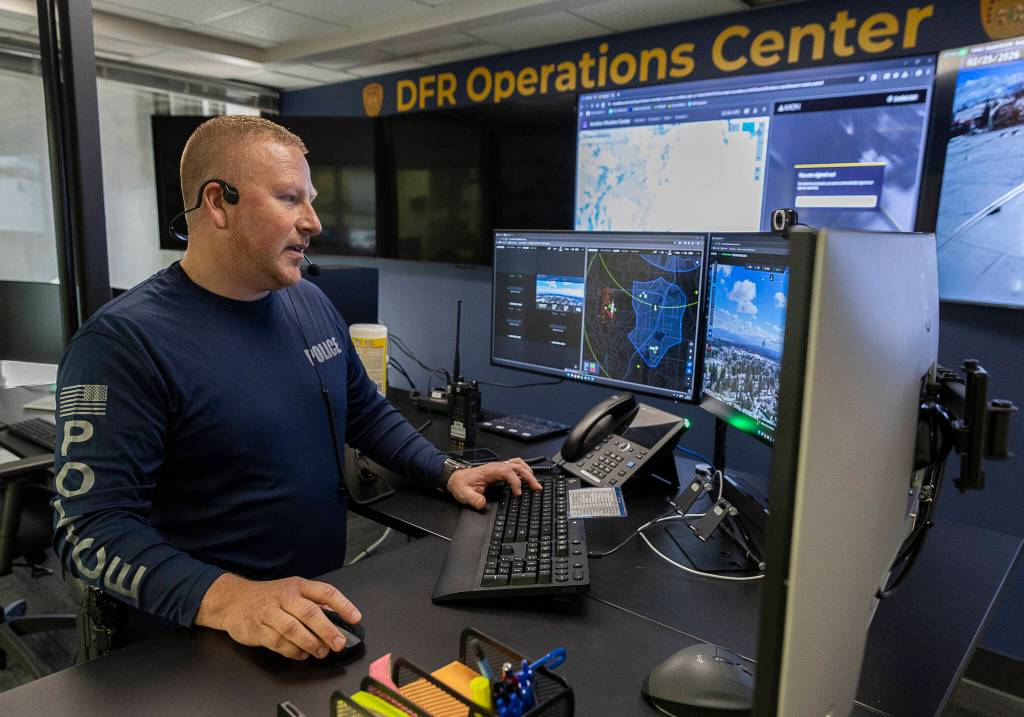
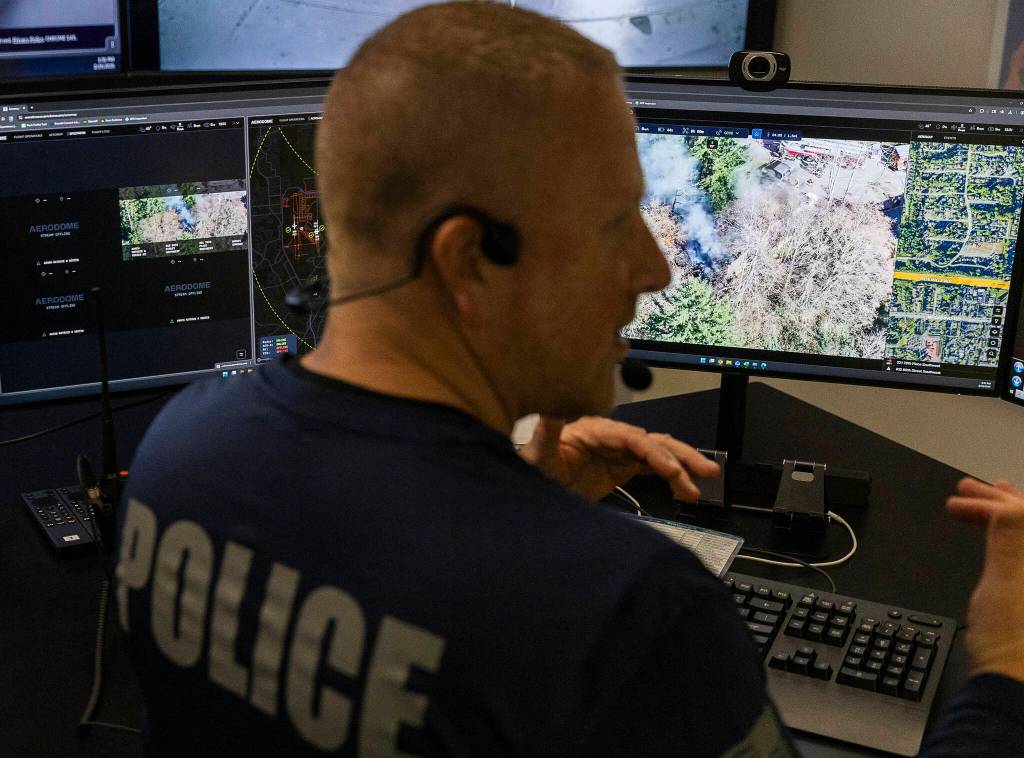


EVERETT — On a Thursday afternoon in February, Everett Police Sgt. Robert Edmonds received a call about a house fire on Hardeson Road.
From 3 miles away, he got eyes on the scene in under one minute.
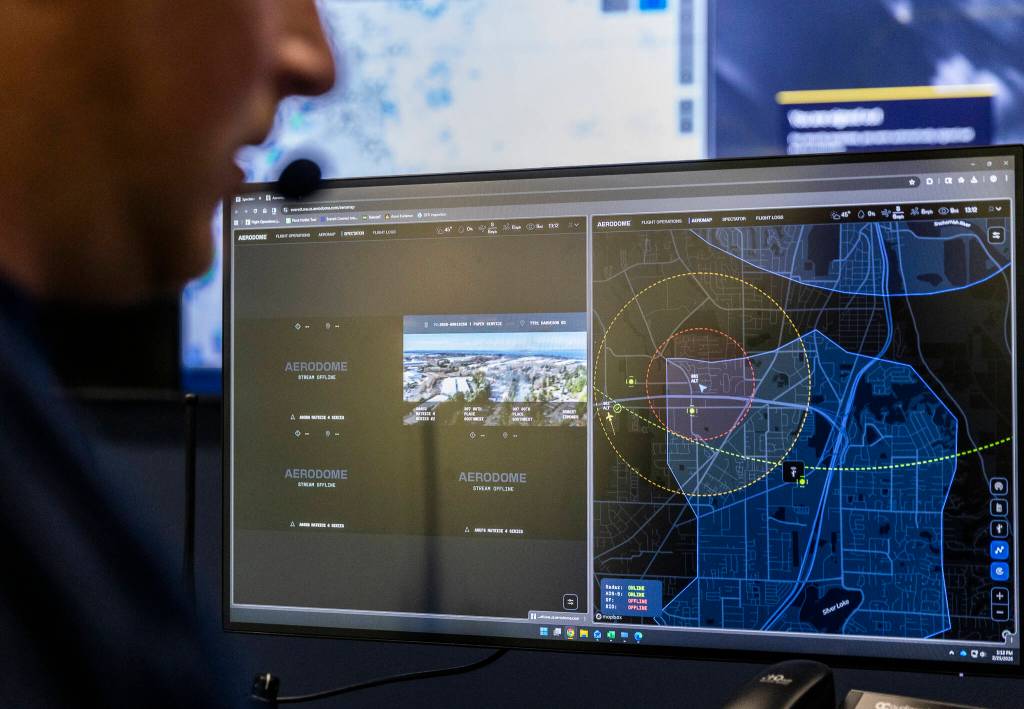
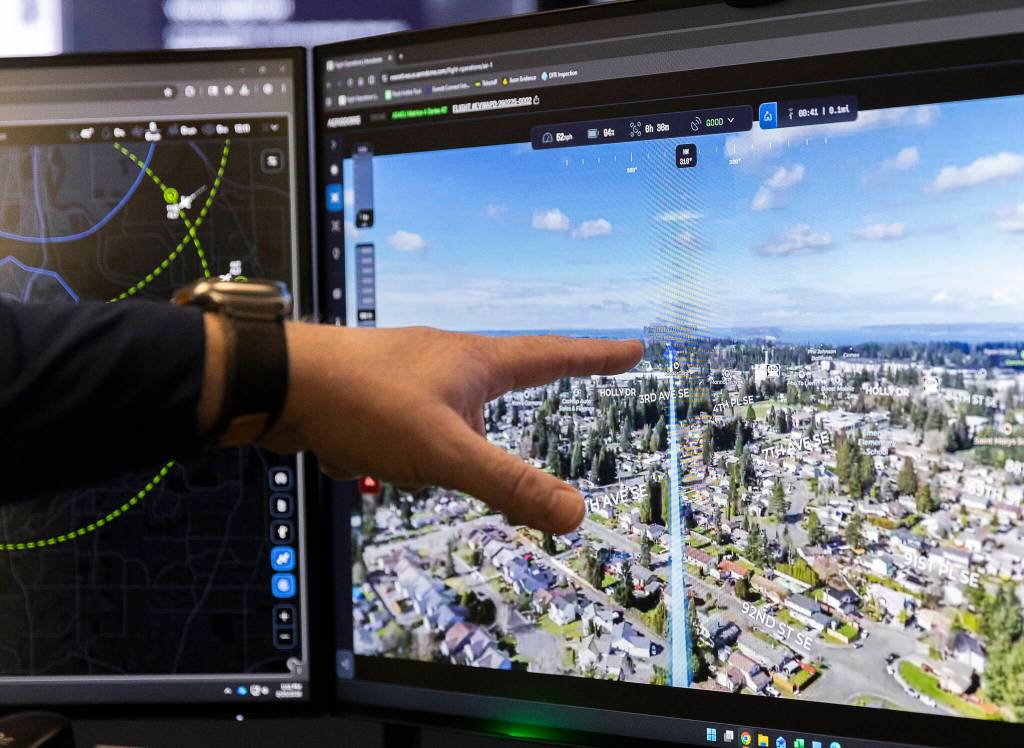
Standing behind his desk at the Everett Police Department South Precinct, Edmonds launched a Flock Safety Aerodome drone with the click of a button. He kept an eye on the screen as the drone emerged from its dock atop the station and flew at 50 mph to the fire.
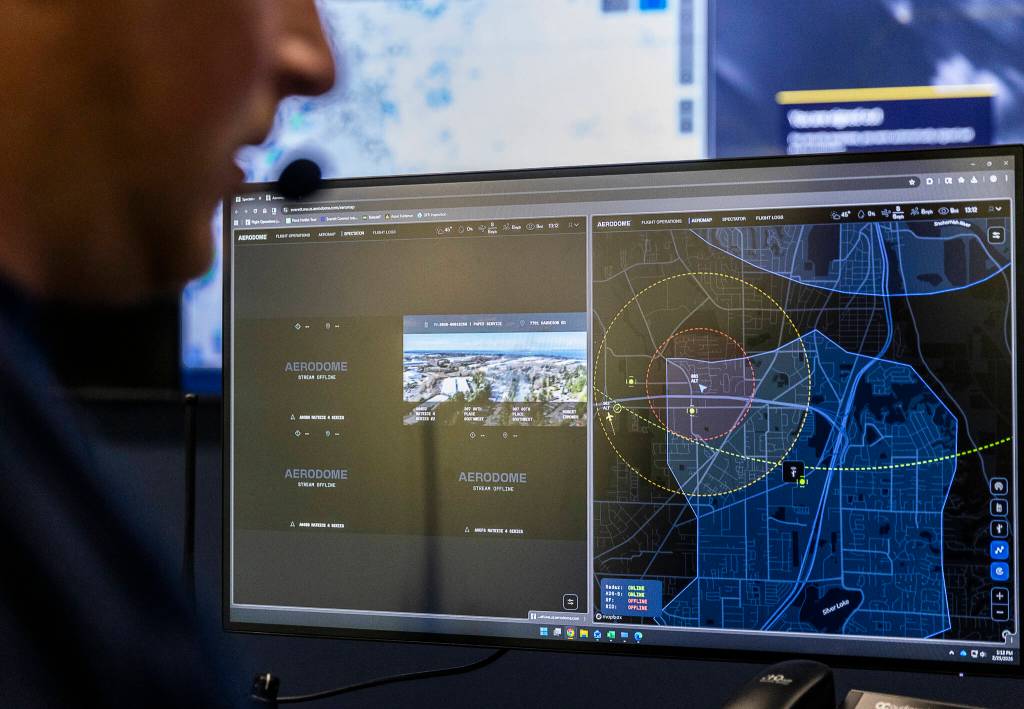
The drone is one of four the Everett Police Department currently uses as part of its Drone as First Responder program, which launched in October.
Drone as First Responder programs have gained popularity nationwide in the past two years. Last year, the Federal Aviation Administration made it easier for departments to get waivers to operate autonomous drones. While some departments, including Everett, have been using drones for years, autonomous drones can get to a scene before officers arrive, sometimes clearing a call without a patrol resource.
“Having a drone on the scene gives us that overall situational awareness that we wouldn’t be able to have before,” Edmonds said. “You’re seeing all the pieces of this puzzle come into play here.”
Since the program launched in October, 87 calls have been cleared without a patrol resource, according to the department’s public drone flight dashboard. The drones have located 174 subjects and reduced response time by an average of 87%.
In one example flight the department posted on social media, officers received a report of someone pointing a gun at passersby in North Everett. A drone arrived to the scene just before officers, and the drone operator confirmed the person was holding a lighter, not a gun. The operators relayed this information to officers, which de-escalated a potential force encounter, the post said.
“Drone as First Responder changes the entire landscape,” Edmonds said. “It adds an aspect of speed that you can’t get anywhere else.”
In April 2024, Redmond implemented its Drone as First Responder program, which inspired Everett, Edmonds said.
“They were able to show us some really cool examples of incidents that they responded to that can completely change the outcome of the event for the better for everybody,” he said. “It made the community more safe and made the law enforcement officers more safe.”
In April 2025, the Everett City Council approved a $507,000 contract with Flock Safety for four drones. In July, the agreement was amended to include two additional drones, radar technology and Flock 911, which streams live 911 calls and transcripts to patrol officers and drone pilots. With discounts from Flock, the final contract price was $500,000 for two years.
The department currently has four drones: two at its north precinct and two at its south precinct. The department is in the process of adding two drones in central Everett on top of a local business, Lt. Jeff Albright said at an October committee meeting. Once those two drones are installed, the contract period begins. After the first year, Everett would be able to withdraw from the contract, Albright said.
Flock Safety is a public safety technology company that has gained attention recently for its automated license plate reader cameras. Last year, federal agencies tapped into multiple Flock camera networks in Snohomish County, sometimes without police departments’ knowledge. Since then, Lynnwood and Mountlake Terrace have canceled their contracts with the company.
In 2024, Flock acquired Aerodome, a company known for its Drone as First Responder technology. Everett is the only city in Snohomish County that has a Drone as First Responder program with Flock.
Last month, the city paused its camera network due to public records concerns, but it has kept operating its drones. Drone footage follows similar data retention and public records rules as body camera footage, police department spokesperson Natalie Given said.
According to Flock’s website, its drones have the capability to read license plates. Edmonds said Everett does not use its drones as ALPRs.
The drones do integrate into the Flock ecosystem, allowing pilots to deploy a drone directly to a camera that detects a vehicle of interest. For example, if a vehicle came into the city that was in a database of stolen vehicles, an officer could direct the drone to that location with the click of a button.
Civil rights and digital privacy groups have expressed concerns about Drone as First Responder programs, advocating for clear regulations and policies.
“We have yet to assess this particular instance of Everett using drones for first responder purposes through Flock, but without proper regulation, drones pose a serious threat to people’s privacy and civil liberties,” said Tee Sannon, technology policy program director for the ACLU-WA, in a statement Thursday. “They can carry multiple surveillance tools over both public spaces and private land while gathering information, purposefully or while in transit to an investigation site. As such, drones could capture data about people’s conversations and movements without their knowledge or consent, and could chill free speech and impinge on people’s free association rights.”
When a drone is flying to a destination, Edmonds always keeps the camera pointed at the horizon to protect people’s privacy, Edmonds said. Even though the drones fly autonomously, Edmonds doesn’t take his eyes off the screen.
“I have to pay attention to it because safety is probably the number one foundation which this whole program is built on, to make sure that everything we’re doing is safe for not only the aircraft in the area … but just the regular public who are driving around or in their backyards,” Edmonds said.
The department’s drone policy states that pilots cannot use the drones for random surveillance, monitoring activities protected by the first amendment, tracking vehicles to or from health care facilities, or solely for immigration enforcement, among other restrictions.
Although the drones are limited to about a 3-mile radius, the police department has started collaborating with other cities when possible. Last month, police used a drone to conduct a chase of a stolen vehicle from Marysville, the department posted on social media. Marysville police informed Everett that a stolen vehicle was traveling southbound on I-5 into Everett. The drone operator was able to track the vehicle through the city, which the post said was a safe alternative to a police pursuit.
“We don’t have to worry about traffic, we don’t have to worry about traffic lights, and it’s really safe,” Edmonds said. “A lot of times when we drive code with our lights and sirens on, that’s dangerous.”
Over the past several months, the police department has found additional uses for its drones. During the historic flooding in December, the police department used the drones to scope out potential damage before alerting people in encampments near the river to evacuate, Given said.
The police department has also collaborated with the fire department, such as during the February house fire. Before it had access to drone footage, firefighters would have to reconstruct a scene from memory to debrief a call, Everett Fire Department Assistant Chief Seth Albright said in an interview Thursday.
“There’s a lot of tactical decisions in the first couple of minutes of a fire, and we can kind of see how they played out and if it was effective or not effective and what we could have done differently,” Albright said.
As the summer approaches, the fire and police departments anticipate using the drones to assist in water rescues. The fire department often receives calls from people near the water who think they see someone in distress, said Rachael Doniger, spokesperson for the Everett Fire Department.
“What they’re seeing may or may not be accurate, and being able to fly something within a minute or three to see if that’s a legitimate thing or not is super beneficial to save resources and personnel and have them available for true emergencies,” Doniger said.
Jenna Peterson: 425-339-3486; jenna.peterson@heraldnet.com; X: @jennarpetersonn.