Snohomish County drivers are spending over $5 per gallon
Published 1:30 am Saturday, March 21, 2026
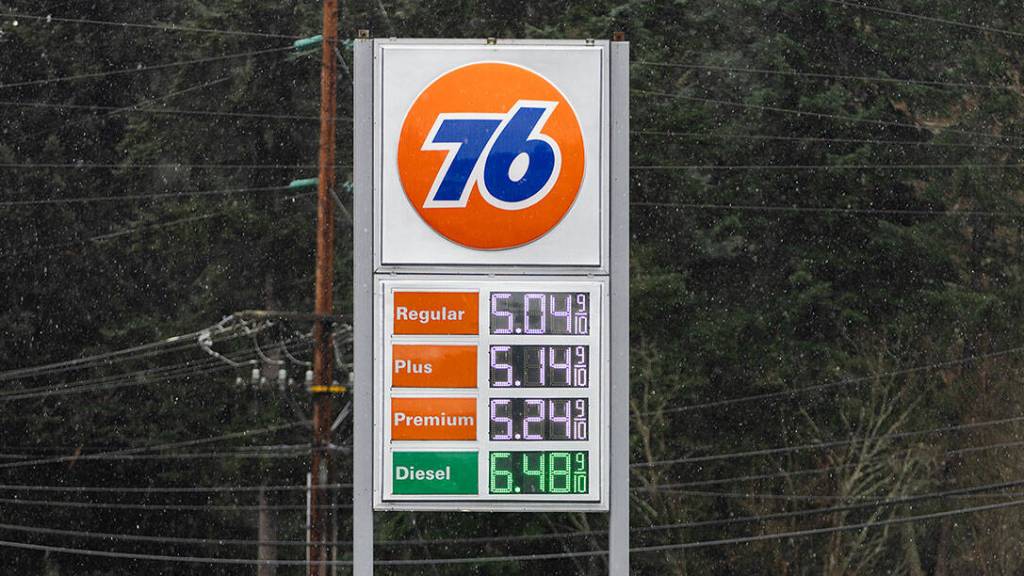
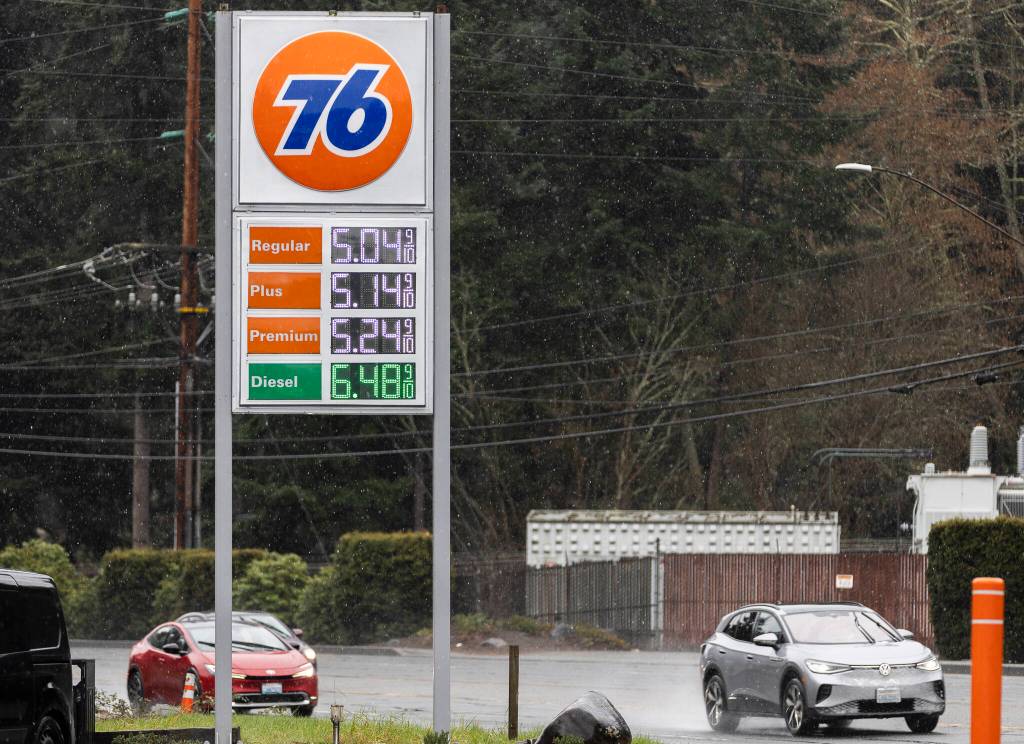


EVERETT — For the first time since 2022, gasoline is passing $5 per gallon.
Amid international conflict in Iran disrupting oil supply, the statewide average for a gallon of gas has rose 23.16% in the last month.
Oil prices are skyrocketing following Iran’s targeting of vessels in the Strait of Hormuz in response to the United States and Israel’s attacks, said Patrick De Haan, the head of petroleum analysis at GasBuddy. The risk of an attack has curbed the flow of oil through the strait.
“There’s not really the freedom of navigation to get oil to where it needs to go,” he said. “Which has created a very large and sudden jolt to global supply and demand when it comes to oil.”
As of Friday morning, the average price for a gallon of gas in Snohomish County was $5.26, according to data from the American Automobile Association. At $5.21, the Washington state average is 5 cents lower.
Katisha Lee, a Snohomish County driver, commutes from Edmonds to Everett to get gas since her local gas station charges $5.09 per gallon — a dollar more than last month, she said.
The commute adds up to 40 miles round-trip, and “that’s not including all the other things I have to take care of and do,” Lee said in an interview on March 13.
While she was able to find gas for $4.84 last week, since then, many gas stations in Everett have passed the $5 mark.
At the Mobil on Hewitt Avenue, gas costs $5.54 per gallon for card and a dime less for cash as of Friday. Half a mile away, Chevron is selling a gallon for a nickel more.
Lee wishes the prices were friendlier for middle-class people.
“These prices are for rich people,” she said.
This isn’t the first time prices have passed $5.
In 2022, supply disruptions during Russia’s invasion of Ukraine led to a record price at the pump in Washington of $5.53 per gallon, De Haan said. The pace of the price increases currently matches what drivers saw around four years ago.
While Washington is just over 30 cents away from record-setting levels, it’s “possible the longer the strait remains essentially closed,” he said.
Seasonal factors also contributed to the high costs, De Haan said. During the spring, the progressive shift to summer gasoline occurs. Summer gas is more expensive due to the U.S. Environmental Protection Agency mandates for the gas to burn cleaner.
During the switch, the demand increases with more people going outside or traveling in the warmer months. These two factors are exacerbated by the falling supply, due to refinery maintenance and the summer gasoline being split into different types, making it “more difficult to supply or replenish all those pools as quickly,” De Haan said.
“Even if the Strait does improve overnight,” he said. “We’re not going to go back to pre-war prices anytime soon because those seasonal factors are becoming more active in elevating prices.”
Washington’s gas prices are more than a dollar above the national average, which is reported to be $3.91 on Friday, AAA said.
Pressure is mounting for countries dealing with high costs, but as far as how long the closure will last, “your guess is as good as mine,” De Haan said.
“When that pressure becomes insurmountable, it will be a tipping point,” he said. “I just don’t know what that tipping or breaking point will look like, and for now, the longer it’s closed, the more prices will be impacted.”
In the meantime, driving behavior can play a big role in how many miles drivers pinching pennies get out of their tanks.
If drivers reduced their speed, even by 10 miles per hour on the highway, and avoided rapid acceleration, it could improve how many miles they get.
“Driving habits, how you pay to fill up and then finding the lowest price are probably the three biggest tips that a lot of Americans still overlook,” he said.
Jenna Millikan: 425-339-3035; jenna.millikan@heraldnet.com. X: @JennaMillikan