All the buzz: For Whidbey’s Hierophant Meadery, sustainability is sweet
Published 1:30 am Friday, January 19, 2024
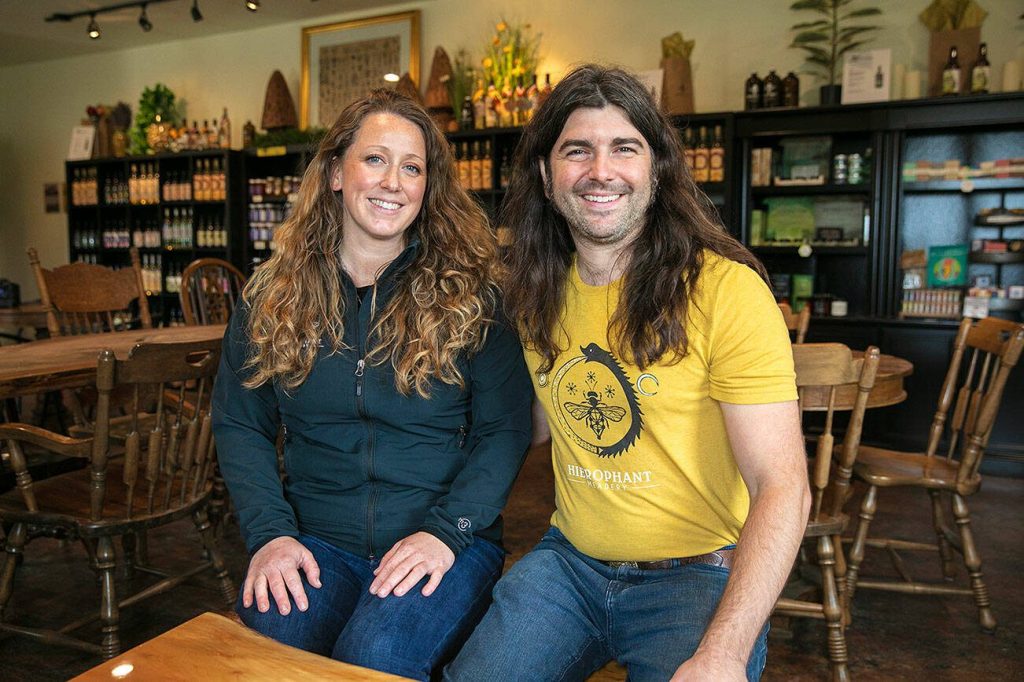




One glass of wine requires about 29 gallons of water, according to the global average from the Water Footprint Network. One glass of beer may need up to 20 gallons of water.
For one glass of mead, the water usage is less than a gallon. Couple Jeremy Kyncl and Michelle Scandalis, owners of Hierophant Meadery on Whidbey Island, estimate one gallon of their honey-based alcoholic beverage uses about six gallons of water.
“The bees just go and they find surface water,” Kyncl said. “They get the water they need, they come back. And so all the water that’s used in producing (honey) is on the land already. It’s not pulled up out of aquifers.”
Kyncl and Scandalis said they strive to influence culture around environmental issues through their business. While mead is a sustainable drink by design, the Hierophant Meadery owners said they localize operations and ingredients as much as possible. Keeping their supply chain short allows the herbalists to build relationships with farmers and surrounding natural spaces — the people and places who also support the “sacred” work of the honey bee.
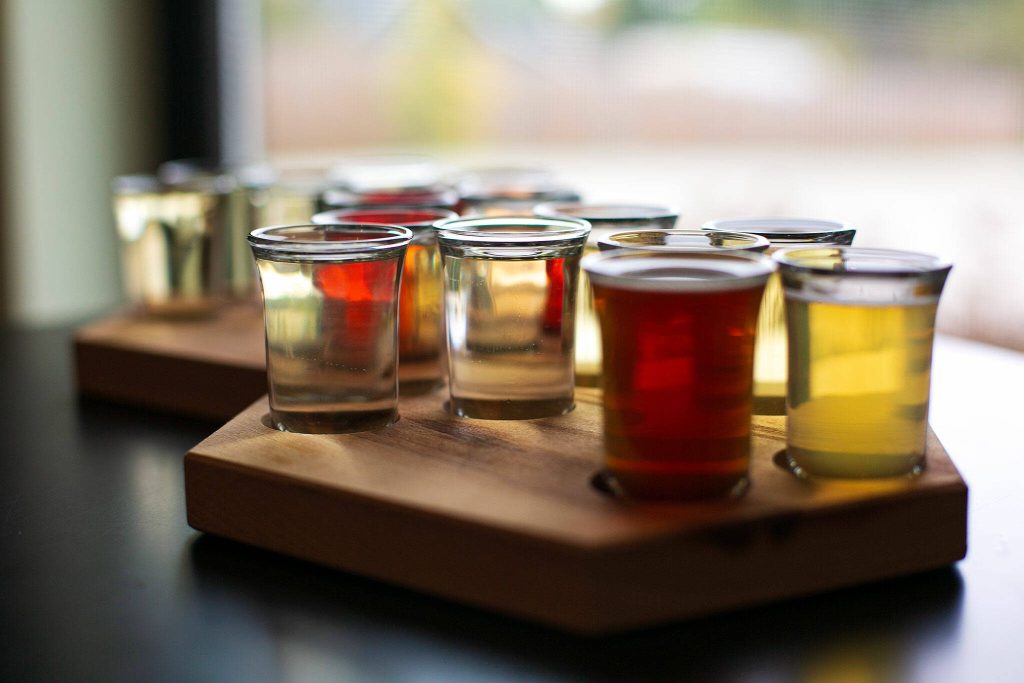
In Hierophant’s tasting room, flights of mead are served on a honeycomb-shaped wooden tray. Varieties can range widely in level of sweetness, despite honey’s sugary base.
Some, like the Matricaria Chamomile Mead, are a gentle balance of floral and fruity. Others, like the Krokos Saffron Mead aged on French and American oak, taste purely natural, like a sip of the forest.
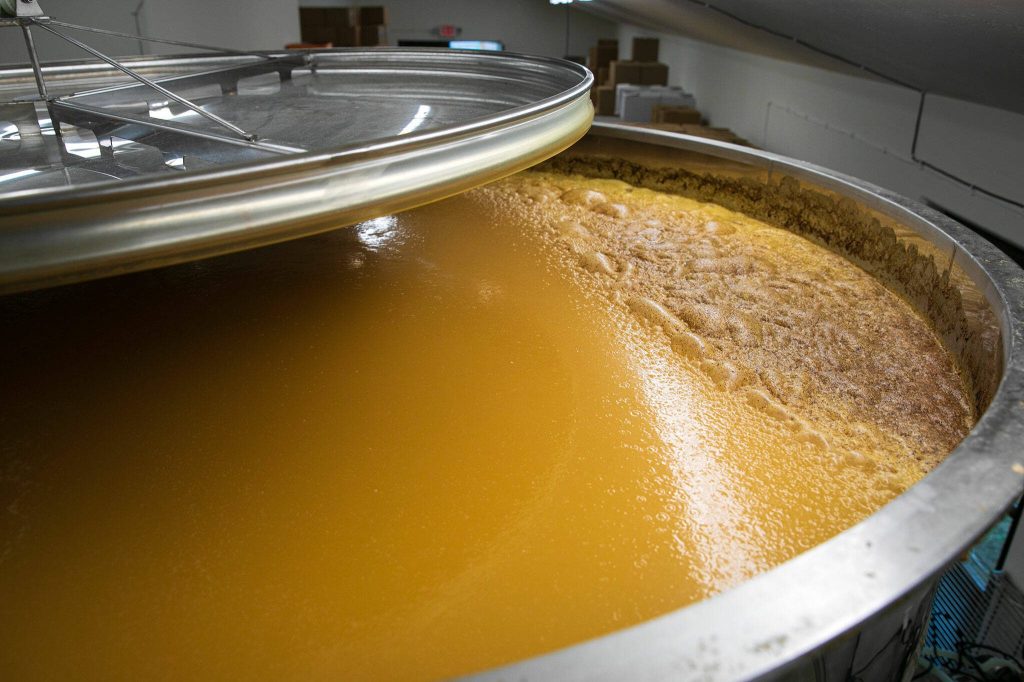
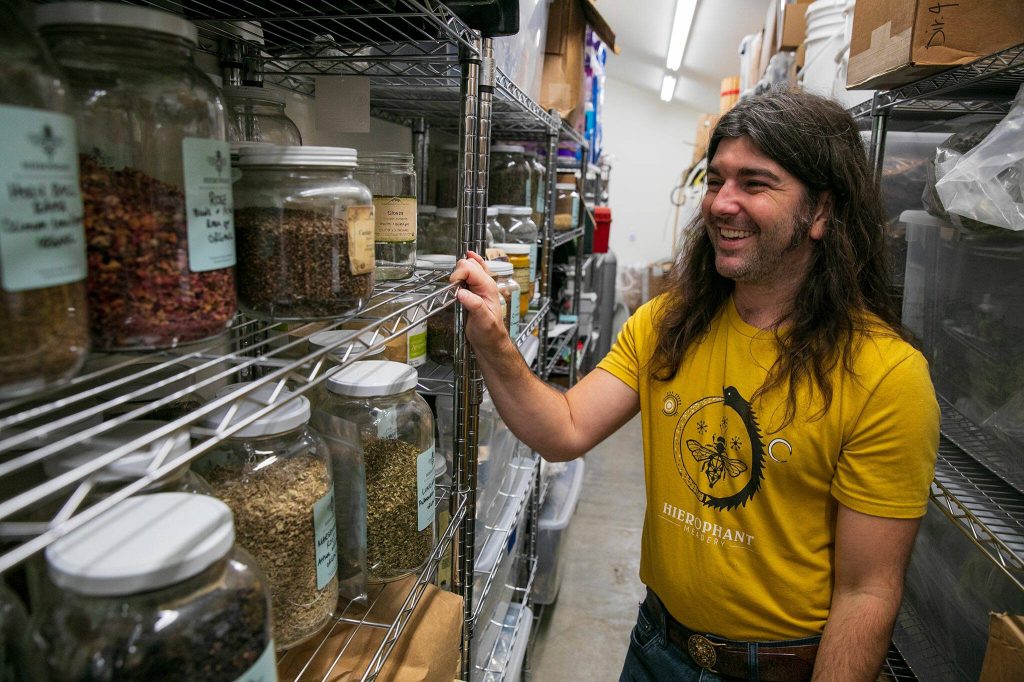
A short walk away from the meadery’s tasting room, a building houses a row of vats, each holding up to 400 pounds of honey waiting to be fermented. Behind that, several shelves are filled with containers of plants like an apothecary’s rows of remedies.
‘Folks we can shake hands with’
Sourcing is top of mind for Kyncl and Scandalis, both for acquiring honey and the flavors that distinguish each variety of mead. The couple works with beekeepers located in the greater Spokane area, where Hierophant Meadery started back in 2012.
“A really important piece of what we do is … keeping things to folks we can shake hands with,” Kyncl said. “It’s folks that we were tabling next to at the farmer’s market.”
Before Kyncl and Scandalis moved to Freeland in 2018, they had spent years searching for a place to grow their business. The couple was initially compelled by Whidbey Island’s agricultural tourism and small-town atmosphere.
As a plus, the property where Hierophant Meadery now stands is accessible to nearby trails and land filled with organic flavors that they dreamed of using in their products.
In 2021, Kyncl and Scandalis received a grant from the Pike Place Market Foundation to start a herb garden on their Freeland property. Instead of sourcing from miles away, their goal is to harvest flavors on site.
It’s a long-term project, but they’ve already started using and infusing plants from the garden, such as lemon balm. They hope to eventually create a “multi-tiered ecosystem” in their garden for pollinators to forage from.
With some botanicals, like vanilla, Kyncl and Scandalis have to buy them off of the world market because they’re just not available in Washington. Still, they aim to source herbs not grown in their garden from local farms or the area around them.
Nettle, for instance, grows “freely and abundantly” in the forest just beyond where the meadery stands. The plants, often likened to spinach, add a fresh taste to meads.
“I think that’s a lot of it,” Kyncl said. “How do we create beautiful, interesting flavors from the ecology that surrounds us in a way that supports the biodiversity around us?”
It’s easier to make mead sustainably, compared to beer and wine, because the timeline to make a batch is relatively short — roughly two months from start to finish, Kyncl said.
The meadery receives barrels, each filled with about 655 pounds of honey, every few months throughout the year. Then the honey is warmed, diluted and fermented for about four to five weeks before it is infused with botanicals, packaged and distributed.
‘Sacred and holy’
Mead operations produce a minimal amount of solid waste — a critical sustainability element when food waste contributes to about 8% of global greenhouse gas emissions. Kyncl said with each batch, leftover wax, pollen and herbs are composted in their garden.
Meaderies like Hierophant support the essential work of pollinators, “skimming off the top” and taking excess honey the bees don’t need, Kyncl said.
“The entire point is to keep them alive,” Kyncl said. “This is not making bacon.”
The name of the meadery — Hierophant — is strategic and intentional. The name refers to someone who reveals “what is sacred and holy.” For Kyncl and Scandalis, the Hierophant is the honey bee.
Through this respect for pollinators, Kyncl and Scandalis continue to seek ways they can make their craft operations more environmentally-friendly. Using more sustainable packaging for their mead products is one area where they want to improve.
Scandalis said they’re hoping to use aluminum cans more often for their mead, partially because aluminum is one of the most recycled materials and has a smaller carbon footprint than glass and plastic.
The Hierophant Meadery brand, Scandalis said, is to make sustainability “sexy.” Especially because botanically-infused mead is still a niche in the industry.
“We want everyone to follow suit in the industry,” Scandalis said. “I’m hoping that if people care about it, then we don’t have to worry about losing pollinators.”
Ta’Leah Van Sistine: 425-339-3460; taleah.vansistine@heraldnet.com; Twitter: @TaLeahRoseV.
Sound & Summit
This article is featured in the winter issue of Sound & Summit, a supplement of The Daily Herald. Explore Snohomish and Island counties with each quarterly magazine. Each issue is $4.99. Subscribe to receive all four editions for $18 per year. Call 425-339-3200 or go to soundsummitmagazine.com for more information.