Lawmakers: Protecting jobs is priority in any Boeing bailout
Published 5:46 am Saturday, March 21, 2020


By Dominic Gates / The Seattle Times
Stunned by the rapidity with which the coronavirus crisis has gripped America in a chokehold, Congress on Friday scrambled to agree on a massive financial-relief package that could prevent economic collapse on top of the mounting toll in human lives.
But key players insist that any such government aid — while preventing permanent damage to the nation’s infrastructure, including the aerospace-manufacturing sector topped by Boeing and its major suppliers — should come with conditions that preserve the workforce rather than bailing out shareholders for their losses.
“The money has to be used for the continued operation of the company,” said Rep. Rick Larsen, D-Everett, who chairs the Aviation Subcommittee of the U.S. House Transportation and Infrastructure Committee. “It’s not to be used for anything else. Executives don’t get bonuses. Shareholders don’t get dividends. There are no share buybacks.”
Sen. Maria Cantwell, in a phone interview during a break from the U.S. Senate negotiations, said Senate Republicans had already accepted as inevitable that any deal must cap executive pay and end dividend payouts and share buybacks.
Boeing, reading the tea leaves and no doubt also anxious to preserve cash, said Friday afternoon that it will suspend dividends and share buybacks until further notice, and will not pay CEO Dave Calhoun and Board Chairman Larry Kellner for the rest of this year.
Worse than devastating
The airlines and the broader aerospace industry that builds and maintains the jets are among the businesses most at risk of collapse from the severe economic shock the coronavirus has delivered.
Larsen, in an interview, cited data from the airlines pointing to a dramatic financial hit: American Airlines has canceled more than 55,000 flights next month and grounded 450 aircraft; a couple of days ago, United flew 144,000 people around the country, compared to 1.5 million people on the same day a year ago; and JetBlue is taking in less than $4 million per day, compared to $22 million per day a year ago.
That threatens the entire U.S. aviation sector, and reaches through to Boeing and its suppliers as the airlines don’t want to take new airplanes. It also hits aircraft-repair stations like ATS in Everett as airplanes not flying don’t come in for maintenance.
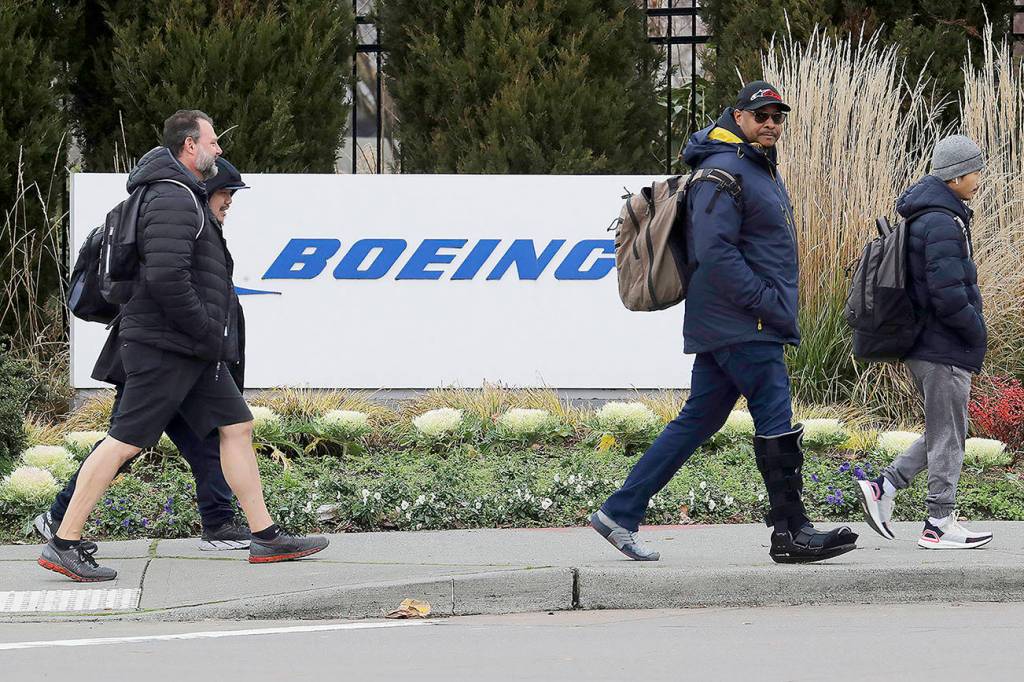
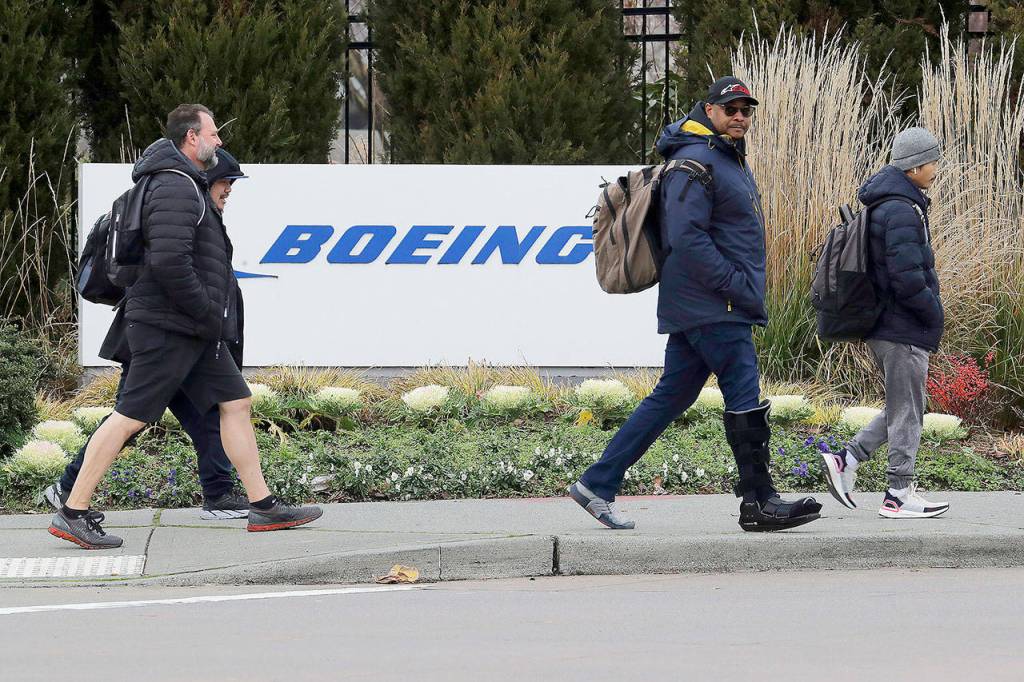
Bad as it is now, it may get worse. If more states move to shelter in place, air traffic may reduce from a trickle to a virtual stop. And Boeing could be forced to at least temporarily shut down production in its local factories, where the workforce is already fearful of infection.
Larsen spoke of this prospect in dire terms.
“Whatever decision is made, it’s got to be made to ensure the safety of the workforce,” he said. “But the impact of COVID-19 on the economy is already devastating. I don’t know what word is worse than devastating, but that’s what it would be if production had to shut down even for 14 days.”
Eric Fanning, CEO of the Aerospace Industries Association that represents Boeing and most of its major U.S. suppliers as well as its competitors on the defense side, said the country and the aerospace companies face twin challenges. “We have to make the right decisions to protect people’s health,” he said. “But we also have to protect the jobs so they are there when we get through this.”
Fanning said the industry supply chain supports thousands of companies and about 2.5 million U.S. jobs and that the threat from the coronavirus already “looks way bigger than 9/11 was.”
He said 70% of money paid to Boeing flows through to its suppliers.
“Our focus is to keep those companies going and the workers working,” Fanning said. “The way to keep the supply chain sound is to keep it working.”
Keep the workforce
Even the local Machinists union recognizes Boeing’s dilemma about trying to continue work while at the same time facing the growing threat from the virus that as of Thursday had infected 18 of its local workers.
In a note to union members Friday, Jon Holden, president of the International Association of Machinists (IAM) District 751, said he has received calls from members frustrated the union has not called for Boeing to shut down operations in Puget Sound.
“This union membership includes 32,000 families that depend on their paychecks to survive,” Holden told his members. “If we demand that operations be shut down, we have no way of knowing how long a shutdown will last and how much pay members will receive.”
This dilemma is at the heart of the debate over the economic-relief package now being negotiated in Congress.
Larsen said House Democrats will insist upon two basic principles: “It has to protect the workers. And taxpayers have to get their money back.”
He said Congress has learned from the mistakes of the relief package airlines got after the 9/11 attacks, when many of the carriers later went into bankruptcy anyway, cutting wages, handing pension liabilities to the government and outsourcing work of airplane repair and catering.
“We don’t want that to happen again,” Larsen said. He said the House bill will require that companies that take the assistance “continue to pay their workers and provide benefits and continue their obligations to people on pensions.”
And he said Democrats will also seek to insert some protection for workers in the event of a subsequent bankruptcy.
Cantwell said that “if we focus on the long-term sustainability of that workforce in the U.S., it will help us in the long run to keep the manufacturing base.”
Fanning, who represents the large companies now seeking this federal assistance, agreed, and said maintaining worker employment is essential through any temporary production shutdown.
He said the companies in his organization “all want to keep their workforce, at work if possible, but also employed even if not at work.”