‘People’s History’ is the vampire novel we deserve right now
Published 1:30 am Sunday, June 17, 2018
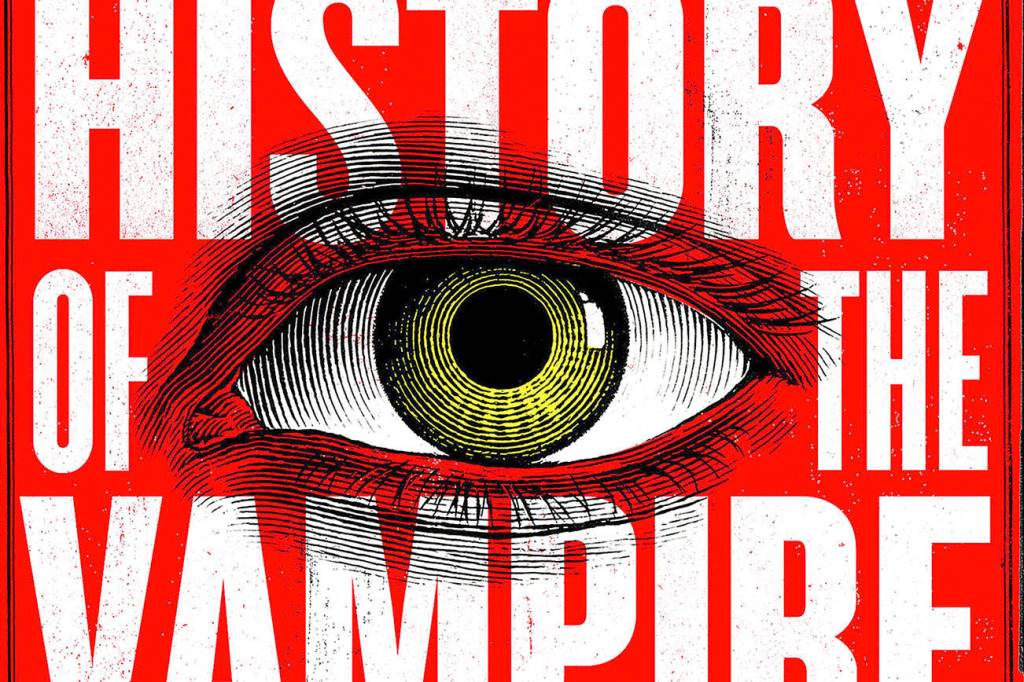


By Elizabeth Hand / The Washington Post
Think things are tough now on the national scene? Wait ‘til the vampires arrive, agitating for equal rights, medical treatment, nighttime access to schools and representation in Congress. That’s the scenario spun by Raymond A. Villareal in his relentlessly clever first novel, “A People’s History of the Vampire Uprising.”
A fictional oral history — compiled from newspaper and magazine articles, online posts, notes from a Centers for Disease Control specialist, transcripts of FBI interviews and more — “A People’s History” traces a viral outbreak from its onset in Nogales, Arizona. Lauren Scott, a young CDC research physician, is dispatched to the border town to examine a three-day-old corpse “exhibiting unusual hemophilia bruising and intradermal contusions over 90 percent of the body.” Problem is, that particular body has disappeared, though another corpse with similar bruising lies in the morgue.
But wait! There are two circular wounds — “maybe a bite” — by the carotid artery. Also, two top molars seem to be loose.
At this point, readers everywhere will be shouting, “Vampires — run!” But it takes a while longer for Scott and her likable sidekick, Hector Gomez, head of the Nogales health department, to catch on. Given the CDC’s response time to real-life epidemics, from AIDS to the current opioid crisis, maybe this isn’t so unlikely.…
Drs. Scott and Gomez search for Patient Zero: a woman named Liza Soles, the corpse who, it turns out, has been reanimated by her exposure to the Nogales Organic Blood Illness (NOBI) virus. They catch up with her in the art mecca of Marfa, Texas, looking like “a young Patti Smith busking in front of the Chelsea Hotel.” (Villareal’s tongue-in-cheek references to the contemporary arts world are a running joke throughout.)
Liza escapes, but not before Scott gets a blood sample, which allows her to determine that the virus causes an allergic reaction to sunlight and can be spread only by direct contact. Those who survive develop “solipsism syndrome,” a severe form of narcissistic personality disorder. Because of their aversion to daylight, survivors call themselves gloamings — and most of them don’t report their infection to doctors.
It soon becomes clear that NOBI carriers are choosing whom they bite based on the trifecta of beauty, wealth and talent. Taylor Swift is the first celebrity to sign on, followed by various politicians, crime lords, the pope and video artist Matthew Barney.
There are some unanticipated side effects, of course. Those infected develop a weird sort of radioactivity that renders it impossible to record them on film. This makes it difficult for the NFL to televise games featuring gloaming players, and it also presents challenges for gloamings running for political office.
Still, within a short time, this select group has become the new 1 percent: They form the Equal People movement and petition Congress to be protected under the Americans With Disabilities Act. Less than 18 months after Liza’s disappearance, the president signs the Gloaming Rights Act.
If you think this is a good idea, you may be a gloaming yourself.
Villareal’s cheeky blend of political satire and gothic thriller is enhanced by his background as an attorney and his deft use of convincing details: the science behind the NOBI virus; the gloamings’ legal defense in their efforts to be recognized under the ADA; minutes from congressional hearings; copious footnotes; and three brief appendixes.
Aside from its ironic allusion to Howard Zinn’s classic, “A People’s History of the United States,” Villareal’s novel is somewhat reminiscent of Christopher Farnsworth’s “Nathaniel Cade” series, though Farnsworth is a better prose stylist. A numbing Vatican subplot, featuring Jesuit derring-do and a Marian prophecy, threatens to put a stake into the narrative. (That particular vein of mysterioso Catholicism was tapped out long ago by Dan Brown and Anne Rice.) But Villareal wisely shifts focus back to Scott and Gomez, along with an engaging FBI agent who cracks dorky vampire jokes.
Unsurprisingly, Villareal’s debut has already been sold to 20th Century Fox for an eventual movie adaptation. With its doggedly unglamorous investigators pitted against a cabal of narcissistic, wealth-obsessed bloodsuckers, this wild ride of a novel proves that each era gets the vampires it deserves.
‘A People’s History of the Vampire Uprising’
By Raymond A. Villareal
Mulholland. 432 pages. $27.