Agencies, nonprofits help farms adapt to changing landscape
Published 1:30 am Monday, May 24, 2021
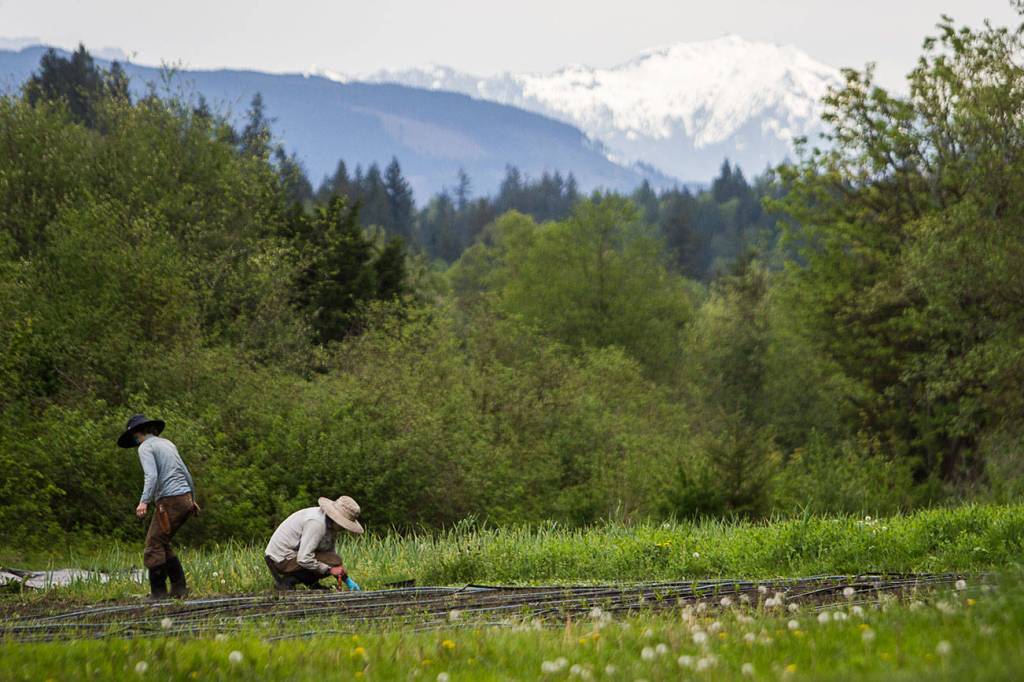


This is the second of two stories about the effects of climate change on farming. Read part 1 here.
Farmers can adapt to climate change, plan for it, help slow it down.
They can do all of that more quickly if they don’t go it alone.
The Farms and Fields Program and the Washington Farmland Trust are among the private and public efforts designed to help. Both have ties to the Snohomish Conservation District, which serves Snohomish County and Camano Island and is implementing an Agriculture Resilience Plan.
Sustainable Farms and Fields is a grant program to provide financial and technical assistance to farms so they can sequester carbon (in soil, trees and shrubs) and reduce greenhouse gas emissions, which help slow climate change. The Washington Legislature approved the program in 2020, but so far it has only provided money to set it up. The interagency task of raising grant money is led by the State Conservation Commission, which coordinates the work of the 45 conservation districts.
“It’s a really special program not only in intent, but how it came to be,” said Alison Halpern, the commission’s scientific policy advisor. She is optimistic that funding will be secured.
“We’re working with Carbon Washington and Audubon Washington, looking at private-public partnerships,” she said. “They are taking the lead in reaching out to corporations and philanthropists who want to invest in climate solutions.”
She also sees promise of funding in the Biden administration’s proposed infrastructure program and in Agriculture Secretary Tom Vilsack’s focus on climate change.
Jake Stewart, who owns the 24-acre Sweetwater Farm on Whidbey Island, testified on behalf of the Farms and Fields bill. He sees it as a pilot program that could benefit not only farmers who are open to new approaches but also those like himself who already use no-till and other climate-friendly practices.
“One thing we are interested in (buying) is an anaerobic digester that would increase compost yields,” Stewart said.
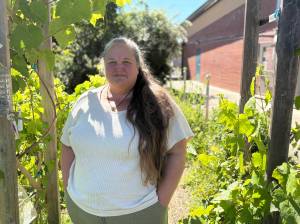
Six years into growing organic vegetables near Monroe, Libby Reed said she doesn’t have immediate needs for assistance but knows that many people do.
“It’s new and beginning farmers, especially farmers of color, who have such barriers to entry and access to capital,” said Reed, owner of Orange Star Farm. “The margins are so tight in farming that there aren’t a lot of excess funds to innovate.”
What makes Farms and Fields special, Halpern said, is the extensive amount of input that went into designing it. Commission representatives met with members of the agriculture community, environmental groups and conservation districts. When organizers sent out an online survey, 270 people responded.
Halpern was pleasantly surprised to learn that most farmers are already using climate-friendly practices, but want to do more. Asked which ones they are most interested in, they overwhelmingly said cover cropping, improving soil health, no-till planting and mulching. Asked if they would accept financial or technical assistance to adopt climate-friendly practices or reduce emissions, 86% said “likely” or “very likely.”
Many farmers took the time to write comments. Some focused on the need to build equity and inclusion into the program, and to make grant materials available in multiple languages.
Conservation districts and other public entities, including agriculture extension offices, will be able to apply for grants. Using common criteria, they will use the funds to provide technical and financial assistance to farmers. While Farms and Fields is a fledgling, the Washington Farmland Trust (formerly PCC Farmland Trust) has been around for 20 years. The nonprofit will help the Agriculture Resilience Plan meet one of its goals, which is making sure that Snohomish County, with its urgent housing needs, always has land to farm.
The Trust works primarily by purchasing development rights. That provides income for farmers so they don’t have to sell their property or take the highest offer for it. The organization has protected 25 properties so far, including Bailey Farm near Snohomish, Reiner Farm near Monroe and Johnson Farm near Stanwood.
“Our strategy is to focus on where we can have most impact to limit farmland loss and not duplicate other efforts,” said Robin Fay, senior conservation manager. The Trust partners with county and conservation district staffs, he said. “We usually get started because someone says, ‘I think you should really talk to the Baileys …’”
Fay said he loves representing the trust in Snohomish County, the only one of Washington’s three most populous counties that still has significant farmland. He appreciates its engaged agricultural community and two distinct river systems.
Rivers often dominate farmland discussions. For example, Fay said, the dynamic Skykomish tends to erode its banks. Natural stream movement is vital for protecting salmon habitat but eats away at fields. In that situation, the trust might help a farmer find uphill land. Or, under a pilot program, it could even buy channel conservation rights that allow land to be farmed until it washes away.
Climate change is less likely to come up in conversations, Fay said.
“Typically, landowners are very aware of changes they’re experiencing. They often have great insight — even if they don’t call it climate change,” he said. “For us at the Farmland Trust, it’s definitely front-and-center.”
Two years ago, the trust completed a conservation plan for the next 20 years. It takes into consideration which areas might be resilient to a different climate and which may no longer be farmable. The organization’s mission is to preserve farmland in perpetuity.
“What’s going to make sense for this area in 20 years, much less in perpetuity?” Fay said. “That’s wild to try to wrap your head around.”
Julie Titone is an Everett writer who can be reached at julietitone@icloud.com. Her stories are supported by the Herald’s Environmental and Climate Reporting Fund. To donate to the fund, please go to cmg-northwest2.go-vip.net/heraldnet/climatefund.