Arlington School District to pay for supplies this year
Published 1:30 am Wednesday, July 27, 2016
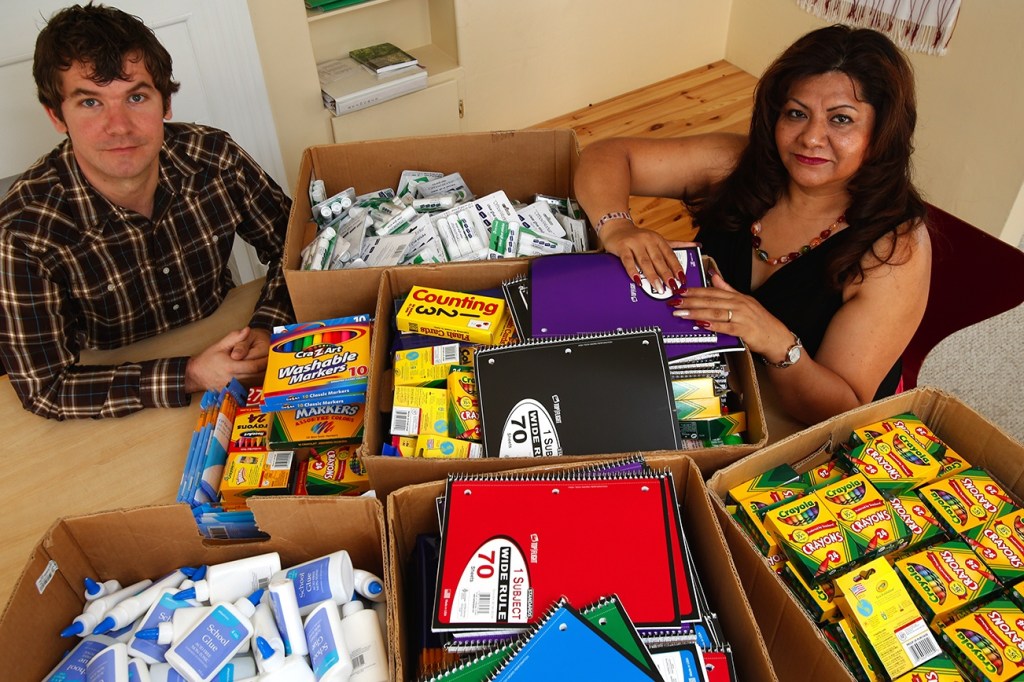


ARLINGTON — There’s something special about a backpack full of school supplies.
It may be July, but stores have put out their back-to-school displays. Shoppers can load up on reams of paper and bushels of No. 2 pencils. Backpacks with simple patterns and $18 price tags hang a few rungs below $50 bags with wheels, dozens of pockets or Disney characters emblazoned on the fabric. Giant pencil-shaped signs point toward shelves of lunchboxes, folders and homework planners.
Supply lists are available for most schools in Snohomish County. The districts post them online, mail them to families and send them to stores.
Little kids need crayons and glue; older ones, calculators and USB drives. Don’t forget the tissues. And the snacks.
A backpack full of school supplies signals the start of another year for kids and teens.
The supplies also add up to anywhere from $20 to $50 per student. It depends on where they go to school, what grade they’re in, what classes they’re taking and where the family shops.
That’s not counting the backpacks themselves, another $10 to $80 apiece. Or items for specific classes, such as a $90 graphing calculator, headphones that range from $10 to $40 or a USB drive that can cost $5 to $20 depending on how much data it holds. Clothes, shoes and lunchboxes get added to the rest of the bill. A family with multiple children can spend several hundred dollars.
Back-to-school shopping, including clothing and electronics, is a $27.3 billion industry in the U.S., according to the National Retail Federation. School and college supply shopping is a national spending event second only to the winter holidays.
Long lists of school supplies demand a lot from families, more than many can afford.
Some districts are trying to ease the burden.
In June, the Arlington School District announced that there are no long lists this year.
“Because we ask for community support for our schools through levies and other fundraising activities, the schools will now provide school supplies,” officials wrote. That includes materials to complete projects at home.
A few items aren’t covered. For elementary students, backpacks are recommended. Middle and high school students are responsible for binders, dividers, pencils, gym clothes and backpacks.
“We wanted to make sure we were creating equal opportunities for all students and have the same materials available to each one,” district spokeswoman Andrea Conley said.
The district is pulling at least $67,000 from the general fund to cover the additional cost of supplies.
Most Snohomish County schools ask students to bring basic supplies. However, over the past few years, districts have been trying to cut back on how much they ask of families.
Mukilteo school officials aim to make things easier with one list for all 12 elementaries so there aren’t differences among schools in the same district. The length of the list is “greatly reduced from previous years,” spokesman Andy Muntz said. Parents aren’t asked to buy loose-leaf paper, pens or spiral notebooks.
In Lake Stevens, lists are standardized by grade level to be consistent from school to school.
“This is the second year we have done this, and families seem to appreciate it,” spokeswoman Jayme Taylor said.
The list also has been trimmed, she said. Families no longer are asked to buy Kleenex, hand sanitizer or wipes.
Most districts draft supply lists at the school level and they can vary from one classroom to the next, even in the same grade. Districts where lists aren’t standardized include Edmonds, Everett, Marysville, Snohomish, Northshore, Monroe, Lakewood, Stanwood-Camano and Sultan.
Many elementary teachers ask for supplies to share. At Cascade View Elementary in Snohomish, the kindergarten list includes a note for girls to bring fruity smelling shaving cream and boys to bring one box of thick Crayola markers.
The kindergarten list for Cedarhome Elementary in Stanwood asks families to “not label classroom supplies with your child’s name. We share everything.” Among the shared supplies are four boxes of crayons, 20 glue sticks and a pair of scissors per student. There should be 24 crayons per box and glue sticks should be Elmer’s brand.
In the Stanwood-Camano district, each school gets $84.11 per elementary student, $108.82 per middle school student and $121.91 per high school student for supplies and materials, said Gary Platt, executive director of business services. Much of that goes toward copy machine leases, repairs, maintenance and paper. Other items covered by those dollars include science and art lab supplies, textbooks, library books, classroom furniture and teacher supplies.
The Granite Falls School District has budgeted more than $200,000 for classroom supplies in 2016-17, spokesman Jeremy Miller said. The items students are asked to bring “fill in the gaps,” he said.
Middle and high school lists are given out class by class. Elementary lists are broken down by grade level. As students get older, needs change — “less crayons, more pencils,” Miller said.
The Monroe School District notes online that its supply lists are suggestions not requirements. A few years ago, a committee set guidelines of about $25 worth of supplies for kindergarten through third grade and $30 for fourth through fifth grade, not including backpacks.
“Those guidelines probably need to be reviewed as it has been a while and not much has gone down in price,” spokeswoman Rosemary O’Neil said.
General lists are posted for schools in Marysville, though some schools may have their own. Money for special projects often comes from donations or grants, spokeswoman Emily Wicks said. Lists haven’t changed much over the years.
“It’s the same as when I attended grade school,” she said.
Everett schools provide classroom and testing materials such as paper and pencils. Calculators can be checked out at the libraries. Each school creates lists of other basic supplies and adjustments have been made to keep up with technology. USB drives were added within the last few years. Copy paper has been removed from the lists.
Around the county, volunteers round up supplies each summer for families that can’t afford them.
The Sky Valley Food Bank gives backpacks to children in the Monroe School District. The goal this year is 550, director Neil Watkins said.
“There’s a self-esteem thing to walk into school on the first day with a backpack full of the supplies you need,” he said. “They feel good. They feel prepared. They feel like they’re ready for what’s ahead.”
Donations can be dropped off between 8 and 11:30 a.m. Mondays, Wednesdays and Fridays or from 5:30 to 7 p.m. Mondays at 233 Sky River Parkway.
The Everett Family Support Center and Familias Unidas distribute about 400 backpacks each year to Everett-area families. They’re collecting donations to give out during National Night Out on Tuesday at Our Savior’s Lutheran Church. Supplies can be brought to 215 W. Mukilteo Blvd. Monday or Tuesday.
The Everett Public Schools Foundation’s Stuff the Bus for Kids is in its seventh year, with a goal of filling 1,700 backpacks with about $50 worth of supplies each.
“It’s a massive effort,” development manager Kirsten Hansen said.
Volunteers plan to collect donations in front of stores Aug. 12-14. Businesses get collection bins Aug. 1.
It’s important for kids’ communities to support them as they head into the new school year, Hansen said.
“You just don’t know what’s going on in people’s homes, how hard things are,” she said. “School supplies are expensive.”
Kari Bray: 425-339-3439; kbray@heraldnet.com