As cells empty, state looks to close Monroe prison units
Published 8:08 am Friday, June 4, 2021
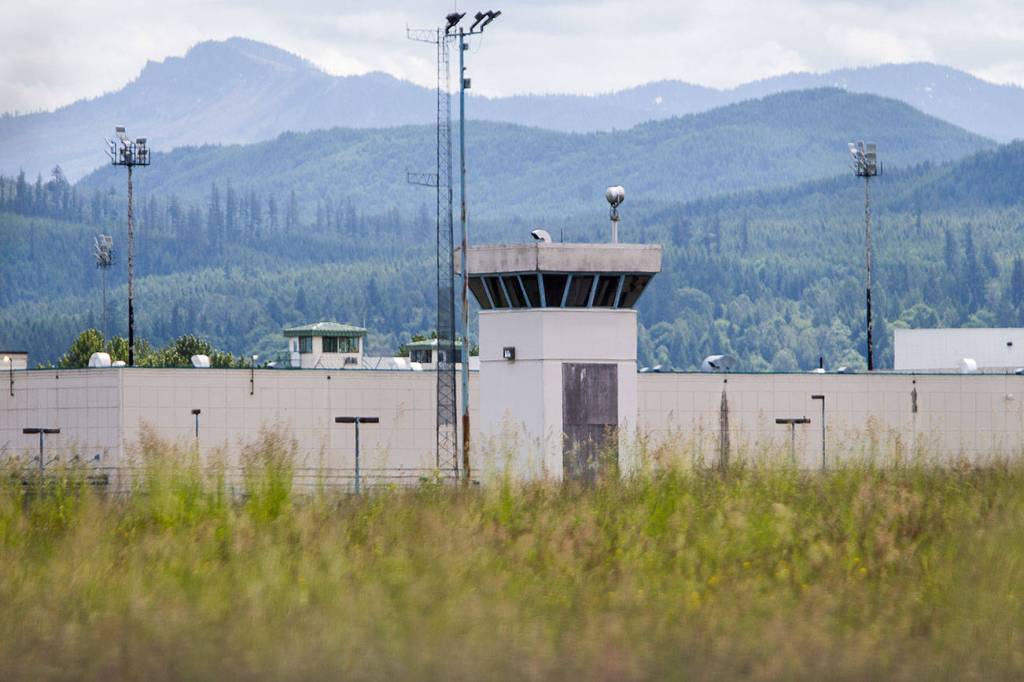
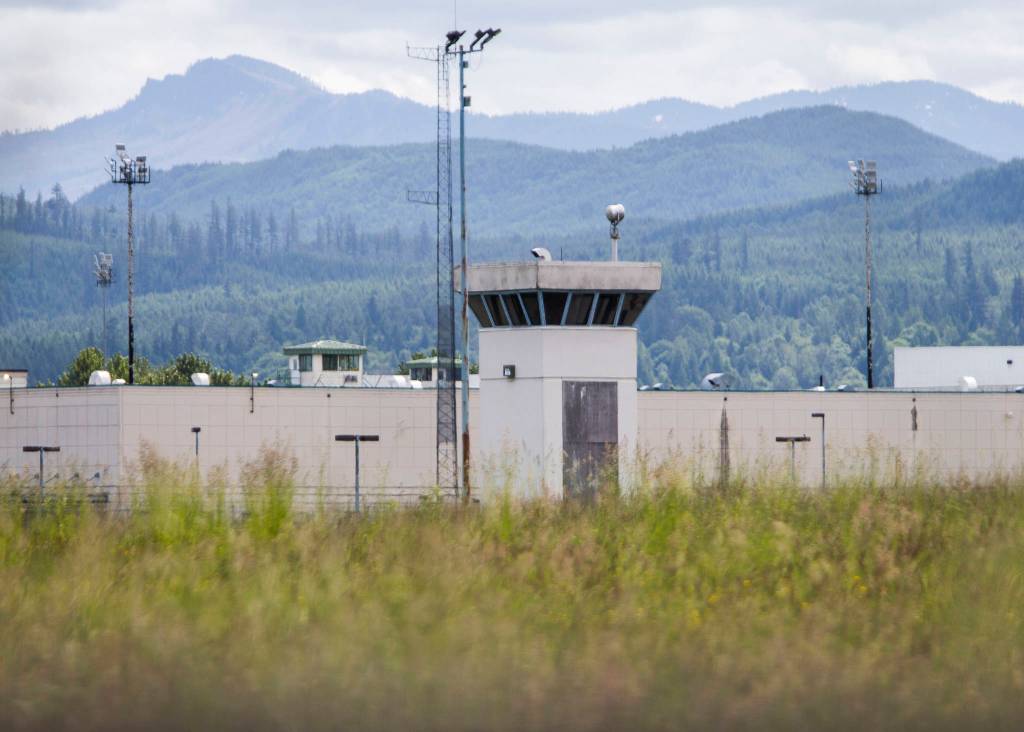


OLYMPIA — At least 20% of Washington’s 18,000 prison beds are empty right now.
Another 20% could become vacant in the next two years.
Faced with a rapidly shrinking inmate population, the state Department of Corrections is making plans to close living units in prisons across the state, with the Monroe Correctional Complex targeted for the biggest reduction.
Late last month, corrections officials informed lawmakers, labor unions and councils for families of incarcerated people that 18 units containing 3,378 beds were being eyed for closure.
Eight of those, with 1,403 beds, are in the Monroe prison, a sum that represents more than half of the complex’s total capacity. As now envisioned, the entire Washington State Reformatory Unit could be shuttered.
No unit anywhere has been closed yet. Agency officials vow to engage those in prison, their families, employees and other stakeholders on how best to proceed before making any final decisions.
“This period of feedback will help the department as we examine the unit closure proposals and work toward solutions with the least impact possible within our options,” agency spokeswoman Jacque Coe said.
But it is going to happen, officials made clear in their May 25 letter to the interested parties.
“These unit closures will occur over a planned six-month time frame to reduce impacts to permanent employees. By managing the reduction in staffing on a gradual basis, increasing staffing provided in the ensuing budget, not filling existing vacancies, and using natural attrition, we are confident we will be able to mitigate impacts to permanent employees,” reads the letter.
Unfilled beds are already an issue.
As of May 26, 3,600 of the state’s 18,000 prison beds were empty. At Monroe, 392 of 2,488 beds were not occupied. There were 460 open at Coyote Ridge Correctional Center in Connell and 447 at the Washington State Penitentiary in Walla Walla.
A confluence of forces — pandemic, judicial and political — steered Washington to this juncture.
Local courts have sentenced fewer people to prison terms in the past 15 months. And early on, more than 1,000 incarcerated men and women got released early, were furloughed or had their sentences commuted following a state Supreme Court order to ease crowding to reduce prisoners’ risk of exposure to the potentially deadly coronavirus.
Earlier this year, a ruling by the same high court struck down the state’s longstanding drug possession law, allowing for the release of many convicted under that now-invalidated statute.
Looking ahead, another 20% or so of state prison beds could open up in the next two years as a result of a new law greatly expanding eligibility for the state’s Graduated Reentry Program.
Established in 2018, this program allows prisoners to serve the final months of their sentences under home detention while taking part in programs and services aimed at helping their rehabilitation. To be eligible, a person has to have spent at least 12 months confined in a state correctional facility. If approved, a person can serve the last six months of their sentence in the community.
The new law, embodied in Senate Bill 5121, changed the rules, clearing the way for an estimated 3,000 additional prisoners to get into the program in the next two years. And hundreds could become eligible annually.
The law — which majority Democrats pushed through without a single Republican vote — created two paths for eligibility.
Under one, a person would only need to serve four months behind bars to become eligible, if that person is not currently serving a sentence for a sexual or violent crime, or a “crime against a person” offense, and also is not subject to a deportation order. Prisoners can spend the last 18 months of their sentence in the program if they get in.
The other path covers those serving a sentence for a sexual, violent or crime-against-a-person offense — assuming they’re not subject to a deportation order, civil commitment or interstate compact for adult offender supervision. Those prisoners must serve at least six months in a state correctional facility to be eligible to serve up to the final five months of their sentence in the re-entry program.
When the new law takes effect July 25, the changes will apply to future prisoners as well as those currently behind bars.
Supporters contend public safety is improved by getting incarcerated people transitioning into communities sooner, under the watchful eye of probation officers. It reduces the need for prison beds, with money saved — a projected $22.6 million in the next budget cycle — getting plowed back into evaluating people for release through the re-entry program.
“This reduction in prison population brings an equally significant opportunity to rapidly advance our reentry mission,” officials wrote in the May 25 letter. “We know that the science supports the concept that people are more successful when they transition into a community and are supported by resources before, during and after that transition.
“This is an intentional, strategic shift to supporting our population in the community, in addition to support within our state’s prisons,” they wrote.
Opponents aren’t convinced the rapid expansion of the Graduated Reentry Program will deliver financial rewards and enhance public safety as promised. They’d have preferred to evaluate the program a little longer before enlarging it.
“I’d love this social experiment to work in the way they think it will work out,” said state Sen. Keith Wagoner, R-Sedro-Woolley, whose district includes the Monroe prison. “We are releasing people who have done bad things. It doesn’t make sense to me that people will get magically better because we let them out early.”
He’s concerned with the economic impacts. He said he figures people will lose their jobs in the prison system. And for Monroe, if all the envisioned closures are carried out, it could put the long-term future of the 111-year-old facility in jeopardy.
There “absolutely will be economic impacts,” he said, “for what is a really good experiment that has yet to be proven.”
In deciding which units to close, spokeswoman Coe said, the DOC will look at a range of “operational factors” such as custody level, living unit capacity, male and female units, mandatory programs, cost per bed and age of facility.
At Monroe, a complex of five different facilities, the two cellblocks comprising the Washington State Reformatory could get shut down. That is about 760 beds. Half of Twin Rivers — one of the living units for medium security and one for minimum security — are on the list, as is half of the separate Minimum Security Unit.
Monroe could be impacted the most because, when all factors are considered, the cost per bed at the Washington State Reformatory Unit is among the highest in the system, Coe said.
Coyote Ridge Correctional Center could absorb the second-biggest hit. The department is looking at shuttering two units, one medium security and one minimum security, accounting for 512 beds.
Coe did not give a timeline for the department to gather feedback and complete its closure plan.
Reporter Jerry Cornfield: jcornfield@heraldnet.com; @dospueblos