Crunch time in Capitol as lawmakers await final budget deal
Published 1:30 am Sunday, April 21, 2019
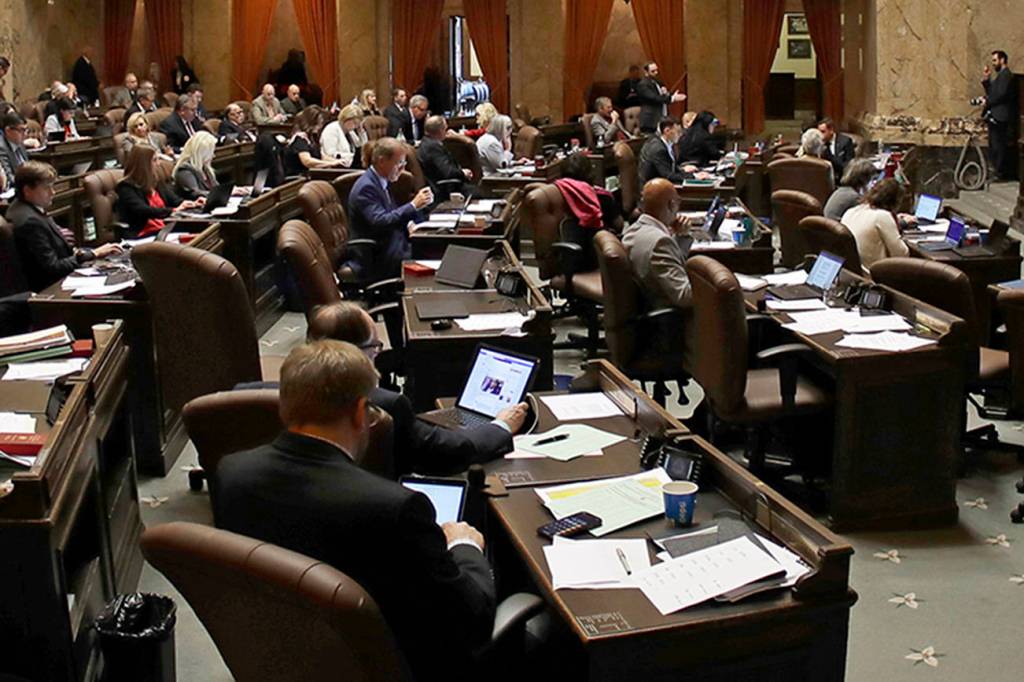
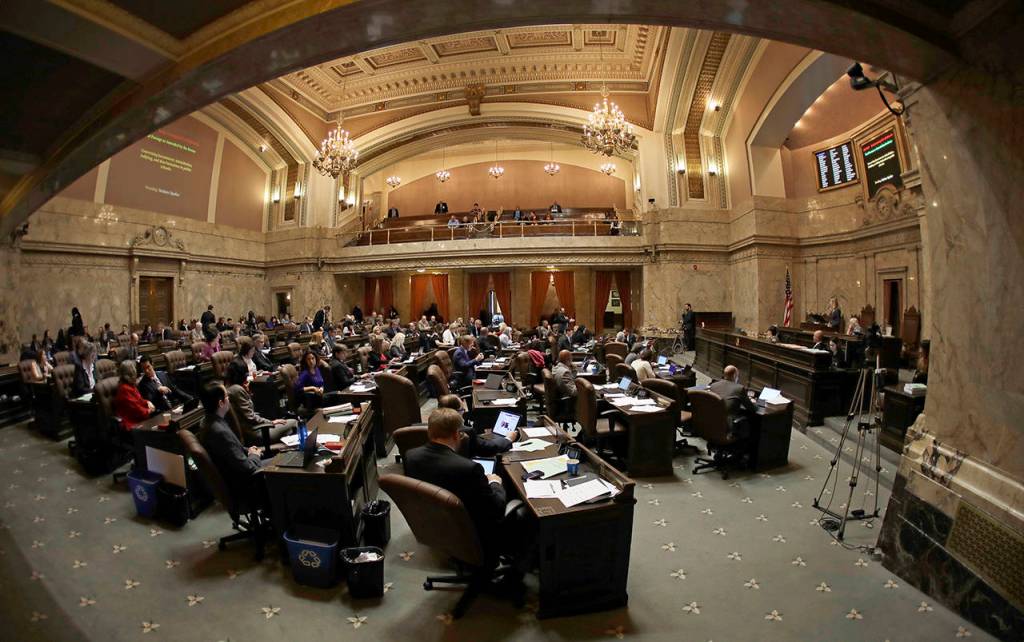


OLYMPIA — Lawmakers are entering the final week of the 2019 session with a number of challenging chores to complete.
Atop the list is getting the House and Senate to agree on how much will be spent in the next state budget and if new or higher taxes will be needed to help cover the bill.
After that, legislators need to sort out and approve capital and transportation budgets for the two-year fiscal cycle that begins July 1.
And then comes a bunch of sticky policy issues to resolve, such as whether to lift the cap on local school levies, authorize tolling on all of I-405 and Highway 167, and impose rules for producing gasoline with less pollution-causing carbon content.
Although Democrats control both chambers this year, it’s not a cinch everything is decided by April 28, the final legislative day.
Especially the budgets.
“We’ll get done with all the negotiations in regular session. But it may take an extra couple days to get all the paperwork printed,” said Rep. Steve Tharinger, D-Port Townsend, chairman of the House Capital Budget Committee. “There seems to be more connections between the three budgets than I’ve seen in the past which makes it more complex.”
Complexity doesn’t mean they are bound for overtime, said an Everett lawmaker involved in talks on the operating budget.
“I think all the budget teams are prepared to spend long days and nights to have everything wrapped up next week,” said Rep. June Robinson, D-Everett, who is a vice chairwoman of the House Appropriations Committee.
The most significant chasm to bridge is in the operating budget.
House Democrats want to spend roughly $700 million more than their Senate counterparts. And their bottom line is balanced with a business tax increase, a boost in the real estate excise tax collected from sales of expensive properties, and a new capital gains tax.
Senate Democrats also want to revise the real estate excise tax but did not embrace the other two taxes in their approach.
Republicans, meanwhile, are watching to see what emerges. They insist no new taxes are required.
“We know what the playing field looks like the 10 days down the stretch,” Senate Minority Leader Mark Schoesler, R-Ritzville, told reporters Thursday.
In spite of “an incredible surge of revenues” and “exceedingly good news” on employment, Democrats are still seeking “new and higher taxes to satisfy some of the special interests here.”
Here are five major questions to be answered in the final week.
How much will they spend?
The House operating budget calls for $52.6 billion in spending and counts on roughly $1.1 billion from new taxes and fund transfers. The Senate’s $51.9 billion blueprint charts out roughly $600 million from transfers and taxes.
Both budgets increase spending in pretty much every bucket of government spending. The differences are generally in the amounts.
For example, the House puts almost $340 million into behavioral health programs compared to the Senate’s $283 million. Part of the added investment in the House is toward operations at Western State Hospital in Pierce County, one of the state’s two psychiatric hospitals.
In special education, the Senate earmarks $156 million more for districts, better than double the House amount. But the Senate plan contains roughly $125 million less for expenses of a new statewide health insurance program for school employees.
In higher education, the Senate’s base budget allots $100 million more for state need grants versus the House’s $25 million. But if that business tax hike goes through, it will deliver nearly $250 million more for financial aid programs.
Will new and higher taxes be part of the final deal?
This has been an enduring question throughout the 105-day session — and even before.
The budget Gov. Jay Inslee proposed in December contained roughly $3.7 billion in new taxes.
Lawmakers never aimed for that level. But they have not been shy about their interest in raising some new revenue beyond what is generated from the booming economy.
Both chambers are proposing to replace the flat rate of 1.28 percent imposed on each sale of property with some form of a graduated real estate excise tax. And both want to repeal a few tax exemptions including the sales tax exemption for nonresidents. As of Friday, none of those have been voted on.
The final budget may count on money from a new tax on vaping products, a hike in the barrel tax on oil and a new statewide fee on property owners for wildfire prevention.
But the capital gains tax — which Republican lawmakers argue is not constitutional — and bump in the business-and-occupation tax rate paid by professional services look to be nonstarters with the Senate. So too is the House idea of ratcheting up the tax rate paid by a handful of high-tech firms like Microsoft Corp. and Amazon.
Will the cap on local school levies be lifted?
Lawmakers appear on course for easing restrictions imposed two years ago on how much school districts can collect in local property taxes. There’s disagreement between the two chambers on where to set a new cap and if restrictions are needed on how future levy dollars are spent.
School districts want the cap raised. Officials say additional local tax dollars are necessary to pay for staff, resources and programs not funded by the state. They are confident voters in their communities will be supportive if asked.
There are lawmakers who don’t want to do anything. They’re frustrated that districts gave big raises to teachers last summer after getting an infusion of dollars from the state due to the McCleary case. Now some of those districts are looking at layoffs. At the least, some lawmakers are seeking to limit the use of new levy dollars.
Will there be more tolling on Puget Sound highways?
Bills giving the state Department of Transportation authority to construct express toll lanes on the south half of Interstate 405 and Highway 167 are awaiting action in both chambers. The hang-up is whether the agency should also be allowed to issue bonds that would be paid off with the future stream of toll receipts.
Supporters want to issue bonds to carry out $1.5 billion in projects on both highways, work that would otherwise be done through the gas tax-funded Connecting Washington roads package. They argue bonding would free up that sum of dollars for use elsewhere around the state.
Opponents counter that if tolls are bonded, they can’t be lowered or eliminated until the bonds are paid off.
Will there be a new roads package and low carbon fuel standard?
The biggest last-minute surprise of the session could be a deal knitting together a new statewide transportation package and legislation for a low carbon fuel standard.
The legislation is stalled in the Senate Transportation Committee but environmentalists in both chambers and Inslee want to see it moved.
Sen. Steve Hobbs, D-Lake Stevens, the committee’s chairman, is not a fan of the bill. But he has made clear there may be a path forward for it if there’s also a route to raising new revenue for major projects left out of the Connecting Washington package. Rebuilding the westbound U.S. 2 trestle is one example.
Hobbs declined to comment on negotiations.
Jerry Cornfield: 360-352-8623; jcornfield@herald net.com. Twitter: @dospueblos