Giving food, supplies, water in protest of Everett ‘no sit, no lie’ law
Published 1:30 am Tuesday, May 16, 2023
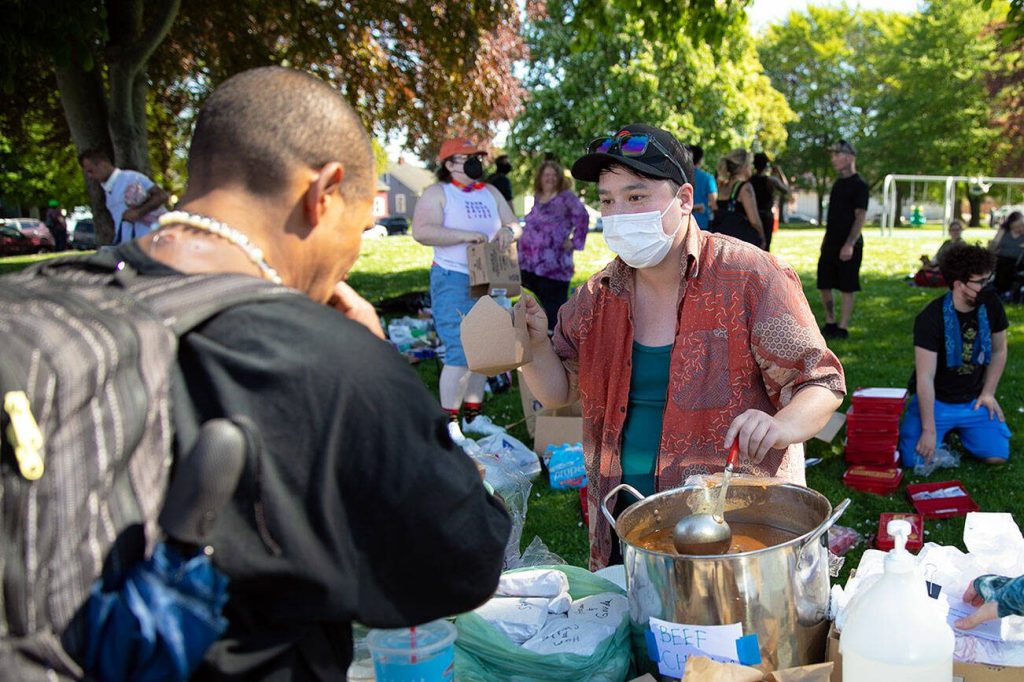
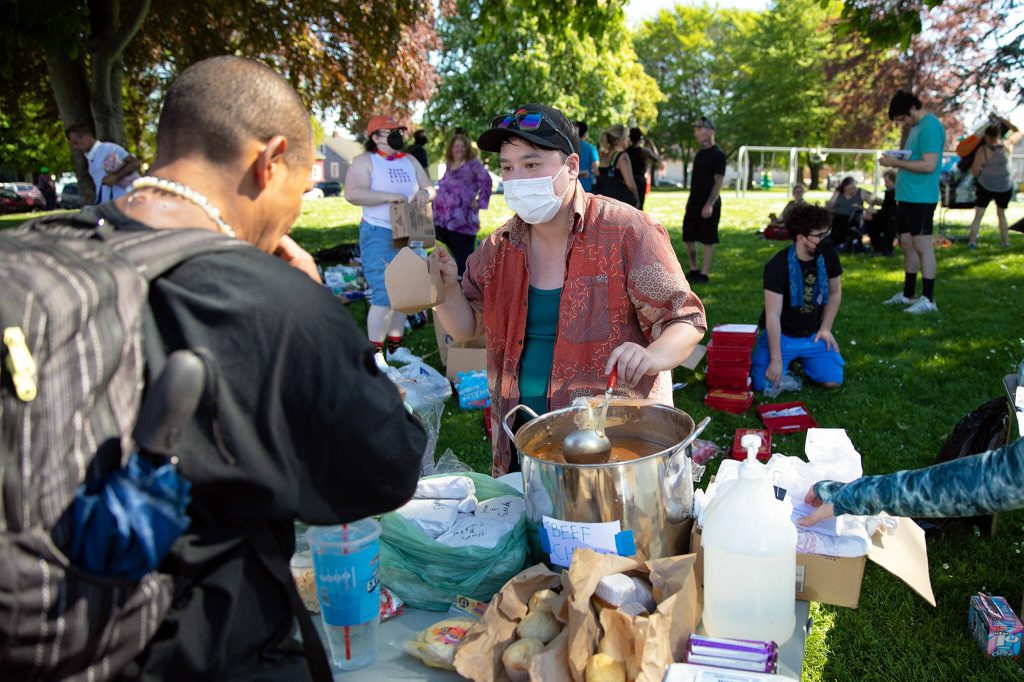
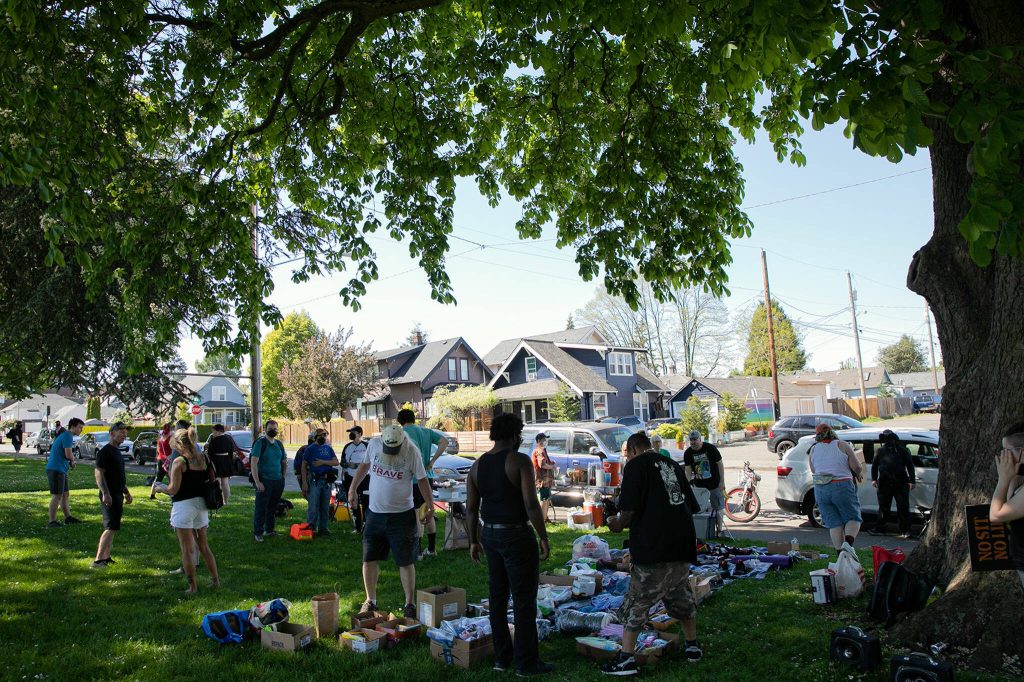


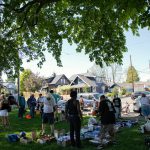

EVERETT — Clothing, food, hygiene supplies, medical evaluations, shoes and water were available for whoever needed and wanted it Sunday at Clark Park.
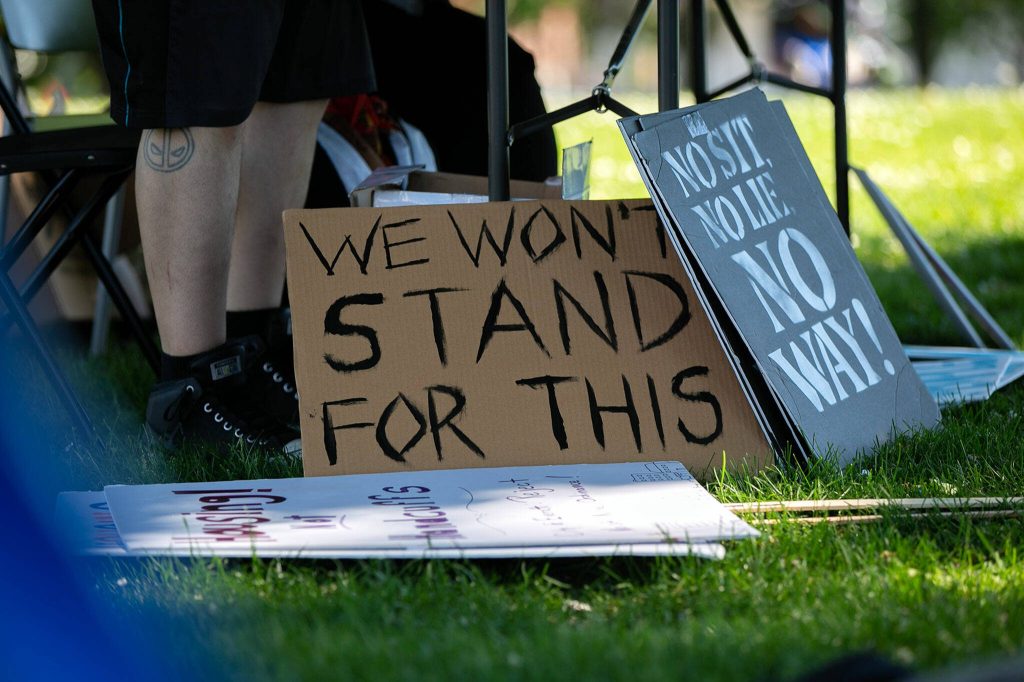
The gathering and giving were acts of compassion and defiance for a few dozen people protesting Everett’s recently expanded “no sit, no lie” law that bans people from sitting and sleeping on designated city property.
No such zones have been created yet under the new law, though one has been in place near the Everett Gospel Mission since mid-2021 after the initial policy passed.
Many people who showed up Sunday are part of mutual aid groups from across the region. Mutual aid is the practice of people directly supporting the needs of others outside of governments and nonprofits.
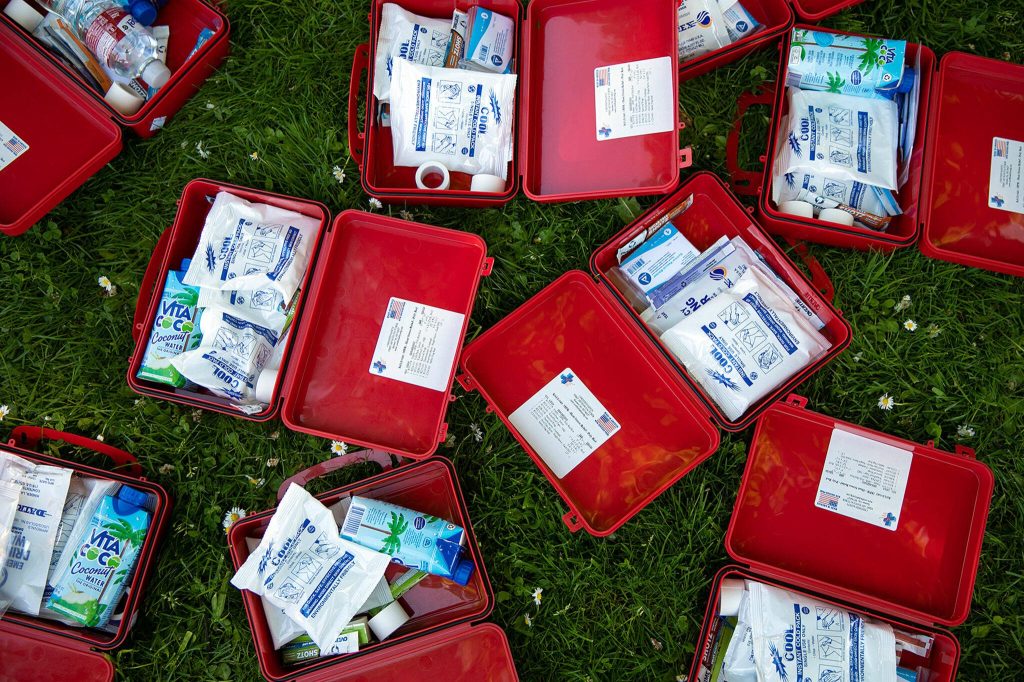
With temperatures hitting the low 80s on a near record-setting day in Everett, mutual aid meant people bought and offered bottled water and heat stress kits.
“There are no barriers to access,” Everett mutual aid supporter and resident Luisana Hernandez said.
Everett’s “no sit, no lie” law also bans people from giving food, supplies and water or other services inside buffer zones without a permit. There hasn’t been a specific permit for such activities, but city staff said they would consider creating one.
Hernandez and others at the protest said they shouldn’t need a permit to give water to someone who is thirsty, food to someone who is hungry, or overdose reversing medication to someone in need. One of the protest’s organizers trained people how to administer naloxone, often called by the brand name Narcan, which can treat a narcotic overdose.
But city leaders, including four council members and the mayor, contend the law gives police officers and city social workers a tool to address homelessness while trying to balance the desires of business owners and other residents in the city.
In public comments last month, people spoke of confrontations with people found sleeping in their doorways and other impositions.
Others opposed the law as a cruel response to life on the streets that can already be filled with trauma.
David Petrie, 32, used to live in a recreational vehicle. The Everett resident, who receives disability benefits, now has an apartment and is enrolled in a college program with an eye on a cybersecurity career.
But he remembers feeling like he didn’t belong and a general sense of hostility from strangers.
“Regardless of being told you need to go, you understand you’re not wanted,” Petrie said. “If one of their problems is just seeing (homeless people), then, as weird as it sounds, put them in houses.”
Everett has spent and plans to spend millions of dollars, much of it federal money, on emergency temporary housing.
Snohomish County is repurposing a former motel near the Everett Mall into an emergency shelter.
Other organizations run and would operate the programs at the sites.
Yet there’s plenty of need for options along the path from homelessness to permanent housing. This year’s point-in-time homeless count across the county reported 1,285 unhoused people, an 8.5% increase from last year and one of the largest totals since 2012.
People at Clark Park said high housing costs make food and other bills a sacrifice, which in turn leads to the need for them ensuring basic needs like food and water are available.
“We’re seeing the effects of longstanding callous disregard for homeless people,” Hernandez said.
Breaking the law, either for sitting and sleeping or giving out food in a designated buffer zone, could land someone in jail up to 90 days and a fine up to $500.
But mutual aid and protest organizers said they plan to keep giving food, medical attention and water to their neighbors.
Ben Watanabe: 425-339-3037; bwatanabe@heraldnet.com; Twitter: @benwatanabe.