If this dike fails, Stanwood goes underwater
Published 1:30 am Sunday, June 12, 2022


STANWOOD — Sid Roberts had just been mayor for a couple of weeks when he got the call in December.
It was Shawn Smith, who also was new to his job as city administrator. The dike just west of town had broken.
“This is a pretty big deal,” Smith said over the phone.
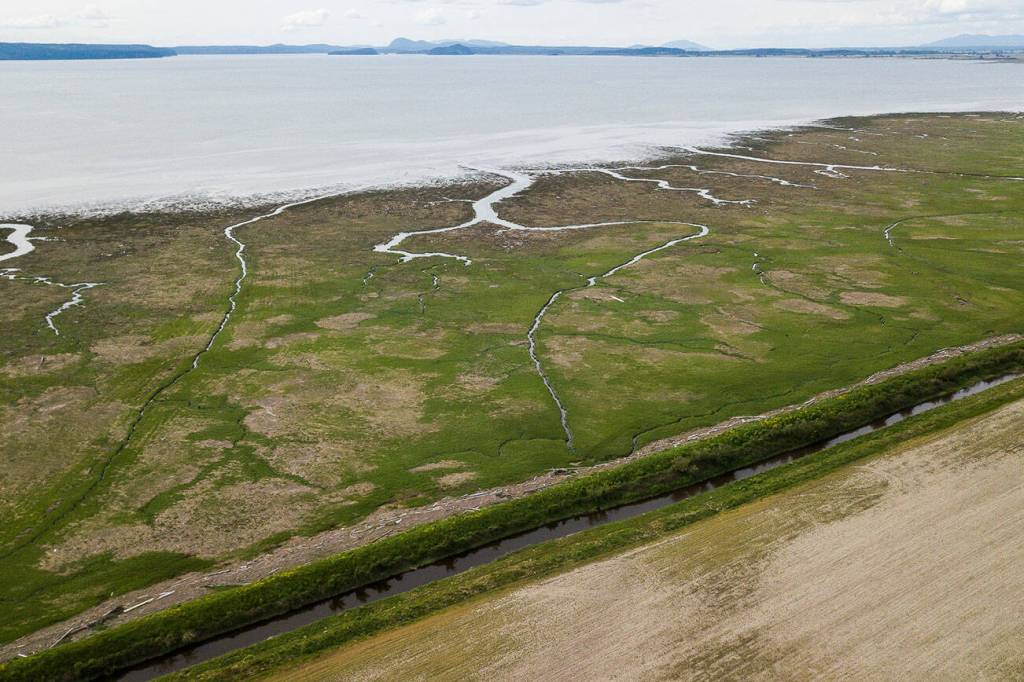
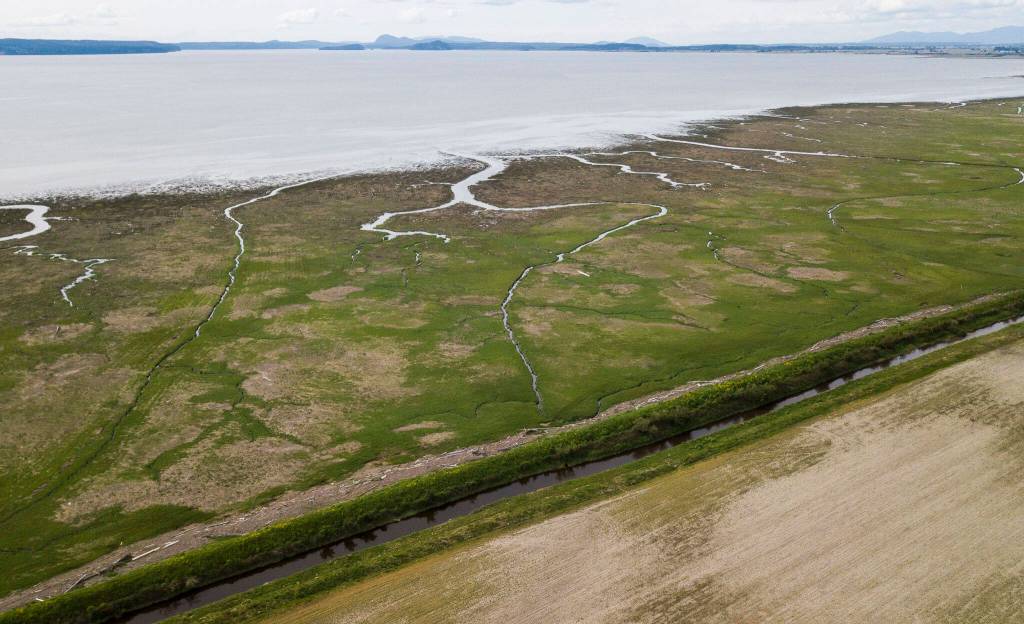
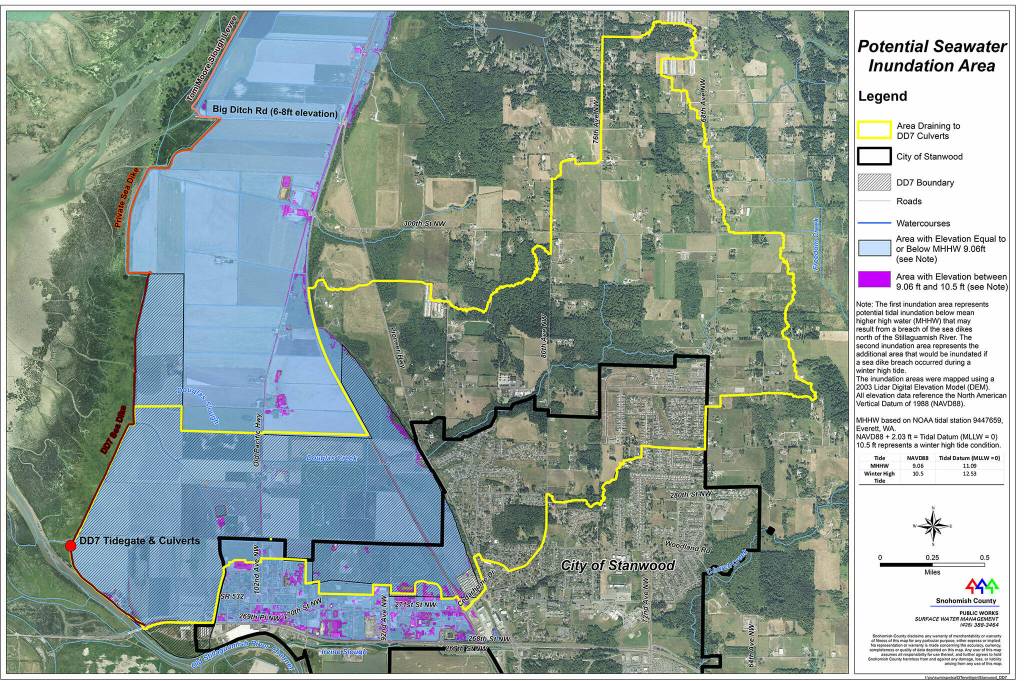
The four-mile-long mound of dirt and grass is all that is holding back Puget Sound. If it gives way, a high tide not only could flood over 1,800 acres of farmland, but submerge all of downtown Stanwood, endangering thousands of people.
As he drove down the hill to find where the leak had sprung that Friday afternoon, Roberts saw people out and about downtown, Christmas shopping, unaware of the danger looming just a few miles away — a danger he himself knew little about.
If the dike did break, models from Snohomish County suggested, seawater would stretch out to Pioneer Highway, deluging City Hall, the post office, the library, grocery stores, a food bank, a clinic. Schools and churches, apartments and houses. The Sons of Norway lodge and the Uff Da Shoppe. Restaurants would be left with a soggy mess of pizza and tacos and teriyaki.
Josephine Caring Community would be sunk, too. The facility employs 300 people and has 160 beds for rehabilitation, long-term care and memory care.
Linda Neunzig, agriculture coordinator for the county, said the dike protects “some of the best farmland” in the country.
“The cabbage seed, the beet seed that goes all over the world is grown in that valley,” she said. “… When you go to Lowe’s and buy a package of cabbage seed, the chance it was grown in that valley is extremely high.”
Red and Yukon Gold potatoes are grown there, also, she said.
“So if we lose that farmland, just imagine the impact right there,” Neunzig said.
The levee is over a hundred years old, slapped together by farmers in the late 1800s using horses and carts. It has held up surprisingly well over the decades, but it’s showing its age, and it’s nowhere near modern day standards.
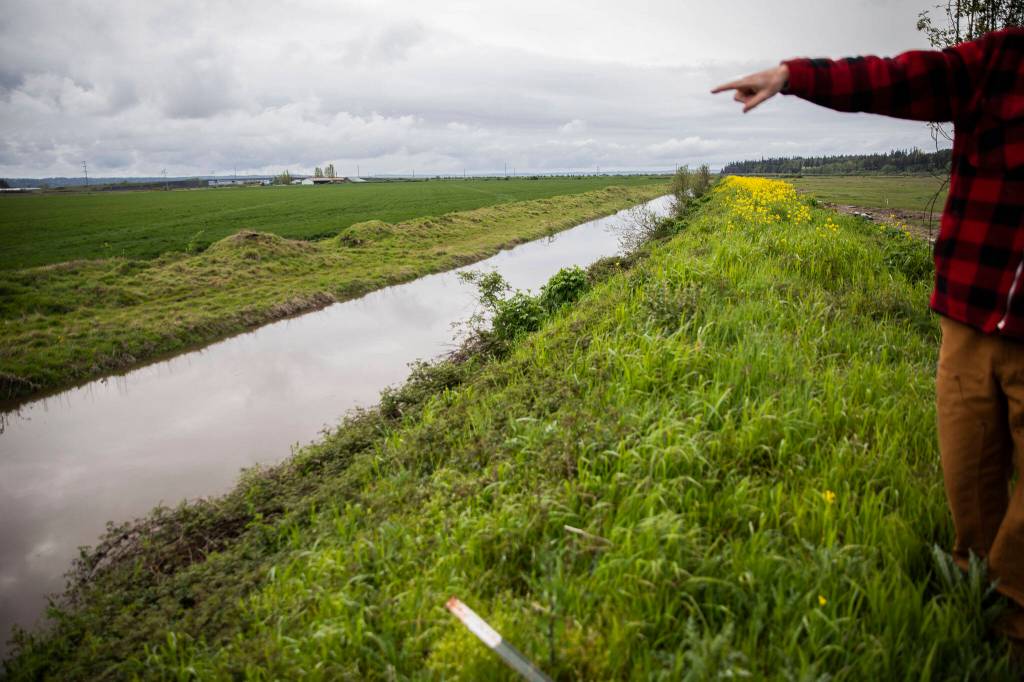
Parts of the levee are eroding, becoming skinnier, barely walkable in some spots, making the chances of a failure more likely. Other parts aren’t tall enough, hardly higher than the highest tides of the year. When Puget Sound fills to the brim, the water laps the top of that dirt mound. And occasionally, the ocean spills over.
Tyler Breum has been trying to get the dike replaced for over a decade now. He’s a former dike and drainage district commissioner and his family’s farm abuts the Sound. He’s the fifth generation to work the land here, mainly growing little red potatoes.
Without the levee, he said: “At the level we’re at right now, we’d be underwater probably six to eight hours a day.”
“It scares me,” he said. “I hate being below sea level. But this is where the soils are the most fertile and we can produce the healthiest crops.”
He’s been dispirited by the starts and stops that have plagued the dike replacement project. He has had so many meetings with government and tribal officials. He has given so many tours of the levee. Only for progress to flounder.
But today Breum has a glimmer of optimism. There are new people in new positions who seem more eager than ever before to get something done. Designs are getting finalized, and talks of wrapping up funding seem sincere.
Maybe, finally, the dike will get replaced.
‘Sheer luck’
That Stanwood didn’t flood in December was “sheer luck,” Breum said.
It was one of the highest tides of the year, a touch over a dozen feet. A duck hunter who happened to be walking on the levee noticed a crack forming in the ground beneath him. Turned out an old abandoned culvert — one nobody knew about — had crumpled, caving in a small section of the dike.
The hunter let a nearby resident know, who then called Breum.
Breum said he ran out as fast as he could, to a field he rented about a half-mile from his house.
“I could hear it before I saw it,” he said. “It was just like a waterfall.”
A six-foot gaping hole had formed. Within an hour, a hundred acres or so went underwater.
“Saltwater, which is just awful” for the soil, he said.
He got his contractor to bring out an excavator, and he called government officials to let them know he was going to do some emergency work on the dike. The contractor showed up within a couple hours. In the cockpit of the excavator, he hit the throttle, sloshing his way through the muddy field.
Fortunately, Breum said, the dike district had built an onramp to the levee. The dirt was good enough to use to plug the hole. Everything else around them had been saturated with water, turned into the consistency of quicksand.
The contractor spent eight hours on the excavator, ripping the culvert out and filling the hole with as much material as he could find. They only had so much time before the tide came back.
“I can’t tell you how lucky we are,” Breum said. “I mean, if that hunter hadn’t seen it when he did, and I didn’t get the call when I did, it’d be a different story. We just got very fortunate.”
When Roberts heard the hole had been patched, he felt a sudden wave of relief.
And then urgency.
“I thought, you know what, somebody has to push this forward and get it done.”
For Roberts, the breach was a wake-up call. But for Breum, it was a confirmation of what he’d been warning everyone about. The levee is on borrowed time.
Not a ‘slam dunk’
Breum has been talking to people about the dike since at least 2009. Back then, Snohomish County was embarking on its Sustainable Lands Strategy, an effort to bring various parties to the table and figure out everyone’s wants and needs. The idea was that fish, farm and flood management advocates could make more progress “by working together than by being at odds with each other.”
In the floodplains, the agricultural and tribal communities have historically waged a tug-of-war over land use, with the sentiment that you can grow crops or you can grow Chinook, but you can’t do both. So neither side wants to give an inch, and compromises are hard to come by.
Not too much came out of those conversations, Breum said. But it helped him get a jumpstart to corral some dollars through Floodplains by Design, an ambitious public-private partnership that also seeks to find harmony among varying interests. The state-backed program funds restoration work alongside agriculture projects alongside flood preparation.
In 2013, in the program’s first phase of grants, the dike replacement got $400,000 for design work, through a package submitted by the Stillaguamish Tribe.
Pat Stevenson, who retired last year, was the tribe’s longtime environmental manager and the point person for their Floodplains by Design projects. At the time, he said, there was some trepidation from the Stillaguamish Watershed Council. On one end of the spectrum, some voiced the opinion that the dike should be removed entirely, or moved further inland, to let the tide back in and create more salmon habitat. Others were cautious about supporting anything that might hurt the fish runs.
While other projects in the grant package gained momentum, like ecosystem restoration at nearby Leque Island, the levee replacement languished. It wasn’t until 2019 it got funding for construction, to the tune of $1.6 million. That money was meant to carry the rebuild to the finish line, but that’s no longer the case.
Stevenson said he ran into numerous challenges. Permitting involved a tangled web of agencies. There were questions about who oversaw the affected pieces of land and water. And it didn’t help that a dike replacement wasn’t in his wheelhouse of expertise. He had to figure out a lot of things from scratch.
Perhaps, also, there was a lack of motivation. The county, which first appeared set to take a leadership role, quietly withdrew. Stanwood, too, took a hands-off approach.
The dike wasn’t the same “slam dunk” as the salmon recovery projects, which saw more support and more money, Stevenson said.
‘Thread the needle’
Last year, Jason Griffith inherited the project from Stevenson. Almost right away, he noticed a problem. Tribes that weren’t consulted might threaten litigation. A cautionary tale was taking place not far north, where the Swinomish Tribe filed an intent to sue the Army Corps of Engineers for permitting dike district projects along the Skagit River, without fulfilling a promise to restore estuaries.
In an attempt to “thread the needle” to appease all of the parties, or come up with a solution that didn’t make anyone too mad, Griffith had delicate, months-long conversations with stakeholders and made updates to the proposal. The current draft calls for setting the levee back further to make up for the habitat impacts of broadening the dike. While it would only be wider by a few feet, over four miles, “a few feet adds up to acres of impact,” Griffith said.
Griffith also found a compromise for mitigation, a requirement for permits. The city of Stanwood is giving up a few acres at the historic Johnson Farm, and Breum is surrendering a few more on his land.
“He should get a Nobel,” Breum said of Griffith. “I’m not overstating that. The agreements that he’s been able to put together, they’re worthy of a lot credit.”
The design should be finalized by end of summer. Griffith said the new levee will be a little taller, with a height of about 14 feet, and a portion on the southern end could become a walking trail, at the request of the city.
Right now, “some of the levee is 11 to 12 feet, so it’s just barely holding the ocean back,” Griffith said.
Fourteen feet adds a couple feet of breathing room, as storms and flooding are expected to get worse with climate change. But it’s low enough that it won’t spur more development.
In the end, the levee will mostly look the same: An engineered dirt pile with grass covering it. There’ll be a lot of clay in the mix, so water doesn’t poke through.
Griffith hopes to get permits by next year. Construction could start as soon as next summer. That would mean another winter of high tides, and the danger of another breach.
“It’s a little embarrassing how long things have taken,” Griffith said. But the process appears to be speeding up.
In the meantime, it’ll be a race to get enough money to fund construction.
‘We started calling’
Stanwood’s new mayor seems eager to help. Roberts concedes the city doesn’t have a lot of money to throw at the project, and doesn’t even have jurisdiction where the dike is located. But he can pick up a phone. That’s what he and city administrator Smith did after December’s breach.
“We started calling Rick Larsen’s office and Nate Nehring’s office and Greg Gilday’s office and basically everybody we can,” the mayor said.
In May, a makeshift think tank met at Stanwood City Hall. County officials, city leaders, the Snohomish Conservation District, U.S. Rep. Larsen and, of course, Breum all gathered at one table.
The goal? Figure out how to fund the dike project, which has ballooned in cost. It’s now estimated to cost $6 million, due to the proposal’s changes and the combo punch of inflation and supply chain issues.
Griffith said he’s pursuing another $1 million grant, again through Floodplains by Design, but that won’t be enough by itself. And the price tag is certainly well beyond the budget of the local dike district, which has less than $30,000 to spend in any given year — enough to keep up with mowing the grass, which Breum has done a lot himself.
A list of acronyms was thrown out: They might get grants from FEMA or NOAA or ARPA, or some combination of state and federal sources.
No guarantees were made, but county leaders expressed interest in becoming involved once more. And the conversations have continued since that May meeting.
Roberts hopes it isn’t too late.
“The way things work politically, no one cares until they care, you know,” he said. “Until there’s a failure. Then everybody starts looking for who knew about this, and why didn’t they do something?”
Zachariah Bryan: 425-339-3431; zbryan@heraldnet.com. Twitter: @zachariahtb.