Lynnwood approves fee increases for permit services, business licenses
Published 1:30 am Tuesday, December 9, 2025
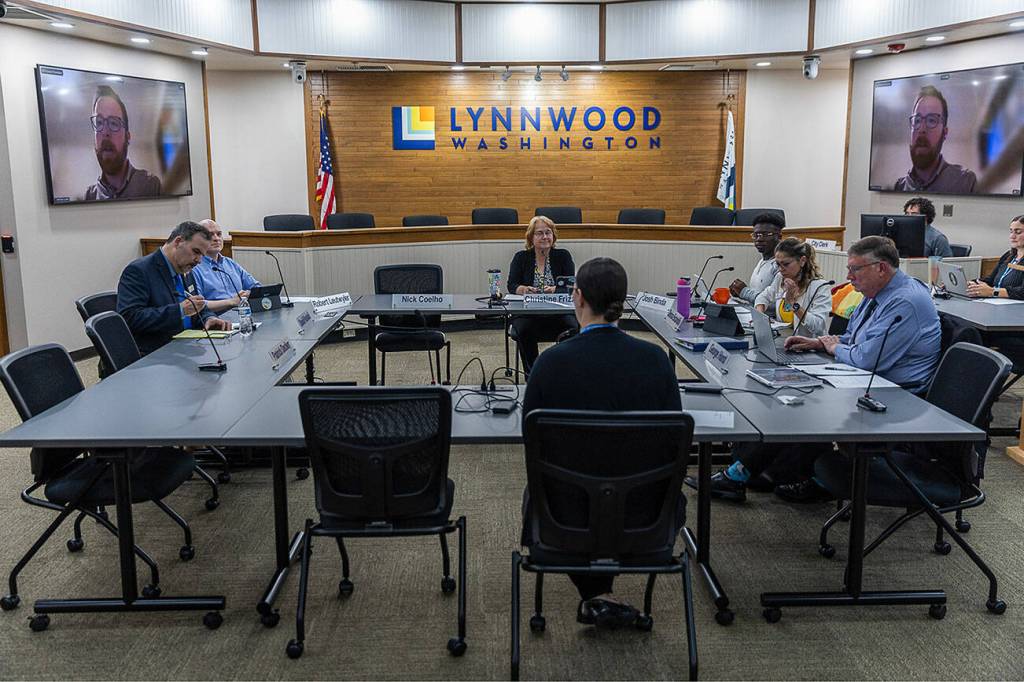


EVERETT — The Lynnwood City Council narrowly approved fee increases to permit services and business licenses Monday.
The votes come as the city continues to address its $25 million shortfall. The shortfall largely stems from lower-than-expected revenues from building permits, as well as sales tax and red-light cameras. A combination of cuts, policy changes and tax increases had lowered the 2026 shortfall to $4.8 million before Monday’s votes.
Starting Jan. 1, the city will implement a 14.7% permit services fee increase across the board. Permits valued over $5 million will see a larger increase of 35%, and the base rate of building and electrical permits will increase by $114.
City staff anticipate between $537,000 and $2 million in additional revenue for 2026 from permit fees.
The council approved the increase by a vote of 4-3. Council members Patrick Decker and Derica Escamilla and mayor-elect George Hurst voted against the increase.
The city increased permit fees in 2023 with the goal of full cost recovery. But full cost recovery hasn’t happened, Community Planning Manager Karl Almgren said, which Hurst raised concerns about.
“I just wish I could be 100% assured that this is the last time this will happen,” Hurst said.
Ben Wolters, director of development and business services, said the city won’t have to increase fees again in the near future.
“We have completely turned around the reputation of Lynnwood as a place to build, and that happens through organizational and cultural changes,” he said. “It also happens through the investment that this council and past councils made in the department.”
Council members who voted in favor of the increase said it’s a necessary step for the city to recover from its deficit.
On Nov. 24, the council approved a 24% property tax increase, less than the 53% it was allowed to enact without voter approval. The city also raised some utility taxes to 10%.
“With the situation that we’re in, which is dire, I would say that a lot of the tax votes that we’ve taken so far have been a compromise because it was not the full amount that was initially presented or recommended,” council member Robert Leutwyler said. “We’ve taken compromised amounts trying to thread that needle. We are not shrinking the deficit as may be initially envisioned.”
The council also approved a 33% business license fee increase, which staff expect to bring in $556,850 in additional revenue. The change will go into effect March 1.
The council adopted the ordinance by a vote of 4-3, with Hurst, Decker and council member David Parshall voting against.
“If we have a reputation of being the most expensive, businesses will go somewhere else,” Decker said.
Simreet Dhaliwal Gill, business development program manager, said she spoke with 10 business owners in the city who were all in favor of a phased approach to the new fees. Parshall was in favor of the phased approach.
“If we were to graduate that increase, it simply would mean less collected in 2026 and therefore would leave more that needs to be made up in some other fashion,” Wolters said.
Again, council members who voted for the business license fee increase stressed the importance of addressing the city’s shortfall.
“We have a giant budget deficit that is potentially going to impede us delivering essential services that our homeowners and that our business owners need — timely police response, timely permit turnarounds, business support,” council President Nick Coelho said. “These aren’t fanciful topics. They’re the nuts and bolts that make a city run, and so I would be in preference of us voting on something concrete that takes really rapid action to try and resolve the situation we’re in.”
Jenna Peterson: 425-339-3486; jenna.peterson@heraldnet.com; X: @jennarpetersonn.