New state lab will work on renewable energy
Published 10:51 pm Thursday, May 8, 2008
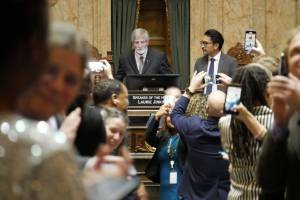
RICHLAND — State and federal officials celebrated the opening Thursday of a laboratory dedicated to research on the fuel potential of agricultural residue and other material, such as wood, common to the Pacific Northwest.
Scientists at the $24.8 million Bioproducts, Sciences and Engineering Laboratory will work on ways to convert biomass, including low-value agricultural crops or non-edible substances such as wood products and municipal garbage, into fuel and chemicals such as plastics and solvents.
Located on Washington State University’s Richland campus, the lab includes work areas for university faculty and students, as well as scientists from the nearby Pacific Northwest National Laboratory.
The two entities plan to collaborate to bring to market some of the best technological practices in biofuels and biosciences, university President Elson Floyd said.
“This facility and the people who work here will form the cornerstone of our efforts as a university and our state to take a leadership role in the efforts of sustainability and clean energy,” Floyd said.
The dedication comes as food scientists urge some countries to rethink biofuel, blaming a flood of agricultural production devoted to ethanol for contributing to high commodity prices and a global food crisis.
There’s no question that biofuels are related to some rising commodity prices, but most food shortages involve products not used for energy, such as rice, said Alexander Karsner, assistant U.S. energy secretary for energy efficiency and renewable energy.
“We know and acknowledge that converting food-based feedstock to fuel only rises to a point of equilibrium, and we’re reaching that point today. Production of ethanol and corn facilities is flattening out now,” Karsner said.
Related to that, he said, is pursuing the potential of non- edible cellulosic fuel such as straw and wood.
“You can’t turn one on overnight and turn off the other,” Karsner said. “What we need to talk about is the addiction to oil and the corrosive effect of $123-per-barrel oil. They all affect one another, but what’s critical right now is researching our energy independence.”
Gov. Chris Gregoire sought funding and promoted the lab to investigate ways to convert farm byproducts into usable products such as plastic and biofuels. She has said she expects technologies coming out of the lab to create new jobs in Washington state, which contributed $13 million to the project.
The national laboratory, which signed a 20-year lease, contributed the balance, as well as an estimated $10 million in research equipment.