Editorial: Even after 1 million deaths, covid fight isn’t over
Published 1:30 am Tuesday, May 17, 2022


By The Herald Editorial Board
Monday, the United States hit its expected — and likely underestimated — milestone of 1 million deaths caused by the covid-19 virus since the disease’s first official diagnosis was reported for a Snohomish County man who was treated in late January 2020 at Providence Regional Medical Center Everett.
The man, then 35, was treated for about two weeks and sent home.
So many more were not as fortunate.
Of those 1 million deaths, more than 12,800 deaths have been recorded among Washington state residents during the course of the pandemic. The death toll in Snohomish County, as of May 13, was listed as 1,146. And very few individuals can claim to have known no one who has died because of covid or whose family and friends have not felt serious impacts from the pandemic.
And yet, covid’s various counts — case rates, hospitalizations and deaths — continue to tick away. Even as the worst of the initial omicron variant’s wave has ebbed, a new sub-variant of omicron is showing signs of resurgence. While far from the worst of omicron’s initial surge in mid-January, covid case rates are increasing in several regions of the U.S., including Washington and Oregon, with 90,000 new cases reported each day nationwide, a 60 percent increase in the last two weeks, The New York Times reported Monday.
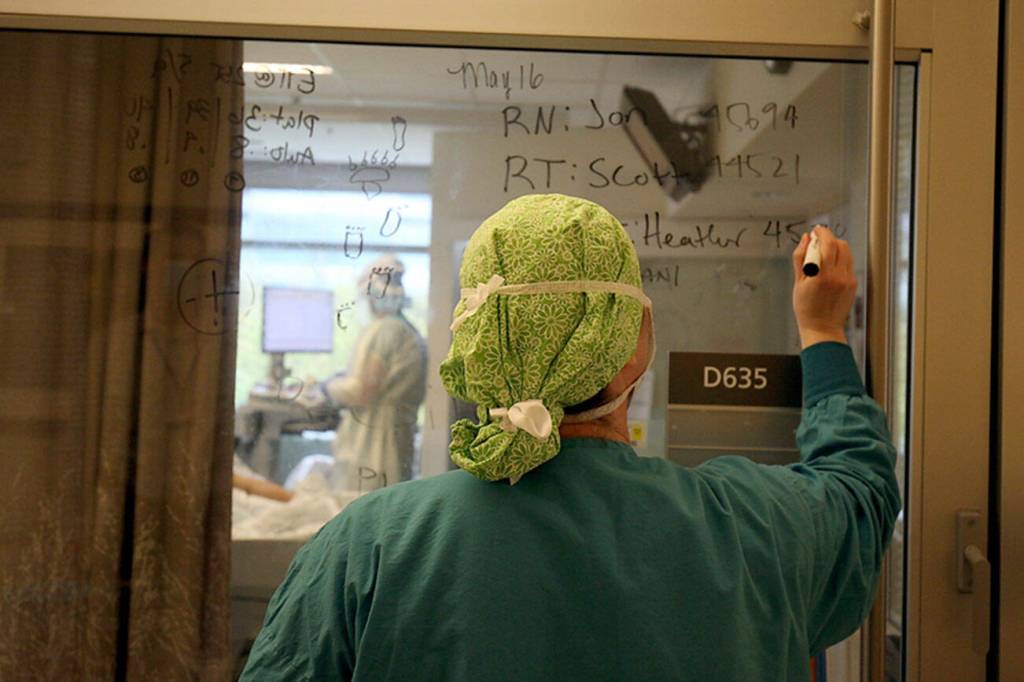
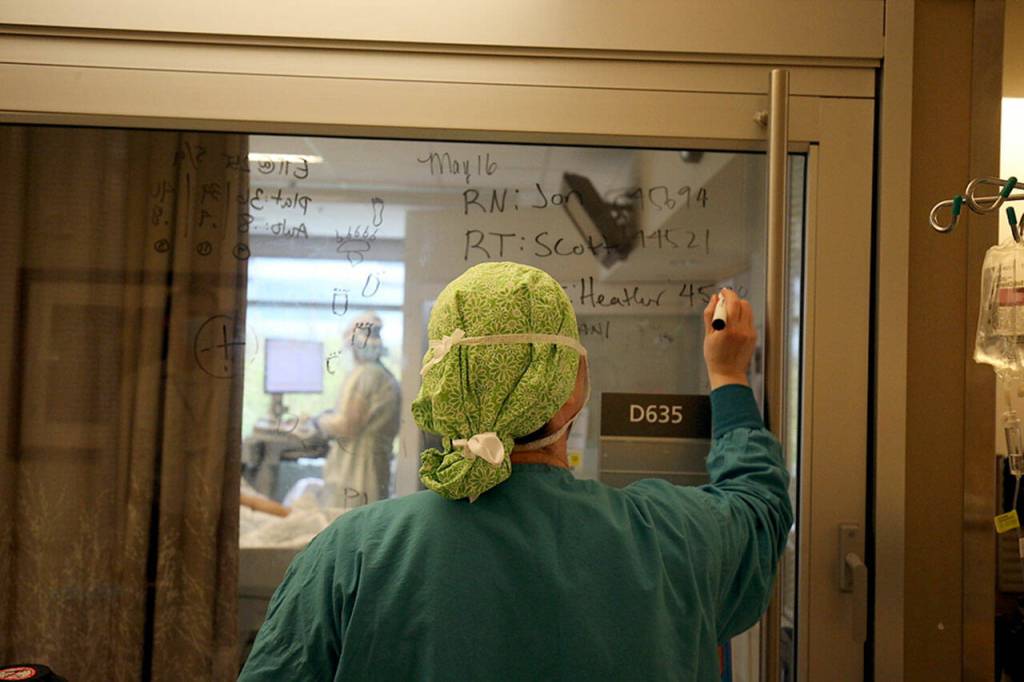
Though more slowly than new cases, hospitalizations also are increasing. According to reports from the Snohomish Health District, 34 patients were reported hospitalized for covid in county hospitals as of May 13, although none was on a ventilator, a significant increase from the 14 hospitalized a month earlier.
With few exceptions, most of us have pocketed our face masks, if we even carry them. And rates for vaccinations and boosters are edging up only at glacial rates. Statewide, nearly 82 percent of those ages 5 and older have received at least one dose, according to the state Department of Health, and about 74 percent are fully vaccinated. But vaccination rates for children nationwide continue to lag; only 4 in 10 parents of children ages 5 to 11 report their children as having been vaccinated, according to the Kaiser Family Foundation coronavirus tracker, with nearly a third of parents — 32 percent — adamant that they won’t seek a vaccine for their child.
That hesitancy — even outright rejection of available covid vaccines — brought us to that 1 million mark far sooner than it had to be.
An analysis by researchers at Brown University and Microsoft AI health, shared with National Public Radio, estimated that more than 318,000 U.S. covid deaths might have been avoided if the nation had been able to reach a near-100 percent vaccination rate. Researchers calculated the peak vaccination rate for each state, then assumed that rate’s continuation until all adults for a state would have been vaccinated. Of the 641,000 Americans who died since the availability of covid vaccines, an estimated 318,981 deaths could have been averted, the research showed.
The state-by-state data makes the unavoidable observation that the nation’s “red and blue” political divide marked the greatest difference among vaccine acceptance among states, as well as observation of masking and other social distancing recommendations and requirements.
Among the states with the highest per capital rates of avoidable deaths were the red states of West Virginia (2,338 preventable deaths per 1 million adults), Wyoming, Tennessee, Kentucky and Oklahoma. While blue states, including Washington, D.C., (285 avoidable deaths per 1 million) Massachusetts, Puerto Rico, Vermont and Hawaii had the lowest per capital rates for avoidable deaths.
Washington state’s preventable deaths, among the low end of the range, were estimated at 890 deaths per 1 million adults, for a total of 5,299 deaths that might have been avoided.
While that observation will surprise few after more than a year of debates about vaccines and masking, it makes the argument — even as it’s clear that covid is not nearly through with us, even if we’re through with it — that care and caution still are necessary.
Those who have not been vaccinated or have balked at vaccinating children 5 and older should reconsider; and at the very least should talk to their doctor. While the vaccine does not provide absolute certainty against being infected with the virus, it greatly reduces the likelihood of serious illness, hospitalization and death.
As more of us return to our workplaces, voluntary use of masks and safe distances should be considered as well as our contact with others increases.
And, finally, Congress — which has correctly recognized the worldwide threat posed by Russia’s unprovoked attack on Ukraine and is expected to soon authorize $40 billion in additional aid to that country — now also needs to make an investment of at least half that amount to continue the fight in the U.S. against covid to boost supplies of vaccines, testing supplies and treatments, including Paxlovid, which the Biden administration pledged would be made available soon after a positive covid test.
Our fight against covid has been long, costly and physically and emotionally exhausting. But it is not over. Not as long as those numbers continue to tick by.