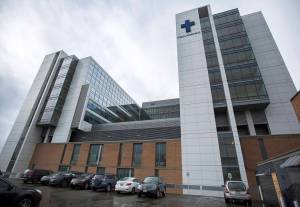
Heart monitor lawsuit winds down
Published 10:26 pm Monday, March 3, 2008
EVERETT — Lawyers for a man whose heart was burned during an operation asked a Snohomish County Superior Court jury Monday to compensate him and his family with a $38 million judgment against the manufacturer of a machine that malfunctioned.
In addition, the lawyers allege that Edwards Lifesciences Corp. should have to pay punitive damages for not disclosing that there was a software bug in a monitor that caused the overheating.
The demand for compensation came as a monthlong civil trial was winding down in the case of Paramjit Singh and Providence Everett Medical Center, who are suing Edwards, of Irvine, Calif.
Edwards admits it is partly responsible for Singh’s injures, but maintains Providence should share in paying damages. Providence rejects that, saying it was kept in the dark about the hazards posed by the machine.
Singh went into Providence in October 2004 for relatively routine heart bypass surgery. During the operation something went terribly wrong.
A series of events triggered the software bug in the monitor, and several fail-safe devices built into Edwards’ Vigilance monitor were turned off. A catheter that had been inserted into Singh’s heart to measure blood flow overheated and literally fried his heart.
Providence paid for Singh’s heart transplant surgery in December 2004, but Singh has had numerous health problems since and expects more — including kidney dialysis or kidney transplant, a bout with cancer, a lowered immune system due to anti-rejection drugs he must continue taking and the prospect of contracting diabetes.
“I have a terrible need for justice in this case,” Singh lawyer Paul Luvera of Seattle told jurors. “I am angry.”
Luvera asked jurors to punish Edwards by finding for punitive damages and “set standards by example.”
Edwards lawyer Steve Fogg of Seattle said his client is perfectly willing to pay reasonable damages to compensate the Singhs. He said there are no grounds, however, to find that the company acted maliciously, and said there should be no punitive damages.
In addition, he accused Providence of contributing to the tragedy when it used a damaged cable that connected the Vigilance monitor to the catheter.
“There is no doubt that it took two failures for this to happen,” Fogg told jurors. Providence had a duty to make sure its equipment, including the cables, were in proper working order.
“Providence had a breakdown here. Providence used a damaged cable,” Fogg said.
Providence lawyer Kathy Cochran told jurors that Edwards knew a catheter could overheat “and they just didn’t share the information. Edwards is the one who did not meet expectations.”
The hospital said it should be compensated for providing medical care for Singh, as well as the cost of defending the lawsuit and for numerous expenses associated with determining what happened to Singh. Cochran has accused Edwards of fraud and concealing the likely cause of the catheter’s overheating.
The lawsuit maintains that Edwards knew of the overheating danger at least a year before Singh’s injury and didn’t warn users about the Vigilance monitor.
Jurors saw a video shot during a Japanese operation in 2003. In it, a catheter began overheating. It charred and burned up. The Japanese patient was not injured because the catheter was outside the heart at the time.
Lawyers for Singh and Providence allege that the company broke federal laws by not reporting the incident in Japan to the U.S. Food and Drug Administration, which regulates medical devices in the United States. They also allege that the company violated the Washington Consumer Protection Act.
Lawyers argued all day Monday and were scheduled to return to Judge Linda Krese’s courtroom this morning to continue arguments.
The jury is expected to start deliberating today.
Reporter Jim Haley: 425-339-3447 or jhaley@heraldnet.com.