Rescued wildlife get their pens spruced up after holidays
Published 1:30 am Thursday, December 29, 2016
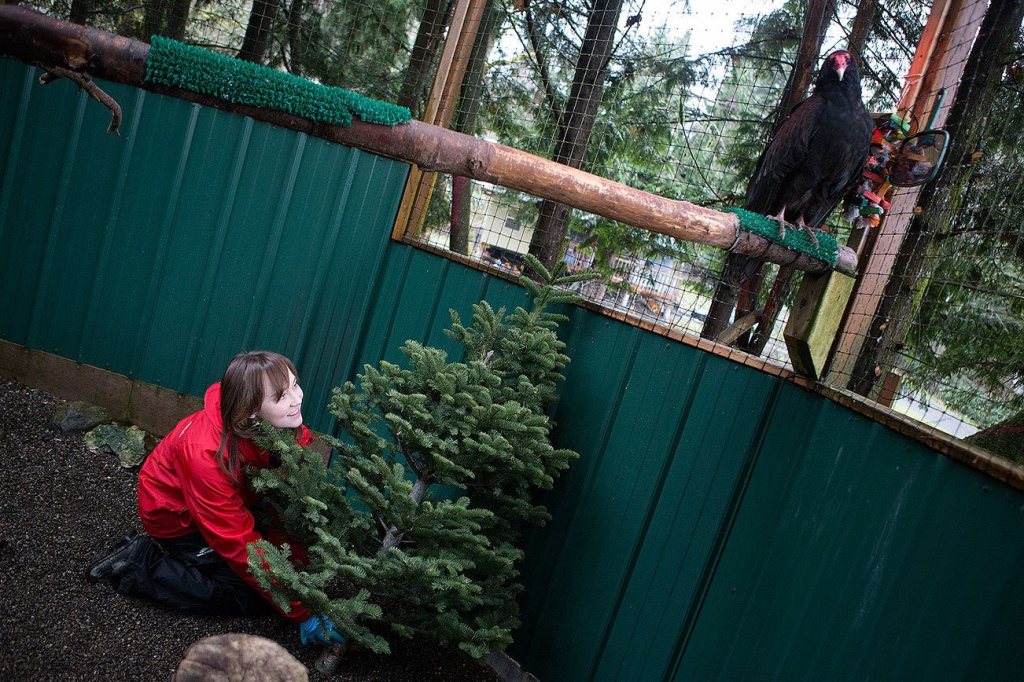
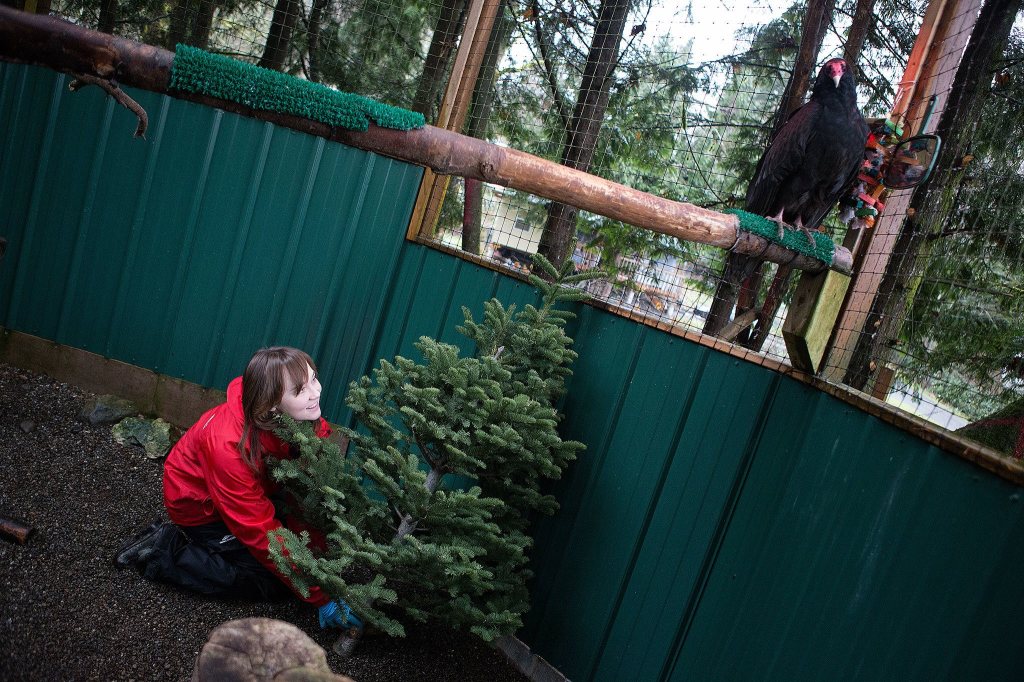
ARLINGTON — The evergreen tree in the golden eagle enclosure doesn’t look a whole lot larger than Hu Iyake, the grand bird who lives there.
The recycled Christmas tree came from someone’s living room, donated for use at Sarvey Wildlife Care Center. Though smaller than many of the evergreens that tower in Western Washington forests, it’s a welcome change in the eagle’s habitat, director Suzanne West said. It offers different sights, smells and textures for the bird, the kinds of things the raptor would find in the wild. Hu Iyake has been part of Sarvey’s education program since 1999. She can’t be released because of problems with her beak that make it nearly impossible to eat on her own.
Donated Christmas trees also have been placed in the habitats of Baxter the Bobcat and a recently rescued porcupine that had been attacked by a dog. On Tuesday, the porcupine was hiding somewhere in the boughs of the evergreen. Hopefully he can be released after he has time to heal. In the meantime, he has a cluster of fragrant green branches to call home.
Sarvey is accepting donations of Christmas trees until Jan. 7, West said. They must be chemical free, so if they were treated with fire retardant or flocking, the center won’t accept them. They also should be devoid of tinsel or other decorations. And the trees don’t work well for habitats if they’ve dried to the point where needles brown and fall off.
Trees can be dropped off at 13106 148th St. NE, off Burn Road between Granite Falls and Arlington. If the gate is closed, trees can be left in the gravel parking lot next to the gate and volunteers will retrieve them, West said.
“The trees give the animals new smells, something maybe to tear up and make a nest with, and new places to perch,” she said. “We try to create as natural a habitat as possible, and this makes sense. (The trees) are just going to go to mulch, and we can use them.”
Sarvey’s staff and volunteers take in injured or orphaned native wildlife with the goal of helping them heal and then releasing them. Animals that are permanently disabled become part of an education program. The nonprofit has about 30 animals in residence, but that’s expected to jump to several hundred critters during the spring “baby season.”
Sarvey accepts donations of money and services year-round. Donated evergreens for enclosures aren’t the only tree-related request this winter, West said.
On Christmas Eve, a tree on a neighboring property crashed down and destroyed one of the habitats for educational birds. It mangled a chainlink fence at the property line and cracked through the roof and wall of the bird’s enclosure.
Luna, a Northern Saw-whet Owl who had been with the center since 2014, escaped. She is not as disabled as some of the other resident birds and West is hopeful she can survive. Luna’s vision is poor, but she can fly and eat on her own.
Neighboring enclosures were damaged slightly when the tree fell, but no other animals escaped.
Insurance is expected to cover the cost of repairing the habitats. However, it won’t be enough to cut down four other trees that West says are at risk of falling. She’s looking for a local tree removal company willing to donate time and equipment.
Hiring someone to take down a tree safely can cost thousands of dollars, and the nonprofit doesn’t have the money in its budget, she said.
On Tuesday, volunteer Alistair Wressnigg worked on repairing one of the damaged habitats. He stood on a step ladder to reach the cracked wooden frame of the door. The red-tailed hawk that lives there had been moved to another area until repairs are complete.
Wressnigg, who has volunteered at Sarvey for 10 months, hoped to get the habitat patched up soon.
West and her team also are working on a remodel of Sarvey’s animal hospital.
New flooring has been installed in almost every room, and the next step is replacing cabinets in the kitchen thanks to a $3,000 grant from the Tulalip Tribes, West said.
The nonprofit is accepting donations for day-to-day operations and projects such as replacing eagle enclosures and adding bird habitats.
For more information, go to sarveywildlife.org or call 360-435-4817.
Kari Bray: 425-339-3439; kbray@heraldnet.com.