Hawks bolster depth on D-line, secondary on Day 2 of draft
Published 1:30 am Friday, April 28, 2017
RENTON — The Seattle Seahawks waited one day. They waited one more pick on day two.
Then they seemed to please few — except, of course, themselves.
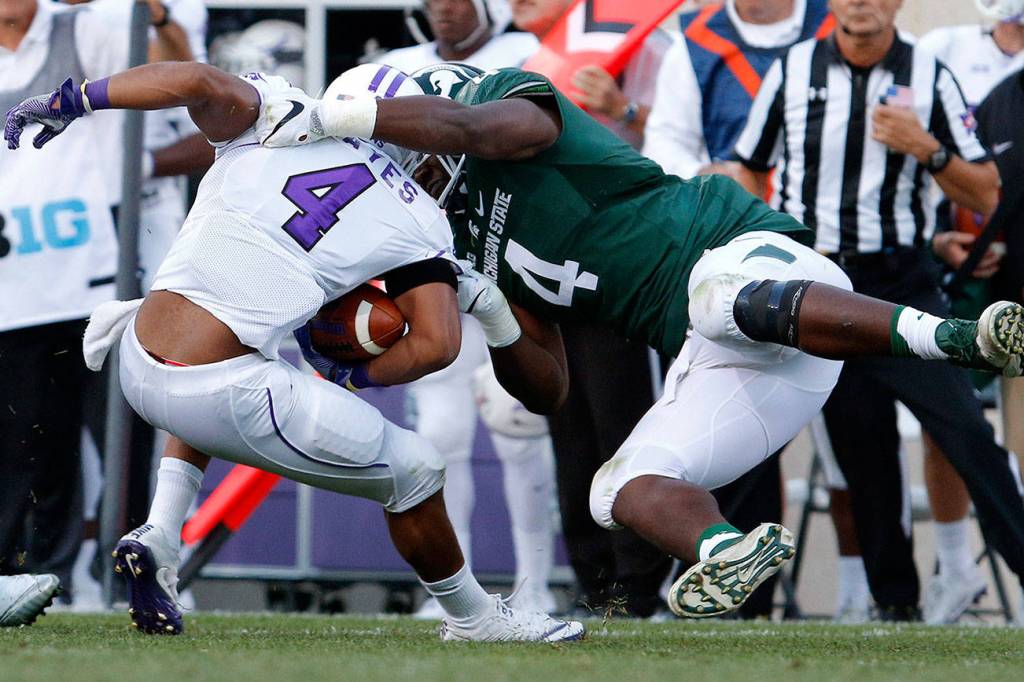
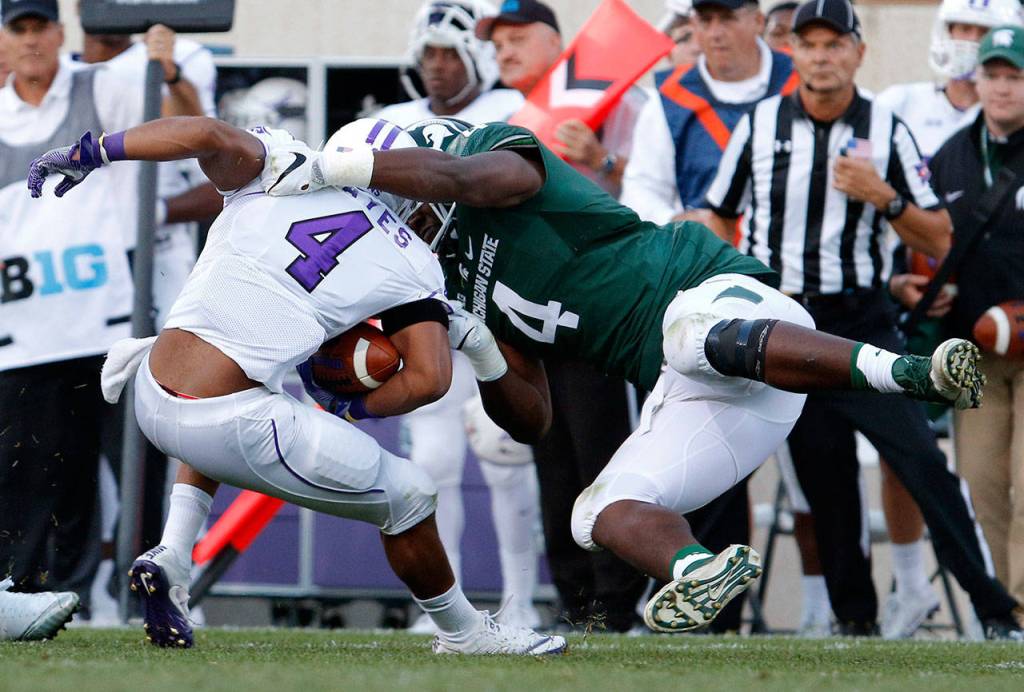
Seattle made its third trade in less than 24 hours Friday afternoon, moving from the second pick of round two down to the third pick of the second round — while picking up Jacksonville’s sixth-round choice. Then they took Michigan State defensive tackle Malik McDowell.
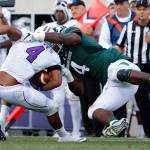
He is 6-foot-6, and weighed 299 pounds on his pre-draft visit to the Seahawks. That was up 23 pounds from his listed weight in college. He said he played “about 90 percent” of his snaps at Michigan State as a nose tackle, over the center.
That’s one tall nose tackle.
He played the other 10 percent of the time outside at end. Expect the Seahawks to explore his versatility once rookie minicamps begin in two weeks.
“Talking to coaches, they said they liked me a lot,” McDowell said of the Seahawks’ interest before the draft. “They played it cool, really.
“I am just real excited. … I’m just coming here to compete. Whatever works out for me.”
In fact, you could just about hear his grin through the phone Friday night from his home in Detroit, minutes after Seattle picked him.
“I’m just so happy,” the 20-year-old McDowell said. “I’m smiling from ear to ear.”
Asked to describe his game, McDowell said flatly: “Dominant player.”
He did not elaborate. He saw no need.
He had been seen by many to be a potential top-10 pick in the last couple years. He dominated games such as against Notre Dame. But he got widely criticized for not showing up for other games as his Spartans uncharacteristically lost.
“It was a tough season, a lot of downs. It was just a tough year,” he said.
“I am motivated.”
Motivation shouldn’t be an issue in the NFL, with a team with plans to compete for a championship again.
McDowell doesn’t turn 21 until June 20. He played three seasons with the Spartans, left after his junior year, and totaled 90 tackles in 36 games, with 24½ of those stops behind the line of scrimmage. He was a freshman All-American in 2014, second-team All-Big Ten in ‘15 and first-team All-Big Ten in 2016, when he played through an ankle injury in the final three games. That’s when his reputation was soaring.
The Seahawks’ net result of moving down from the 26th overall pick Thursday to 35th Friday: McDowell plus four additional draft choices for a total of 11 in this draft.
But there was a cost: whom the Seahawks passed on and missed out on while moving down, then down, then down again. They lost out on Kevin King, the 6-3 star cornerback from the neighboring University of Washington that seemingly would have fit Seattle’s defensive scheme. King went one spot above Seattle’s initial second-round place before it traded down, at 33rd overall to Green Bay.
The Seahawks didn’t get top offensive linemen Cam Robinson of Alabama, the Outland Trophy winner as college football’s best interior lineman, or Western Kentucky’s Forrest Lamp, who projects as a guard. Either could have helped what remains Seattle’s most problematic unit.
Another gut punch to fans in Western Washington: UW safety Budda Baker went to the Seahawks’ NFC West rivals, the Arizona Cardinals, one pick after Seattle selected McDowell.
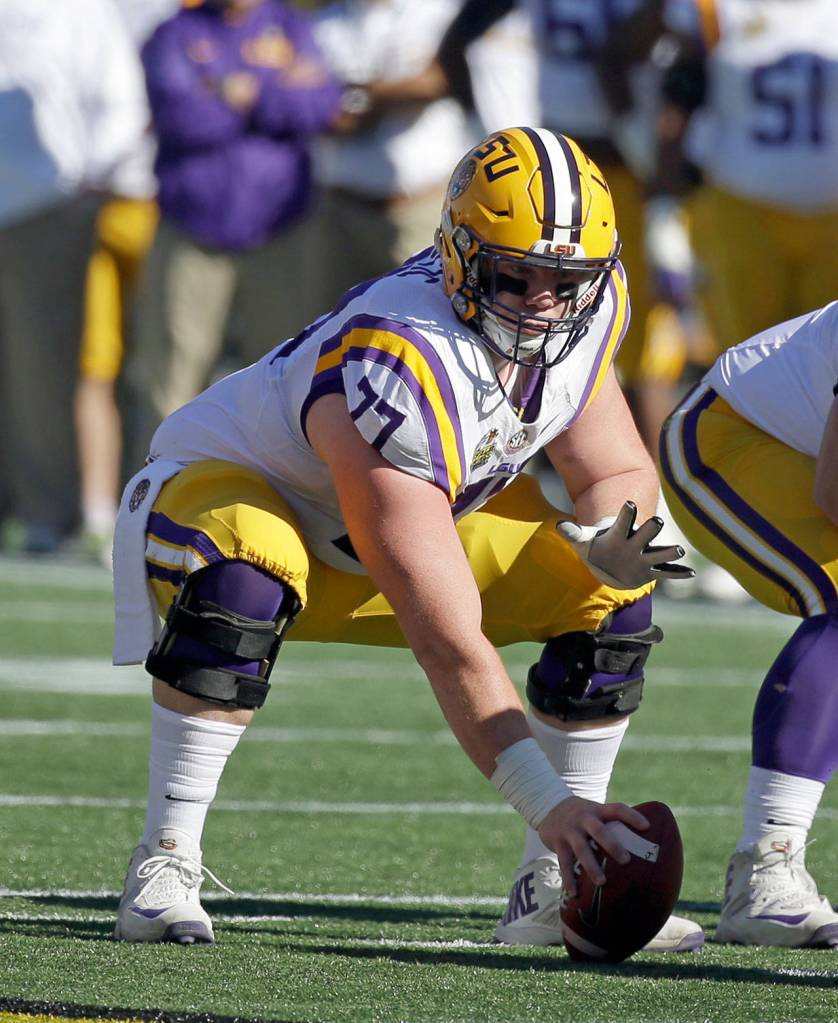
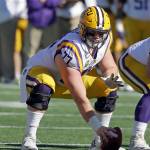
Seattle used its second selection of Friday’s second round of the NFL draft, 58th overall, to take Ethan Pocic out of LSU. He was a center for 27 of 37 starts for the Tigers, but he is 6-foot-6. That’s tackle height.
Some scouts believe he can be a right tackle in the NFL —the position to which Seattle has been planning to switch 2016 starting right guard Germain Ifedi. Pocic says he’s played left tackle “in an emergency” at LSU, and also started at right tackle while there.
“One thing I do well is, I’m versatile. That is my best trait,” Pocic said over the telephone Friday night from his family’s home in the Chicago suburb of Lemont, Illinois.
He said he’s never been to Seattle — continuing the Seahawks’ almost annual tradition of drafting guys they barely met with or talked to. He said he didn’t meet with veteran Seahawks line coach Tom Cable, just with some of the team’s scouts.
But he knows enough about the Seahawks to say: “I knew that they value versatility.”
It took 90 picks, three trades and two previous picks, but the Seahawks finally got help at cornerback.
Twice the help.
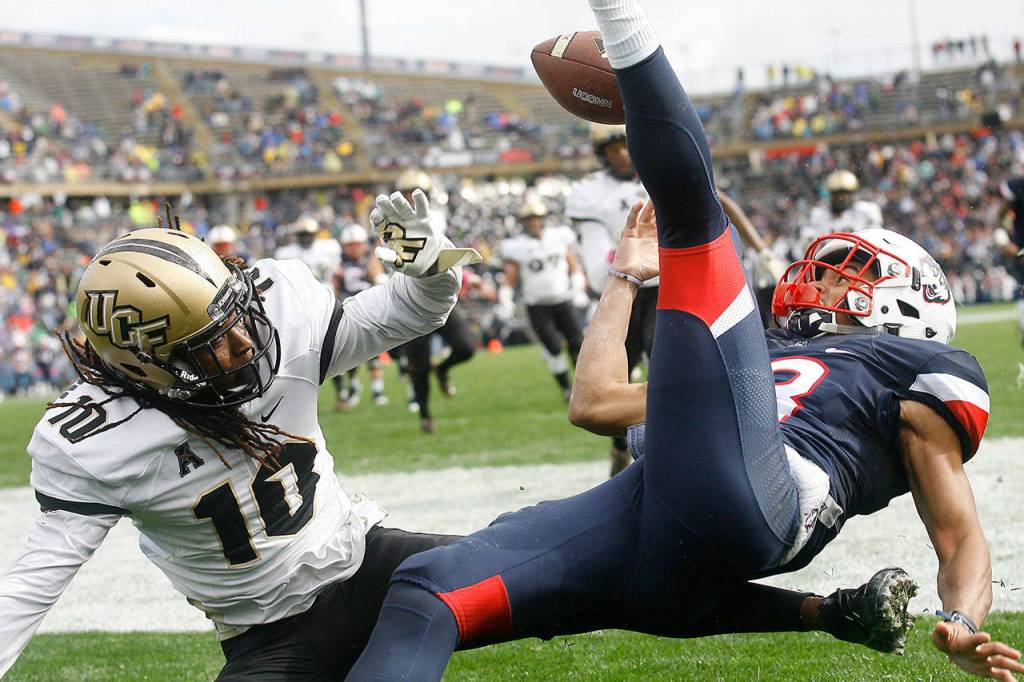
Seattle used its third pick Friday, this one in the third round with the 90th overall selection, to draft Central Florida cornerback Shaquill Griffin.
“My family is going crazy,” Griffin said, laughing giddily Friday night from a roaring family home in Daytona Beach, Florida. “I had to lock myself in my room just to hear my calls.
He said he didn’t do a ton of press coverage, Seattle’s speciality, while at Central Florida.
“Press coverage is something (where) I can show my skills.”
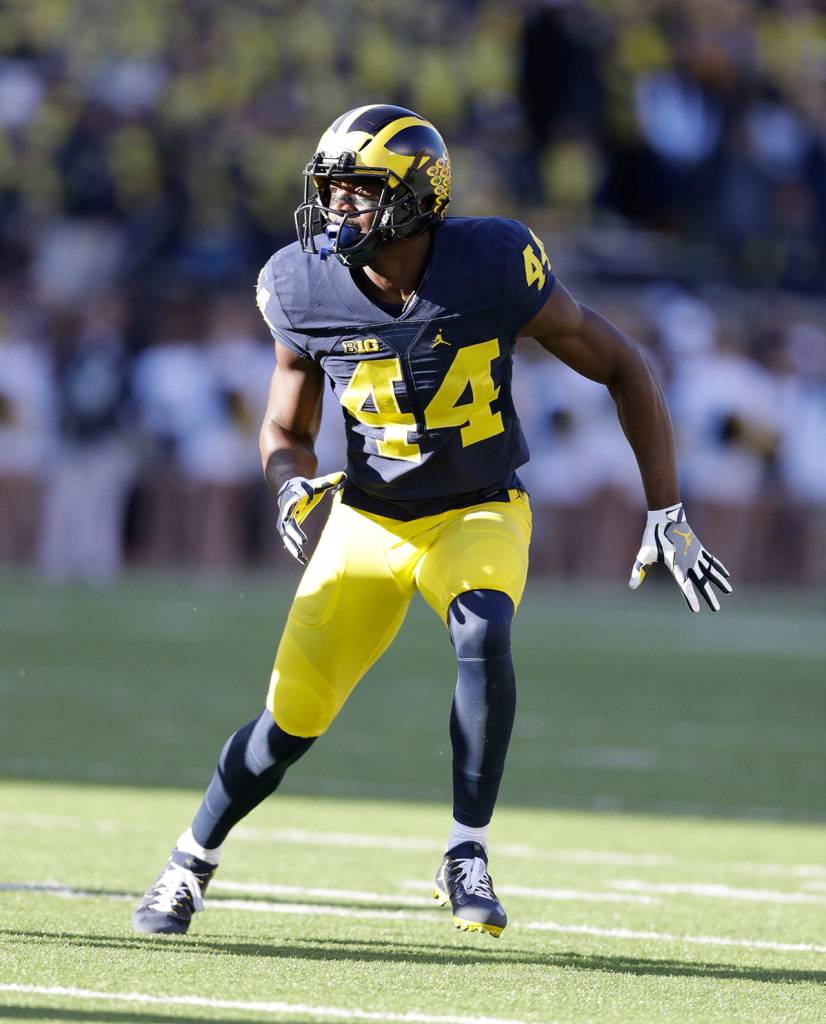
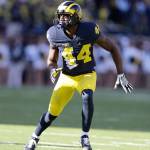
Five picks later, the Seahawks drafted Michigan safety Delano Hill. He’s 6-1, 216 pounds, and is known as an aggressive tackler against the run.
And from the initial sounds of it, he can and wants to play on special teams.
“Oh, I get after it on special teams,” Hill said.
Griffin started his own track program for kids, the St. Pete Nitros in his Florida hometown, when he was 15. He coaches and mentors 4-year-old kids up to 18-year-olds.
“Right now, I live for the kids,” Griffin said.
He visited the Seahawks during the pre-draft process.
“The place is amazing,” he said. “The family vibe, I could feel it. I felt so much loyalty in that program.”
He says as of right now, he’s a cornerback. But he played safety as a junior at UCF.
Griffin is 6-feet tall, which ties him with Jeremy Lane and Perrish Cox for the shortest cornerbacks on the Seahawks’ roster. But, intriguingly, he did play some at safety, and is just under 200 pounds (a listed 198 at his pre-draft visit with Seattle). His has long-ish arms for a cornerback, 32 3/8 inches. His 4.38 seconds in the 40-yard dash was among the fastest among cornerbacks at last month’s NFL combine.
His twin brother, Shaquem, played with him at UCF. Shaquem redshirted and has one more season there. He had to have his left hand amputated when he was 4-years-old.
According to the Orlando Sentinel, Shaquill’s first goal before the NFL was to be a motivational speaker, using his brother’s experiences to encourage others to persevere amid challenges.
“The situation we had to overcome, and see what my brother went through … people, they tend to listen to me.
“I know he’s enjoying it right now,” Shaquill said.
The Seahawks have an opening at starting right cornerback. DeShawn Shead, the starter there last season, isn’t expected back until perhaps October following a major knee injury in the mid-January playoff loss at Atlanta. Richard Sherman, the three-time All-Pro at Seattle’s other cornerback spot, has two years remaining on his contract and just turned 29. You may have heard about his offseason and 2016 season.
Hill is 6 feet and 1/2, 216. He is known to be aggressive in flying up to the line of scrimmage to stop the run.
Seattle has strong safety Kam Chancellor coming off three consecutive injury-marred seasons and entering the final year of a contract it’s expected they will extend.
“He’s one of the best safeties in the league,” Hill said.
Seattle free safety Earl Thomas is coming off a broken leg.
Hill said the safety positions were interchangeable at Michigan — as they often are in the Seahawks’ defense.
Seahawks defensive end Frank Clark was like a big brother to Hill when both were at Michigan. Hill often hung out at Clark’s place in college, and since Seattle drafted Clark in 2015 he has filled in Hill on life with the team, in the NFL and in Seattle.
Clark told him the basics, too. When asked what he thought of about the Seahawks, Hill said: “The winning tradition.
“The 12s, the 12s are crazy!”
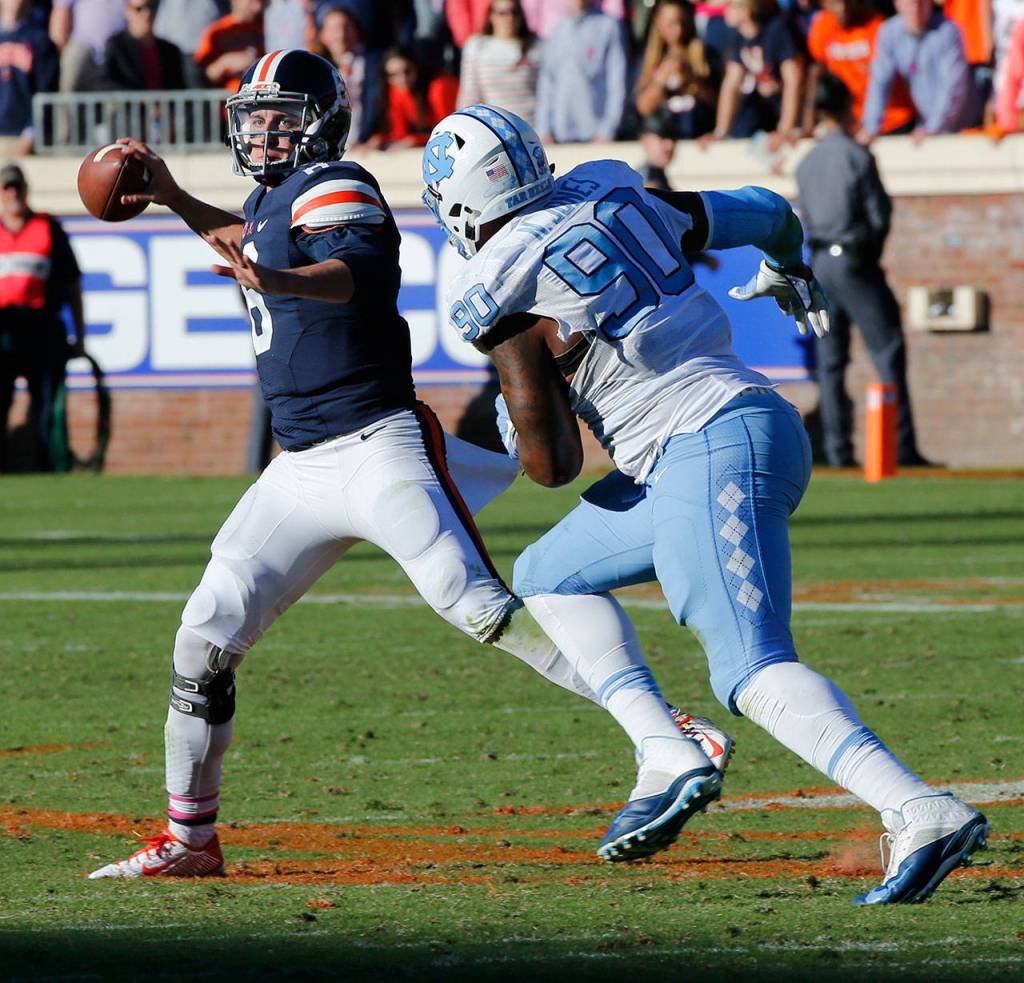
The Seahawks’ fifth of six picks Friday, their third of the third round (102nd overall) was Nazair Jones, a 6-5, 304-pound defensive tackle from North Carolina.
Rural North Carolina. His phone kept cutting out Friday night, interrupting his joy.
“I’m sorry,” Jones said at one point. “I’m from the country.”
“I had a pretty good idea it would be Seattle,” said Jones, who also talked to the Seahawks before the draft. “I’m a great fit for it … my versatility.”
Carroll indeed loves that for his defense.
Jones couldn’t walk for two weeks and was hospitalized at the University of North Carolina Children’s Hospital, 115 miles away from home, at age 16. He was forced to use a walker, then a wheelchair, just to get to school and back.
Eventually, doctors diagnosed him with Complex Regional Pain Syndrome.
“I had to re-learn how to walk.”
He did. Now, he’s flying — into the NFL. And he hasn’t forgotten where he’s from. He mentors underprivileged kids from “the country, little seminars,” on how to succeed in life.
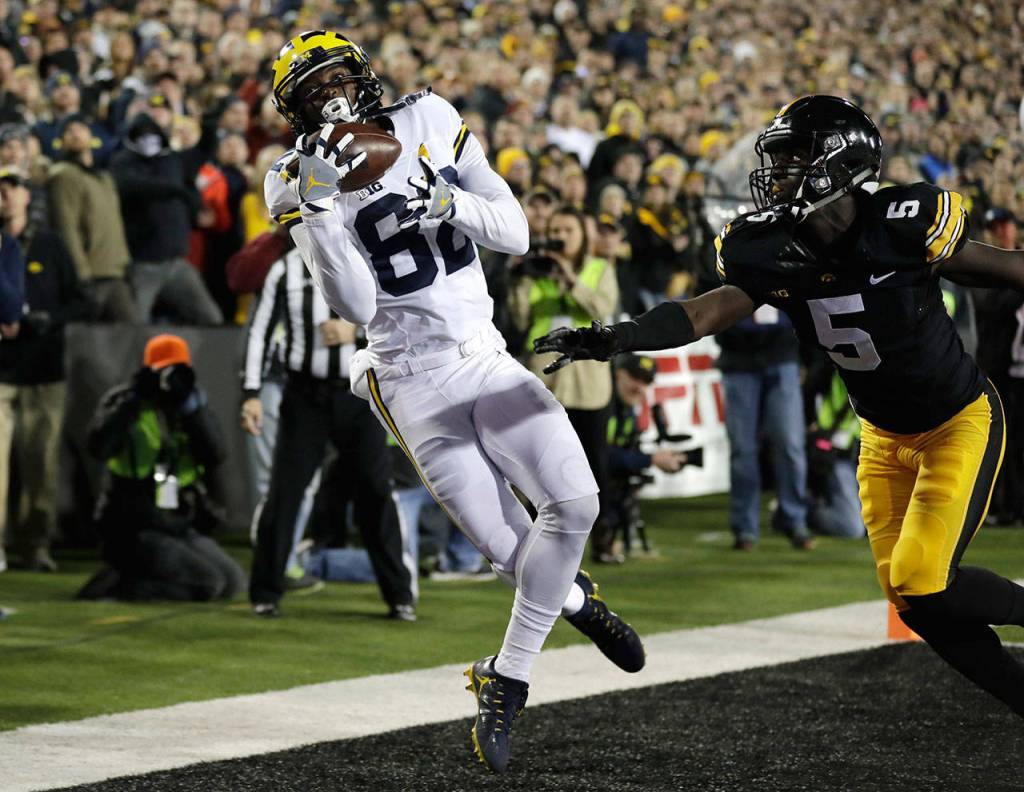
Seattle’s final pick of the third round and the day, Amara Darboh, has done that.
The 6-foot-2 wide receiver lived through both his parents getting murdered during civil war in his native Sierra Leone, in west Africa. He jumped from safe haven to safe haven, “just moving around — a lot,” he said, and choosing to remember only the good times.
“Playing soccer with my brothers. The food. Going with my sisters to the markets,” he said Friday night over the phone.
He fled Sierra Leone and war at age 7, eventually settled in West Des Moines, Iowa, got adopted at age 17 and gained United States citizenship in 2015.
“I feel very blessed,” he said, almost shyly. “I went through very difficult times.”
With rookie minicamp beginning in two weeks, training camp this summer, making a Seahawks roster that needs a big wide receiver will seem like a comparative breeze.