Darboh’s incredible path: from war orphan to Seahawks rookie
Published 1:30 am Thursday, May 11, 2017

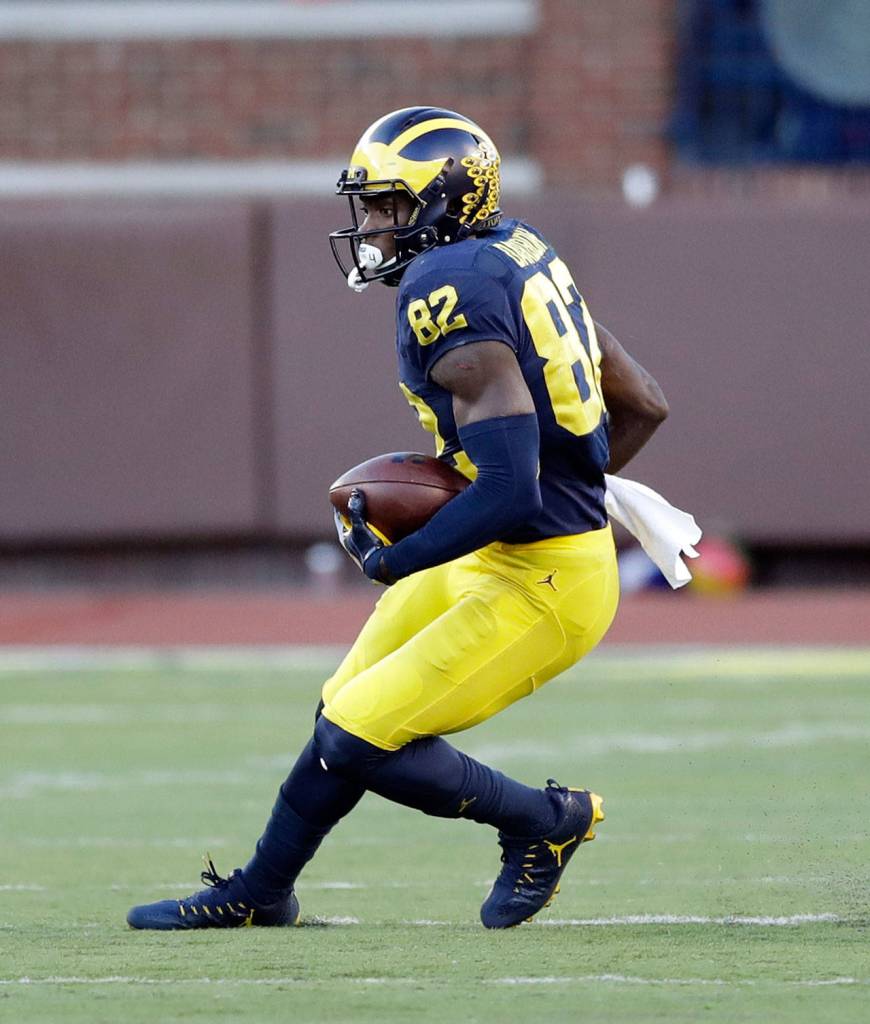
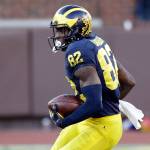
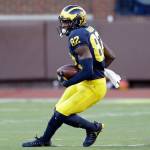
RENTON — His first NFL rookie minicamp this weekend?
Learning a new playbook more complex than some college courses?
Making a Seattle Seahawks roster that needs a big wide receiver he is, but is loaded with veterans he is not?
Daunting for most 23-year-olds straight out of college.
But for Amara Darboh, it will seem like a breeze off Lake Washington. That is, compared to what the most resilient of Seattle’s 11 rookie draft choices debuting this weekend has already lived.
“Yeah, man. I feel very blessed,” the Seahawks’ newest wide receiver and third-round draft choice said. “I feel like I’ve gone through some difficult times in my life. I think God has also blessed me and I’ve had some great people that have helped me throughout my life.”
One of them is the man who drafted Darboh out of the University of Michigan into this latest — but not most — unlikely place in his life.
“A grit kid,” Seahawks general manager John Schneider said the night he selected Darboh two weeks ago, “that’s been through a ton in his life.”
When the tall, polished receiver was 2-years-old, his parents Solimon and Kadita were murdered.
They were two of more than 35,000 people killed during civil war in Sierra Leone over the first five years of Darboh’s life. The orphan jumped from safe haven to safe haven there, through his country’s sadly ironically named capital city of Freetown.
“Just moving around,” he said. “A lot.”
Asked what he remembers about that horror, Darboh talked about the joy.
“Fortunately for me, I remember the good parts right before we left,” he said. “I remember playing soccer with my older brothers. I remember the food. I remember family members. I remember going to the market with my brothers and sisters.”
How many siblings does Darboh have?
“I have a lot. About 13,” he said.
At age 7, he fled his west Africa nation as one of 2.5 million people the 11-year war displaced. Some of Darboh’s many relatives escaped with him — reportedly on foot. They hurried to Gambia and neighboring Senegal. That was across the countries of Guinea and Guinea-Bissau in between.
The distance from the center of Sierra Leone to the center of Gambia is 420 miles.
On foot.
“I had a big family so I had to move around a lot,” he said. “So sometimes I’d be with all my brothers and sisters, and moving a lot is what I remember. Moving to different countries, at times.”
In 2001, he jumped at the chance to move to another one: the United States. A Christian group from Des Moines, Iowa, sponsored what was left of Darboh’s family and gave it a home in which to live. His older sister by 12 years, Lovetta, basically raised him there.
Soccer was his favorite sport, but not such a huge hit in Des Moines. He played basketball at the local YMCA. Without money, he got a scholarship to play in the city’s Little League Baseball program, when he was 8. A father of one of Little League teammates, Dan Schaefer, coached him for years. By sixth grade, Darboh had moved in with the Schaefer family. The Schaefers eventually adopted him, when he was 17.
That was a couple years after he started playing football, as a freshman at Dowling Catholic High School in West Des Moines. He grew into a towering, superstar receiver. Michigan signed him from there.
As a junior in 2015, he did something better than catching 58 passes with five touchdown receptions for coach Jim Harbaugh’s first Michigan team. Better than reaching the Citrus Bowl that season and trouncing Florida.
He gained United States citizenship.
“It was something that I always wanted to do,” he said. “It was something I wanted to do in high school, but unfortunately I didn’t get it done.”
In moving from Des Moines to college in Ann Arbor, Michigan, he lost his paperwork for naturalization. So he started again, from scratch, while in college.
“I felt like it was a final step (for) me (in the) U.S.,” he said. “I grew up here, and then for me to become a citizen and to be able to participate in all the rights of citizens, like voting and all that, was important to me.
“When I got that done it was a weight lifted off my shoulder.”
He played like it. His senior season, playing outside and in the slot, he had 57 catches and seven TDs for a Michigan team that ranked among the top 5 nationally. He beat No. 8 Wisconsin with a 46-yard catch and run late before 111,000 people and a national-television audience.
Then in his pre-draft workouts he ran the 40-yard dash in 4.44 seconds. That’s zooming for anyone, but especially a man 6-foot-1 and 216 pounds.
On April 28, he became the 106th pick of the 2017 NFL draft. He’s in line for a slotted, four-year rookie contract potentially worth $3.1 million if he sticks with the Seahawks. When he signs, he’ll get a signing bonus scheduled to be $706,000.
From war orphan to near millionaire.
“I feel very blessed,” Darboh said, the last word heavy with meaning and memory.
The Seahawks knew all this when they became interested in Darboh. Schneider and his scouts also saw at Michigan that Darboh had athleticism and smoothness that belied his inexperience of having played the sport for only seven years.
“He’s young in football and looks like a professional wide receiver,” Schneider said.
The Seahawks feared they wouldn’t be able to draft him, that he was too full of potential and grit for other teams to pass up in the draft’s early rounds. Schneider didn’t ask Darboh personally about his back story. He didn’t even talk to him.
He didn’t want other NFL teams to learn the Seahawks had met or even called Darboh.
“We were kind of laying in the weeds,” Schneider said.
The sandbagging worked.
“He’s really a good route-runner,” Schneider said. “He’s got good ball skills. He’ll block. He’ll play on (special) teams. He’s one of those kids that checks off all the boxes.
“When you watch him run routes you are like, ‘Whooo! Thank God! (someone in college football can still run precise routes)’
“There’s still a lot out there in front of him.”
Could it possibly be more than what he’s already passed?
“It’s all part of God’s plan,” he said. “I’m going to keep following the path that He set out for me.”
Friday afternoon, that path will turn onto the practice field at the Seahawks’ Virginia Mason Athletic Center in Renton. He will be wearing a fresh, blue jersey with his new number “84” and “Darboh” stitched on the back.
His run from war in Africa has led to this weekend, the start of his unlikely, absolutely earned run in the NFL.
“He is,” Seahawks coach Pete Carroll said, “such an amazing kid.”