Arlington students spend a challenging day colonizing Mars
Published 1:30 am Tuesday, June 20, 2017
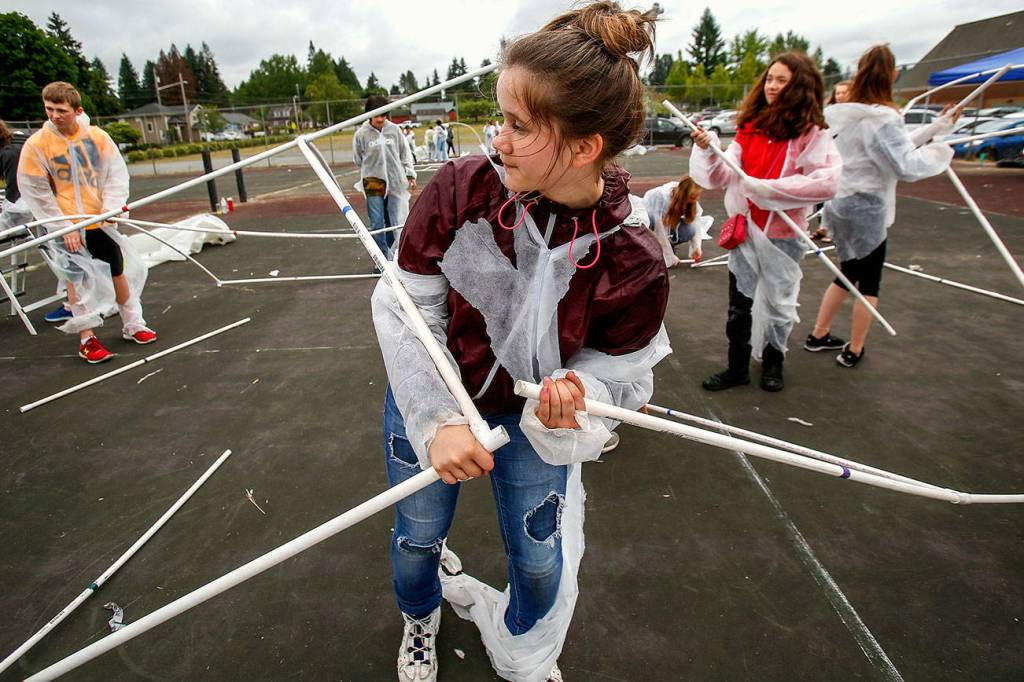
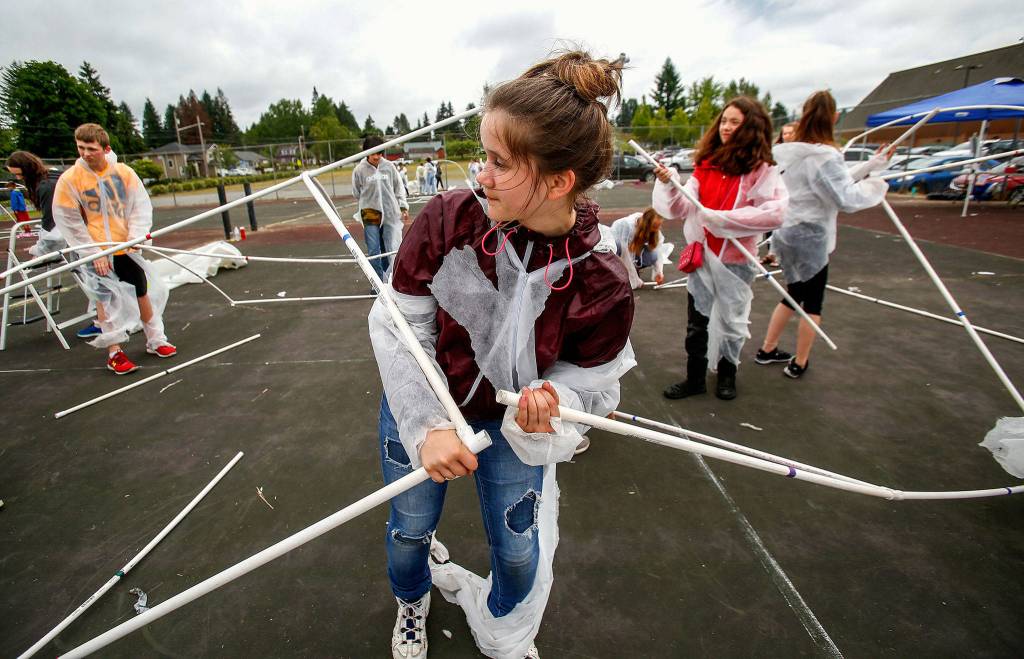

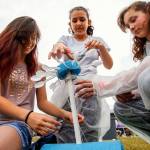
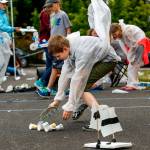
ARLINGTON — A frustrated team of would-be Mars adventurers tore apart their carefully built shelter for the third time.
The dimensions were wrong. They hadn’t used all of the supplies. Time to rebuild.
Again.
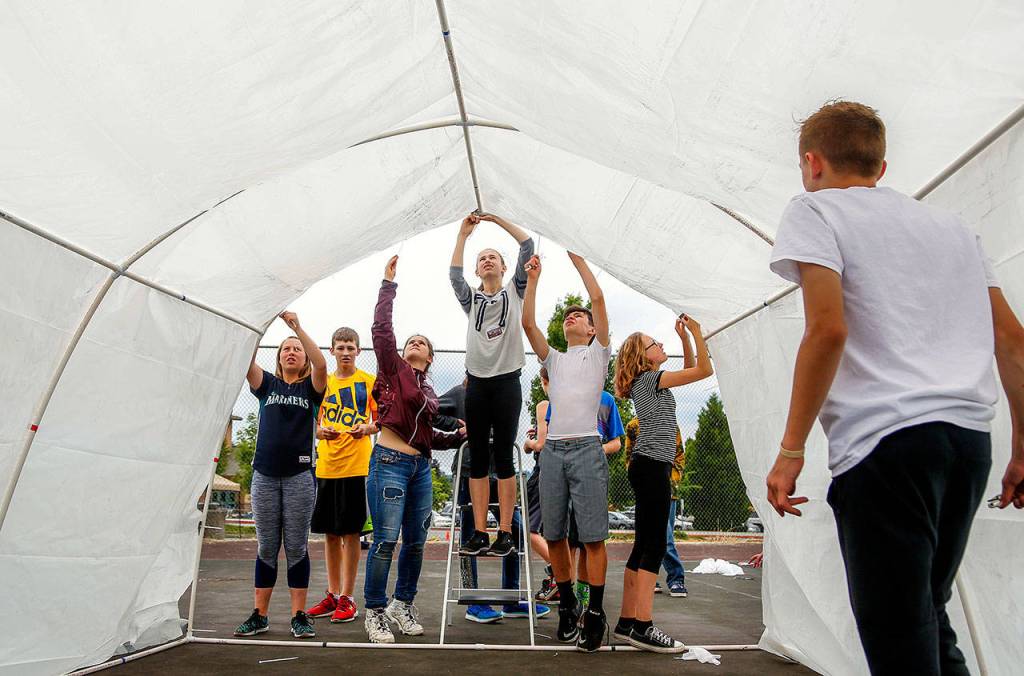
If they counted how many times the arched structure of PVC pipe, zip ties and plastic sheets had fallen apart on them, along with the times they had to tear it down themselves, the crew probably did 10 rebuilds Monday morning, one explorer said.
It’s not easy colonizing another planet.
A couple of hundred sixth-grade students and a class of seventh-graders worked in teams outside Haller Middle School on a mock mission to settle Mars.
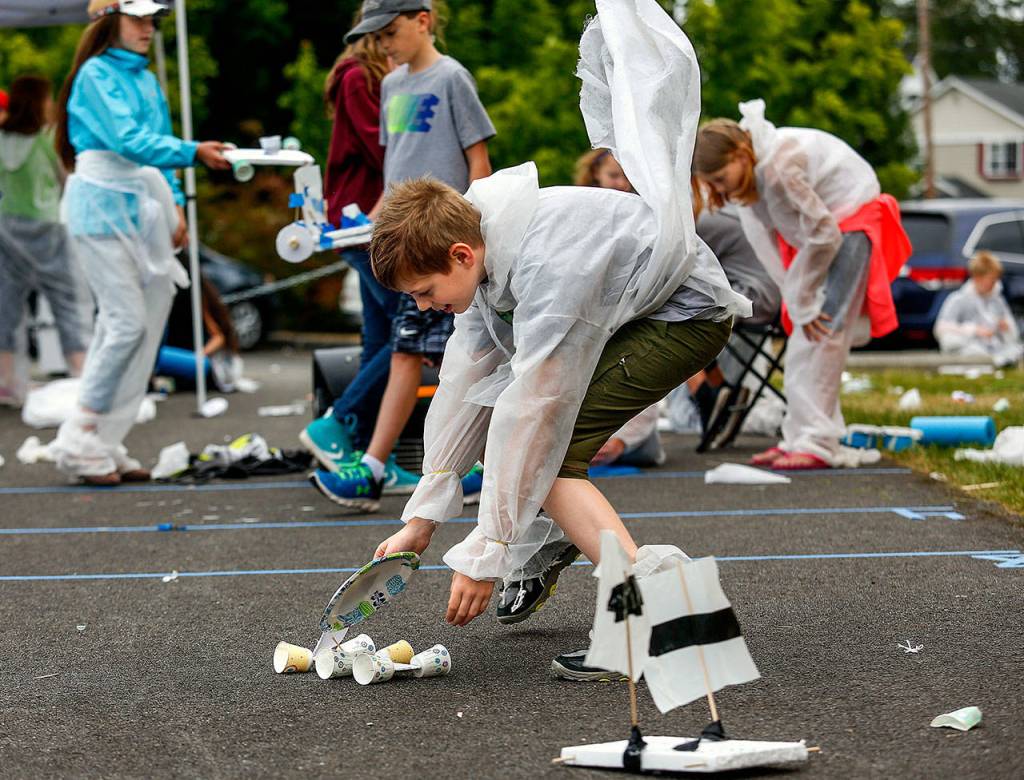
There were crews working from “Mars” — the tennis courts and a grassy area across the parking lot — to build habitats, rovers, wind turbines, solar panels, and aquaponics for water recycling and gardening. A command staff remained on “Earth” — another part of the parking lot — to radio directions and send supplies.
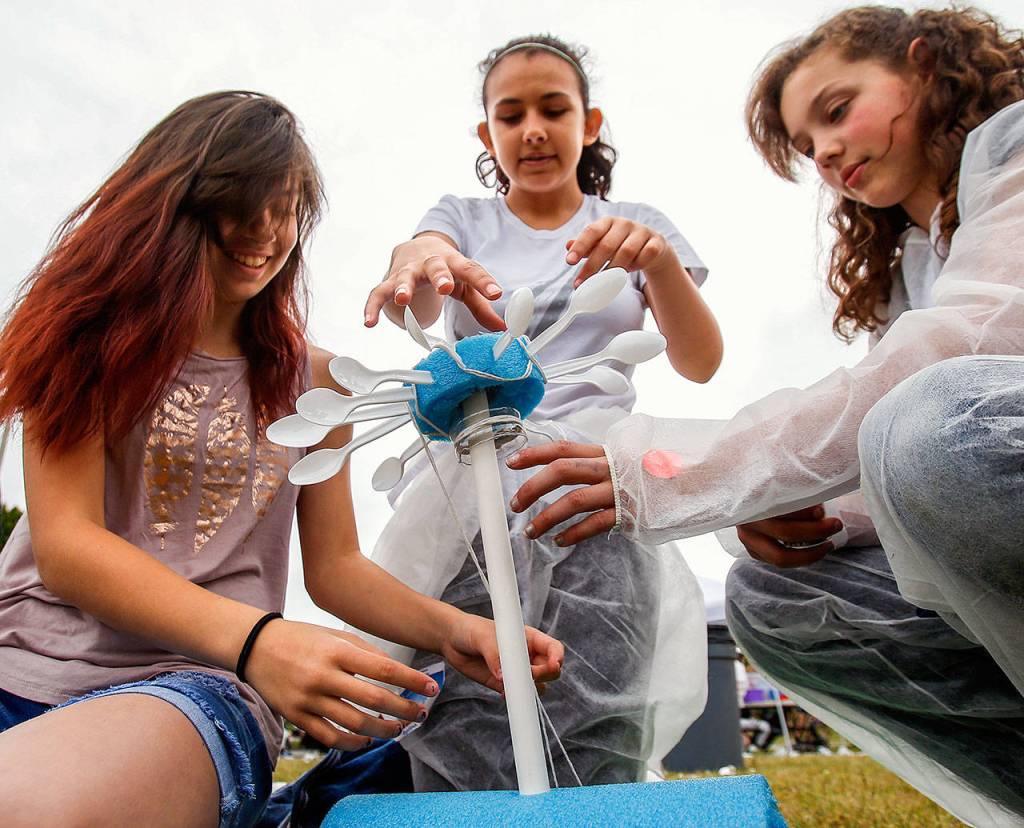
The Haller colony wouldn’t stand up to conditions on the real red planet, with wind turbine blades made of paper plates and solar panels of aluminum foil. But students say it gave them an idea of how difficult it would be to pull off a mission in space. It takes teamwork, communication and patience. It also requires a tricky balance of the discipline to follow instructions and the ingenuity to improvise. Many teams struggled.
Teachers supervised but didn’t intervene. The struggle is important. Students were challenged to solve problems themselves, with help from teammates and instruction packets.
The idea for the project came from a conference in Houston. Teacher Rachel Harrington, who attended the conference in February, built a fake Mars colony as a professional development activity there.
“I was like, ‘I’m not doing this for professional development. I’m doing this with my sixth-graders,’” she said.
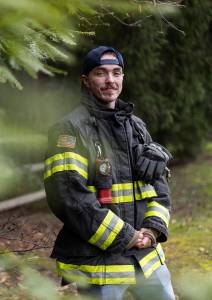
The Arlington Education Foundation provided a grant and businesses donated supplies. Teachers put in hours of work getting ready. Harrington recruited her husband, Seattle police officer Dave Harrington, to help out. He headed up the command post.
He expects to see the project grow in future years as teachers and students learn what works and what doesn’t. For example, teams quickly decided they wanted more freedom to come up with their own designs.
Though some students goofed off, distracted by cartwheel contests in the grass or live goldfish in the aquaponics, most were all-in for their Mars mission. It was more fun, and more difficult, than a normal day in class, they said.
Cole Ford, 13, acted as assistant commander on Earth. He fielded the questions radioed in or shouted across the parking lot “galaxy” by his peers.
“You need teamwork,” Cole said. “Really try to find that true leader. If you don’t have a leader, it won’t go so well.”
Challenges were given along the way to make the mission more realistic. A storm could tear apart a wind turbine, or materials may be in short supply, Jori Profit, 13, said as she tested a turbine with a fan. One of the paper plate blades fell off, but the rest kept spinning.
It’s tough, agreed Landon Harper, 12. “You can’t just run to the dollar store on Mars.”
There was talk among students about the merits of nuclear power on Mars, but solar and wind are more viable, said Devon Gerik, 12, part of the solar team.
On the tennis courts, there were exclamations of frustration during the rapid dismantling of a Mars habitat. A visitor from “Earth” appeared.
“I came to Mars to help,” Levi Younger, 14, announced.
“That was quick,” another student observed.
Levi opened his instruction packet and urged the team to better sort their supplies before attempting a rebuild. They hurried to get the pipes, connectors and plastic sheets into the right piles.
“It’s really fun, but there are some frustrating things you have to go through,” said Kadie Harrett, 12, who noted that she won’t be planning any trips to Mars after seeing how hard it would be.
“I’m happy on Earth.”