Seahawks fire assistant coaches Cable and Bevell
Published 1:30 am Wednesday, January 10, 2018
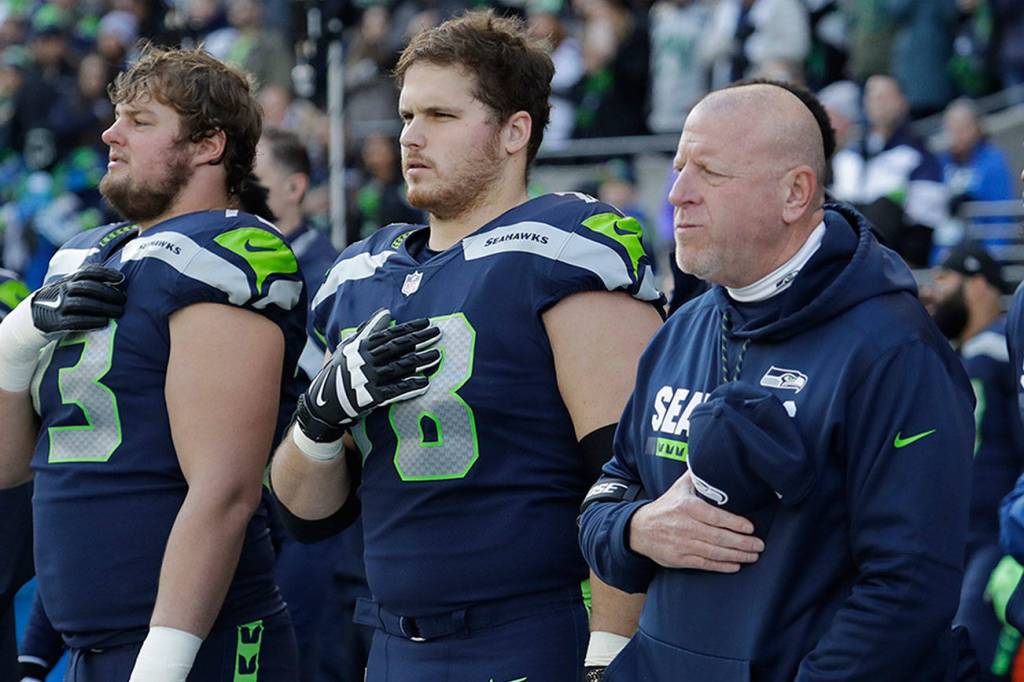
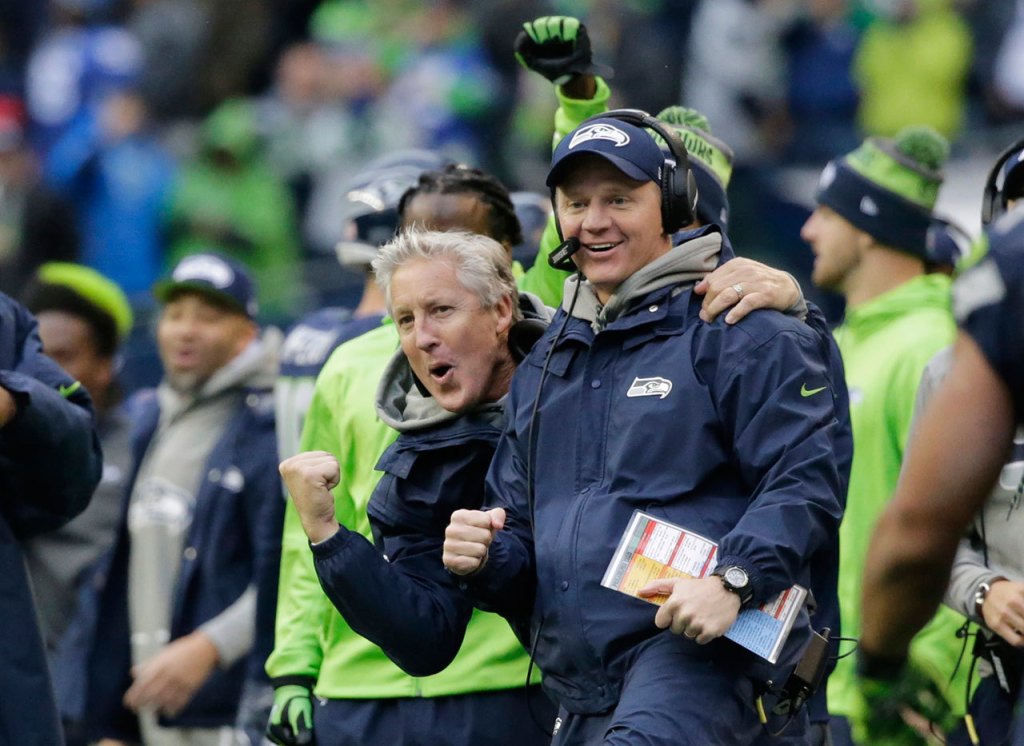
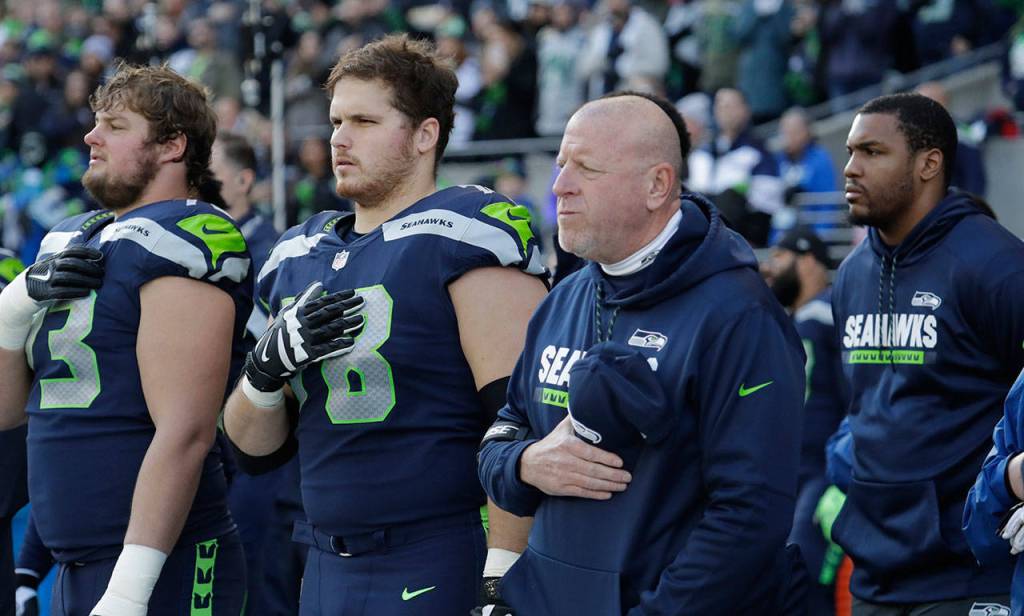


Oh, yes, Pete Carroll means business in wanting to change the Seattle Seahawks’ flagging — and excessively flagged — offense in 2018.
On Wednesday, Darrell Bevell and Tom Cable took the business end of Carroll’s push. Two of the team’s top assistants got pushed all the way out of Seattle.
Carroll on Wednesday fired Bevell and Cable, his offensive coordinator/play-caller and his offensive-line coach/assistant head coach. It’s a decisive rebuke of what’s happened on that side of the ball the past two seasons.
The team confirmed the moves to eliminate the heads of the passing game, the running game and the blocking since 2011 with a statement from the head man:
“We are challenged by change, but excited to tackle the future with great purpose. I want to thank both Tom and Darrell for their role in helping take this program to a championship level,” Carroll’s statement read. “I will always be grateful for the opportunity to coach and compete alongside these great men.”
It’s the boldest single-day strike in his eight years running the Seahawks. Carroll cherishes continuity on his coaching staff. He stuck with Bevell through two Super Bowls — including the second one Seattle lost when Carroll infamously had Bevell call a pass from the 1-yard line in the final seconds.
Wednesday’s firings shows how broken the head man sees the offense — systemically. That’s why Cable got fired, too. The Snohomish High School alum had been the Seahawks’ running-game coordinator, college scout, evaluator, architect and teacher of Seattle’s deteriorated blocking unit since 2011.
It’s a double move to fix the Seahawks pronto. As in, while $88-milllion quarterback Russell Wilson is still in his 20s and, like the 66-year-old Carroll, under contract for two more seasons. It’s obvious Carroll feels the urgency to remake this team in his way now, back to a dominant running game, before it’s too late.
The firings came 11 days after the Seahawks ended their first season without a playoff appearance in six years.
When you don’t win, you change.
Bevell, who turned 48 on Saturday, is a class act. He is a family man. Yes, he heard his haters. He also accomplished a ton while at times handcuffed by his offense’s shortcomings.
Foremost among them: the lack of consistent blocking.
Bevell issued a statement soon after the Seahawks made his firing official.
“I would like to thank the entire Seahawks organization for seven great seasons,” Bevell wrote. “I can’t thank Mr. Allen, Pete Carroll, John Schneider, our coaching staff and players enough for the support and hard work they put in to help build the championship success of this team.”
The past two seasons have been a referendum on the vast authority and decision-making responsibility Carroll and general manager John Schneider gave the 53-year-old Cable on scouting, evaluating, drafting, signing and developing offensive linemen. That’s from Cable being on college campuses working out Germain Ifedi, Ethan Pocic, Terry Poole, Mark Glowinski among the league-leading 16 offensive linemen the Seahawks have drafted since 2011. That was the year Cable joined Seattle’s staff after the Oakland Raiders fired him as their head coach.
That referendum failed.
Five of those 16 linemen — nearly one-third — Seattle has drafted with Cable’s input since 2011 never started a game for the Seahawks (Poole, Garrett Scott, Kristjan Sokoli, Justin Senior, Ryan Seymour). Three others started fewer than nine games: Michael Bowie, Rees Odhiambo and Joey Hunt (Odhiambo and Hunt, 2016 draft choices, are still on the team).
Cable was also Seattle’s run-game coordinator. He mentored and meshed running backs with those blockers in a unique arrangement: other NFL offensive coordinators don’t have to share responsibilities in the running game with another assistant. The Seahawks have gone from a top-five rushing offense in 2012, ‘13, ‘14 and ‘15 — when Marshawn Lynch was romping in Cable’s zone-running schemes and Seattle played in two Super Bowls — to 25th and 23rd the past two seasons. That’s been with injured and relatively anonymous successors to Lynch. Take away quarterback and team-rushing leader Russell Wilson’s scramble yards and the Seahawks would have been 32nd, dead last, in rushing offense.
Running backs Mike Davis, Thomas Rawls, Eddie Lacy, J.D. McKissic, Chris Carson (who missed most of the season on injured reserve) and C.J. Prosise (also mostly on IR) averaged just 62 yards per game. That was the NFL’s lowest production by backs. Carroll will add more runners to get better there, too.
The Seahawks’ offensive line went through five iterations of starting lineups during the 2017 season. It will also change yet again this offseason. It has to.
Beyond its broken running game, Cable’s line allowed Wilson to get hit 121 times trying to pass this past season. That was the third-most quarterback hits allowed in the league. It was 10 more hits than in 2016, when the pass protection was so bad it got Wilson a severely sprained knee and badly sprained ankle in the first three games. The Seahawks’ O-line allowed 43 sacks in 2017, 11th-most in the NFL — and one more than it gave up in 2016.
The questions for Seattle’s line in 2018 are at left guard, right guard and right tackle — and, now, line coach.
Top wide receiver Doug Baldwin shoved Cable out of the way during what Baldwin wanted to be a players-led talk on the sidelines in October, while the offense was struggling again early in an eventual win at the New York Giants.
Now Cable’s been shoved completely out of the Seahawks franchise.
Throughout last season Bevell said he knew Seattle’s identity under Carroll was to run the ball, but that he had to make the calls to win games. That often meant passes that counted on Wilson to make whatever playground, improvisational magic he could. Sometimes, that worked: all his yards off scrambling and league-leading 34 touchdown passes. Often, it did not: Wilson’s twists and turns into sacks for losses of 22 and 23 yards in December games against the Rams and Cowboys.
Cable’s line was largely to blame for that.
Baldwin is not a fan of Bevell’s firing. New Year’s Day, the day after the Seahawks’ 2017 season ended, the Seahawks’ top wide receiver pointedly defended Bevell’s play-calling.
“Bev,” Seattle’s longest-tenured offensive player said, “is not the problem.”
Not anymore.
As for potential replacements, Wednesday Falcons coach Dan Quinn shot down a potential option for Carroll at offensive coordinator: Reuniting with Steve Sarkisian.
While Atlanta was preparing to play Philadelphia this weekend in the NFL playoffs, Quinn told reporters in Georgia there is “zero chance” Sarkisian, the former Washington Huskies coach and Falcons’ first-year offensive coordinator, becomes the Seahawks’ new OC and play-caller.
Carroll gave Sarkisian his first coaching job, as an offensive assistant at USC from 2001-04 on Carroll’s first Trojans staff. Then Sarkisian was Carroll’s offensive coordinator at USC, before Sarkisian became a first-time head coach at UW in 2009. Carroll followed him to Seattle to take over the Seahawks a year later. The two have remained in contact through Sarkisian’s tumultuous time since.
Former Broncos head coach and offensive coordinator Gary Kubiak, who won Super Bowl 50 leading Denver two years ago, would be a coup. He led top scoring and rushing offenses as the Broncos’ coordinator from 1995-2005. The 56-year-old former backup quarterback in Denver for Hall-of-Famer John Elway stepped away from coaching after the 2016 season citing health concerns. But he reportedly gave indications during the past season while a Broncos’ senior consultant that he might want to return to coaching.
Carolina this week fired offensive coordinator Mike Shula. He just spent the past five seasons leading a run-based offense with a running quarterback as a centerpiece just like Wilson is in Seattle: Cam Newton.
The hiring of Cable’s replacement will tell whether Carroll still believes in the zone-read run game, or whether the Seahawks will shift to a line coach that teaches more straight-ahead, man-on-man blocking for a rushing offense.
Wednesday’s firings of Cable, and Bevell, told how far away Carroll believes Seattle’s offense had gotten from where he wants it to be.