As juvenile arrests rise in the county, why police say their hands are tied
Published 1:30 am Saturday, September 6, 2025


EVERETT — Marysville Police Chief Erik Scairpon and other police officers say would like to do more to address rising juvenile crime. But he and other law enforcement officers say state legislation enacted in 2021 has resulted in legal roadblocks that hamper officers’ ability to investigate incidents involving juveniles.
Proponents of the bill, including a supervising attorney of adult and youth criminal defense programs, said RCW 13.40.740 was created to ensure juveniles have access to an attorney during police questioning, detainment and property searches.
“Those are legal standards that law enforcement can and should be familiar with and able to act upon in the course of their regular duties,” Elizabeth Mustin said.
Members of law enforcement acknowledge the legislation was well-intended, but said they are left dealing with unintended consequences, like increased difficulty differentiating suspects from witnesses.
“Law enforcement personnel frequently arrive on scene at the conclusion of an incident and do not have the big picture as to how the crime(s) was committed,” Everett Police Department Public Information Officer Natalie Given said in an email.
In Snohomish County, juvenile arrests rose 79.3% between 2022 and 2024, according to data released by the Washington Association of Sheriffs and Police Chiefs.
“It’s almost a non-starter”
State Rep. Lauren Davis, D-Shoreline, was one of 30 legislators who co-sponsored the 2021 legislation because she believed it intended to protect juveniles.
“Co-sponsoring and voting for that piece of legislation is chief among my greatest and deepest regrets as a lawmaker,” Davis said. “I think it was a terrible mistake.”
As cases emerged post-legislation, it seemed to Davis the bill protected juvenile assailants over juvenile victims, who are most often on the receiving end of these offenses, she said
To Mustin, who works as the supervising attorney of adult and youth criminal defense programs at the Washington State Office of Public Defense, the legislation was passed in recognition of where young people are in their brain development and the challenges it creates in stressful situations.
“They don’t understand what it means to have constitutional rights in order to exercise them,” she said.
Law enforcement officials said they don’t want to appeal the legislation but amend it to allow more leeway for police work. Arlington Police Department Operations Commander Peter Barrett said he would like to see legislative changes that allow police to identify victims and witnesses while maintaining the suspect’s right to access the Youth Access to Council hotline.
Mustin said the purpose of the hotline is not to impede investigations but explain to juveniles the rights that everybody has when interacting with police.
“The commentary has kind of shifted to like, ‘Well, now we can’t do anything,’ but really what they’re saying is, ‘We don’t want kids to understand their rights,’” she said. “That’s a really hard thing to swallow in some ways.”
As of Aug. 19, the Washington Senate Rules Committee placed SB 5052, which intends to clarify law enforcement’s ability to contact juvenile witnesses and victims not suspected of criminal involvement or activity, on “X” File. This removed the bill from legislative calendars and the status sheet.
However, the bill may be pulled back at any time, according to the Rules Committee guidelines.
“If I were to sum it up, it would almost be like the attitude has been police bad, kids good, don’t let police interview kids,” Scairpon said. “That’s kind of the simplistic view of how it’s been treated. So, it’s almost a non-starter when it gets to the legislative session.”
State Rep. Cindy Ryu, D-Shoreline, was another of the bill’s sponsors. She said the data on the racial disparity of juvenile incarceration was why she supported the legislation.
“I’m an immigrant, and English wasn’t my first language,” Ryu said. “I realized how important it is for anyone, especially youth, to have counsel.”
As of 2022, Black youth comprise 9% of the Washington State youth population and account for 17% of youth adjudications or convictions, according to a University of Washington study analyzing 2018 legislation that altered adult and juvenile jurisdictions.
Latino youth comprise 19% of the Washington State youth population and account for 29% of youth adjudications or convictions, the study said. Meanwhile, white youth comprise 60% of the state youth population and represent 46% of youth adjudications or convictions.
“Your only available option”
The Washington Office of Public Defense created the Youth Access to Council program to provide individuals under 18 with attorney consultations through a 24/7 phone line. The program intends to provide youths with tools to understand their constitutional rights during interactions with officers, the program’s 2024 update said.
If a juvenile decides to remain silent after speaking to the hotline, officers are left with probable cause for an arrest as their only jumping off point, Scairpon said.
“If police are presented with a crime that has occurred and you have probable cause for a juvenile, and you have no ability to interview them or work through it or find if somebody else is responsible for the crime, your only available option is to charge the juvenile,” he said.
Over the last three years, attorneys from the hotline have been able to collaborate with police on investigations, Mustin said.
“In reality, the relationship can be quite collaborative in a lot of situations,” she said. “I think that they can do a lot more than they act like they can do under the requirements of the statute.”
Mustin said the legislation ensures equity for individuals under 18 during potentially stressful interactions with police officers.
“If you talk to the same law enforcement officers who say that they’re not happy with this program or these rights that young people have, a lot of them would also advise their own children to talk to an attorney before speaking with law enforcement,” Mustin said. “This just makes that available for all children across the state.”
‘They will not talk to police’
Interviews are a fundamental building block in an investigation, Given said. Without the ability to ascertain aspects, like mental state, it is hard for officers to determine an individual’s level of involvement.
Without these details, often the next step in an investigation is to refer charges to prosecutors in hopes the juvenile will elicit information through their assigned attorney, said Lynnwood Police Department Detective Sgt. Jacqueline Arnett.
Law enforcement said most juveniles invoke their right to silence after speaking to the hotline.
“After they talk to that attorney hotline, they will not talk to police. That’s the way it works, ” said Scairpon. “You end up spending about 45 minutes allowing them to speak to an attorney, and then they don’t talk to you.”
Mustin said the hotline provides resources to help juveniles navigate what may be the scariest moment of their life so far.
“Sometimes the young person is really dysregulated or just really upset,” she said. “Our attorneys are trained in suicide prevention. They’re trained in deescalation techniques and calming people down.”
The inability to interview juvenile suspects prevents officers from gaining evidence, securing dangerous scenes and collecting weapons, Barrett said.
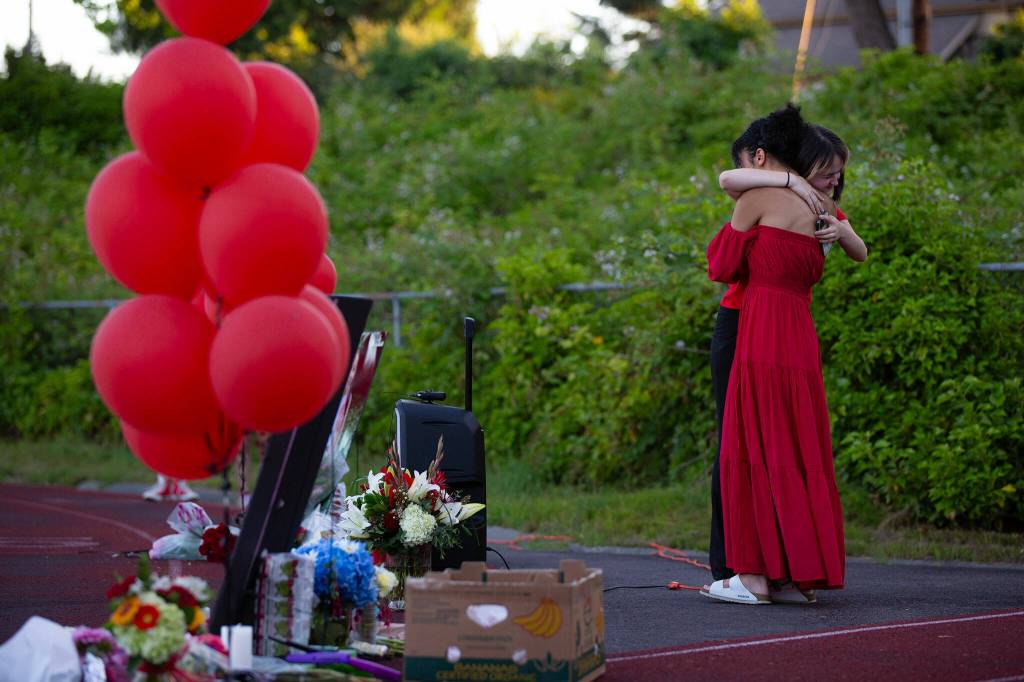
On July 3, 2024, Samuel Gizaw, who was 16 years old at the time, allegedly fatally shot a 13-year-old girl in Alderwood Mall. Gizaw got in an altercation with five other teens. He pulled out a gun and shot at a boy who punched him in the face, prosecutors alleged. Instead, he hit Jayda Woods-Johnson, who was walking with a friend and wasn’t involved in the fight.
“That firearm has never been recovered,” Davis said. “Why? Because law enforcement was prohibited from interviewing the murderer and asking the location of the firearm.”
Arnett said she can’t think of a time any juvenile has talked to officers after receiving counsel from an attorney.
“No attorney, having gotten a very brief description of what occurred, whether through law enforcement or their client, to my knowledge, has ever advised their client to go ahead and talk to law enforcement,” she said.
Police rely on a constellation of evidence to solve cases outside of statements, Mustin said.
“They could end up continuing their investigation and finding all the evidence that they need in order to prosecute the person,” she said. “They don’t normally just rely on a person’s statement to prosecute a case.”
Gizaw’s mother later brought her son to the police. Lynnwood Police Department was not able to recover the weapon used in the altercation.
“Given the Democratic Party’s focus on the prevention of gun violence, I do find it deeply problematic that we are inhibiting the ability to end gun violence in a really direct way,” Davis said.
Lynnwood saw a 173% increase in juvenile arrests, jumping to 355 in 2024 from 130 in 2022, data showed. Marysville saw a 77.9% increase. Meanwhile, Arlington saw a rise of 53.3%, although there was a slight drop from 2023 to 2024.
According to the Everett Police Department’s juvenile arrests data, annual totals increased from 83 arrests in 2021 to 210 in 2024, resulting in a 153% increase. The partial 2025 data showed 159 arrests through July. Most arrests involved non-violent property crimes, although simple assault offenses were common.
“We are seeing more complex issues with kids”
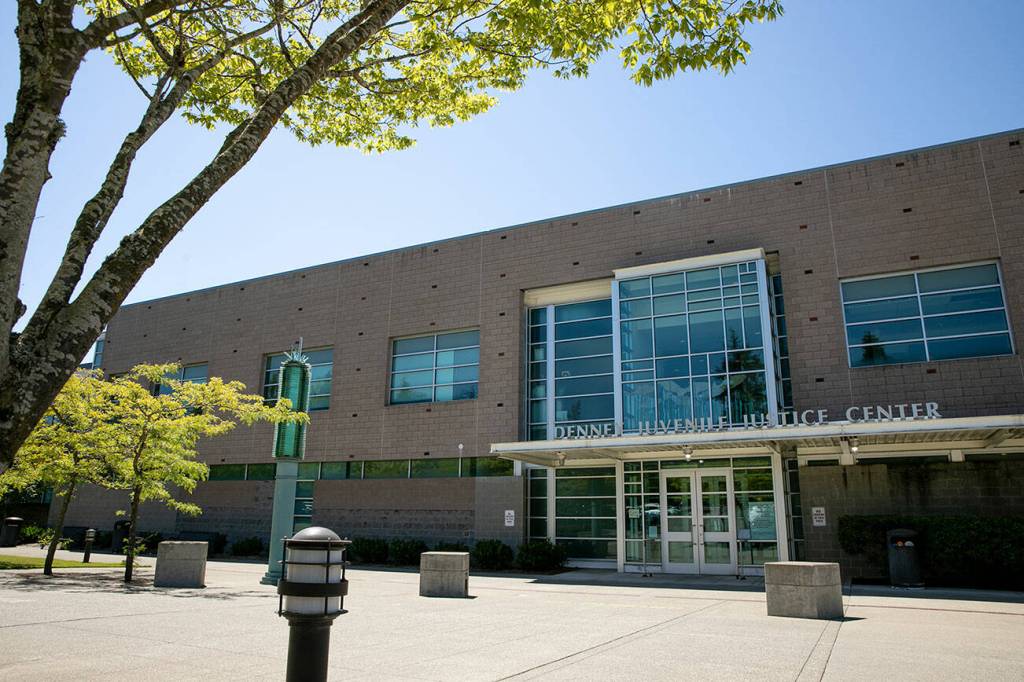
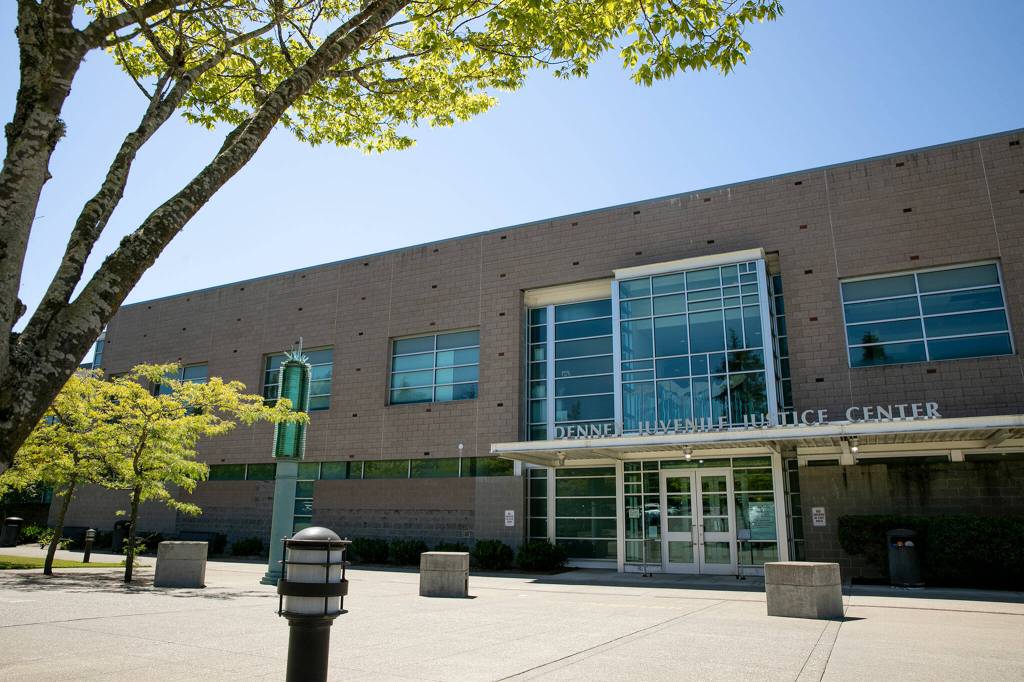
In July, Arlington police arrested a 16-year-old male on suspicion of driving under the influence. During the arrest, officers found an illegally possessed loaded firearm with an extended magazine and illicit narcotics. The Denney Juvenile Justice Center declined to book the suspect, leading officers to refer criminal charges and release him to a guardian, Arlington police said. The department expressed concern about the lack of accountability for juvenile suspects via a Facebook post on the incident.
“When you remove the ability for any form of consequences, we’re not teaching the kids anything,” Barrett said. “We’re creating a void that allows gang and drug dealers to come in and use these kids, which we’ve seen, to evade and avoid any sort of consequences because they know we can’t talk to them.”
Every piece of the juvenile justice system was built for rehabilitation, Barrett said. Denney Juvenile Justice Center is one of those pieces. In recent years, there has been a higher threshold for booking juveniles into the center, he said.
“We have booking criteria that we expect law enforcement to follow when they are deciding whether or not to bring a kid to detention,” said Juvenile and Superior Court Administrator Andrew Somers in response. “There are times when the circumstances involving a kid’s arrest don’t meet criteria for booking.”
The center’s booking requirements are based on a point system with factors like offense classification and criminal history correlating to more points. The center will detain a juvenile if they reach 12 or more points, according to Denney Juvenile Justice Center booking requirements.
Law enforcement can request an override if they want to book a juvenile who doesn’t meet the point threshold for admission, Somers said in an email.
“The juvenile court already gives offenders consideration in terms of sentencing and detention due to their stage of development and vulnerability, which is appropriate,” Given said.
“Victims feel the impact of these crimes despite the age of the suspect, and an incomplete investigation is a disservice to them.”
In 2024, the average stay for a juvenile in the Denney center was 9.4 days, Somers said in an email. The average filing-to-resolution timeline of the juvenile justice system is 188.75 days.
“We are seeing more complex issues with kids that are being arrested, and that could be substance abuse, mental health issues,” Somers said. “A higher acuity of kids that requires more resources, more interventions, further assessment to best get that kid back into pro-social behavior and not, ultimately, re-offended in the future.”
Herald reporter Jenna Peterson contributed to this story.
Jenna Millikan: 425-339-3035; jenna.millikan@heraldnet.com.