ICE arrests in Snohomish County are rising, UW data shows
Published 3:40 pm Tuesday, March 17, 2026
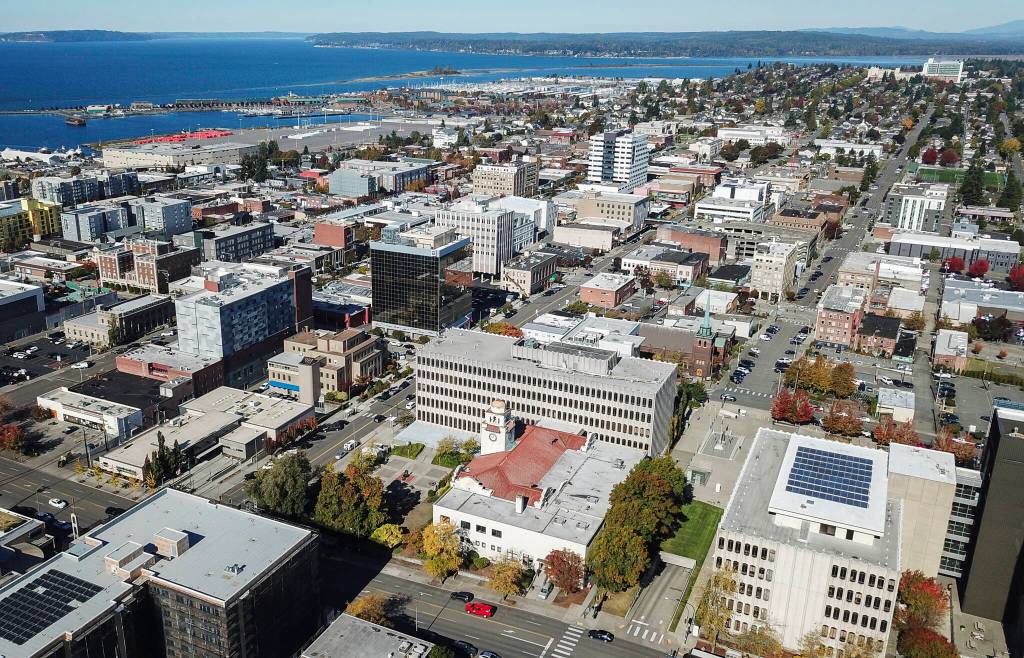
EVERETT — Immigration arrests in Snohomish County increased significantly between 2024 and 2025, newly released data obtained by the University of Washington Center for Human Rights showed.
The data is not a complete picture of immigration arrests — the source of the information, known as I-213 forms, shows a majority of arrests, but not all of them. Yet it’s the most up-to-date data available on the number of immigration arrests in the Pacific Northwest, and the only source of data that can show arrest rates at the county level.
In Snohomish County, there were 17 immigration arrests in 2024, the data showed. In 2025, that grew to 59 arrests. That’s likely an undercount of the total number of people arrested, a researcher said.
While the increase in arrests was significant, Snohomish County was not affected by the uptick in immigration enforcement as much as some other areas. Some other counties in Washington saw much sharper upticks in immigration arrests. Skagit County, for example, jumped from 3 arrests in 2024 to 29 arrests in 2025. Benton County increased from 4 to 60, Whatcom County jumped from 10 to 136. Yakima County increased from 165 arrests in 2024 to 477 in 2025 — making it the county with the highest per-capita immigration arrest rate across Oregon and Washington last year.
Snohomish County’s per capita immigration arrest rate was also relatively low compared to many other counties — about 6.8 arrests per 100,000 people. Over two-thirds of the Snohomish County arrests in 2025 came in the last six months of the year.
The University of Washington Center for Human Rights obtained the data from a Freedom of Information Act lawsuit against the Department of Homeland Security and Immigration and Customs Enforcement, known as ICE. The suit, filed in 2024 and still ongoing, is seeking data from the federal government, including I-213 forms, which are the only known source of information the federal government maintains to track precise arrest locations and detailed arrest narratives, according to the center’s complaint filed in 2024.
The Department of Homeland Security creates those forms as a legal document that makes a case for the arrested person being either inadmissible to the country or deportable, said Phil Neff, a research coordinator at the University of Washington Center for Human Rights, in an interview Monday.
I-213 forms aren’t a complete record of every immigration arrest; rather, the Department of Homeland Security produces the form when they initially apprehend someone. If an individual who had been arrested by ICE or border patrol in the past was rearrested in recent years, the federal agencies would not create a new I-213 form, Neff said.
The data from the I-213 forms represents about 80 to 85 percent of the total number of arrests, Neff said.
The Center for Human Rights received the latest information via a data set ICE provided, which included partial information from recent I-213 forms. The data did not include the narrative portion of the forms, which detail the circumstances of each initial arrest.
“That’s the part that we really think is an important source of information about specifically how arrests are being carried out in ways that might involve civil and human rights violations or violations of Washington or Oregon state law,” Neff said.
The Center for Human Rights felt it was important to release the data as soon as possible because it’s up to date and includes new information, like the numbers of arrests at a local level, that were previously unknown to the general public. The data shows a significant, steady increase in immigration enforcement across Washington State through 2025, Neff said, with a pronounced surge in arrests in the last three months of the year in the Portland, Oregon area.
“Combined, those put us, in only the last three months of 2025, at near-historic levels of immigration arrests for this region,” Neff said.
The last time immigration arrests were this high in the Pacific Northwest region was in 2011, the data showed.
Terry Preshaw, an Everett attorney who practices U.S. and Canadian immigration law, said the findings from the University of Washington report didn’t come as a surprise.
“The numbers we’ve seen definitely validate what people have been surmising,” Preshaw said of the increase in arrests.
Community organizations have also seen impacts from the rise in immigration enforcement. The Washington Immigrant Solidarity Network, an organization that operates rapid response groups and hotlines that help document immigration enforcement activity, wrote in a statement that the statistics are in line with reports from community members made to the organization.
“We’ve seen that immigrant communities are often being targeted in plain sight—in public places like neighborhood streets and outside local businesses—sometimes involving large groups of masked agents using multiple unmarked vehicles as well as detentions that appear to be warrantless arrests with no probable cause, warning, or due process,” wrote Catalina Velásquez, the executive director of the organization.
Rosario Reyes, the CEO of the Latino Educational Training Institute in Lynnwood, said fear of public immigration enforcement actions undertaken across the nation has meant attendance in her organization’s classes has decreased significantly. Some residents have taken time off work or pulled their kids out of school, she said, as people are generally concerned about going into public spaces.
“The programs that we have, they easily had a 50% reduction in attendance because people just don’t want to take risks,” Reyes said in an interview Tuesday.
Will Geschke: 425-339-3443; william.geschke@heraldnet.com; X: @willgeschke.