Before it’s gone, archaeologists dig into Everett’s decaying ship Equator
Published 1:30 am Sunday, June 11, 2023
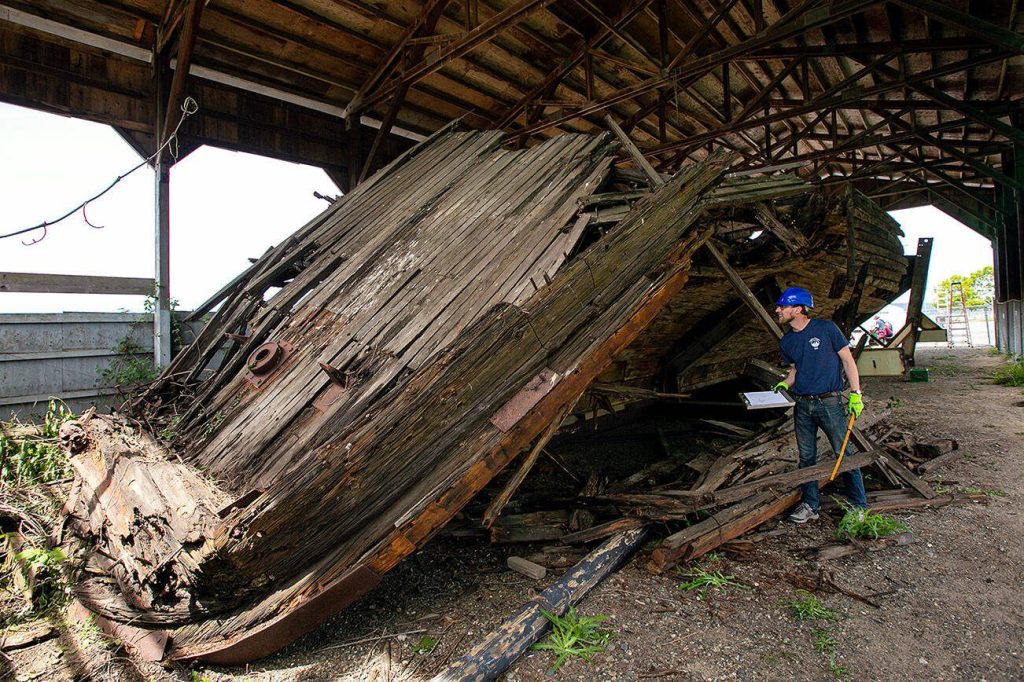
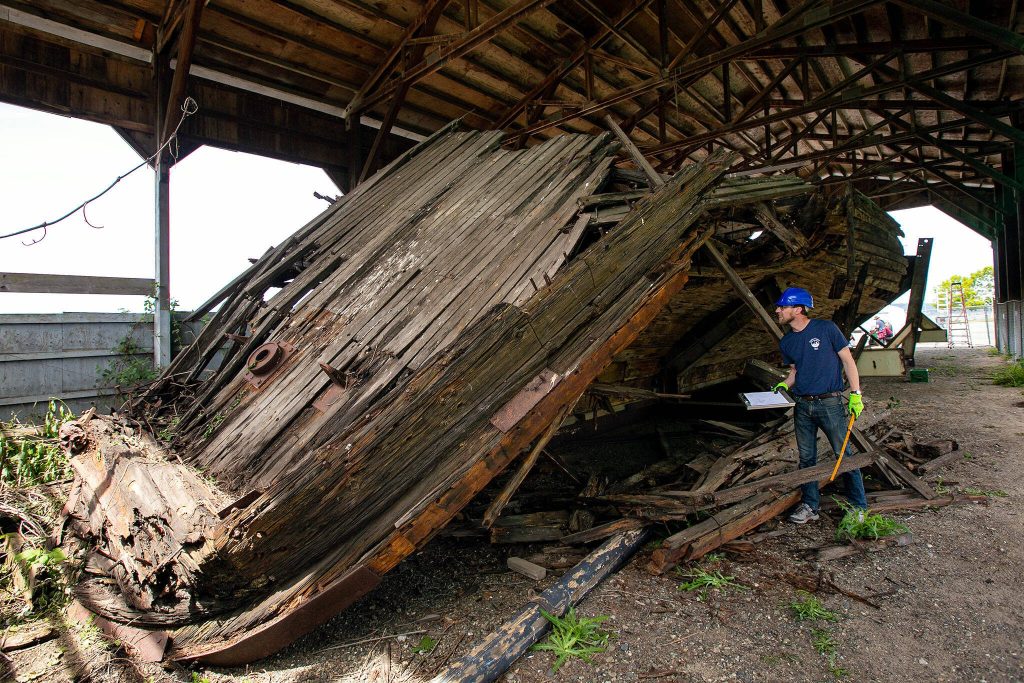
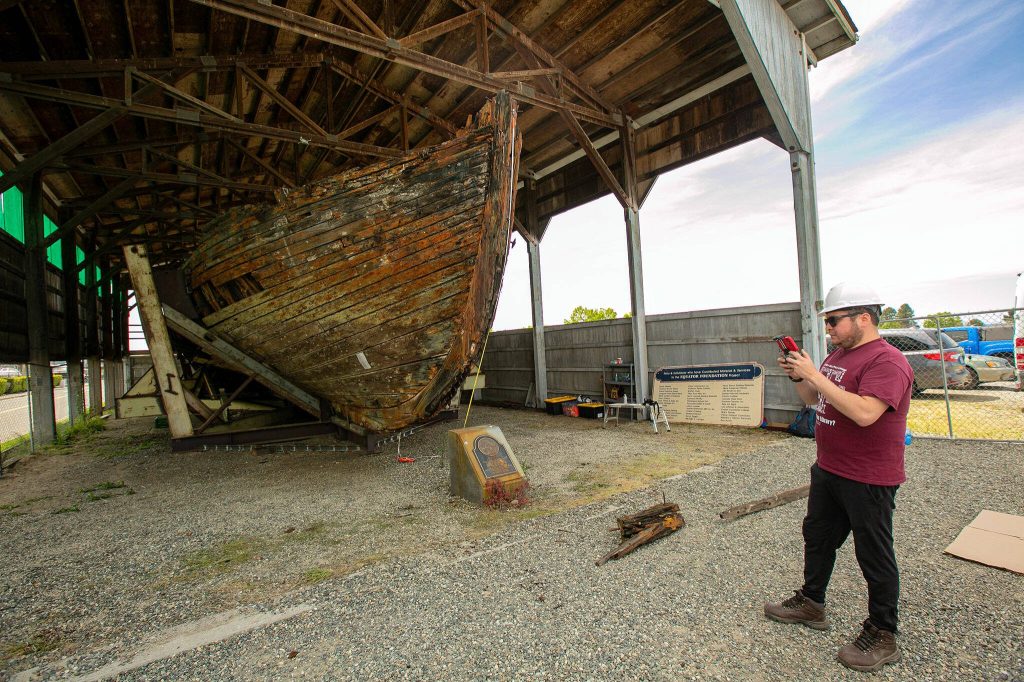



EVERETT — Nature and time are overcoming the craftsmanship and stewardship of the Equator, a wooden schooner built in 1888 that has called Everett home since the 1950s.
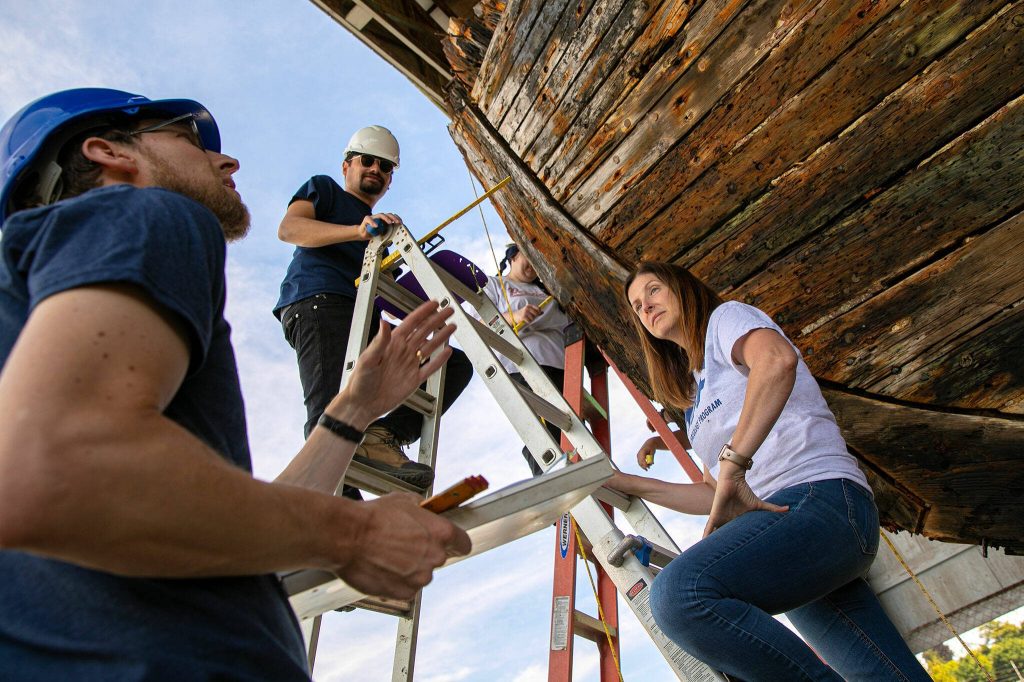
A Seattle-based nautical archaeologist, a pair of professors and seven Texas A&M University students are racing to document what they can about the 78-foot ship over two weeks in June.
“It is a witness to history,” professor Katie Custer Bojakowski said.
Sooner than later the ship as it exists today — with a life spanning sailing, steam engines and airplanes — will be no more.
The Port of Everett plans to have it dismantled after a chunk of its stern fell off years ago. Efforts to restore it could cost millions and be an ongoing expense.
Some of the ship’s timbers could be included in public art along the waterfront. The port also plans an interpretive exhibit with a drawing and a 26-by-36-by-12-inch model at the Waterfront Center near Scuttlebutt Family Pub and a ship-themed playground at Jetty Landing near the 10th Street boat launch.
“To us, it’s almost getting a whole other life,” professor Piotr Bojakowski said.
An open house about the nautical archaeology team’s work and port’s plans is scheduled for 3 to 7 p.m. Thursday, June 15 at the vessel’s shed at 10th Street and Craftsman Way off West Marine View Drive.
The Equator began as a two-masted sailing ship as designed by San Francisco-based boat builder Matthew Turner. Scottish author Robert Louis Stevenson, who wrote “Strange Case of Dr. Jekyll and Mr. Hyde” and “Treasure Island,” was among the Equator’s early passengers on a voyage in the Pacific Ocean.
It got an engine in 1893 for use as a fishing and whaling vessel in Alaska until it returned to Washington in 1923 for renovation as a tug in Puget Sound.
“It was a working ship with people, passengers and items,” Bojakowski said. “It’s a time capsule.”
But after decades of use and a change from a sailing boat to a diesel-powered steamboat, the Equator was eventually scuttled as part of the Jetty Island breakwater with other boats in 1956.
It didn’t stay buried in Port Gardner and Snohomish River silt for long. A community group removed and salvaged it in 1969 then got it on the National Register of Historic Places a few years later.
The husband-and-wife Texas A&M archaeology professors first learned of the Equator several years ago while visiting family in Everett. After walking along the waterfront, they passed the ship which grabbed their attention as a beacon into technology, commerce and society at the turn of the century, especially along the West Coast.
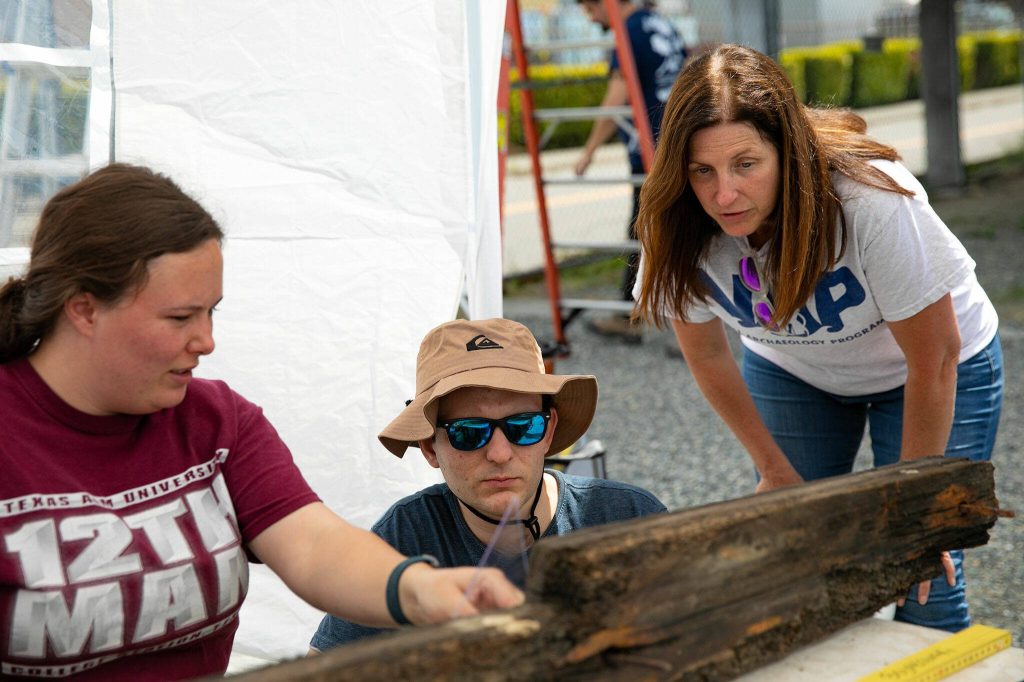
“Ships were often the most advanced technology at the time,” Custer Bojakowski said. They can tell which of the hundreds of wooden planks, almost certainly Douglas fir, were sawed by hand or machine. Repairs and patches stand out, too.
“It really looks like two ships stitched together,” Custer Bojakowski said.
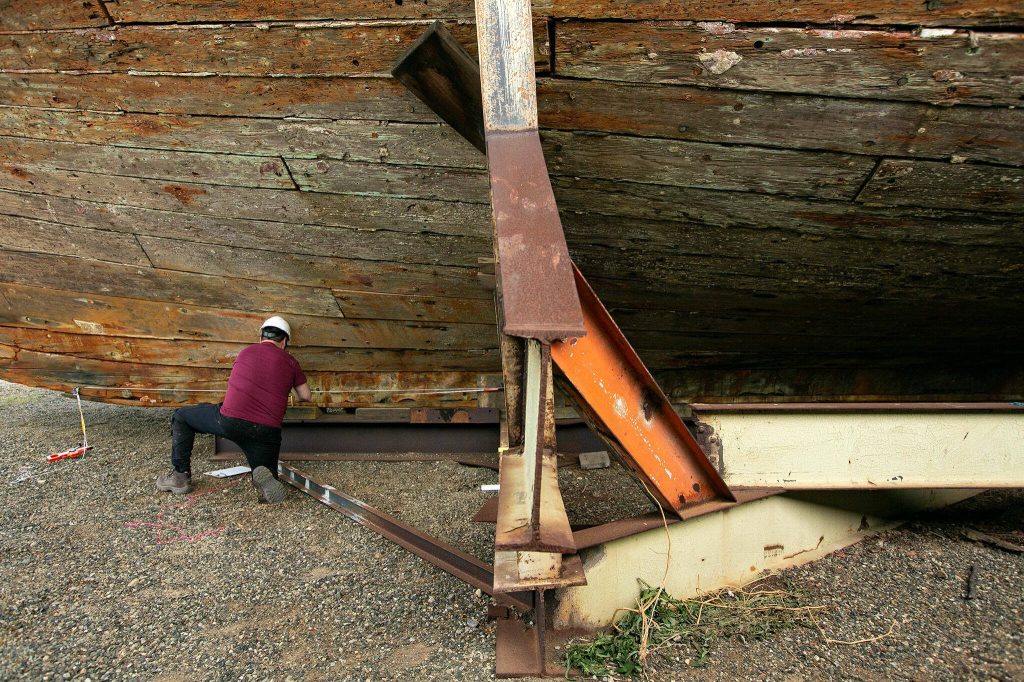
The Equator is too unstable for the archaeologists to climb aboard, but damage and modern technology gives them a glimpse inside.
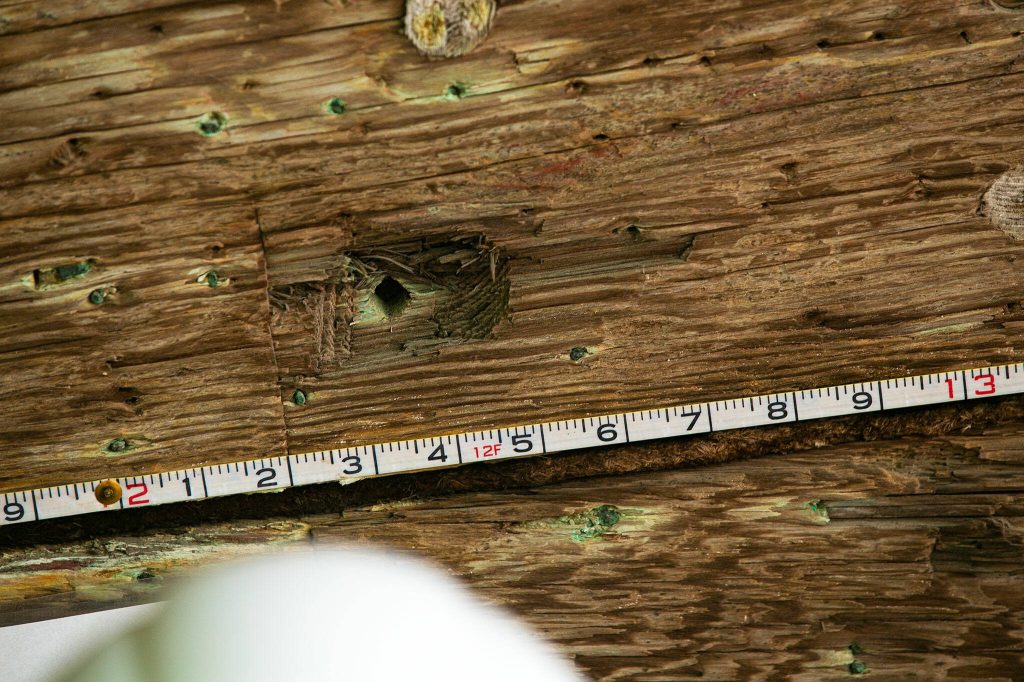
They can see some of the decking from a hole on the starboard. Fasteners are visible from the exterior, as are some of the tool marks and repairs, like a different colored plank and what they believe to be a large lead paste patch near the bow.
Drones and laser imaging, called lidar, can give them data to digitally recreate the ship. From that information, someone with enough money and time could reconstruct it.
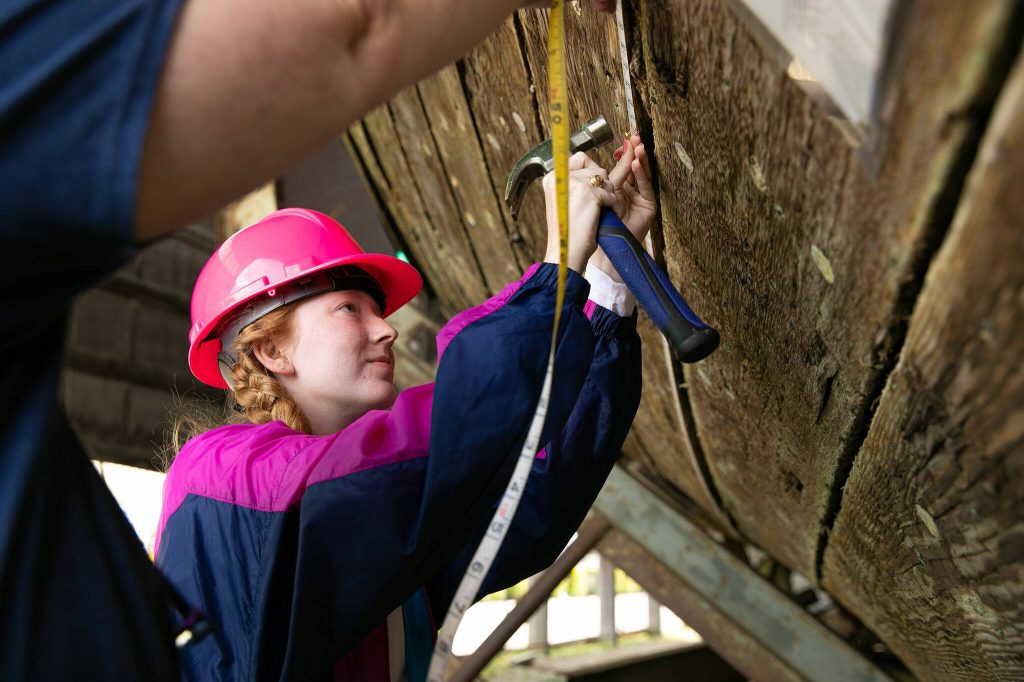
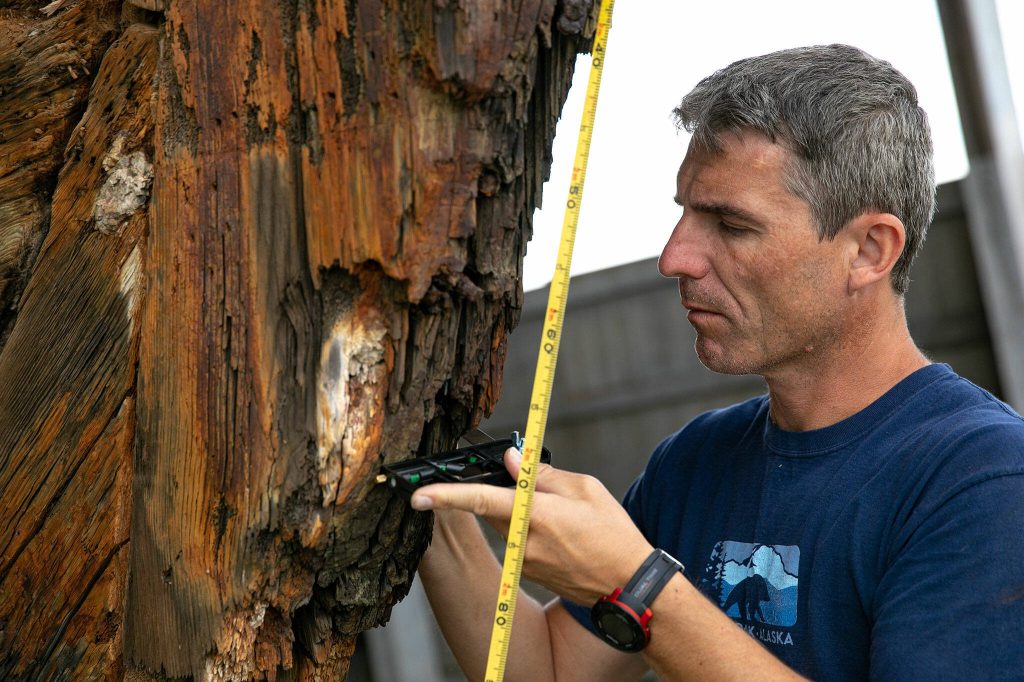
But a lot of their work this week is analog: protractors, ladders, paper and pencil.
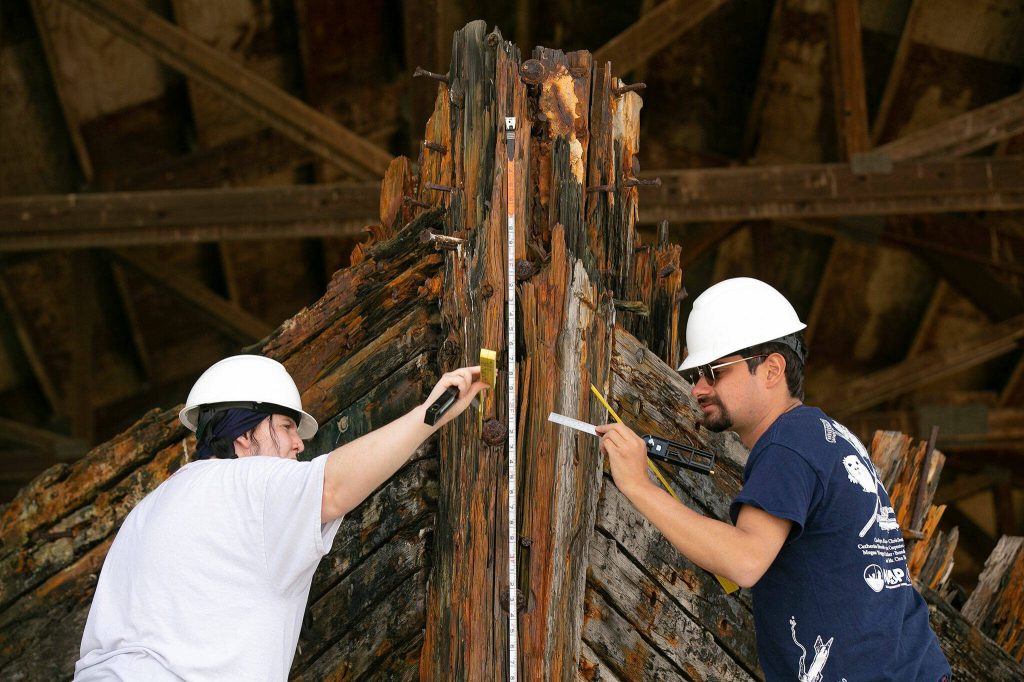
On Thursday, a pair of students suspended a tape measure from the bow stem to the ground. Morning wind threatened their ability to get accurate readings, so they looped its end around a cantaloupe-sized rock and stabilized it in the middle with duct tape and other tape measure segments in what Custer Bojakowski called creative problem solving.
They were recording the construction, geometry and shape. The wood curves from the top of the bow stem to the keel.
The original builders joined the bow stem with the keel, a single piece of timber estimated at 13 inches wide, 7 inches tall and 66 feet long. They likely used wood based on the grain to leverage its strength and flexibility to make the sharp bow that cut through the water on its voyages, Bojakowski said.
Another pair of students looked at the metal and wood fasteners near the bow to see the pattern and identify the frame.
“If we don’t record something, there’s no coming back,” Bojakowski said.
Since the work is being done on behalf of the public university, all of the data will be open once it’s published.
“This is a form of preservation, forever,” Bojakowski said.
The archaeologists hope their work guides other groups working with aging 19th and 20th century wooden vessels across the country.
Ben Watanabe: 425-339-3037; bwatanabe@heraldnet.com; Twitter: @benwatanabe.