Crashed tourism helicopter in Copper Lake could stay there until 2024
Published 5:00 pm Tuesday, October 31, 2023
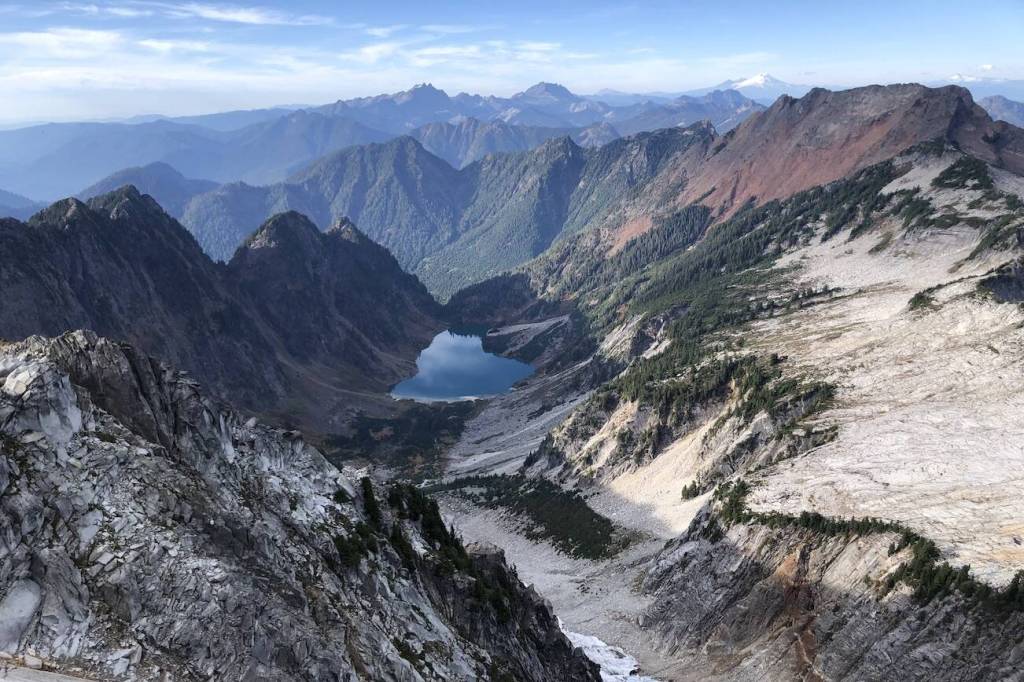


SILVERTON — A helicopter that crashed into Copper Lake — part of the watershed providing drinking water for Snohomish County — may be stuck there until next spring or summer.
It has been over a month since the helicopter plunged into the water while dropping off fly-in campers on the south shore of the remote lake at 3,037 feet elevation, just southwest of Big Four Mountain.
State and county officials said they would need two consecutive days of good weather to even attempt a removal operation this fall.
Copper Lake’s outlet flows into Williamson Creek, connecting it to the county’s main drinking water source, Spada Lake reservoir.
But officials said Tuesday there was still no apparent threat to water quality.
To take out the helicopter, contracted divers would need to rig it up, float it to the surface and move it to a shoreline, according to the state Department of Ecology. Contractors would then remove fuel from the helicopter and have it lifted out via another helicopter.
A slew of factors could postpone removal until 2024: poor flying weather; dropping temperatures with the potential of the lake freezing over; and elevated water levels at Copper Lake, limiting the amount of shoreline to stage the sunken helicopter.
“Everyone is poised and ready if necessary,” said Paul McFarland, natural areas manager for the state Department of Natural Resources. “It’s just looking less and less likely.”
Around 8:30 p.m. Sept. 8, a Eurocopter AS350 “Ecureuil” or “Squirrel” helicopter crashed into Copper Lake — a pristine slice of wilderness that would require miles of bushwhacking for traditional hikers to reach. The pilot, from Arlington-based WorldWind Helicopters, Inc., had initially dropped off four passengers near the south shore. The pilot then left and tried to bring four more people, when the helicopter crashed into the water. The helicopter had 60 gallons of fuel on board.
Nobody was injured in the crash.
Part of Copper Lake sits in the Morning Star Natural Resources Conservation Area, a DNR property where landing aircraft is illegal. The northern and western shores of Copper Lake are owned by the U.S. Forest Service, where — before Sept. 8 — “commercial” landings were allowed with a permit.
State officials believe the pilot landed in the Morning Star area when the first group of people were dropped off, and the pilot intended to land there again before the helicopter crashed. Agencies remained mum on whether the flight was a private or commercial flight. The National Transportation Safety Board had not concluded its investigation of the incident, as of this week.
WorldWind Helicopters did not respond to requests for comment.
On Oct. 19, contractors flew in and oversaw a remote-operated vehicle search at Copper Lake. A small submersible was sent into the water to survey the condition of the aircraft and its location in the lake.
Officials haven’t flown any helicopters to the site since, so it was unclear whether Copper Lake had frozen over as of Tuesday afternoon, said McFarland.
McFarland said he’s well aware of the irony of using helicopters to remove a helicopter that wasn’t supposed to be in the area in the first place. But Copper Lake is one of the most remote water sources in the region, and there aren’t many options.
Downstream, the Snohomish County Public Utility District operates Spada Lake and co-owns the reservoir’s dam with the city of Everett, contracting with neighboring cities to supply 640,000 people with drinking water.
Last month, staff from the PUD and the state Department of Ecology put oil booms at the outlet of Williamson Creek in Spada Lake, as well as near the site of the crash in Copper Lake.
Since then, the booms in Spada Lake were removed due to windy weather, said PUD spokesperson Kellie Stickney. She said the oil booms at the mouth of Copper Lake will remain there unless Williamson Creek freezes. At that point, Stickney said the PUD will try something else, though those plans are not concrete.
Staff from the city of Everett will continue to sample water from Copper Lake every two weeks to ensure safe water quality until the helicopter is removed, said Kathleen Baxter, spokesperson for the city.
If fuel were to leak from the helicopter, it would be visible on the surface and have a rainbow-colored tint.
“We don’t have any reason to believe there’s any kind of spill,” said Ty Keltner, spokesperson for the state Department of Ecology. “We have to see evidence.”
On Sept. 29, the U.S. Forest Service issued an area closure of the northern and western portions of Copper Lake in an attempt to prevent helicopter landings at the site for the next two years.
The Forest Service is planning to pursue the National Environmental Policy Act process soon, which would permanently restrict access to the Forest Service side of Copper Lake, said Joe Neal, ranger for the Skykomish ranger district.
Officials from the Forest Service and DNR previously told The Herald they were unaware of anyone fly-in camping, or transporting tourists by helicopter, in the remote Morning Star area or near Copper Lake. However, images of Copper Lake on Google Maps suggest people have been flying helicopters to Copper Lake for years — at least since 2017.
Bill Lider, principal engineer for Lynnwood-based Lider Engineering, has been consulting with officials from the state DNR and Forest Service for weeks about removing the helicopter. He spoke to the PUD Board of Commissioners on Oct. 17, urging the agency and the Forest Service to collaborate on prohibiting fly-in tourism in the Spada Lake watershed.
Lider said the Forest Service should make the closure permanent, as soon as possible.
“Just because it is not leaking fuel today does not mean that it won’t be leaking next week, next month,” Lider said, “or after the lake freezes over.”
Ta’Leah Van Sistine: 425-339-3460; taleah.vansistine@heraldnet.com; Twitter: @TaLeahRoseV.