Lawsuit denies teen had knife when Arlington police shot her
Published 1:30 am Sunday, February 24, 2019
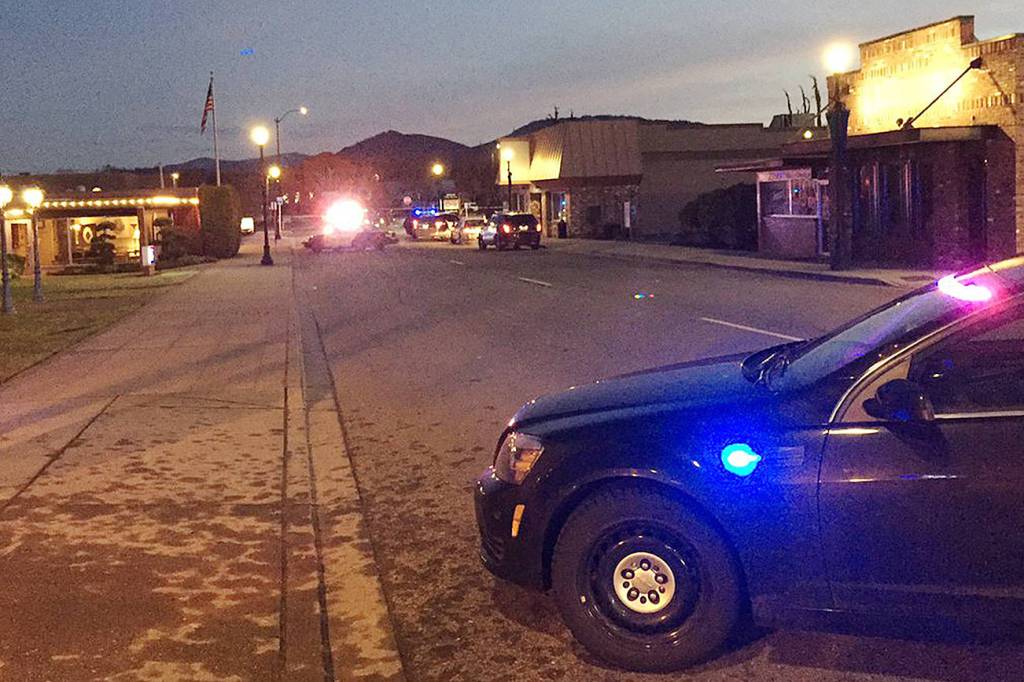
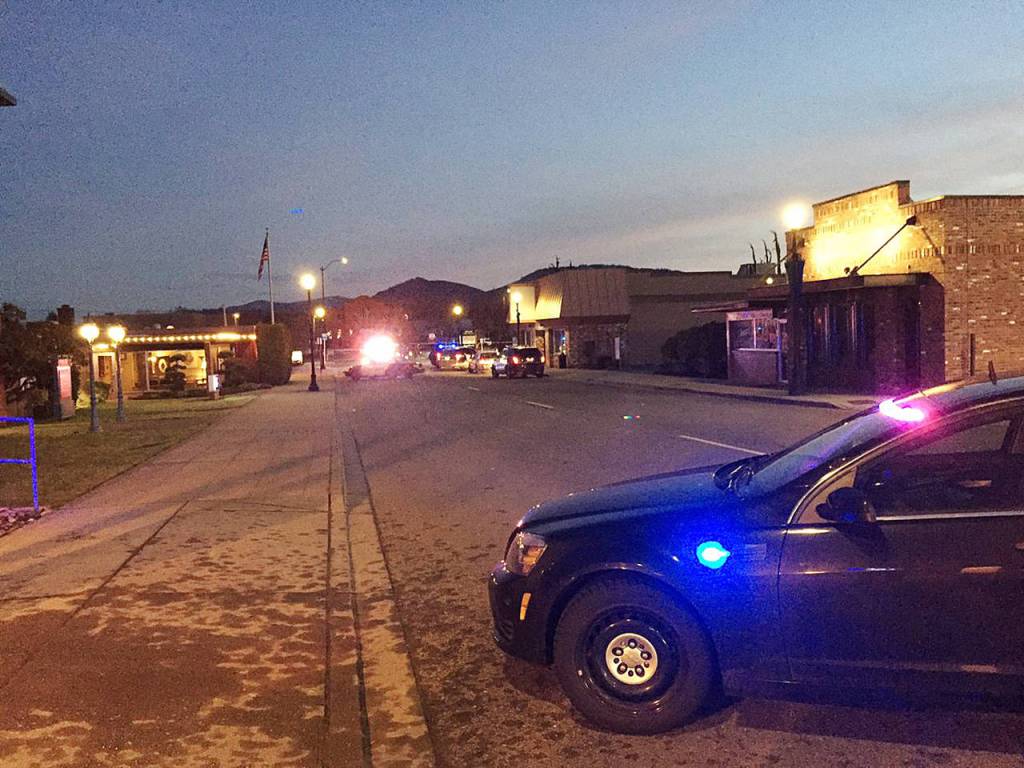


ARLINGTON — All five bullets that hit Nina Semone Robinson struck her in the back and buttocks, according to a new lawsuit filed against Arlington police in U.S. District Court.
The account told in the complaint is markedly different from the police narrative of Valentine’s Day 2017, when two officers fired nine rounds at the Arlington girl, then 17.
The officers reported Robinson, who was threatening to kill herself, came at a police sergeant with a small knife in a gravel lot off N. Olympic Avenue.
There is a plausible explanation for why bullets struck Robinson’s back, Arlington Police Chief Jonathan Ventura said in an interview Friday. One officer stood at an angle and saw the sergeant about to be stabbed, according to public records.
Both officers opened fire. Robinson survived.
The civil complaint acknowledges she held the knife to her throat moments earlier, but says she was unarmed at the critical moment. According to the plaintiff, a police sergeant broke out her car window with a baton, pulled her out of the car by her hair and allowed her to walk across the gravel, while trying to shock her with a malfunctioning stun gun.
The officers “radically escalated the severity” of the situation and lacked adequate training in crisis intervention, according to the complaint. It doesn’t name a dollar amount sought.
(Update: The claim for damages shows Robinson is seeking $25 million. The Daily Herald obtained a copy Tuesday through a public records request.)
Police maintain that Robinson refused commands, crawled out of the broken window herself and attacked the officers with the 2¾-inch blade.
In a statement responding to the lawsuit, the city of Arlington noted the shooting was investigated by the Snohomish County Multiple Agency Response Team, a cadre of detectives tasked with cases where police use potentially lethal force.
Both officers, Sgt. Peter Barrett and officer Justin Olson, were cleared of wrongdoing by Mark Roe, then the county prosecutor.
“The bullet wounds were from her back, not in her chest,” one of the plaintiff’s attorneys, Fred Langer, said Friday.
The shooting drew widespread attention amid national coverage of cases — Eric Garner, Tamir Rice, Walter Scott and many others — where police used deadly force on African Americans. Robinson is black. The lawsuit notes Arlington is a “small, rural, mostly Caucasian town.” However, the complaint does not make accusations that the officers exhibited racial bias.
The lawsuit alleges dereliction of duty, violations of public records laws and civil rights abuses. It focuses on how police handled Robinson during a mental health crisis.
“She has scars that are more than skin deep,” Langer said.
The shooting
It was two hours before dawn Feb. 14, 2017, when early bird commuters called 911 to report a young woman lying in the middle of the street, weeping and screaming.
Robinson was upset over a boyfriend. She’d accused him of cheating on her at a party. She’d bloodied her hand earlier when she punched a door. Hospital tests later confirmed she’d been drinking alcohol and smoking cannabis. After the party, Robinson drove to the lot, parked and talked about her problems with a friend.
She grew inconsolable around 5 a.m. She got out of the car and screamed in the street. Officer Olson, who was hired by Arlington police in 2014, arrived first. She told Olson she wanted a truck to run over her. Sgt. Barrett arrived as backup. He ordered her to get back in her car. Barrett had been patrolling Arlington since 2004.
“He would’ve been to, easily, a couple hundred suicidal situations over the course of his career,” the police chief said Friday. “Each one of those would’ve been a training opportunity.”
The girl and Barrett argued about whether police could arrest her, as she was a minor. Robinson eventually sprung up, walked back to her car, opened the door and yelled, “Bye!”
Police walked behind her as she returned to the car. According to Robinson’s lawyers, police should have detained her right away for a mental evaluation.
Robinson locked the door. According to the complaint, the police “surrounded the vehicle, and began yelling loud, confusing and conflicting orders at her.”
Barrett ordered her to open the door. She grabbed the knife and rapidly clicked its blade against the window, according to police. She held it against her throat. She eventually did try to open the door while still holding the knife, but Olson pressed it closed, officials said. The pair came up with a plan for Barrett to break a window and use his stun gun, while Olson distracted the girl. Barrett smashed the window with his baton. As he tried to clear the debris, he reported, the young woman lunged at him with the knife.
The defense says Robinson was dragged outside by her hair. The police chief said that’s disputed.
“Think of it from a common-sense perspective,” Ventura said, “if that would make any sense for the officer to climb in through the window … and then drag (her) out.”
Once she was outside, the sergeant tried twice to shock her with the stun gun. Tests on the weapon later revealed it was sparking at 2 pulses per second, rather than 19 per second. At that level, it would cause discomfort, but not severe pain, according to a police report. Officers check that their stun guns are operational at the start of every shift, Ventura said Friday.
This incident began at the end of the night shift.
Barrett backpedaled as Robinson walked toward him, according to his report.
“She came within approximately 15 feet, (and) raised the knife above her head still in her right hand,” says a summary of his interview.
Police generally are trained that anyone with a blade can be deadly within 21 feet.
Three bullets hit Robinson in the back, according to the plaintiff. One hit her buttocks. One hit her right shoulder, damaging her humerus.
“Oh, hon,” Sgt. Barrett asked as police gave her first aid. “Why did you do this?”
“Because I wanted to die,” she reportedly answered.
The aftermath
The lawsuit notes the knife was found 40 feet away from the spot where Robinson was shot and fell. According to police, she said she threw it. An attorney for the plaintiff declined to discuss how it ended up there.
Robinson was flown to Harborview Medical Center in Seattle, where she spent days in intensive care. She had a collapsed lung, a punctured liver, broken bones and underwent surgeries to have gravel and bullets removed from her wounds.
“Her body is now checkered with scars, including a massive, dark, hypertrophic (raised) scar that runs the length of her abdomen from below her navel up to her sternum, like a zipper,” according to the complaint.
The officers submitted their statements over two weeks after the fact. They returned to their jobs by the next month.
The lawsuit was filed exactly two years after the incident.
A city news release issued Feb. 16 included a quote from the police chief: “This is an unfortunate situation for the plaintiff and we empathize with her and her family.”
“At the time of the shooting, the involved officers were trained in crisis intervention techniques to the standard required by state law,” the city statement read. “The independent investigation showed that the officers repeatedly attempted to deescalate the situation, including the deployment of a Taser to prevent injury to the plaintiff, the officers and bystanders.”
Months after the shooting, a new state law required police to take an annual course specifically about crisis intervention.
Robinson’s attorneys accused the department of not following its own policies on crisis training. The city policy manual had been written by a subscription service, Lexipol, and had just gone into effect Jan. 1, 2017, the police chief said.
The lawsuit says no Arlington police underwent the kind of crisis training required in the manual until October 2017.
Ventura said the city’s officers have been trained in tactics that might not be called Crisis Intervention Training, but that’s essentially what they are.
“De-escalation is kind of a current buzzword,” Ventura said, “but officers have been dealing with people in crisis for over 100 years.”
The news release erroneously said the girl later pleaded guilty to two counts of assault on a police officer. It added that she admitted “that she attempted to assault the officers to force a ‘suicide by cop’ scenario.”
In fact, the girl had entered an Alford plea to fourth-degree assault and unlawful display of a weapon in 2018. Both are misdemeanors. In an Alford plea, a defendant maintains her innocence, but concedes a jury could convict her based on the evidence.
Before the plea, Robinson had no criminal record. Her family has described her as a Running Start student and talented artist who wanted to study international law. She has since moved away from Washington.
The city has not yet responded in court to the litigation.
Caleb Hutton: 425-339-3454; chutton@heraldnet.com. Twitter: @snocaleb.