Marysville to run ‘most critical levy’ in its history, schools chief says
Published 1:30 am Friday, January 13, 2023


MARYSVILLE — Marysville School District Superintendent Zach Robbins has marked his calendar for Feb. 14.
That’s when voters will decide the fate of what he calls the “most critical levy” in the district’s history.
Voters said no twice in 2022, and the budget suffered. If they say no next month, deeper cuts loom.
“While we like to remain positive, we also face the reality that it would require us to make more impossible choices that no school district should have to make, that no city should have to make, when it thinks about how best to educate children,” Robbins said. “Because after a while, you’re not cutting fat. You’re cutting bone.”
If the levy does not pass this year, Marysville schools would lose almost a sixth of the usual annual budget. Such a loss would leave the district with bare-bones staff and programs. Some local leaders are worried it would put the district in financial peril and limit local control of schools.
“Some of what I’ve seen is that if the school levies continue to fail, OSPI steps in and they take over,” said Cindy Gobel, chair of the pro-levy Best Schools Marysville political action committee. “And then we as a community, and even the school district, they don’t have control over the decisions that are made.”
School officials say the risk of insolvency is years down the line and hardly likely. But the fact that it has come up at all shows what’s on the line, said Becky Roberts, president of the Marysville teachers union.
“We’ve talked about how this levy is critical, and it’s going to take all of us to help pass this levy,” Roberts said. “There is nobody who gets to sit on the sidelines.”
‘Cutting bone’
If it passes, the local tax would raise almost $108 million over four years, including $25 million in 2024.
The district estimates it would cost voters about $1.67 per $1,000 of assessed property value. That’s $1,002 annually on a home valued at $600,000, the median price in Marysville according to Zillow and Redfin.
The levy helps pay for staff and supplies not fully funded by state or federal dollars. In Marysville that includes:
• About 15 custodians, grounds or maintenance employees;
• About 6 security officers;
• About 16 health services employees;
• About 27 counselors or social emotional support staff.
It also funds other daily operational needs, like transportation and curriculum; the Marysville Pilchuck High School pool that’s available for community use; and 100% of school athletics.
“When you look at all these items here, all these items create opportunities for students and families,” said Dave Cram, district finance director.
Usually, the levy funds 16% to 18% of the school district’s budget.
This school year, local taxes accounted for just 7%, because last year voters twice rejected a tax that included the 2023 collection. The consequences: bigger class sizes, fewer staff, outdated curriculum and reductions to school athletics programs.
“Those things aren’t benefits to children,” Robbins said. “They negatively impact our fantastic teachers’ ability to give kids the educational experience they need.”
Roberts, the teachers union president, estimated there are about 40 fewer teachers in the union this year, with about 685 members remaining. Although no teachers were officially laid off, the district decreased its staff by leaving some vacant positions unfilled to save money.
In addition, many paraeducators, secretaries and other support staff saw their hours cut. Some full-time positions dropped to part-time hours, even when the number of responsibilities stayed the same.
“Their workload hasn’t changed, but the amount of time they have to do that work has changed,” Cram said. “So there is a tremendous amount of pressure on them to get things done.”
Levies are collected on a calendar year, so another $12.5 million in cuts, at least, are in order for 2023-24, whether or not voters pass a levy this election. Those cuts would almost double if voters do not approve a reinstatement levy this year.
If voters reject the levy in February, the district can try once more in 2023, before needing to slash the local tax from its budget.
‘Option of last resort’
The worst case scenario — another levy rejected twice — could trigger insolvency, Roberts said. That would start a multi-year process with state oversight and, in the most extreme case, dissolution of the district.
The process begins with “binding conditions,” or strict fiscal rules established by the regional educational service district and state superintendent’s office. A district is put on those conditions if it cannot balance its budget without borrowing from future revenues.
Then the district would have to follow the parameters until it is financially stable.
If a district remains on binding conditions for more than two years, it is deemed insolvent and referred to a special financial oversight committee. That committee has two options for resolving the bankruptcy: appoint the state to oversee the district budget and operations, or dissolve the district.
Actual dissolution is highly unlikely, especially for a district the size of Marysville. That fate has befallen only one Washington school district in at least five decades. And that district had about 65 students.
Marysville is nearly 20 times that size, with 10,200 enrolled last school year.
It’s also very rare for a large district to be put on binding conditions.
The 2011 report the state uses to guide the insolvency process states that between 2001 and 2011, just 12 districts of the state’s 296 at the time qualified for the parameters at some point. All but two of them had fewer than 2,000 students.
“It’s important to note that the process is designed to assist districts back to financial health/stability, not to force dissolution or consolidation,” an OSPI spokesperson wrote in an email to The Herald. “That is the option of last resort.”
‘It’s about our future’
School levies need simple majority approval to pass. Last year, similar tax measures in Marysville earned 40.7% approval in February and 45.8% approval in April.
Those levies had slightly higher estimated tax rates that decreased each election, from $2.20 per $1,000 assessed value in February, to $1.97 per $1,000 in April. The previous failed levies shared the ballot with separate technology levies, bumping up the total estimated tax rates proposed to Marysville voters by about 60 and 26 cents, respectively. The upcoming measure estimates yet another drop in the proposed tax rate: $1.67.
Roberts heard from voters that the most common reason they said “no” to the levy last year was because they had concerns about student performance. According to state data, about 81% of students graduated on time in Marysville last school year. That compares to 91% in Lake Stevens and 89% in Snohomish, two nearby and similarly sized districts.
Test scores also trended lower in Marysville. On state assessments in the spring of 2022, about 24% of students met state standards for math and about 37% met state standards for English. In Lake Stevens, those percentages were about 45% in math and 60% in English.
Roberts said many factors influence student performance. For example, Marysville has a significantly higher rate of low-income students. About 55% of the students in Marysville qualify as low-income, compared to 28% and 23% in Lake Stevens and Snohomish, respectively. Decades of education research indicates that low-income students tend to fall behind more economically stable peers.
“We need to look at that bigger picture,” Roberts said. “And what I do know is that things can’t improve, we can’t work on student performance and improve student achievement if we fail our levy. … We have a dedicated staff. We have a staff that really cares about kids and wants kids to succeed, and we need the levy to help make that happen.”
The Marysville School Board signed a resolution supporting the levy earlier this month. The measure also has support from Marysville Mayor Jon Nehring, state Rep. Julio Cortes and Best School Marysville, a new political action committee.
The PAC includes Tulalip Tribes staff members. Meanwhile, the Tribes have started researching how to open their own K-12 school, but that plan could take years to become a reality. Until then, tribal leaders say they will continue supporting the Marysville district, which encompasses the Tulalip Reservation.
“It’s really critical that people get out and vote and support this levy and support the district,” said Ryan Miller, director of treaty rights and government affairs for the Tulalip Tribes. “Ultimately, this is about our kids. This is kind of the bare minimum that’s required to do what’s necessary to protect children’s education in the Marysville School District.”
Last election cycle, there were no organized pro- or anti-levy committees, according to Public Disclosure Commission records.
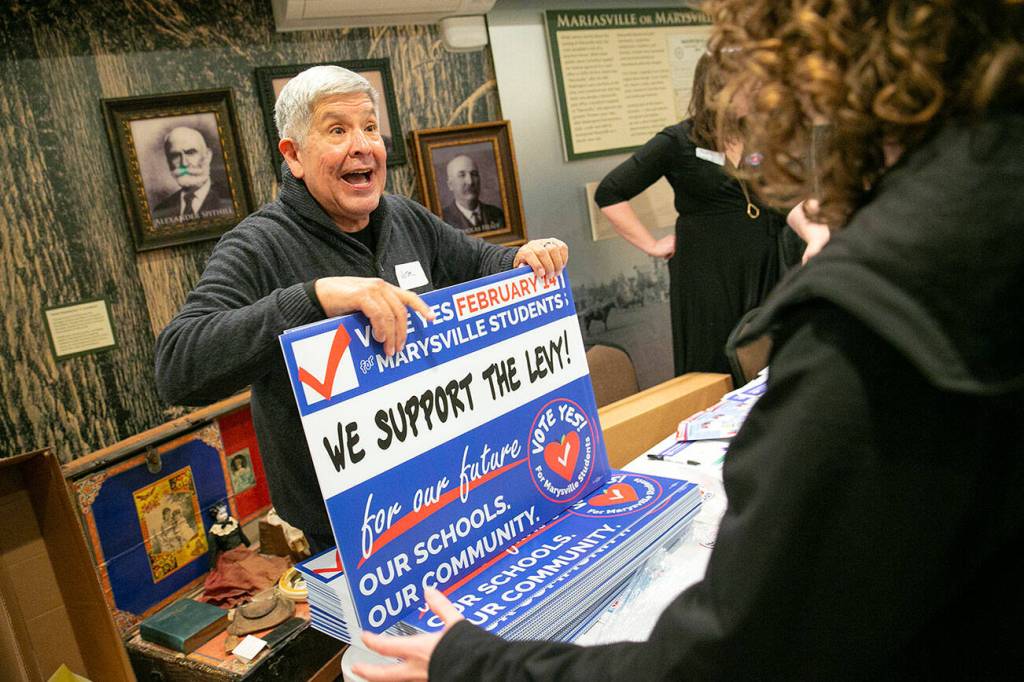
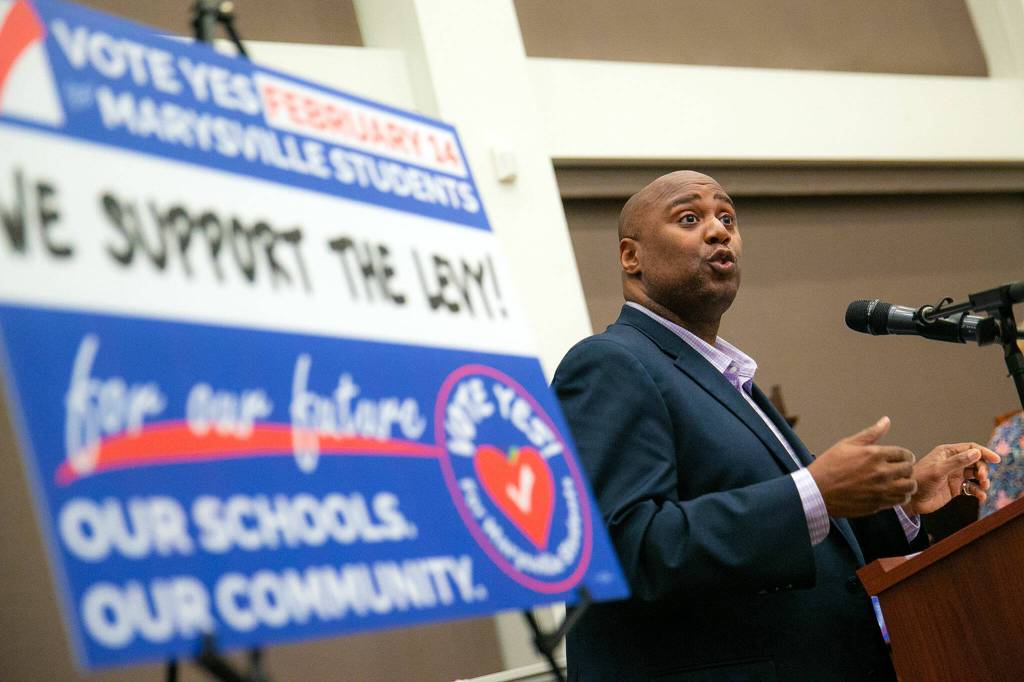
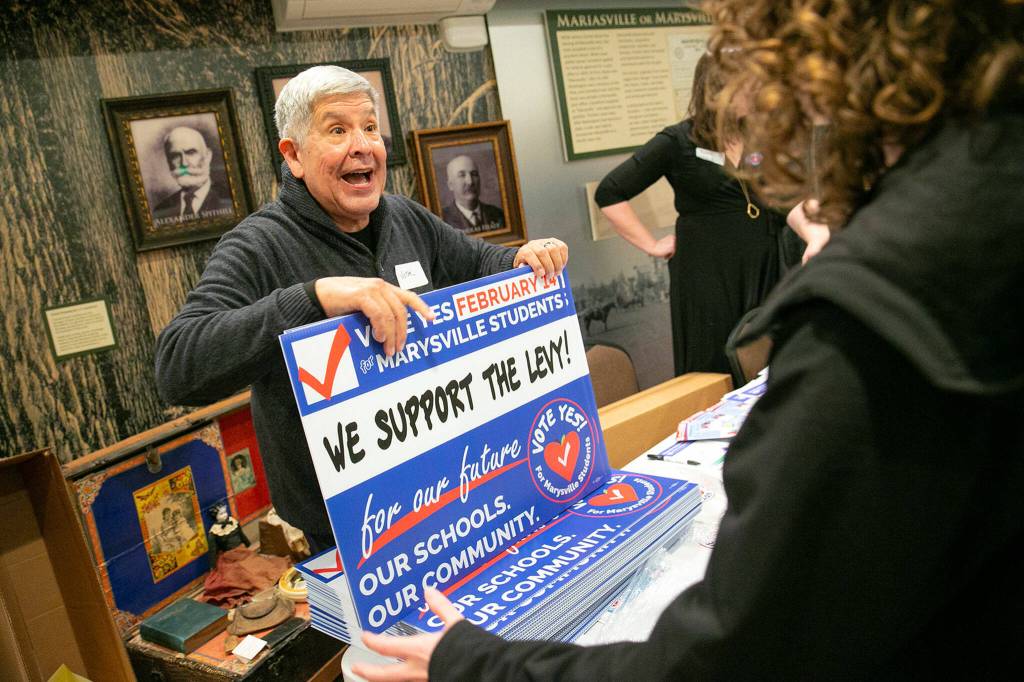
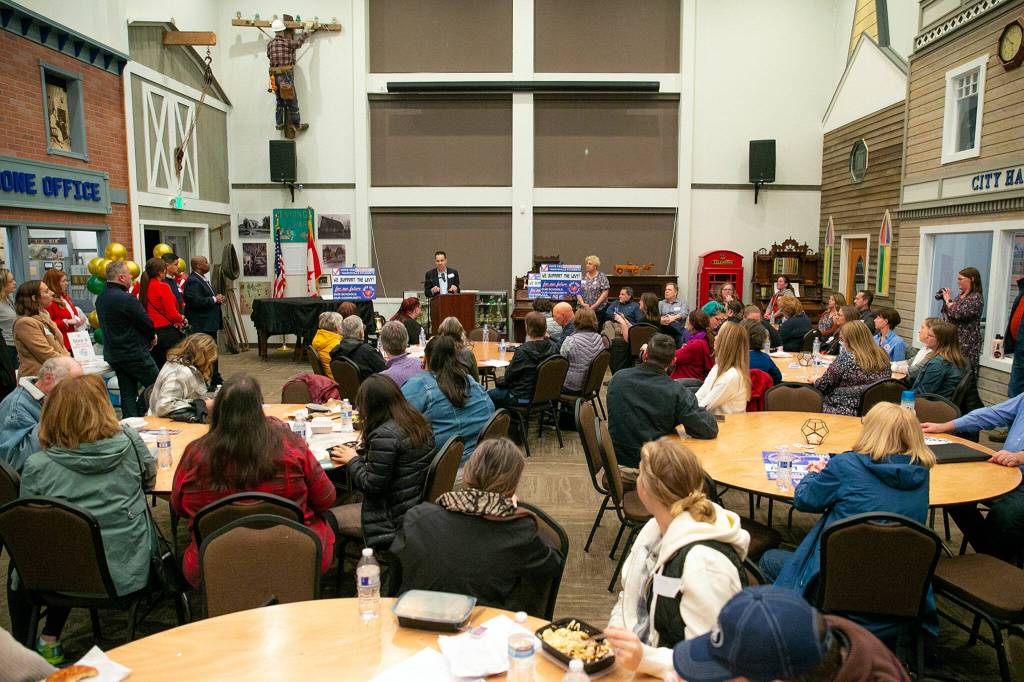
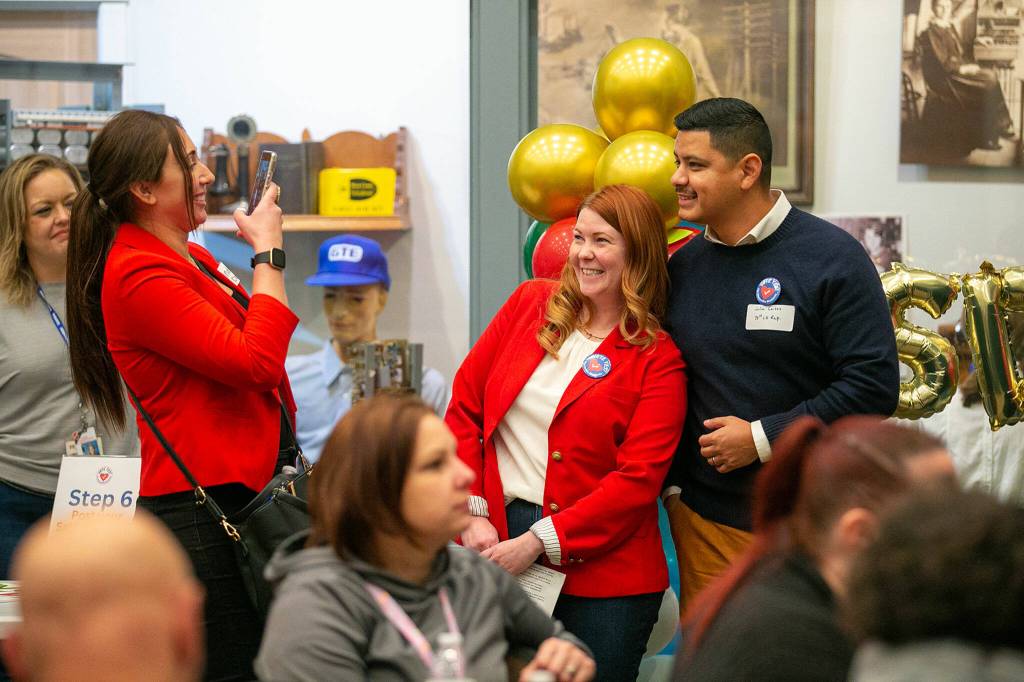
On Jan. 5, Best Schools Marysville hosted a kickoff event to promote the measure and distribute “vote yes” signs and buttons. Gobel, the PAC’s chair, emphasized the importance of passing the levy for the benefit of local schools and the economy.
Strong schools attract businesses and developers to invigorate the local economy, Gobel said.
“It’s not just about the students,” she said. “It’s about the economy. It is about our development and our future for what we want to be as Marysville.”
Mallory Gruben is a Report for America corps member who writes about education for The Daily Herald.
Mallory Gruben: 425-339-3035; mallory.gruben@heraldnet.com; Twitter: @MalloryGruben.