Once a must for wealthy Seattle-area liberals, Teslas feel Elon backlash
Published 1:15 pm Monday, December 2, 2024


By Paul Roberts / The Seattle Times
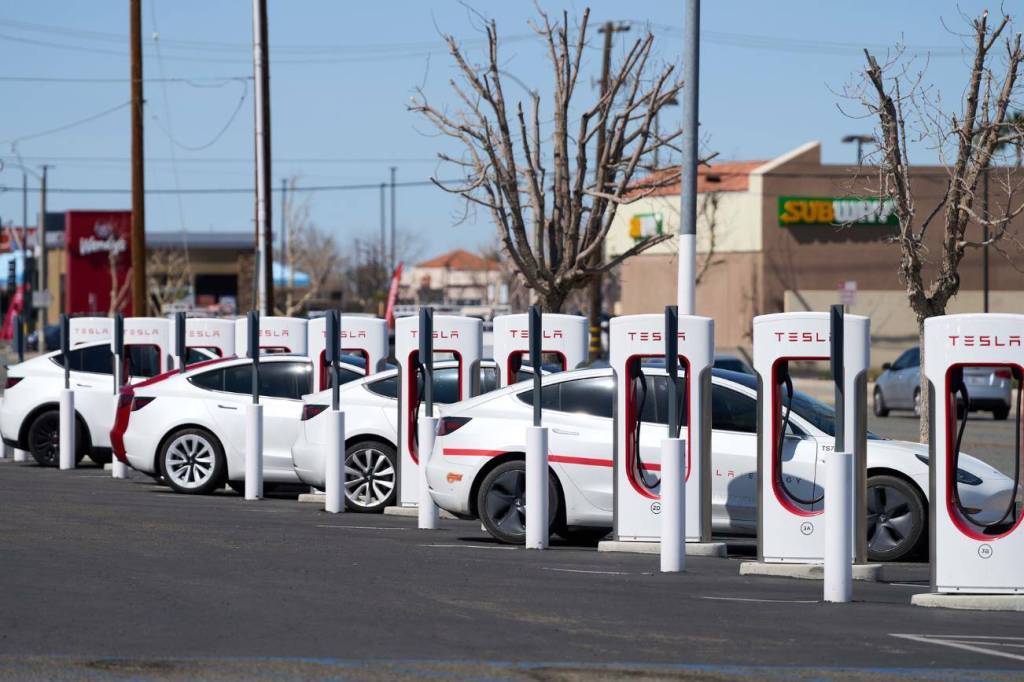
For Tesla drivers in and around Seattle, the mood these days can feel a little charged.
In a metro area famous for its Democratic majorities, driving an electric vehicle whose maker, Elon Musk, just helped reelect Republican Donald Trump can earn its own special version of the Seattle freeze.
Parked Teslas have been spray-painted and smashed. Tesla drivers have been given unseemly hand gestures.
“It’s surprising how much more often I get flipped off now than 2 days ago,” quipped a member of a Seattle Cybertruck Facebook group shortly after the Nov. 5 election.
Seattle has always had a love-hate thing for Tesla, to be sure. While the area’s many thousands of Tesla-stans see their cars as climate-friendly disrupters of the petroleum status quo, others gleefully dunk on Teslas as clichéd status symbols for obnoxious tech bros.
Still, Tesla dunking intensified in the run-up to the election, when Musk was roiling progressives with social media blasts on everything from “open borders” and the “woke mind virus” to an offer to impregnate Taylor Swift.
Some Seattle Tesla fans have tried to steer a middle ground.
“The politics of the leader of the company is unfortunate, but I don’t think it affects my view of their product,” said Matt Moreno, a Microsoft engineer from Everett who has been a Tesla fan since 2013.
Others, however, are done.
“People I knew would comment to me, ‘Why are you supporting him?’” said John Wyss, a 60-year-old Seattleite, who got so fed up he dumped his leased Model 3 Tesla late last year and switched to an electric Hyundai.
For Wyss, Tesla had changed from a brand associated with climate action and disruptive innovation “to something that was much more divisive and representing a very specific viewpoint around right-wing politics.”
Surveys show that Musk’s controversial positions turn off many left-leaning, climate-focused consumers who would otherwise embrace the upscale Tesla, which can cost anywhere from around $40,000 for a basic Model 3 to $100,000 for a deluxe version of the new Cybertruck.
That “Elon Effect” may be showing up in sales data. Although shares of Tesla are up 39% since Jan. 1, overall Tesla deliveries through Sept. 30 are down around 2.4% versus the same period in 2023.
In Washington, Tesla deliveries fell further — by 11% for the same period, according to state new title registration data — even as registrations for battery-powered electric vehicles overall rose 2.4%. If that continues through December, it will be Tesla’s first yearly decline in Washington since 2014.
To be clear, it’s difficult to know whether Tesla’s recent slump reflects politics or other market factors, such as growing competition from other electric vehicle brands.
Tesla’s share of the state’s electric vehicle market, which peaked at 72% in 2018, was already falling before Musk started stumping for Trump; so far this year, around 48% of new EVs in Washington have been Teslas.
But anecdotally, Musk is indeed having an effect. Redmond resident Theresa McNeal Ramsdell, a Tesla owner since 2016 and president of Tesla OwnersWashington, knows club members who “will not buy another Tesla again because of Elon.”
Trouble in Tesla Town
Tesla’s Washington swoon marks a striking shift for a part of the country that was once one of the brand’s biggest supporters.
The Seattle area in particular, with its ranks of well-heeled tech workers, strong environmental attitudes and relatively cheap electricity, was fertile ground for a car that aimed to utterly disrupt the traditional petroleum-fueled car industry.
“It was an investment in the future,” said David Eaton, professor emeritus at the University of Washington, of the roughly $100,000 he shelled out in 2012 for one of the first Tesla Model S vehicles.
By the following year, Washington was registering more Teslas per capita than any other state, according to state data.
Tesla fans were so loyal here that when the company was struggling to meet delivery goals in 2018 and turned to existing customers for help, Moreno, the Microsoft engineer, and dozens of other Seattle-area Tesla owners volunteered to offer new-driver orientation for local buyers.
“No other car company could get their customers to come back in and volunteer their time,” Moreno said at the time.
In 2018, nearly 3 of every 4 new electric vehicles titled in Washington were Teslas. By 2021, Tesla deliveries in Washington were increasing 55% a year, as the brand’s appeal expanded from idealists and status seekers to ordinary drivers hoping to escape the high costs of gas-powered transportation.
Lyft driver Andres Cortes, 61, of Kirkland, bought a Tesla Model 3 in 2019, partly at the suggestion of his tech-industry passengers. He found he was able to more than cover the monthly car payment with the money saved not buying gas. Do the numbers, said Cortes, “and you can see that you’re going to save money.”
Even then, though, there was trouble in Tesla paradise.
The cars were increasingly associated with the influx of tech workers that some progressives blamed for rising inequality in and around Seattle.
Tesla drivers were also feeling heat from some conservatives who saw the cars as a symbol of a growing hostility to gas-powered transportation — especially after Washington enacted legislation in 2020 that ultimately led to the mandate that all new passenger vehicles be zero-emission by 2035.
“That’s when I saw a lot more of the hatred start to pick up,” said McNeal Ramsdell of the Tesla Owners club. “I think people started to feel threatened that they’re going to be forced to buy electric vehicles.”
But it was also around that time that Tesla’s CEO was starting to antagonize progressives.
On Twitter, which Musk would eventually buy and rename X, he offered hot takes on everything from COVID-19 (he wrongly predicted cases would fall nearly to zero by the end of April 2020) to transgender issues (“Pronouns suck”) to his suggestions that Ukraine give up Crimea as a way to negotiate peace with Russia.
And well before Musk openly endorsed Trump, he had repeatedly criticized the Biden administration, which he saw as anti-Tesla due to Musk’s opposition to labor unions at Tesla.
Given that Democrats were then accounting for around 40% of sales, according to research firm Strategic Vision, Musk’s antics seemed like a risky play.
And, in fact, since January 2021, the share of Americans who view Tesla unfavorably has surged from 15% to 38% — and to 47% among Democrats, according to CivicScience, a consumer analytics company.
That has “obvious implications” in Democratic-leaning states like Washington, said CivicScience CEO John Dick.
While no one can “prove beyond any doubt that the decline in (Washington Tesla) registrations is purely a function of political tribalism manifesting itself in auto sales,” Dick said, “it would be hard to call it a coincidence.”
‘Culture war on wheels’
Still, while some think Musk has been cavalier with Tesla’s reputation, others see it as a shrewd bet by Musk that a Trump administration will be helpful for his other businesses, including SpaceX.
“He’s making a calculated decision that what he might lose in market share for Tesla cars he will preserve and protect and enhance his SpaceX and other activities that have huge government contracts,” said Lawrence Parnell, director of the Strategic Public Relations graduate program at George Washington University.
For critics and fans alike, the tide of Tesla hate took a new twist late last year with the first deliveries of the Cybertruck, a Tesla that is arguably as divisive as Musk.
With its stainless steel exterior, angular, fortresslike profile and $100,000 price, the Cybertruck is seen by some as being less about technological disruption than deliberate provocation.
“Cybertruck customers are in it for the stares and glares,” Ivan Drury, with the Edmunds car shopping guide, told Wired last week.
In a story headlined “A culture war on wheels,” The New York Times notes Tesla’s Cybertruck designers were inspired by dystopian science fiction of the 1980s and 1990s — stories set on “dark worlds, where corporations reign over a teeming and violent urban underclass” and “cars often function as armored weapons.”
The peculiar styling, coupled with half a dozen Cybertruck recalls and the truck’s less-than-perfect handling on off-road terrain, led to a storm of nasty memes and viral videos and photos of stuck Cybertrucks.
That includes a Reddit thread, called “CyberStuck,” about a Seattle Cybertruck that was immobilized for weeks after being crashed into while parked on Martin Luther King Jr. Way, which drew hundreds of caustic comments.
But the Cybertruck has also further scrambled the traditional Tesla love-hate dynamic.
DC Ren, a Bellevue tech worker who got his Cybertruck in May, said he is regularly flipped off by people in Priuses and Subarus but also by those in traditional pickups.
“At this point, it’s from every segment of the political realm,” said Ren, 37, a Tesla-stan since 2017, as he stood by his shiny Cybertruck on Mercer Island last week.
Ren thinks progressives continue to be bothered by “Elon Musk’s political stances,” while the Cybertruck’s decidedly unconventional look “challenges the traditional pickup drivers’ ego and image of themselves.”
Perhaps not surprisingly, of the more than 850 Cybertrucks currently registered in the state, the vast majority are in Western Washington, and especially in the suburbs to the north and east of Seattle, where the trucks are unlikely to encounter unfriendly terrain.
‘I like my Tesla’
Whether the Elon Effect continues to hurt Tesla sales in Seattle and elsewhere remains to be seen.
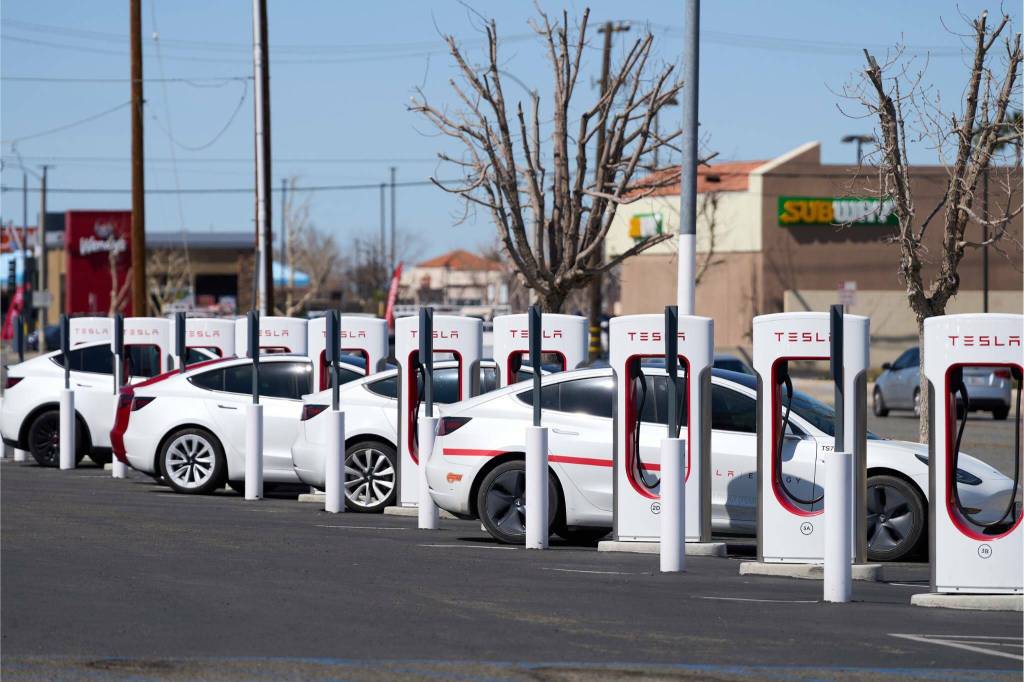
With more electric vehicles on the market — and with much of Tesla’s massive charging network now open to rival brands such as Ford, General Motors and Rivian — EV fans have choices.
And, frankly, given Republican skepticism of electric vehicles, including the current federal $7,500 EV tax credit Trump says he plans to cancel, the entire EV industry faces a lot of uncertainty.
But many Seattle-area Tesla owners feel the brand’s momentum will carry it through, despite its mixed reception locally.
Tesla’s technology, they say, is still so far ahead of other electric vehicles that it compensates for any political backlash.
“It’s a love-hate relationship,” said McNeal Ramsdell, the Tesla club president. “I love the tech, but it would be nice if he would keep his mouth shut once in a while.”
For Cortes, the Lyft driver, the choice is starker.
A legal immigrant from Colombia, he is keenly aware of the challenges others in immigrant communities may face following the Musk-assisted Trump victory. But there’s no thought of abandoning Tesla and its economics.
“I can say that I hate that — the political part,” said Cortes. “But I like my Tesla.”