Sauk-Suiattle members urge feds to step in against leaders ‘abusing’ power
Published 1:30 am Thursday, July 6, 2023
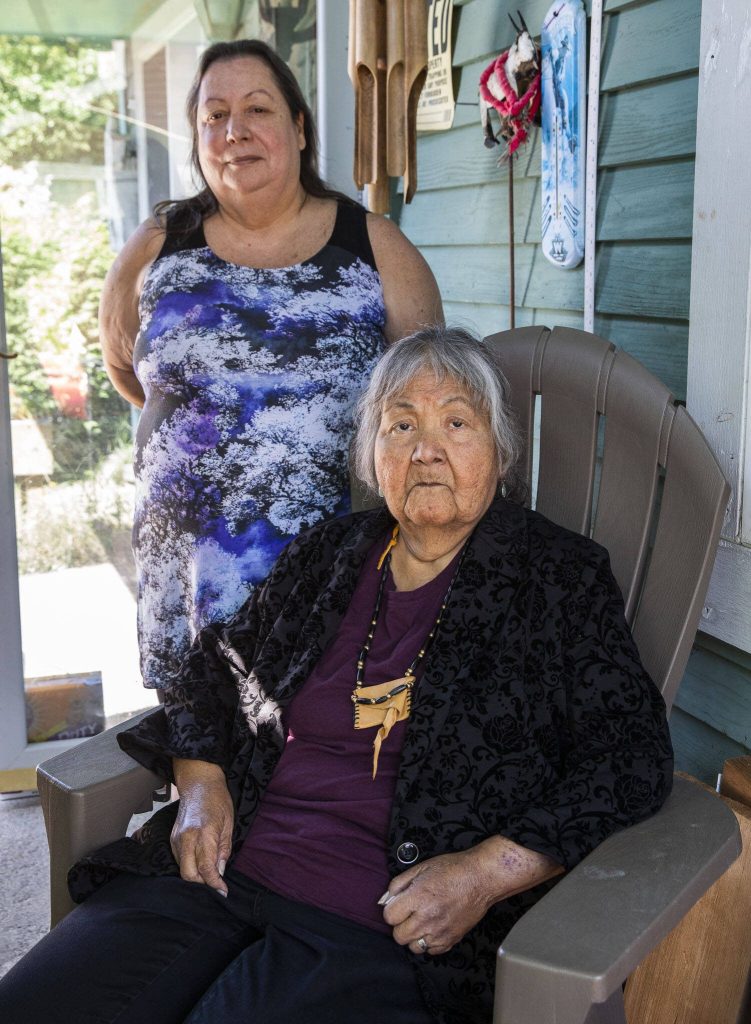
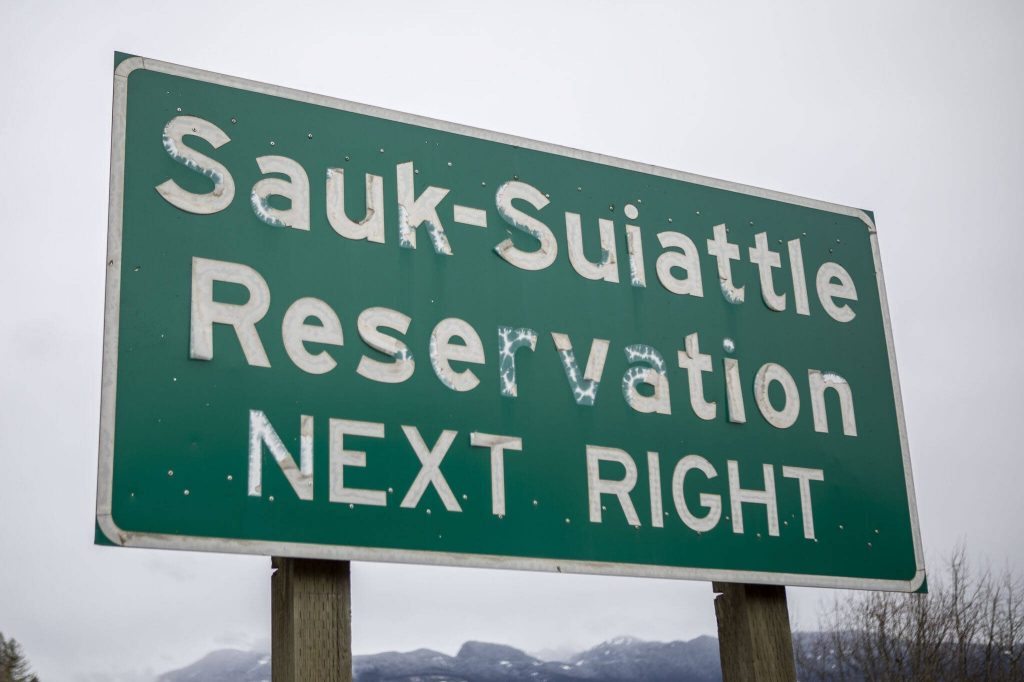





SAUK-SUIATTLE RESERVATION —On a hot June afternoon, tribal elder Norma Joseph pushed her walker up the ramp of her sister’s home on the reservation’s circular street, Chief Brown Lane.
She might have walked to her own home, but the tribal council has delayed building a ramp to her front door for more than a year, and she struggles to climb the steps.
In April, Joseph was one of eight members from the Sauk-Suiattle Tribe who signed a letter begging for “swift action” against “a Tribal Council who are grossly abusing the power of their office.”
The letter outlines 19 issues ranging from denying services and misappropriation of funds to shrouding the sovereign government in secrecy. They sent it to 12 state and federal agencies, requesting immediate intervention.
Two weeks later, the tribal council fired Joseph after 15 years as the tribe’s cultural resources director. The council offered no explanation.
“I really …” Joseph paused, struggling to find the words. “I try not to think about it because it just did make me feel bad. Things are going unaddressed and continue to go unaddressed.”
This spring, the council terminated or demoted at least four members of the 314-person tribe who spoke out against the council for various reasons. In the past three years, at least 14 have been fired.
But Joseph’s main concern is the ongoing disenrollment case against the Bill family. In 2021, the council voted to wipe the roughly 30-member family from the tribe, stripping them of everything: jobs, education, health care, payments, identity.
Nationally, tribal disenrollment was practically unheard of before the 1990s, explained David Wilkins, a Native American scholar and professor at the University of Richmond. A few years ago, Wilkins published a book on tribal disenrollment, “Dismembered.” The book identified about 80 tribal nations that had either disenrolled or denied membership to its citizens.
“Typically, criminal activity leads to banishment — disenrollment is more complicated,” Wilkins said. “It tends to involve political power struggles, economic choices that tribal enrollment committees or tribal officials are making. It’s more political power and personal issues, as opposed to crime.”
“And here we are decimating ourselves,” he continued. “We have survived so many things that have been thrown our way by the states, by the federal government, and yet now we are at war with our own selves, and we’re cannibalizing our own members.”
‘Legal wonderland’
Ronda Metcalf, a tribal elder and army veteran, joined Norma Joseph, 76, on the porch in the shadow of Whitehorse Mountain.
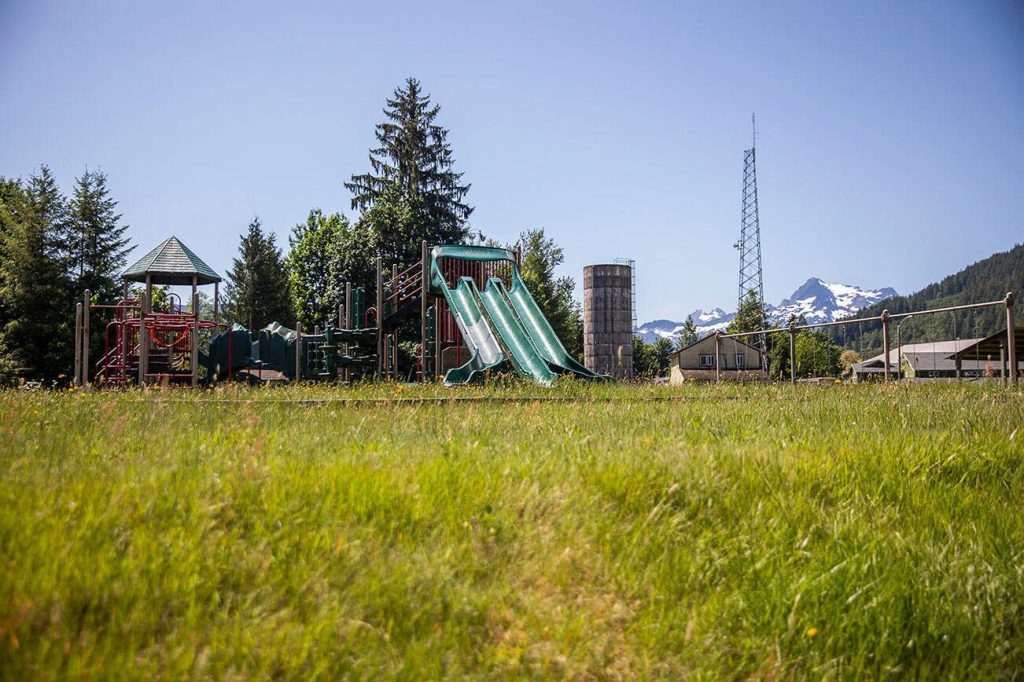
All the homes on the Sauk-Suiattle Reservation sit on the same circular street, facing each other. In the center of the loop, yellow dandelion weeds have overtaken an abandoned playground.
Despite the waiting list for housing on the reservation, two of the homes sit vacant.
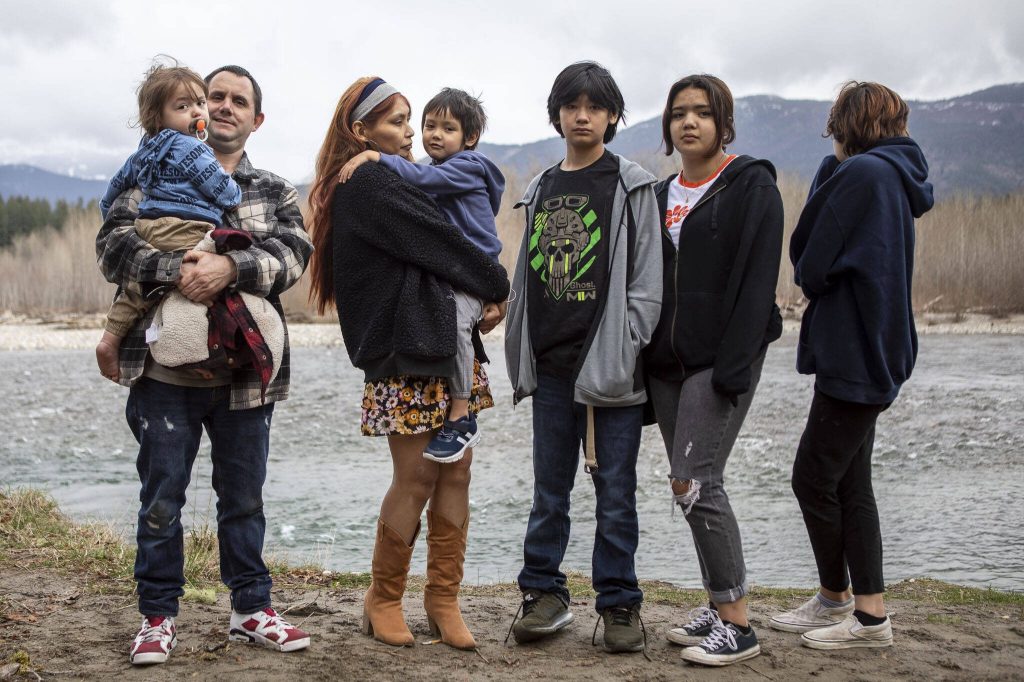
Across the way, Metcalf pointed to the blue two-story with the trampoline out front. It used to be home to Khrista Bill, her fiancé Shawn Haggard and her six children before the tribal council evicted them. Bill had just given birth to her youngest — he was not yet a month old when they were forced out.
While their home has sat empty for years, the Bills have been homeless.
Then Metcalf pointed to the other end of the loop, to the little white house she was evicted from. She said the eviction came shortly after she spoke up against the council, condemning its decision to disenroll the Bill family.
Looking around, Joseph and Metcalf worried Sauk-Suiattle is on the brink of collapse.
And because tribal nations are sovereign, Wilkins explained, there’s little accountability for those in power.
“Armed with the kind of political power that tribal governments possess, they know they don’t have to answer to anybody,” Wilkins said. “(Members) literally are stuck in a legal wonderland where they have no place to turn.”
Defending disenrollment
Following an April article in The Daily Herald, the tribal council chair Nino Maltos Jr. defended the decision to disenroll the Bills, who had been enrolled since 1988.
“It could open the doors for just anybody to willy-nilly add whoever they want, whenever they want as a member of the tribe,” Maltos said in an interview. “But there’s very specific guidelines and standards that have to be met.”
In February, Sauk-Suiattle Tribal Court judges ruled to reinstate the Bills after 1½ years of exile, but as of this week, they had still not been allowed to return. Maltos said he plans to continue fighting the court’s decision. He added reinstating the Bills now would mean the family is owed “some absurd amount of back pay.”
He also informed The Herald none of the six other council members would be available for interviews, but the council would send a response letter as a whole.
The letter claims the council was right to disenroll the Bills. However, many of the council’s claims proved difficult to corroborate.
For example, Metcalf, a former tribal council member, is quoted in the letter saying the Bill’s tribal paperwork does “not show a blood line to the Sauk-Suiattle Tribe.” In June, she denied ever saying that.
While The Herald fact-checked the response letter, Maltos replied with a written statement.
“It’s a shame how media outlets take advantage of the hardships suffered by tribal communities,” he wrote. “We as tribal people and tribal leaders are doing our best as is to provide for our members as a whole and continuously having to defend ourselves. What is the purpose of writing these type of articles? Because it is certainly not to help tribal communities build and grow.”
‘We’re not living by our laws’
Despite the tribal council’s firm stance, elder Norma Joseph and a slew of other members are begging the federal government to intervene.
Through slow, even breaths, Joseph told the story of how she only ever left the reservation once in the 1970s to attend UCLA and earn undergraduate and master’s degrees in Native American studies. She returned to the reservation in the mid-1980s and worked to reintroduce lost cultural cornerstones such as Lushootseed — the traditional language of Coast Salish peoples.
Joseph has had a front-row seat for the past 50 years of tribal history.
“There were periods during which we would grow like kids, you know? We would grow and stop and grow a little bit more, and it has been like that for years,” Joseph said. “But now? We’re not living by our laws — by our constitution.”
Through the decades, Joseph has periodically served on the tribal council. This March, however, she resigned from the elected position.
“I was not being informed about the meeting times,” Joseph said. “It felt like I was being ignored all together. I had no say.”
And it’s not just Joseph who has been fired from tribal jobs.
In May, the tribal council demoted her son Jason after 11 years as the natural resources director. He now makes half the salary. This spring, the council also fired cultural resource workers Thomas and Vivian Decoteau for unjust cause, according to Joseph.
In his statement, Maltos said the tribal council cannot defend its firing decisions “without disclosing confidential information.”
Metcalf and Joseph said the terminations are a form of censure, but that’s only one concern on a longer list of red flags, they argued. Another concern is halting the language classes Joseph started.
“I think we’re really close to being absorbed by the Bureau of Indian Affairs,” Metcalf said.
‘Without any recourse’
The Bureau of Indian Affairs, the federal agency overseeing tribal relationships, reserves the right to grant federal recognition to tribes — a right the bureau can also revoke but rarely does. Recognition grants federal aid and sovereignty, or the right to self governance.
Wilkins, the professor, said sovereignty is a cornerstone of tribal rights. But tribal members are U.S. citizens who receive federal funding and sometimes the government should step in to protect its people, he argued.
“The bureau, for the most part, tries to distance itself,” said Wilkins, a citizen of the Lumbee Tribe of North Carolina. “It claims that it respects that sovereignty, so it won’t interfere with internal matters. But that leaves disenrollees and those fired without any recourse.”
“This is a fundamental problem of human rights violations by natives against their own people,” Wilkins added. “But it would take something real serious, like a massive upswing in violence or some kind of major, major crisis before the bureau would step to move in.”
To date, the eight Sauk-Suiattle tribal members who wrote to the bureau for help haven’t heard back.
“The current council is thinking they can just do as they please and that that’s exercising sovereignty, which is right if you’re building laws and abiding by them,” Joseph said. “But they’re not doing that. They just make up laws as they see fit.”
“I think—,” Joseph said, pausing, “I just think we need help.”
Kayla J. Dunn: 425-339-3449; kayla.dunn@heraldnet.com; Twitter: @KaylaJ_Dunn.