Lawmakers in Olympia on verge of major policing overhaul
Published 9:53 am Thursday, March 11, 2021


By Gene Johnson / Associated Press
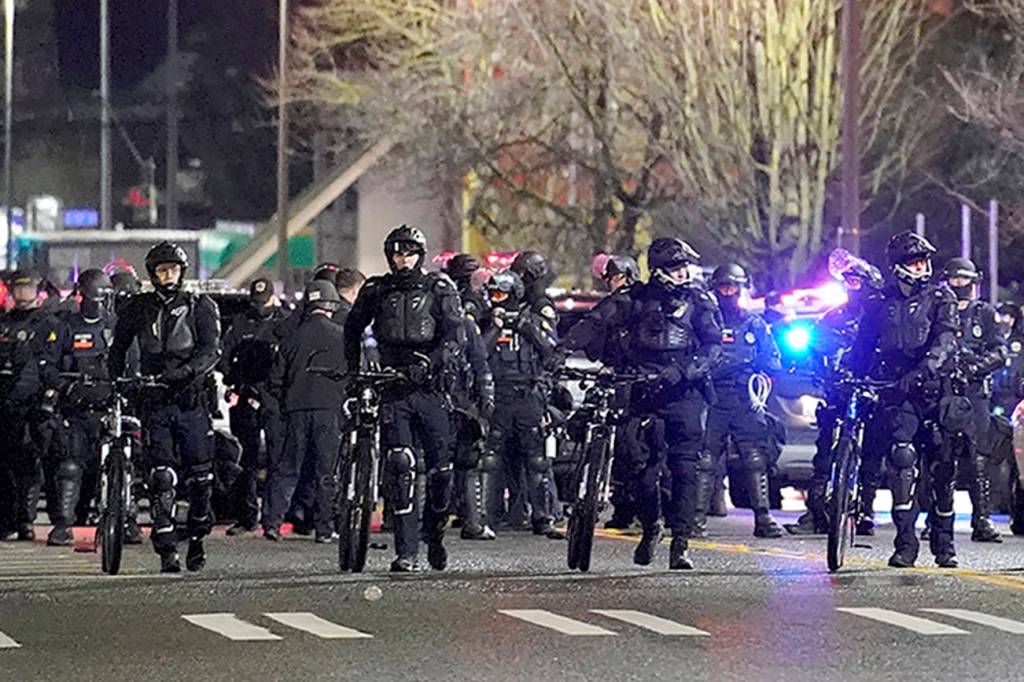
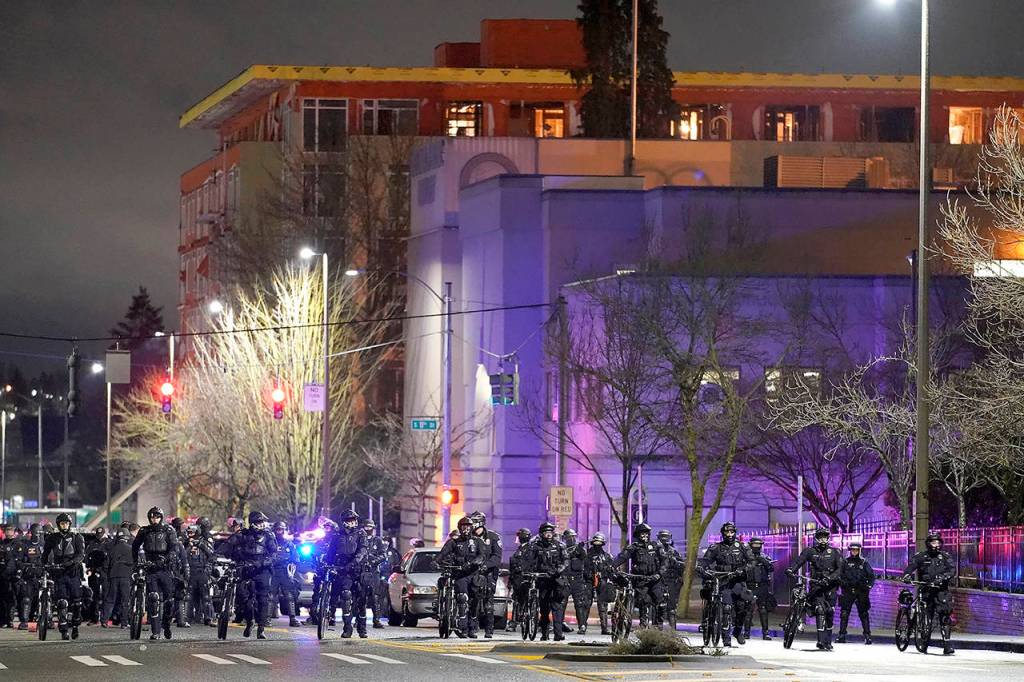
OLYMPIA — Lawmakers are on the cusp of overhauling policing and police accountability in Washington state, acting with unusual urgency to curb bad behavior by officers following last year’s turbulent protests for racial justice.
As this week’s deadline for passing bills out of the house where they were introduced elapsed, most of the key bills had been approved. Hearings were set to begin as soon as Thursday as House bills moved on for consideration in the Senate, and vice versa.
“We’re moving further and faster than Olympia normally would on an issue,” said Seattle Democratic Sen. Jamie Pedersen, chair of the Senate Law and Justice Committee. “But given what we’ve all learned and experienced in the past year, that is appropriate.”
The bills include measures limiting the use of tactics like neck restraints and creating an independent office to investigate police use of deadly force. Officers would be required to intervene if they see a colleague using excessive force and to exercise reasonable care in deciding to use force — a standard designed to require de-escalation tactics and to take into account whether someone is having a mental-health crisis.
The state’s Criminal Justice Training Commission would be empowered to decertify officers for misconduct, helping ensure bad officers don’t simply bounce from one agency to the next.
Police departments would generally have to record custodial interrogations of juveniles and interrogations in felony cases. Detained kids would get to consult an attorney before waiving their Miranda rights and agreeing to be interviewed.
Versions of one bill have already passed both chambers, with a final vote still to come in the House, clarifying and strengthening requirements of law enforcement agencies to uncover whether officers have engaged in behavior that could impeach their credibility at trial and to turn that information over to county prosecutors.
“These bills all work together in a constellation of accountability,” said Rep. Jesse Johnson, D-Federal Way, who sponsored the bill limiting police tactics and use of military-style equipment.
The police reform legislation has been pushed mainly by Democrats, with strong bipartisan support for some of the measures, following last year’s outcry over the deaths of George Floyd in Minneapolis and other people of color killed by police. Pressure from community activists, including Black Lives Matter-Seattle King County and the Washington Coalition for Police Accountability, has generated the momentum for an overhaul that goes beyond longstanding talk of reform, while police unions and law enforcement organizations have also recognized a need for some of the changes.
“Law enforcement agencies and communities have been engaged in this so-called reform process for decades, and we are dying at an exponential rate at the hands of law enforcement,” said Sakara Remmu, lead advocacy strategist with the Washington Black Lives Matter Alliance. “The people demand a higher level of public safety, a higher level of police accountability and a higher level of transparency.”
In Tacoma, the police killing of Manuel Ellis last year as he repeatedly told them he couldn’t breathe outraged many, even more so after it became clear that the Pierce County Sheriff’s Office conducted a botched review of the killing without disclosing that one of its deputies had been involved — in clear violation of Initiative 940, which was supposed to guarantee independent investigations.
That failure helped galvanize the push for an independent office within the governor’s office to handle investigations of whether officers should face criminal charges for using deadly force. Under the bill, the office would not be able to hire investigators who have been employed by a police department within the previous two years unless its advisory board agrees — a concern for Republicans who objected to the notion of civilians conducting such investigations.
And the difficulty many cities have had in seeing officers fired or punished by their departments for bad acts, only to have those decisions reversed by private arbitrators, has helped prompt an effort to reform the arbitration system. Under a bill approved on a bipartisan 41-8 vote, the state would have a panel of arbitrators to hear police discipline cases. Critics have long argued that because departments and officers typically must agree on an arbitrator, arbitrators have an incentive to sometimes side with the officers: to show they can be “fair” and thus continue being hired in future cases.
Still, not everything on the agenda made it. One measure that remains in committee would have allowed people to sue when officers fail to exercise reasonable care in using force. Backers hope to try again next year.
Republicans and police groups have expressed concern with the breadth and scope of the changes, and they have succeeded in limiting some of the measures. The police tactics bill initially would have banned officers from unleashing police dogs to make arrests and banned the use of tear gas; following amendments, it now calls for a commission to review the use of dogs and allows police chiefs to authorize tear gas use in riots and in situations with a barricaded suspect.
House Republican Leader J.T. Wilcox said that his caucus is doing everything they can to “preserve the tools that are necessary for the police to keep us safe and at same time make it as unlikely as possible that they can be misused.”
Further tweaks are likely. Pedersen, who represents Capitol Hill, the neighborhood at the heart of Seattle’s protests last year, said he’s not comfortable with the House’s decision to allow police to use tear gas at all in crowd-control situations. He also acknowledged that in his own bill making it easier to decertify officers, he could live without provisions giving the Criminal Justice Training Commission the ability to preliminarily suspend certifications pending a decertification hearing — a sticking point for law enforcement groups.
Steve Strachan, executive director of the Washington Association of Sheriffs and Police Chiefs, said lawmakers need to reach a balance between recognizing citizens’ expectations of law enforcement and supporting good policing.
“It’s been challenging, but at the same time we really appreciate the conversation that’s going on,” Strachan said.
———
AP Correspondent Rachel La Corte contributed from Olympia.