‘Get vaccinated now’: Last season, 512 flu hospitalizations
Published 1:30 am Saturday, October 6, 2018


Last year served as a warning for just how serious the flu can be.
A record-breaking 512 people were hospitalized in Snohomish County in the 2017-18 flu season.
And 40 people died from flu complications, the second highest number of local flu-related deaths since more comprehensive reporting of flu cases began in 2009.
The median age of those whose lives were taken by flu during the 2017-18 flu season was 84. But flu can kill people of all ages.
Nationally, there were 180 pediatric flu-related deaths — including a 10-year-old from Washington’s Clark County — the highest since the 2009 flu pandemic when 358 children died, according to federal and state health officials.
State health officials rank last year’s flu season as one of the most severe on record. Yet only 61 percent of Washington children and teens were vaccinated.
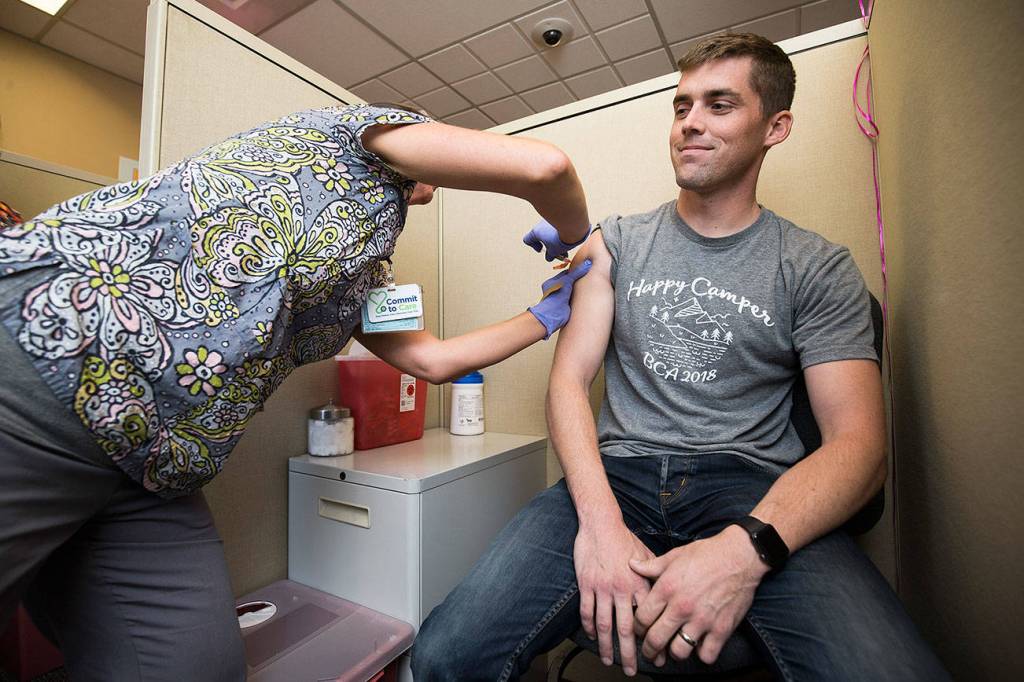
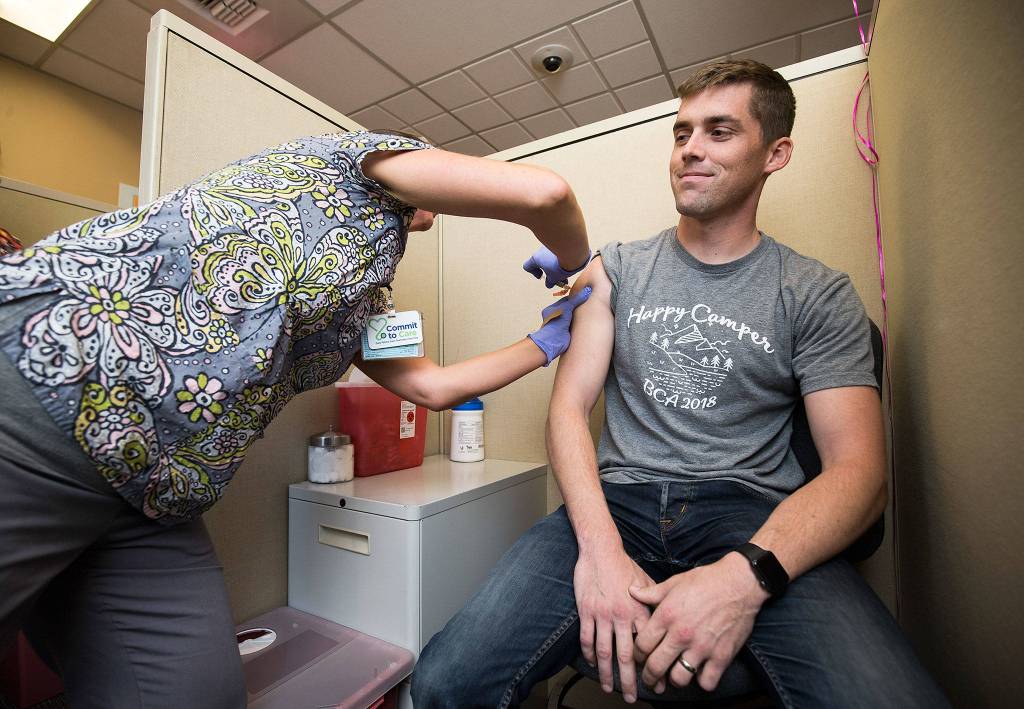
“Get vaccinated now,” said Heather Thomas, spokeswoman for the Snohomish Health District. It takes several weeks for the immunization to become fully effective.
Flu season officially began this week as local, state and federal health officials began monitoring for the 2018-19 flu season.
“Last year truly was an awful year in the number of deaths we saw in Snohomish County and across the country,” said Dr. Yuan-Po Tu, who tracks influenza issues for The Everett Clinic.
It also ranked as one of the longest flu seasons in recent years, lasting about 18 weeks. Flu season typically lasts about 12 weeks, he said.
“The start of vaccine season is designed to be two to three weeks in front of flu season, which can start as early as Thanksgiving and go as late as spring,” Tu said.
There are ample supplies of flu immunizations, both traditional shots and flu mist, a shot alternative, at local medical clinics and pharmacies.
The immunization is recommended for everyone 6 months and older. Flu mist, a flu-fighting immunization delivered by a squirt in the nose, is available for those from 2 to 49 years old.
Senior-specific immunizations for adults 65 and older are available. They either provide more flu vaccine or add an immune-booster to the vaccine.
“We believe strongly that seniors should obtain a senior-specific flu vaccine,” Tu said.
Last year’s flu vaccine was about 40 percent effective in warding off the flu, according to the federal Centers for Disease Control and Prevention.
But even if it doesn’t totally prevent illness, health officials say the immunization is thought to shorten the days people are sick from influenza.
Sharon Salyer: 425-339-3486 or salyer@heraldnet.com
Influenza in Snohomish County
| Flu-related deaths | Flu-related hospitalizations | |
|---|---|---|
| 2009-10 | 7 | 105 |
| 2010-11 | 1 | 16 |
| 2011-12 | 2 | 39 |
| 2012-13 | 8 | 103 |
| 2013-14 | 7 | 82 |
| 2014-15 | 16 | 182 |
| 2015-16 | 9 | 153 |
| 2016-17 | 45 | 460 |
| 2017-18 | 40 | 512 |
Source: Snohomish Health District
Who should get a flu shot
Everyone 6 months and older, including healthy teens and young adults, should get a flu shot. Those most at risk for flu complications are young children, pregnant women, people with chronic health conditions, and people 65 and older.
Source: Washington State Department of Health
How can I get immunized?
The immunization is provided at no cost in Washington for children through age 18.
A nasal mist flu immunization is available for those from 2-49 years old.
A flu shot is available for others.
For those 65 and older, a special flu shot is recommended to give extra protection against the virus.
Flu symptoms
• Fever or feeling feverish/chills, although not everyone with flu will have a fever
• Cough
• Sore throat
• Runny or stuffy nose
• Muscle or body aches
• Headaches
• Fatigue
• Some people may have vomiting and diarrhea, though this is more common in children than adults
Flu complications
Most people will recover in a few days to less than two weeks, but some people will develop complications such as pneumonia, which can be deadly.
Source: Centers for Disease Control and Prevention
More infomation
The Snohomish Health District: www.snohd.org/flu
The Centers for Disease Control and Prevention: www.cdc.gov/flu/index.htm