Patterson: M’s ‘control the zone’ mantra yet to sink in
Published 1:30 am Saturday, January 26, 2019


If you’ve been paying attention to the Seattle Mariners the past three years, then you’ve heard the phrase, “control the zone,” more often than the hashtag #EdgarHOF was pumped out on social media by Mariners partisans.
Control the zone. C the Z. Since Jerry Dipoto and Scott Servais arrived as the Mariners’ general manager and manager prior to the 2016 season it’s been chanted like a Buddhist mantra.
Yet anyone who actually watched the Mariners the past three seasons had to be asking themselves if the players, and specifically the batters, were wearing ear plugs.
So controlling the strike zone was once again one of the main themes during the Mariners’ pre-spring training media luncheon Thursday morning at T-Mobile Park, with both Dipoto and Servais parroting the need for Seattle to improve in that regard.
“What I learned (from last season) is when we started sliding, when it started getting away from us, our foundation wasn’t solid enough for us to stop it,” Servais said. “For me, that foundation is you go back to our identity, and our identity is controlling the zone.”
Has controlling the zone actually been the Mariners’ identity? It’s been three years and it’s doubtful the first thing that comes to mind when the Mariners are mentioned is the ability to take the borderline pitch. But an examination of the numbers shows the Mariners are at least onto something with their control-the-zone focus.
The best way to determine whether a team is controlling the strike zone is by looking at its strikeout/walk ratio, both on the pitching side and hitting side. For pitching, Houston led the league at 3.88 strikeouts per walk, and five of the top six teams in the statistic made the playoffs. For hitting, Washington led the majors at 2.04, with six of the top seven teams by that measure qualifying for the postseason.
Controlling the zone sure seemed to play a role in teams making the playoffs.
The Mariners? They actually controlled the zone well from the mound. Seattle’s pitching staff finished with a 3.32 strikeout/walk ratio, which ranked fourth in the majors, making the Mariners the only team in the top six that fell short of the playoffs. Mariners pitchers were controlling the zone, and both Dipoto and Servais praised them for that Thursday.
Why wasn’t Seattle able to reach the postseason with those kind of pitching numbers? It’s because on the offensive end the Mariners had about as much control as a marionette. The Mariners’ batters had a 2.84 strikeout/walk ratio, which ranked 23rd out of baseball’s 30 teams. Of the seven teams that finished behind Seattle none won more than 73 games, and six lost at least 96.
Teams like Kansas City, Baltimore and the Chicago White Sox are not the company you want to keep when trying to end a 17-year postseason drought. If this was the Mariners’ idea of control, one has to shudder at the idea of them operating a television remote.
“We didn’t have players who were capable of (controlling the zone), of getting on base in a consistent manner to create scoring opportunities,” Servais said, placing the responsibility square on the players’ shoulders. “Our pitching far exceeded our expectations. … But what really hurt is our foundation was not solid enough in controlling the zone to create consistent offense.”
The Mariners believe their offseason machinations have helped solve the problem. Dipoto didn’t just spend the offseason dealing veterans for prospects. He also added a handful of veterans who exceeded the major-league average walk rate of 8.5 percent last season, players like Omar Narvaez (11.8), Jay Bruce (11.4) and Edwin Encarnacion (10.9). One can question why, if a team’s identity is controlling the zone, it’s taken three years to begin acquiring those type of players. But hey, progress is progress.
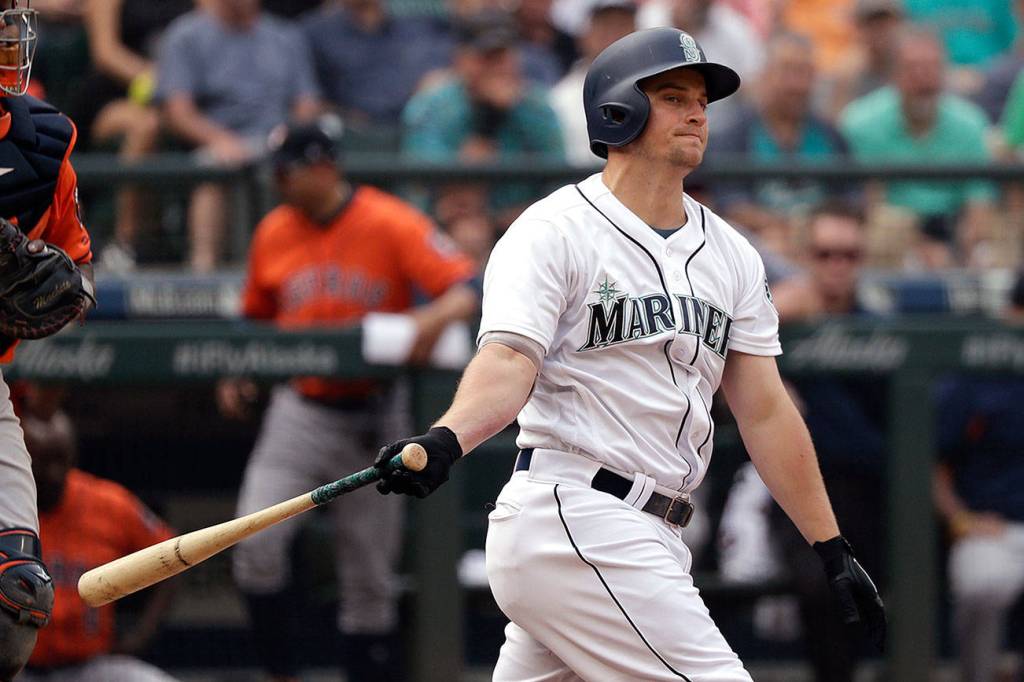
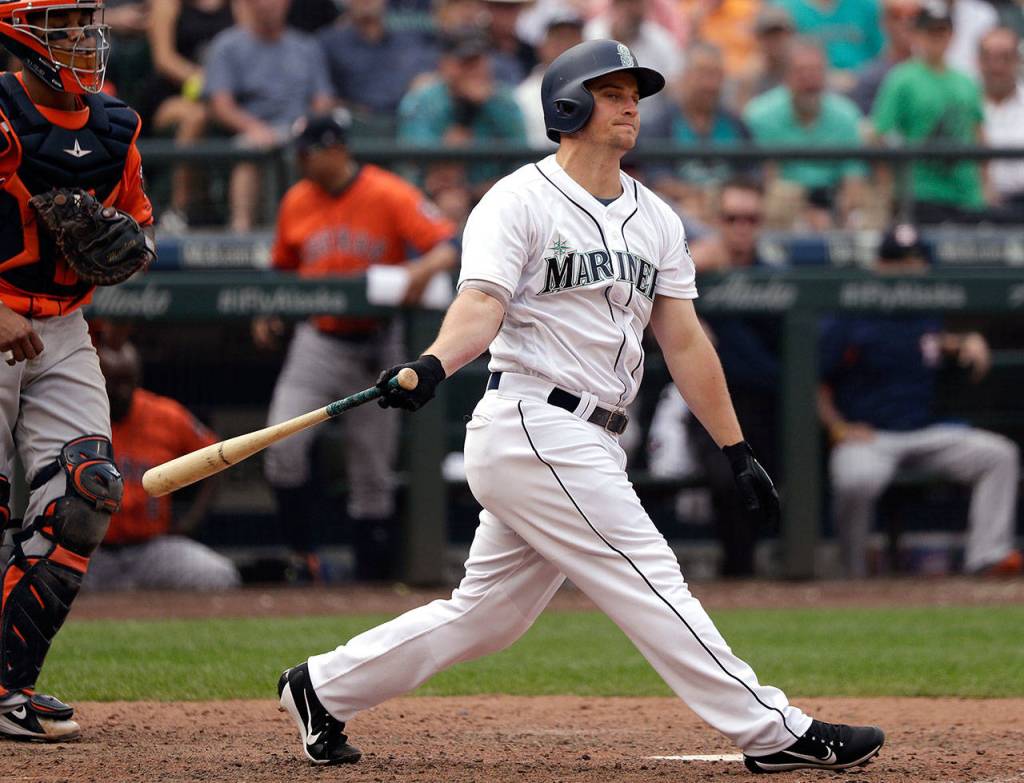
The problem is the worst offenders are still here. Dee Gordon, who drew just nine walks in 588 plate appearances for a 1.5 percent walk rate that was the worst by a qualified batter since Virgil Stallcup in 1949, is a projected regular. So are Ryon Healy (5.3) and Kyle Seager (6.0). So bringing in a few new bodies won’t solve the problem on its own.
“It’s swing decisions, and swinging at pitches you can do damage with,” Servais said. “Ryon Healy is a guy who comes to mind. Ryon Healy has power, when he gets his pitch he can certainly do damage. It’s getting him to understand the numbers behind it, that when you swing at a certain pitch you have a lot less chance to do much damage with it. So it’s being more selective in understanding what you’re looking for when you come to the plate.”
Servais also said he’s talked to Gordon, and that Gordon will take more pitches this season. It’s one thing to say that. It’s quite another for a player who’s never drawn walks during an eight-year major-league career to completely change the way he plays the game.
It’s good that the Mariners continue to push the idea of controlling the strike zone. It’s good that Seattle is targeting players who personify that approach.
But it’s been three years. It’s long past time that message sunk in.
Follow Nick Patterson on Twitter at @NickHPatterson.