A retired judge reflects on 25 years of cases big and small
Published 4:00 pm Tuesday, April 14, 2020
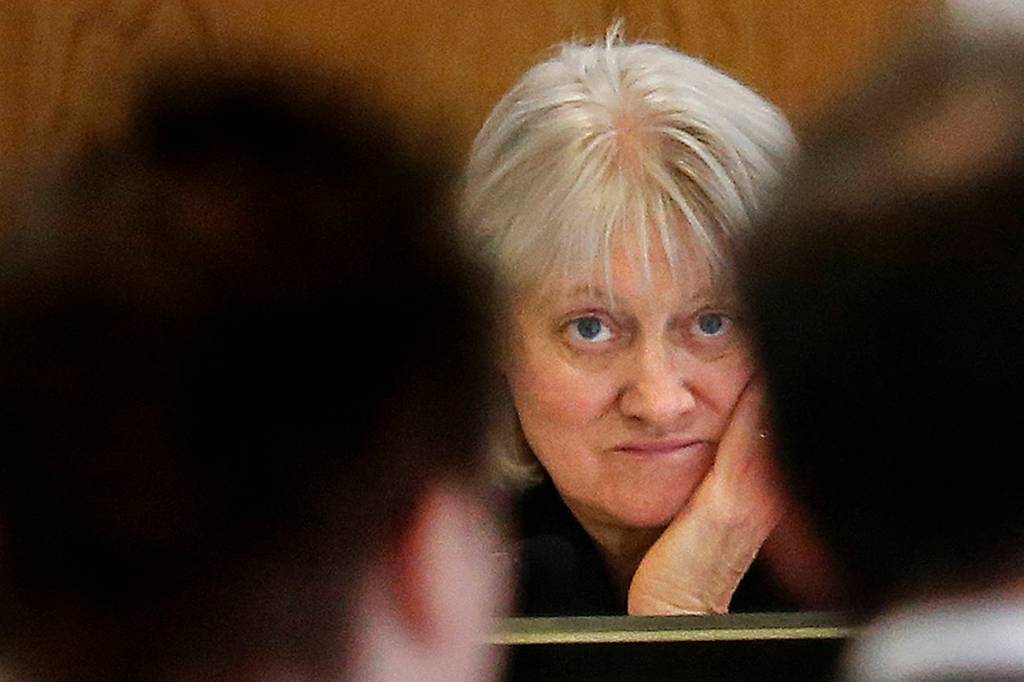
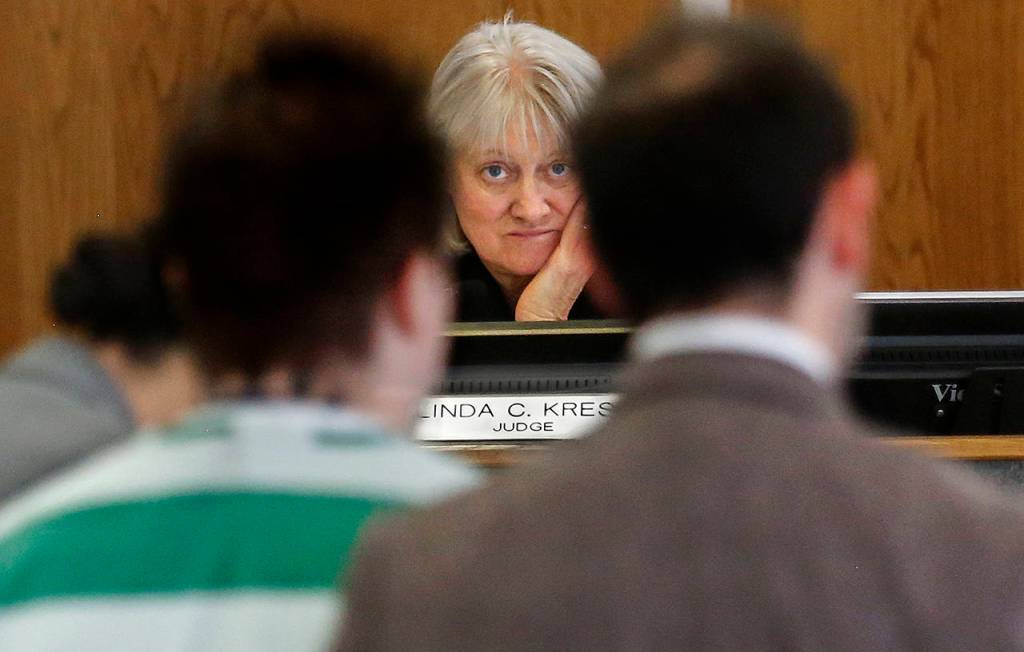


EVERETT — So far, Linda Krese’s retirement hasn’t gone as planned.
The former Snohomish County Superior Court judge stepped down from her position in February, just as news of a COVID-19 outbreak hit Washington.
“I was supposed to be in Mexico right now as a matter of fact, but we canceled that,” she said from her home last month. “… I’m kind of more of a shut-in than I expected to be at this point. Somehow I’ve managed to stay busy.”
The time at home has given Krese, 68, opportunity to reflect on the quarter-century she spent as a judge in the county. She could’ve hit 26 years if she stayed on for another few months, “but it seemed enough,” she said.
“It’s an election year, I felt like I had to make up my mind,” she said. “I didn’t see myself wanting to work past 70.”
In January, Gov. Jay Inslee appointed Edirin Okoloko to take her place — after he lost a close election race in November.
Krese graduated from law school at Boston University in 1978 and went on to briefly practice with a small firm in Colorado, where she grew up. The next year, she packed her bags and moved to Washington to work as a deputy criminal prosecutor in Kitsap County. A few years after that, she worked in the state attorney general’s office.
She found her way to Snohomish County in 1986 and led a three-person tort unit at the prosecutor’s office, working civil rights and personal injury cases.
In 1994, then Gov. Mike Lowry appointed Krese as a superior court judge. She stayed in that position for the rest of her career, never having to run a contested election campaign. She never even appeared on a ballot; no one signed up to oppose her.
In the time she’s been on the bench, Krese has been the presiding judge in two separate stints, including most recently from 2016 to 2019. She’s also chaired the superior court’s operations committee and served as the chief juvenile and family law judge. On the state level, she has served on the Superior Court Judges Association Board of Trustees, the Board for Judicial Administration and both the Pattern Instructions Committee and the Pattern Forms Committee.
“I was probably perceived as being a bit of a stickler for following the rules in my courtroom,” she said.
Krese has witnessed plenty of change at the courthouse on Rockefeller Avenue. Now there are more judges, more cases and more people — a lot of whom don’t have legal representation.
Some things have changed for the better, she said. For example, the county’s approach to juvenile detention has become less about punishment and more about rehabilitation and diversion.
Other problems have persisted in the county, such as drug addiction.
“Unfortunately that problem has gotten much worse in the 20 years I’ve been on the bench,” she said. “… Whatever we have used as an approach on this — the whole criminal justice system, not just the courts — has not resulted in improving that problem at all.”
Throughout the years, Krese said she’s had to make some difficult decisions.
In 2003, it was her gavel that brought an end to the longest teachers’ strike in state history.
After the Marysville School District and its teachers failed time and time again to come to their own agreement, Krese ordered the teachers to go back to work, saying the strike “unquestionably has resulted in actual and substantial harm” to students, parents and school district employees.
Krese didn’t mince her words.
“It’s time for all the adults to grow up and start looking at their obligations to these children,” she said.
Thirteen hours later, the teachers’ union voted to end the 49-day strike.
And in 2008, Krese presided over what was believed to be the largest civil jury verdict ever in Snohomish County, and one of the largest in state history: $40 million to the family of a Mount Vernon man whose heart was literally cooked by a California company’s medical device.
Paramjit Singh had gone to Providence Regional Medical Center Everett for a relatively routine heart bypass surgery. A monitor made by Edwards Lifesciences Inc. malfunctioned, turning off fail-safe devices and causing a catheter inserted into Singh’s heart to reach temperatures up to 500 degrees. Singh ultimately survived the ordeal, but needed a heart transplant and would go on to suffer health complications as a result.
During the trial, Krese turned down the defendant’s motion for a new trial and declined to reduce both compensatory and punitive damages to Singh and his family. She said the company “chose to cross their fingers and roll the dice” when it failed to disclose to users about the potential dangers of its machine, amounting to a “reckless disregard for the safety of others.”
Seemingly smaller cases, such as divorces, can have just as big an impact on people’s lives, Krese said.
“I think that’s an important thing for all of us to keep in mind,” Krese said. “… Every time a case comes in front of you, you’re making a decision that’s going to have an impact on people’s futures and their lives and their families.”
Often, when she went back to her chambers after making a decision, Krese said she wondered if she did the right thing.
“Yet we almost never get any real feedback about that,” she said. “Nobody comes back to me and says, hey that worked out great the decision you made for my child, or that worked out terrible.”
Instead, Krese said she simply had to move her attention to the next case, where she would make another decision, also likely to have a dramatic effect on someone’s life.
She didn’t have time to dwell. But, she said, it was important to remember how people would carry the consequences of her choices beyond the courtroom.
“It’s helpful to … remember these are people, to bring some compassion and concern for the people in front of you,” she said.
In 25 years, the job never got old. Up until she retired, Krese would still encounter scenarios that caught her by surprise.
“How can I have been here so long,” she said, “and still have so much to learn?”
Zachariah Bryan: 425-339-3431; zbryan@heraldnet.com. Twitter: @zachariahtb.