Collectible St. Patrick’s Day memorabilia hard to find before 1900
Published 1:30 am Friday, March 12, 2021
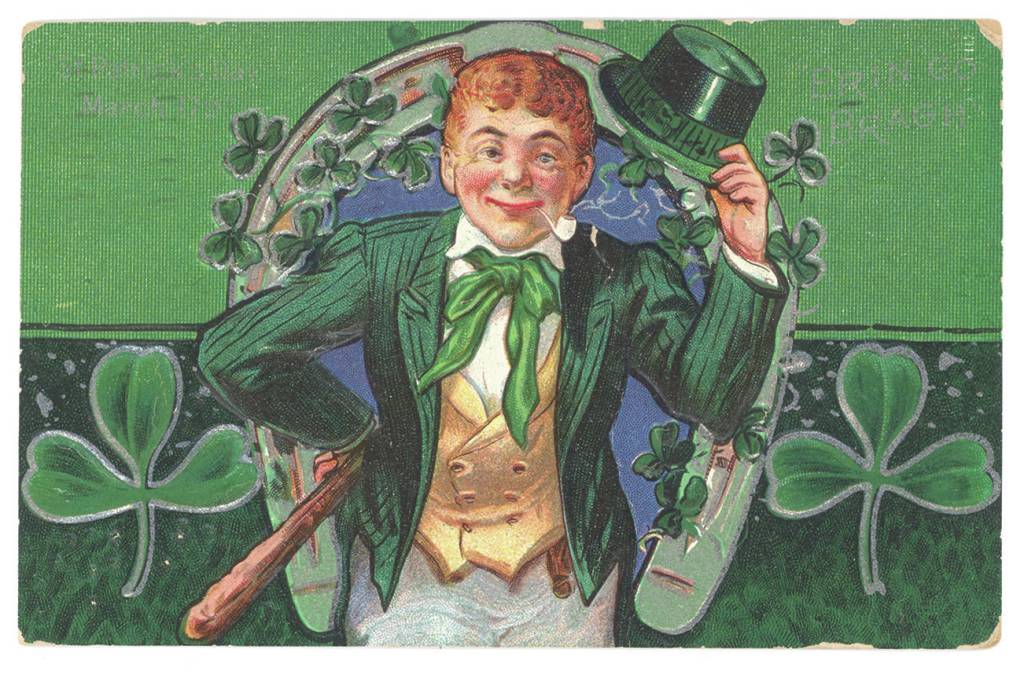
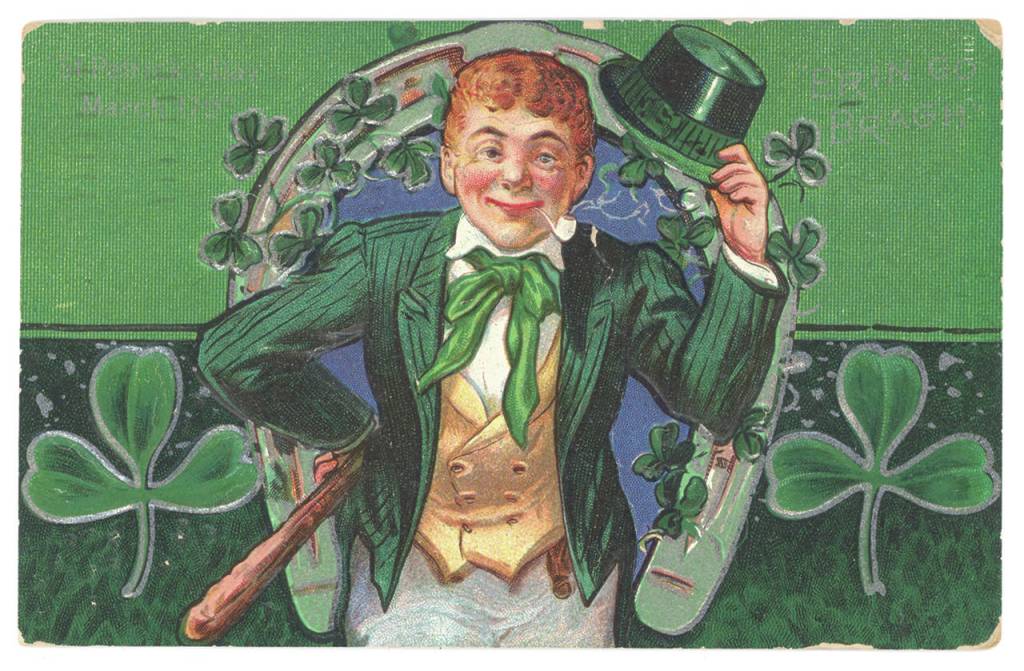


St. Patrick’s Day is celebrated each year on March 17 in the United States, but collectors found few postcards, greeting cards or objects to collect before 1900. The first St. Patrick’s Day parade is said to have taken place in 1601 in St. Augustine, Florida. But a major event is the New York City parade, which started in 1762.
St. Patrick, the patron saint of Ireland, was born in Roman Britain and kidnapped in the late fourth century, when he was 14 years old. He was taken to Ireland as a slave, but he escaped in 431 A.D. and converted the Irish to Christianity. Parties, dances, drinking and celebrations started about 1600, and the observance has grown into an important celebration not only in Ireland but also in the U.S.
There have been many symbols of the past celebrations to collect. The leprechaun is an important symbol. The mischievous, red-haired elf is usually pictured in a top hat, green jacket, tie and vest standing with a pot of gold at the end of a rainbow. He represents the magic of fairies and the little people, and you are lucky if you find him and the gold.
Q: What are the symbols of St. Patrick’s Day, besides the leprechaun with the bucket of gold?
A: The shamrock is the first plant of spring in Ireland and represents rebirth. By the 17th century, it was the emblem of Ireland. The Celtic harp is another important emblem: It appears on the presidential seal, passports, official documents and coins. A surprising number of symbols are food. Corned beef and cabbage are the traditional dinner. The corned beef is the leftover meat from the sailing ships. It was a cheap substitute for bacon bought by poor immigrants. Shepherd’s pie and soda bread also were inexpensive substitutes. Today, we also get green bagels and green beer. Save anything that pictures or represents these things, as well as the religious symbols of the day. More collectibles are being made, displayed and kept each year.
Q: We’ve had a Shirley Temple pitcher in our family for many years. It’s blue glass with a picture of Shirley and her autograph on one side. The pitcher is 4½ inches tall and 3 inches across the top. Is this a collector’s item? What might it be worth?
A: Shirley Temple (1928-2014) was a child actor who began appearing in short one-reel films in 1931 and in full-length films in 1932. By 1935, she was the most popular movie star in the U.S. and won the Academy Award’s first-ever Academy Juvenile Award. Your cobalt-blue pitcher is part of a breakfast set that included this milk pitcher, a mug and a bowl. The dishes were made by Hazel Atlas Glass Co. and U.S. Glass Co. from 1934 to 1942, and given away as premiums for Wheaties and Bisquick. Millions of dishes were made, and in recent years they have been reproduced. The pitchers sell for $10 to $12.
Q: I have 95 pieces of Wunsiedel china. I’m thinking about selling it, but I don’t know what it’s worth or who might be interested in purchasing it. It’s marked with a crown over a shield with the letter “R” in the center. The word “Wunsiedel” is above the shield and “Bavaria, Germany” is below it. What can you tell me about the maker, age and how to sell it?
A: Your china was made by Retsch Co. Porcelain Factory, which was founded in Wunsiedel, Bavaria, Germany, in 1884. The company specialized in making pierced porcelain. Dinnerware was made later. This mark probably was used after 1950. The company moved to Arzberg, Germany, in 2003. It’s still in business, now under the name Retsch Household World AG. Retsch dinnerware is often listed online as “Wunsiedel.” Pierced porcelain pieces sell for more than plain pieces. Most plain dinner plates sell online for about $10 or less. The company currently sells 12-piece dinner sets (six dinner plates and six soup plates) for as little as $23. Large sets of dinnerware are difficult to sell, but you may be able to donate them to a charity.
Q: I have a large silver bicentennial bowl made by The Franklin Mint. It has a wide border with raised scenes from American history. The inside is lined with 24-karat gold. The bottom is inscribed with my family’s name. It’s numbered 305 of a limited edition of 750. The bowl is still in its original container and box. My children have no interest in this bowl. Is there a market for it? What do you think it’s worth?
A: The Franklin Mint is a private company founded in 1964. At first, it made gold and silver commemorative medallions. Later, it made legal coins, then limited-edition plates, dolls and other items. This bowl was made in 1976 to celebrate America’s bicentennial. The first bowl in the limited edition was given to President Gerald R. Ford on July 4, 1976. The bowls have sold at auction for over $2,000. Value could be less if inscribed with the owner’s name.
Tip: China can be washed in warm water with mild soap. The addition of a little ammonia to the water will add that extra sparkle.
On the block
Current prices are recorded from antiques shows, flea markets, sales and auctions throughout the United States. Prices vary in different locations because of local economic conditions.
Postcard, St. Patrick’s Day, The Top O’ The Mornin’ To You, leprechaun tipping his top hat, green overcoat, green-and-white-striped pants, embossed, divided back, Ellen Clapsaddle, International Art Publ. Co., printed in Germany, $30.
Decanter, Old Fitzgerald Whiskey, Sons of St. Patrick, Irish-American Signers of Declaration of Independence, bicentennial, 1776-1976, shamrock garlands, harp, eagle, ceramic, gold trim, crown finial, 4/5 quart, $265.
Water pitcher, pewter, bulbous bottom, cinched neck, shaped handle, conical lid, disc finial, marked, William, McQuilken, Philadelphia, circa 1850, 10 inches, $375.
Desk, George Washington style, kneehole, mahogany, top surface has two raised shelves on each side, center drawer flanked by three drawers on each side, eight tapered legs, marked “Wallace Nutting” in drawer, 35 by 65 inches, $490.
Belleek basket, Rathmore, fine latticework, four flower heads, green buds and leaves, loop-and-bud border, blue twisted trim and handles, oval bowl, marked, 3 by 12 by 9 inches, $600.
Toy car, Buick coupe, cast iron, light-green paint, black trim, driver inside, Arcade Mfg. Co., 3¾ by 9 by 3½ inches, $750.
Candlestick, copper, gilt, twisted stem, shaped socket, ruffled bobeche, domed foot, marked, Marie Zimmerman, circa 1925, 12½ by 5¼ inches, $1,000.
Grueby pottery vase, willow leaves, drippy blue glaze, crackled ivory ground, oval, five scallops on rim, marked “RE” for Ruth Erickson, 1899-1910, 8½ by 4½ inches, $1,620.
Coin-operated pinball arcade game, Chicago Coins Big League Bullseye Baseball, 10 cents, playing field graphics, circa 1955, 74 by 26 inches, $2,090.
Tiffany silver water pitcher, allover repousse flowers and leaves, bulbous, beaded band on cylindrical neck, handle with female mask, circa 1865, 9 inches, $5,500.