AquaSox switch-pitcher’s long path leads to Everett
Published 8:00 am Friday, June 27, 2025
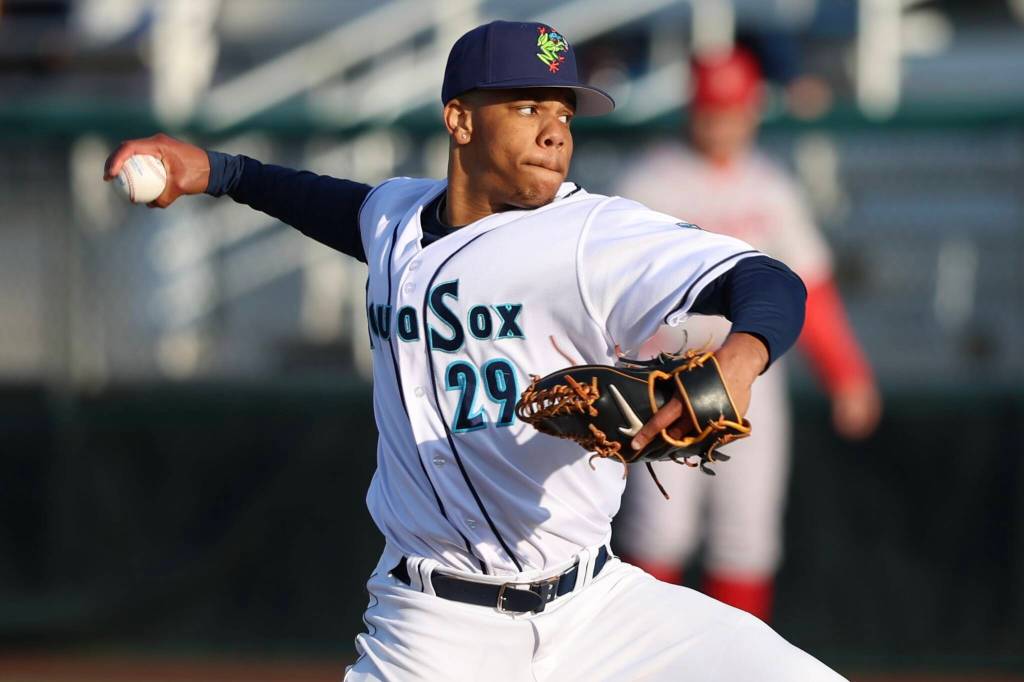
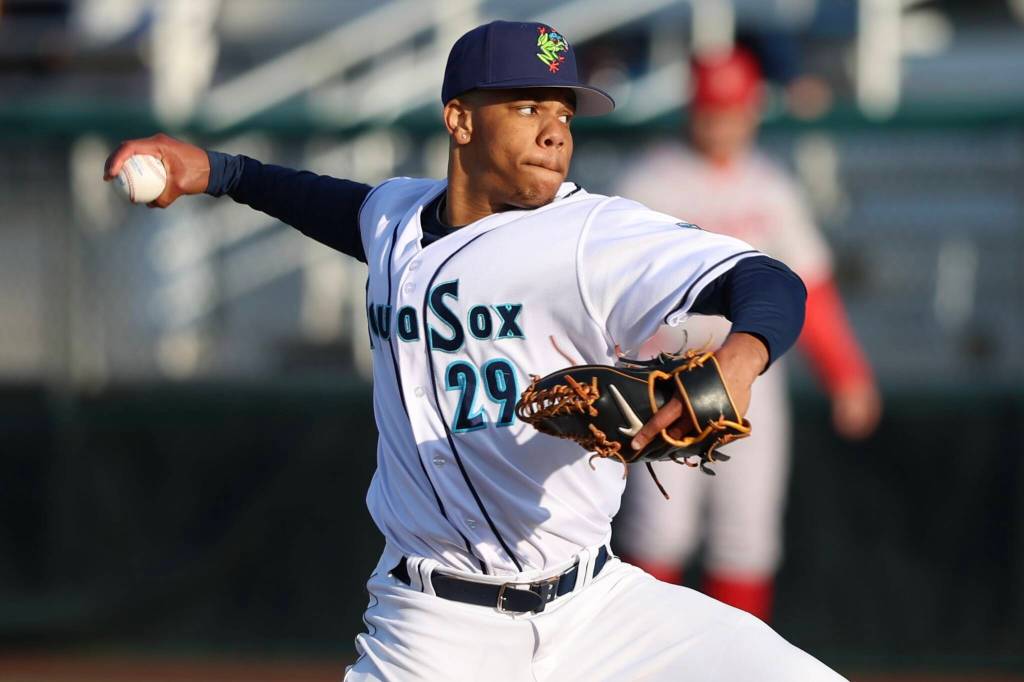
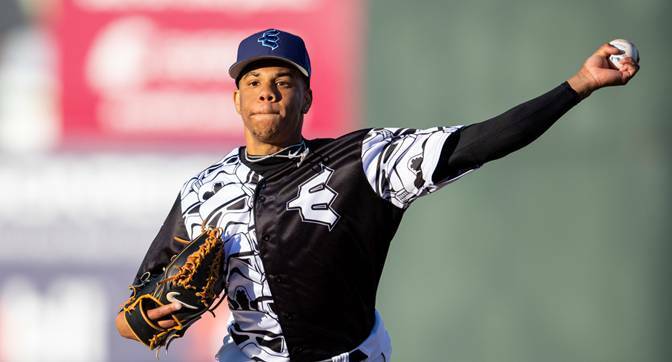
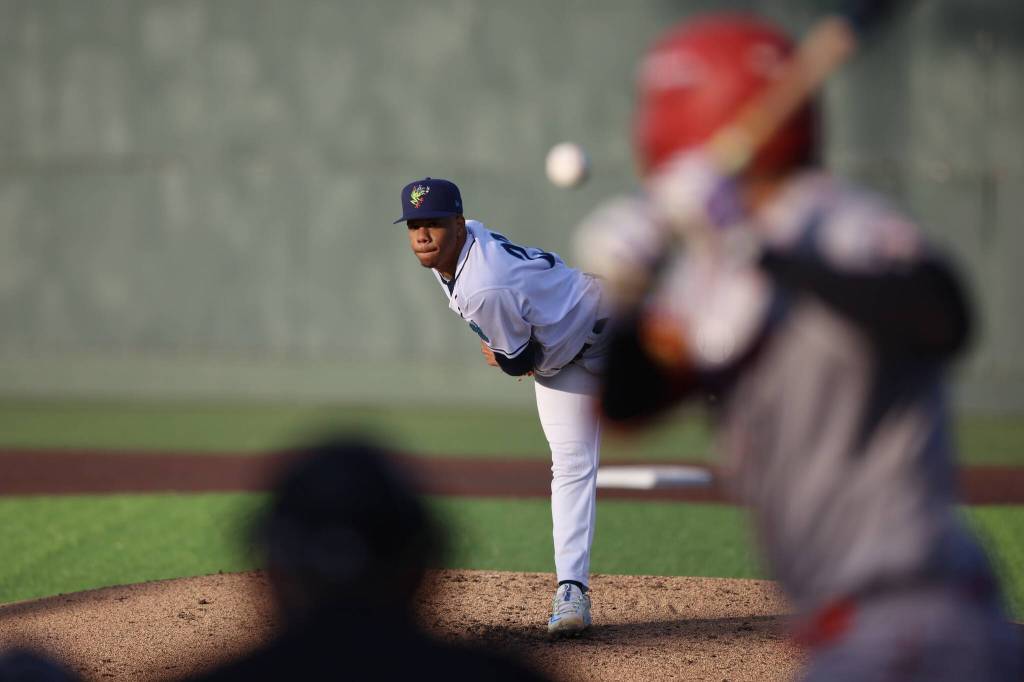
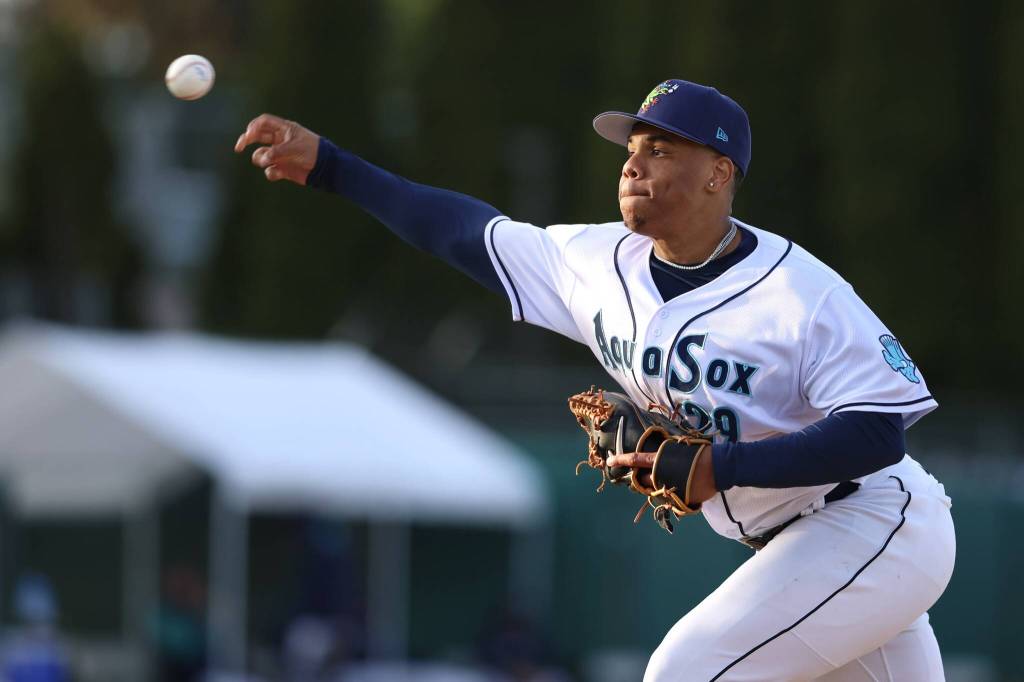


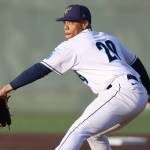
EVERETT — It had been over two hours since Jurrangelo Cijntje stepped foot in Cowtown Coliseum ahead of the 2024 MLB Draft in Fort Worth, Texas on July 14, and the ultra-rare switch-pitching prospect was on edge.
Born in the Netherlands and raised in Curacao, Cijntje moved to Florida to live with his cousins at 16 before spending two years at Mississippi State. It had been a long journey with plenty of stops for the then-21-year-old, who could throw over 95 miles per hour with each arm. Today was finally the day he would find out his next stop.
Cijntje was wracked with nervousness when he first entered the building. He completed his media obligations, which took his mind off things for a little bit, and he sat down at his table, surrounded by family. He waited, watching the first dozen picks come off the board, until his phone rang. It was his agents, Nolan Fontana and Amber Sabathia.
“Here we go,” Cijntje said, picking up the phone.
“Would you like to play professional baseball?” Fontana asked him.
“Heck yeah,” Cijntje said. “I want to play.”
“Because Seattle’s about to be your home,” Fontana said.
There were still a couple of picks left to be announced before the Mariners’ at 15th overall, so Cijntje got up to use the restroom before he could risk missing his name being called. While walking back to the table, he had to remind himself that the moment was real.
“It’s happening right now,” Cijntje told The Herald about what he was thinking on his walk back. “It’s just a dream come true, for sure. All the way that I came, I came a long way.”
After foregoing an opportunity to join the Pittsburgh Pirates as an international signee out of Curacao in 2019, then opting not to sign with the Milwaukee Brewers in 2022 — when they selected him in the 18th round as a shortstop — Cijntje’s bets on himself paid off.
Charting a Path
The opportunity to sign with Pittsburgh as a teenager would have solidified Cijntje’s path to the majors much earlier. His father, Mechangelo, played professionally in the Netherlands, and inspired the younger Cijntje so much, it’s well-documented that he started to throw with his right hand — despite being a natural lefty — to be more like his father.
Primarily playing the middle infield in Curacao, Cijntje had pretty much stopped using his left arm entirely by the time the Pirates offered him a contract. Despite the enormous opportunity, his cousin, Zackery Braafhart, suggested a path he believed would serve Cijntje better in the long run: Moving to the United States to play baseball in high school and college.
Braafhart played baseball at Florida National University and was living with his two brothers, Yazir and Zjeanuwayne, who were also baseball players at Florida National. Based on his own experiences, Zackery felt a player of Cijntje’s potential would have a better chance at reaching the majors playing in the U.S.
“A lot of people focus on just wanting to get signed, which is good, you know, you want to get the opportunity,” Zackery Braafhart said. “But having the fast path, from what I learned from my time playing in the United States, it’s been through college baseball. So me, I elected to advise them to take a chance on that path.”
It took some convincing for Mechangelo, but he agreed as long as Braafhart could find a high school for Cijntje to attend. Braafhart’s coach at Florida National at the time, Tito Carrillo, connected him with the head coach at Carrillo’s alma mater, Champagnat Catholic School in Hialeah, located just northwest of Miami.
When Braafhart called Champagnat’s coach, Jorge Aguas, about his cousin who could switch-pitch and switch-hit, Aguas had to pull over his car.
“He’s like, ‘Wait, wait, wait, what, what, what?’” Braafhart recalled from the conversation. “‘Let me stop the car, and we’ll talk.’ … We had a 10-15 minute conversation. He said, ‘Meet me Monday.’ I went and met him on (that) Monday, and the rest was history.”
From there, the process started to obtain an I-20 student visa for Cijntje, and when it came for a place to live, Braafhart offered up the 650-square-foot apartment that he shared with his two brothers. After arriving in Florida in 2020, Cijntje spent his first year of high school sharing a Queen-sized bed with Yazir, while Zjeanuwayne slept in another bed in the same room.
Amid the early stages of the COVID-19 pandemic, Cijntje and his cousins would spend their time cooped up, watching baseball on TV and doing workouts around their apartment complex while the cousins helped Cijntje learn English, as well as how to cook and take care of himself.
“I don’t even know what I was thinking,” Zackery Braafhart said, chuckling. “I’ll take care of them. … We made it work because we are all chasing one dream at the time.”
Despite the Braafhart brothers teaching him how to prepare chicken and peel a potato, Cijntje said he still can’t cook. What he does remember is the cockroaches. Everywhere. Even in the car, he would turn the air conditioning on and a cockroach would blow out of the vent and hit him in the face.
Eventually, the Braafharts and Cijntje moved to a nicer apartment in Pembroke Pines, but Cijntje has come to appreciate some of those negative experiences on his path and how it’s shaped him going forward.
“It was rough,” Cijntje said. “But at the same time, you have to go through some of this stuff and see how far you came. And I think that helped me, and it’s pretty good (for) my story, too.”
The Business of the Game
Another major help for Cijntje on his journey was Orsen Josephina, Cijntje’s other cousin who worked with him as his pitching coach after he moved to Florida. Cijntje lived with Josephina for a month in the summer of 2020 after his high school season was shut down. Of all the things Cijntje learned from Josephina, perhaps the hardest lesson stood out the most.
Josephina had spent part of the 2019 season pitching in the Pirates organization for their Gulf Coast League team after playing at Palm Beach Atlantic University, but when he received the call informing him he was being released, Cijntje was in the house to witness it first-hand.
“I remember seeing his face,” Josephina said. “He was very, like, in shock. He felt down with me that day. And since then, I don’t know, something else entered, and there was no looking back.”
Indeed, Cijntje learned about the business of the game.
“Life can come at you quick,” Cijntje said. “How you handle that, and just keep looking forward and see what more you have, like, in life for (yourself).”
With Josephina’s playing career winding down, he turned to coaching in order to prevent others from “passing through,” with the goal of helping players reach their peak sooner. Cijntje was his first student.
Cijntje credits Josephina for improving his mechanics, especially as he started to throw more regularly with his left arm again. When he first started working with Josephina, Cijntje threw in the mid-80s with his right arm and the low-80s with his left. After about a month, he started to touch the low-90s.
Cijntje initially didn’t know what to think about moving to the U.S. instead of signing internationally, but seeing all the opportunities for playing time and exposure opened his eyes. As Cijntje progressed at Champagnat, where he finished with a 2.32 career ERA, Josephina advised him to play in the Perfect Game World Wood Bat Association (WWBA) Championship in Jupiter, Fla. He touched 94-95 miles per hour with his right arm and drew the attention of Mississippi State, where he would end up committing for his college career.
He was already in Starkville for early admission when the Brewers selected him in the 18th round of the 2022 MLB Draft, which was later than he had anticipated. He also wanted to remain a pitcher rather than play shortstop. So Cijntje bet on himself again and aimed to raise his stock at Mississippi State instead of signing with Milwaukee.
With the Bulldogs, Cijntje not only improved his numbers but also gained experience facing top-level college competition in the SEC. His final collegiate start, in the NCAA Regionals against Virginia, is where he believes he stopped feeling nervous before games. Despite allowing four earned runs in the 5-4 loss, he viewed it as a major growth point that he carries to this day.
“I think that helped me a lot,” Cijntje said. “You can just be yourself and just play the game. And I was like, ‘Okay, right now, just go out there, have fun, and it’s just another opportunity to be great.’”
The Pay-off
The nervousness he felt leading up to the 2024 MLB Draft was unlike any he experienced before a game, but those feelings quickly turned to excitement when MLB Commissioner Rob Manfred officially announced the selection.
Cijntje shared the moment with those who helped him reach this point. Josephina screamed and laughed with Cijntje over the phone. For Josephina, seeing the first player he coached turn into a first-round pick was as gratifying as anything he accomplished in his own playing career, if not more so.
“I felt like I was a first-rounder that day,” Josephina said.
Zackery Braafhart’s immediate thought: “Thank God!”
“He bet on himself again,” Braafhart said. “He said, ‘I’m going to go to the first round.’ I told him, ‘Well, go to the first round,’ and he did. And you know, (thank) God at the end of the day, and thankful for the Mariners organization, again, for believing in that vision.
“They believe in him, and that’s all I can ask for.”
After all the stops that led to Cijntje becoming a first-round pick, he would soon discover the next one on his path to the majors.
Next Stop: Everett
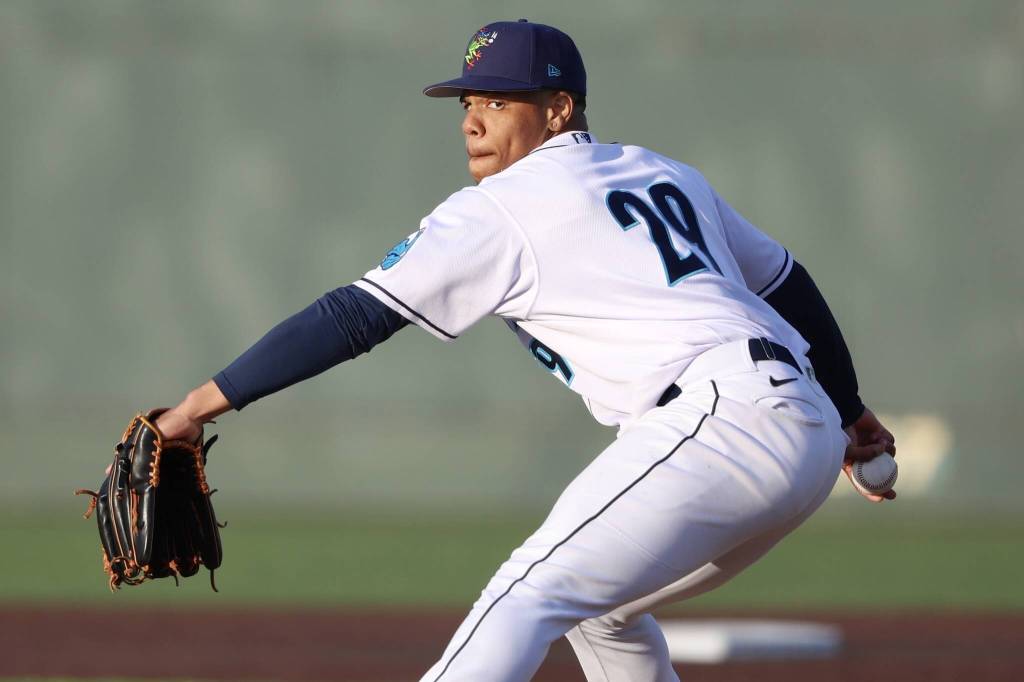
When Matt Carasiti first saw Cijntje in a bullpen session ahead of the 2025 Seattle Mariners training camp, he couldn’t believe how easily the ball left his hand. A first-time pitching coach for the Everett AquaSox who was in the Major Leagues as recently as 2024, Carasiti had never seen anything like Cijntje’s right-handed fastball at the professional level in 15 years.
Carasiti cited the low release height and the velocity. He liked the look of Cijntje’s secondary pitches, but he called the fastball “a true weapon,” and not just a pitch to throw between another.
Cijntje, now 22, is nearing triple-digits from the right, and is squarely around the mid-90s with his left. Both Carasiti and Mariners pitching coordinator Quinn Cleary said the organization is putting Cijntje’s right arm at the forefront of his development. They project him as a frontline starter with his right, but they also want him to utilize the left for pocket outs when needed.
In his first professional appearance — a start against the Spokane Indians on April 5 — Cijntje struck out six batters, allowing just one hit and no runs in four innings. Like many prospects in High-A, his performances have gone up and down since then, but the good has largely outweighed the bad. His season highlight so far is six innings of one-hit ball against Vancouver on May 18.
“He’s pretty polished, especially from the right side, already,” Carasiti said. “Obviously just getting innings, getting reps, getting used to pro ball is going to be one of the adjustments, but stuff-wise, it’s hard to put him up against someone else and not say he’s just as good.”
For the Mariners organization, figuring out how to develop a switch-pitcher is uncharted territory. Only Pat Venditte regularly pitched with both arms in the major leagues, and several others before him had the ability to do so, but none had the velocity or potential that Cijntje possesses.
“Obviously, the first thing that sticks out is the ambidextrous aspect to it,” Cleary said. “But I think from, like, a player development lens, there’s just so many options of what you can do with him.”
The Mariners have relied heavily on Cijntje’s input when it comes to his development plan, gauging his physical and mental comfort at every turn.
In addition to getting him reps and adjusting to the pro level, the organizational goal is simplification. Cleary said it’s easy for pitchers to get flooded with information, so the organization likes to have them fill out a spreadsheet that focuses on their strengths when it comes to putting together a game plan.
“It’s like arts and crafts,” Cleary said. “They color in the zone of where they’re targeting, what their mindset is. Basically, what is your ‘Plan A,’ regardless of who the hitter is, with a righty and a lefty. I think that (with) any pitcher, it’s easy to get over complicated, but especially when you throw with two arms.”
Cijntje, Josephina and Braafhart are all pleased with the Mariners’ plan. When Cijntje returned to Florida to work with Josephina this past offseason, the Mariners filled out a training plan they had Cijntje bring along, which aligned with Josephina.
“I read the plan. I saw everything that they had him doing,” Josephina said. “I was like, ‘Man, this is good.’”
In Josephina’s eyes, the biggest step for Cijntje’s development is learning the game at a higher level, mainly because his athleticism is already high. Carasiti is already impressed with Cijntje’s ability to understand the analytical side of the game, and Braafhart credits Cijntje’s experience playing a variety of other positions growing up with providing him an “out of this world” baseball IQ.
“I don’t even tell people I played baseball anymore,” Braafhart said. “Because of what he does or what he’s able to do.”
Carasiti has witnessed the quiet kid he first met blossom into a personality in the bullpen who jokes around with his teammates, but competes hard and takes his work seriously. Cijntje has become comfortable in Everett, where he’s slated to make his next start on Saturday at Funko Field against the Eugene Emeralds.
After that, it should only be a matter of time before he moves on.
“He’s somebody that wants to be challenged and wants to be held accountable, and so that’s what I see him doing the rest of this year,” Carasiti said. “Just building on all these starts and getting experience, and I see him taking off, because he’s just that kind of a talent.
“I’m happy that I was the first guy that gets to coach him, obviously in pro ball, and see him develop at this level, and I hope that I’m not his coach the whole year.”
Everett was always meant to be just another stop along the way, and as much as Cijntje wants to move up the ranks, he’s in no rush to do so.
“Even though people going up, people going down and stuff, I mean, actually, I want to get promoted too,” Cijntje said. “But it’s just, why think about (that) stuff? It’s going to happen eventually. Just go out there and just pitch and just play the game. The game, it never changes. You just got to be mentally prepared and go do your thing.”
Until that promotion comes, Cijntje will keep betting on himself. After all, why stop now?