Archaeology students excavate local history in Mukilteo’s Japanese Gulch
Published 1:30 am Saturday, August 2, 2025
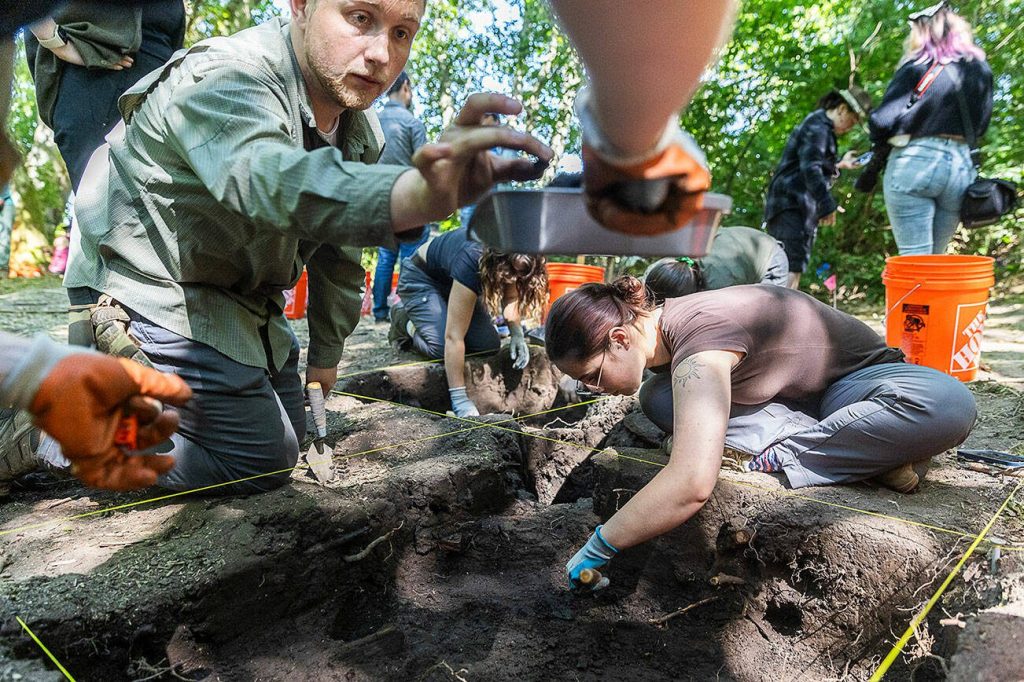
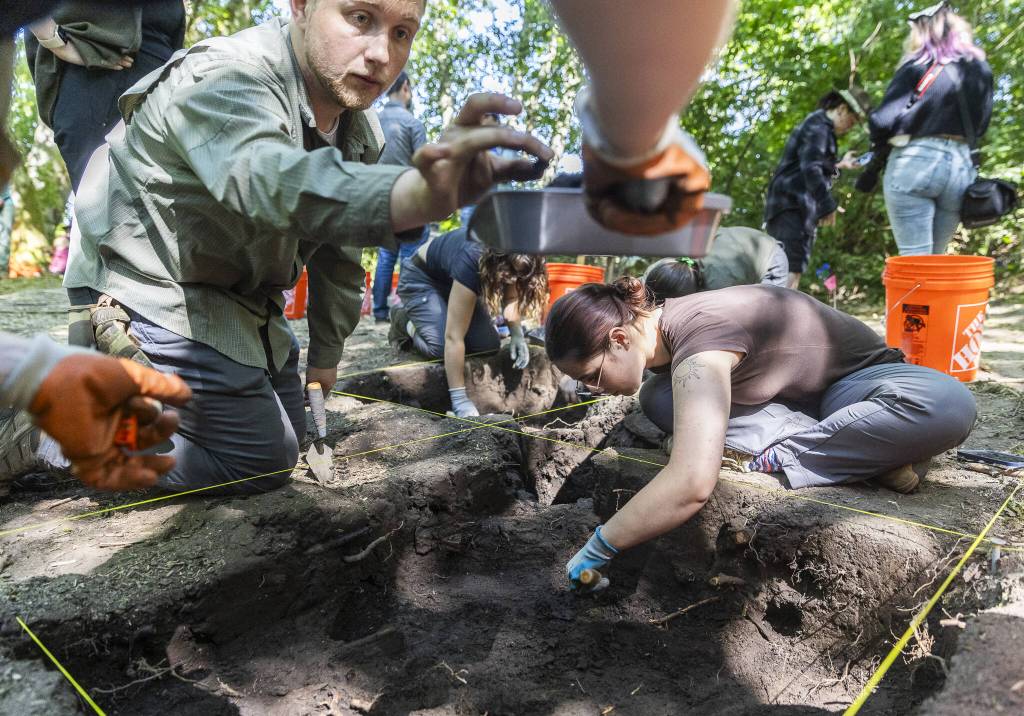


MUKILTEO — Hidden among trees, shaded from the July sun and just beyond train tracks running alongside Puget Sound, college students unearthed the history of Japanese Gulch.
In 1905, Mukilteo’s population of approximately 350 people included 150 Japanese immigrants or people of Japanese descent. Many of them worked at the Mukilteo Lumber Company, later renamed the Crown Lumber Company, which was one of the most productive mills in the Puget Sound region, according to the Mukilteo Historical Society.
Historical accounts said Mukilteo differed from many towns at the time that rampantly discriminated against Japanese immigrants. It was known for its relative acceptance of workers and families. While most Japanese immigrants left the area after the mill closed in 1930, remnants of the past still remain under the surface.
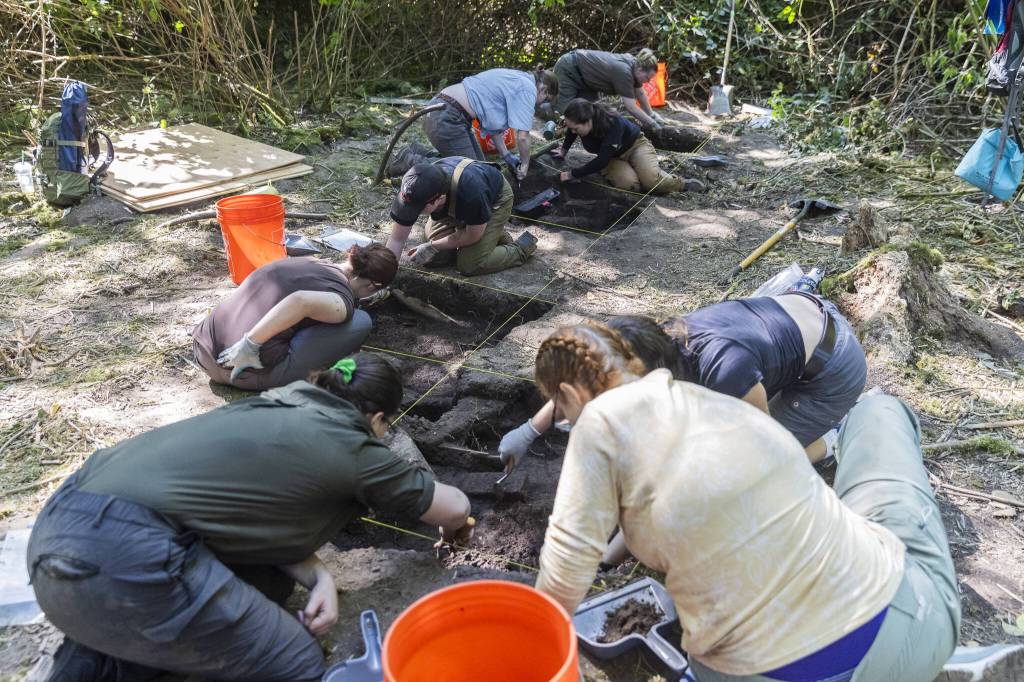
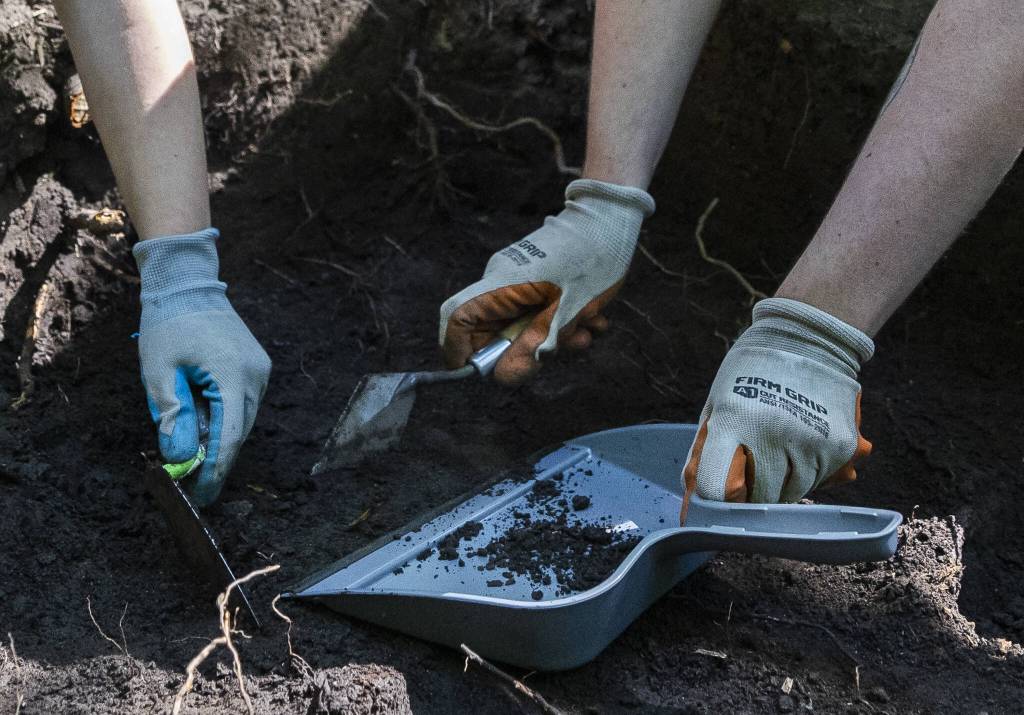
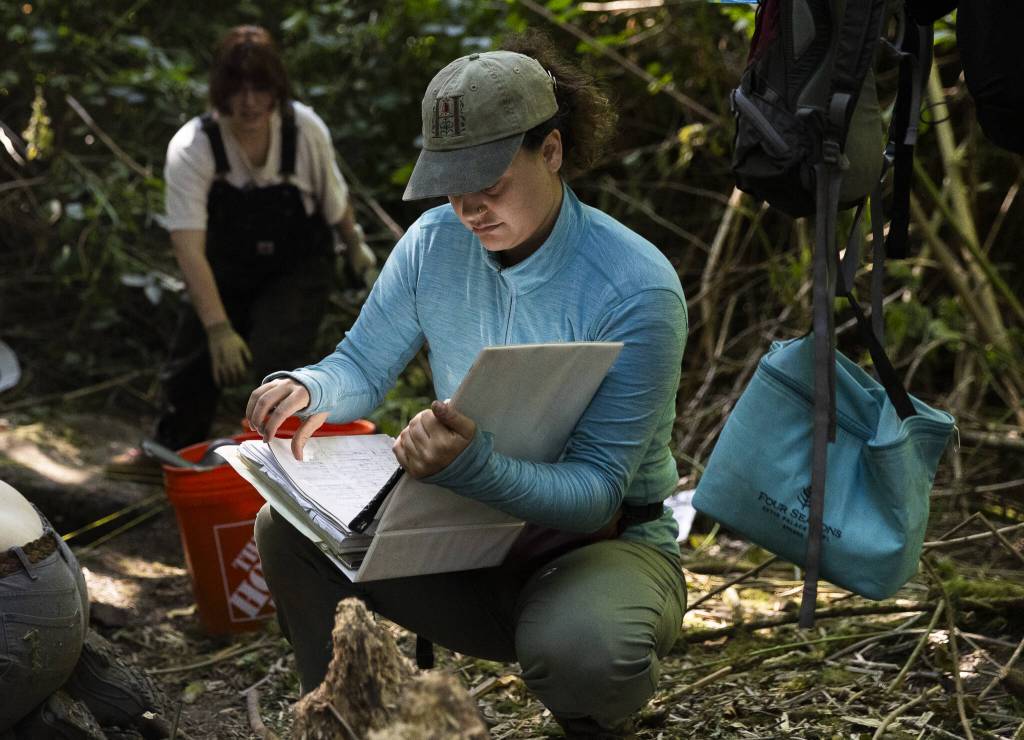
For the past four weeks, Edmonds College Department of Anthropology archaeological field camp students excavated a site where Japanese workers used to live, practicing technical skills while beginning the process of piecing together a part of local history.
Associate professor Dr. Alicia Valentino said the Edmonds program stands out among an already short list of field camps in the country because of its accessibility to students.
“It’s a low-barrier class also, so you don’t have to have any background, any training, you don’t have to have taken an archeology class,” she said. “You get a crash course on day one, and then we put shovels in your hand, and we tell you to get going.”
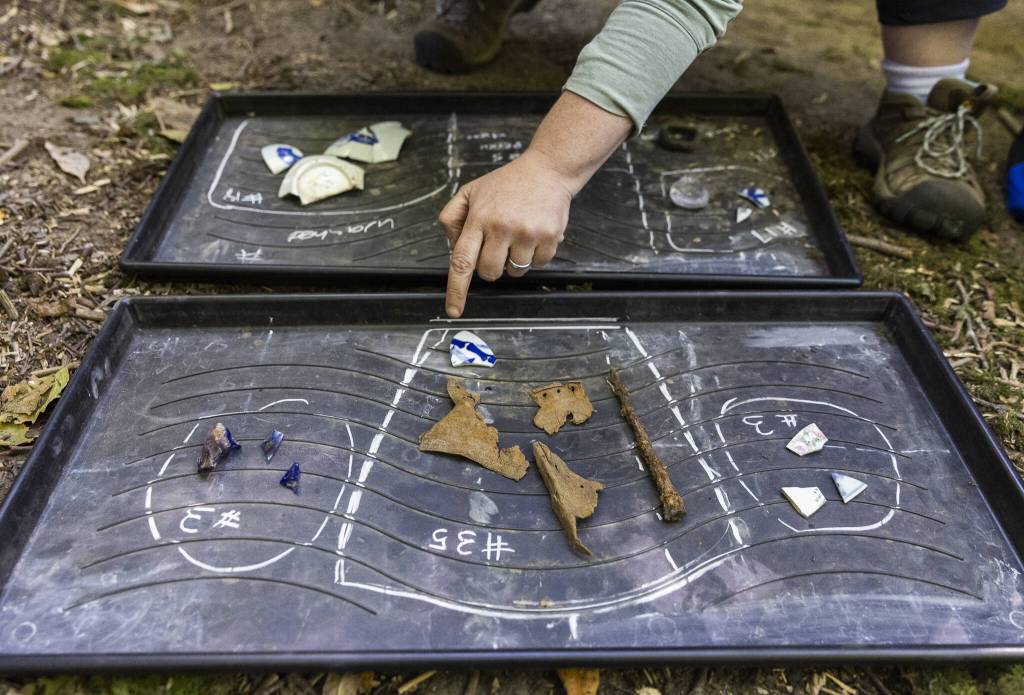
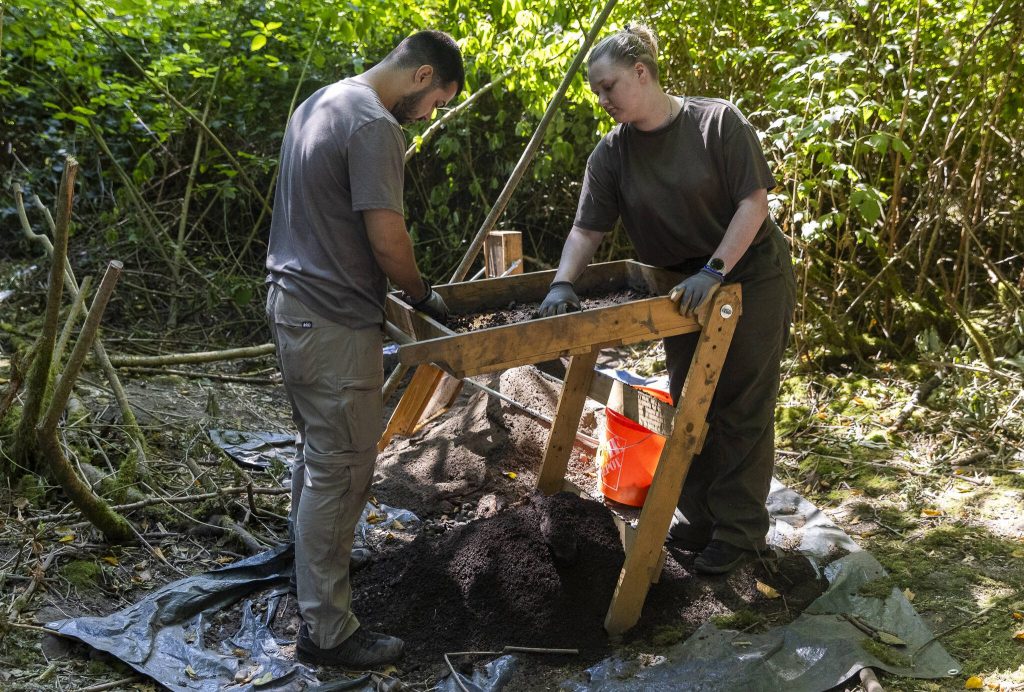
Students learn how to plan units, square areas in the ground to dig, how to contextualize findings, identify soil types and clean and prepare artifacts for display or storage. During the month of July, the class found ceramic pieces, glass shards and even old shoe leather.
One of the students, Sharon Nettleton, who grew up in Arlington, said that while she now wants to become a museum curator, her career aspirations didn’t start there.
“It’s kind of a long story. Basically, COVID happened. I didn’t end up going to college. I went to culinary school. Didn’t like it. And then I was an optician,” she said, folding her knees to momentarily stop digging in the hole in front of her.
While working as an optician, Nettleton had a coworker from Somalia who would often talk to Nettleton about her culture.
“I fell in love, like, ‘Oh my god, this is so cool,’” Nettleton said. “So I started looking into it, like, maybe religious studies, and then I learned what anthropology meant.”
The rest is history. Since enrolling at Edmonds College, Nettleton has taken four classes from the Department of Anthropology’s Chair Ashley Pickard, who led the dig in Mukilteo.
The field class draws students from outside the anthropology department, like Lara Mai Tjernagel, who is studying music at Edmonds College.
Tjernagel became interested in anthropology while taking one of Pickard’s classes at the college and jumped at the chance to continue learning about the subject through the field camp.
“During these four weeks, I can honestly say that I’ve learned about how great it is to work with people who are so passionate about what they do,” she wrote in an email. “I also feel that learning about anthropology, whether you’re new to the subject or a seasoned pro, can help people to learn the importance of diversity, preservation of culture, languages, oral traditions, and just being generally more tolerant to other ways of life.”
Excavation wrapped up on Friday. In the fall, another class will go through and organize all the artifacts, eventually giving them to the University of Washington’s Burke Museum of Natural History and Culture.
Eliza Aronson: 425-339-3434; eliza.aronson@heraldnet.com; X: @ElizaAronson.
Eliza’s stories are supported by the Herald’s Environmental and Climate Reporting Fund.