DNR appeals ruling that it must account for climate change in individual timber sales
Published 1:30 am Wednesday, November 19, 2025
EVERETT – The Washington Department of Natural Resources argued its appeal on Oct. 31, challenging a 2024 King County court decision that the agency must evaluate climate impacts for each timber sale under the State Environmental Policy Act. The decision built upon an earlier Jefferson County case that reached the same conclusion, setting up a broader legal test for how the state agency accounts for climate effects in its forest management.
The appeal questions the priorities of newly elected Commissioner of Public Lands Dave Upthegrove, since he supported the very policy the state’s attorney spoke against when his predecessor, Hilary Franz, was in office.
The decision, which is not expected for several months, will determine if the agency can continue with business as usual or have to update protocols to address climate impacts on a sale-by-sale basis.
‘Sequester more carbon than any other forest’
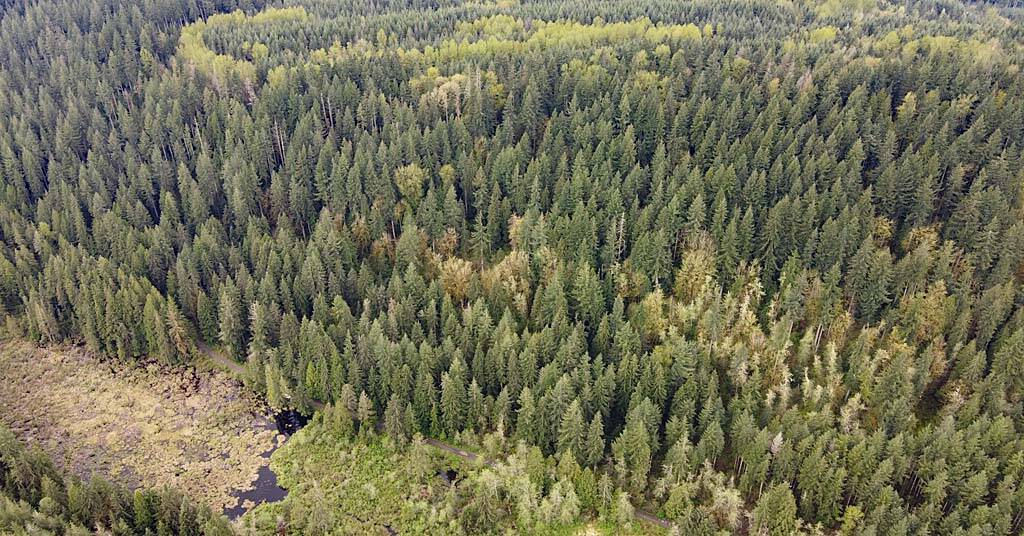
Last month’s arguments covered a 2024 court ruling on the proposed Wishbone Timber Sale — a 100-acre area home to 80- to 110-year-old trees in the Tolt and Snoqualmie River basins.
King County council members, including Upthegrove, who was council chair at the time, publicly opposed the sale and wrote a letter to Franz to preserve the trees for their climate and biodiversity benefits.
“Mature temperate conifer forests in the Pacific Northwest sequester more carbon than any other forest ecosystem in North America,” the letter stated, referencing the agency’s climate action plan.
The old trees draw in massive amounts of carbon dioxide from the atmosphere, storing it underground in an ecosystem of roots, soil and decayed plant matter. Additionally, mature forests support a wide range of plants and animals, and are generally more resilient to drought or wildfire.
Preserving mature forests, also known as legacy forests, is one solution to combating climate change and its effects on the surrounding landscapes, countless scientific studies show. By selling the trees, the state would lose an increasingly rare carbon sink while also producing more carbon emissions with the machinery needed to log the plot.
The Washington State Legislature established the Department of Natural Resources in 1957 to manage state lands in a way that benefited people living in the state.
Historically, this generally meant selling timber to support beneficiaries, like public schools and county services. But in 2022, the Washington state Supreme Court ruled the agency can leave its forested lands intact for other purposes, including climate change, instead of selling for profit. This ruling gives the agency more flexibility in how to manage its lands, like Wishbone.
While going through the State Environmental Protection Act checklist requirements during the proposed Wishbone sale, the agency ruled that the sale would not have any probable significant environmental impacts. The decision relied on a 2019 environmental survey modeling carbon sequestration and emissions across state-owned lands, arguing that the document already accounted for climate impacts in the region.
Environmental groups took the state to court, appealing the sale to the King County Superior Court. In March 2024, the court ruled against the state, building on a previous court decision in Jefferson County that the agency must treat the climate impacts of individual sales as mandatory parts of the State Environmental Protection Act review.
With two court decisions and Upthegrove publicizing his support of more robust climate protections while campaigning to take Franz’s position, environmentalist groups were optimistic of agency change.
‘He’s completely flipped’
“He’s completely flipped on this, and it’s a mystery,” said John Talberth, president and senior economist for the Center for Sustainable Economy and co-director for the Forest Carbon Coalition. The Center for Sustainable Economy was one of the original groups to sue the state over the Wishbone sale, and defended the state’s appeal in October. “Somebody must have made him an offer he couldn’t refuse. We don’t know what’s really going on, and we’ve asked him several times directly and his chief of staff to sit down with us, and instead of appealing this decision, work with us.”
If the King County decision was overturned, it would be a major setback for climate policy in the state, Talberth said.
When asked for comment, Upthegrove said in an email that the department is considering how to account for the carbon impact of timber sales.
“I remain strongly committed to ensuring the agency engages in robust and honest carbon accounting, which will take time to get right. I look forward to working with the new Board and our expert staff to develop a carbon accounting method that accurately reflects the impact of DNR’s timber activities,” he said. “These improvements will be achieved best through thoughtfully developed operational changes rather than court orders.”
Correction: A former version of this story incorrectly stated Commissioner of Public Lands Dave Upthegrove was appointed. He was elected.
Eliza Aronson: 425-339-3434; eliza.aronson@heraldnet.com; X: @ElizaAronson.
Eliza’s stories are supported by the Herald’s Environmental and Climate Reporting Fund.