Proposed state legislation could affect Snohomish County Flock cameras
Published 6:30 am Thursday, January 15, 2026
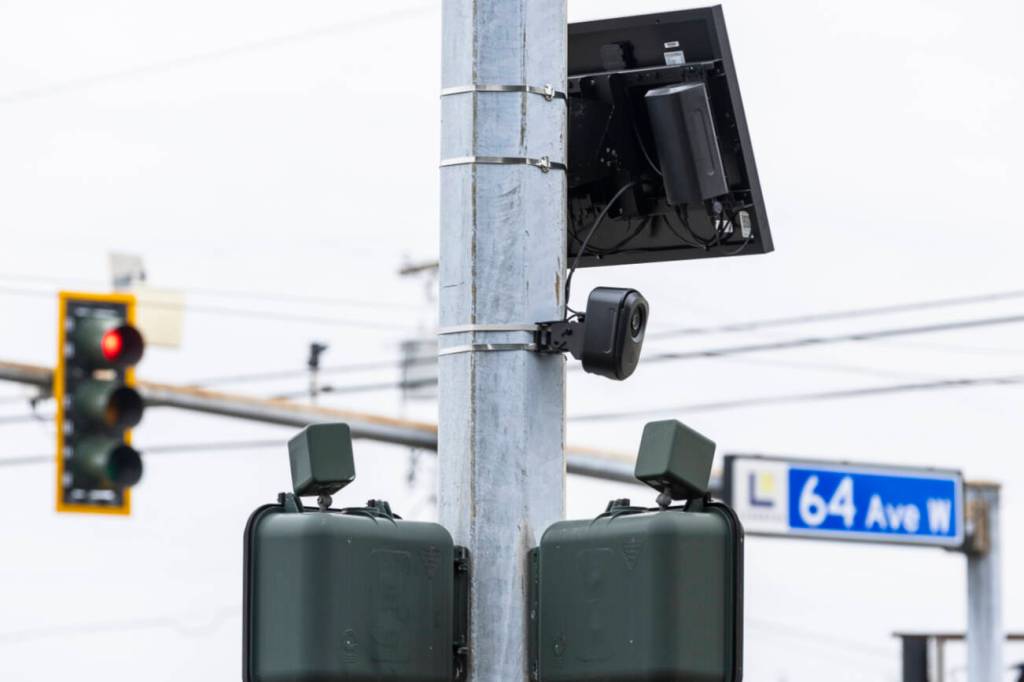


EVERETT — A state bill filed last week could affect how local police departments are allowed to use Flock Safety cameras and other automated license plate readers.
Senate Bill 6002 would place restrictions on how long police departments can retain data, what crimes they can investigate with the technology, who can have direct access and where they can collect footage. It would also require agencies to register ALPR systems with the state attorney general’s office and keep detailed logs of each time their network is accessed.
The bipartisan bill would be the first legislation in Washington to regulate the use of ALPRs. It’s co-sponsored by Sen. Yasmin Trudeau, D-Tacoma, and Sen. Jeff Holy, R-Cheney.
Many Snohomish County law enforcement agencies have said Flock cameras have contributed to significant decreases in vehicle theft and have been beneficial in locating suspects.
Flock cameras have become increasingly controversial over the past year, as reports from The Daily Herald and state researchersfound out-of-state and federal agencies, including U.S. Immigration and Customs Enforcement, accessed local networks, often without law enforcement’s knowledge. In November, a Skagit County Superior Court judge ruled that Flock footage is subject to public records requests, sparking concerns over potential misuse of footage by members of the public.
“The bill feels relevant for all those reasons because we don’t want anyone accessing our personal data and using it against us for any reason other than what we expect them to use it for, which is to solve crimes,” Trudeau said.
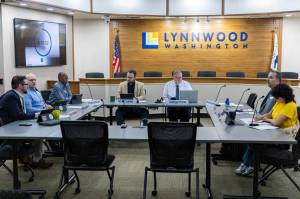
In November, Lynnwood paused its Flock program entirely amid privacy and public records concerns. In December, Mountlake Terrace canceled its contract with the company before its cameras were installed.
Flock cameras differ from some other ALPRs because of their artificial intelligence capabilities. After Flock cameras capture the back of a vehicle, AI analyzes the footage and creates terms for officers to search. For example, an officer could search for a vehicle’s make, model, color, or even distinct bumper stickers or body damage, even if they don’t have a specific license plate number.
Every time a vehicle passes a camera, the image and associated data are stored in the cloud for a default of 30 days, according to Flock. Most Washington agencies use the 30-day default. Any time within those 30 days, an officer can make a search and retrieve the data.
SB 6002 would change the 30-day period to 72 hours. After that period, departments would no longer be able to access data if they learn about a crime.
Trudeau said 72 hours strikes a balance between data retention limits throughout the country, which vary widely. In New Hampshire, it’s three minutes. In Alabama, it’s five years.
The bill also limits the types of crimes officers can use ALPR systems to investigate. Officers can search for a vehicle connected to a state or federal watchlist, such as a missing persons list. They can also search for a license plate number connected to a vehicle that is stolen, associated with a missing or endangered person, registered to someone with an outstanding felony warrant or related to a felony. If they access the data within 72 hours for any of these reasons, they can retain it as long as they need to for evidence, the bill states.
“If you have a crime that rises up to a felony warrant, you should know within 72 hours,” Trudeau said.
Some local law enforcement officials disagree.
Lynnwood Police Chief Cole Langdon said it sometimes takes longer to learn about a felony, and that he’d like to see a compromise between three days and 30 days.
“I think there’s a happy medium here,” he said. “Seventy-two hours feels a little tight. It might be days before we discover a crime has actually occurred.”
In a statement to The Daily Herald, Everett Police Chief Robert Goetz said the department would support a 21-day retention period.
On Friday, the Association of Washington Cities raised concerns about the bill in a press release. Among them was the 72-day retention period, which it said is too short. The organization also worries that police wouldn’t be able to use the system to investigate and prosecute gross misdemeanors.
The bill is still in its early stages, and Trudeau said it could change as it goes through the legislative process.
“I’m not fixed on anything right now that’s in the bill, other than making sure that we get some sideboards and regulation so that individuals know that if these cameras are being used, they’re being used for the purpose in which they’re intended to,” Trudeau said. “That’s my goal of this whole policy, because right now, it’s the Wild Wild West.”
With a short legislative session, Trudeau and Holy have two months to get the bill over the finish line. The bill must be voted out of committee by Feb. 4, out of the Senate by Feb. 17 and out of the House by March 6.
SB 6002 has a companion bill, House Bill 2332, which lists Snohomish County Reps. Cindy Ryu, D-Shoreline, Mary Fosse, D-Everett, and Shelley Kloba, D-Bothell, as co-sponsors. On Wednesday, Sen. Derek Stanford, D-Bothell, became a co-sponsor of the Senate bill.
Beyond the retention period, some officials have concerns about other aspects of the bill.
Langdon said the bill seems to limit the ability for officers to search Flock networks based on anything other than license plate numbers, such as the vehicle’s model or color. The feature was a main selling point of Flock for Lynnwood, he said. If the bill is passed as written, Langdon said the department may have to reassess whether it’s worth keeping the system.
“It becomes a thing where I have to look at it and go, ‘Is it worth the hundred-something-thousand dollars for this system for a couple of years, when the investigative value really starts to go down?’” he said.
Under the bill, agencies would only be able to directly share their network with other state or local agencies. This would prohibit agencies from sharing their networks with out-of-state or federal agencies. Last year, records showed Arlington directly shared its network with hundreds of agencies across the country, including U.S. Border Patrol and U.S. Postal Inspection Service.
Records also showed thousands of searches into Snohomish County Flock networks from out-of-state agencies for reasons directly related to immigration or seemingly on behalf of U.S. Immigration and Customs Enforcement.
“Whether or not a person knows their information is being misused, this creates a situation where people don’t want to participate in civic society, and that puts every single person at risk,” Trudeau said. “I don’t care what your immigration status is. You’re a human being. … To me, this is about the protection of every person that lives in our community.”
As currently written, the bill prohibits agencies from placing cameras “on the premises or immediate surroundings or access to or from” facilities that provide immigration services. The same restrictions would apply to facilities that provide protected health care — including gender-affirming care and reproductive care — schools, places of worship, courts or food banks. Trudeau said she doesn’t yet know if the final version of the bill would include a more specific buffer around these facilities.
In his statement, Goetz raised concerns about this provision of the bill. He said the department plans to look into it further to “better understand potential impacts to our community.”
“Strategic, citywide coverage is what makes the system effective,” he said. “Large buffer zones around certain facilities could limit where cameras can be placed, especially along major arterials where this technology is most useful and could reduce the safety benefits for our neighborhoods.”
The bill requires police departments to keep specific audit logs of each time an agency accesses their network. Currently, agencies can access audits created through the Flock system, which are what most agencies use to fulfill public records requests. On Tuesday, 404 Media reported that Flock is changing its audits to no longer include license plate numbers, the name of the officer and “vehicle fingerprint information,” including specific characteristics an officer searches for.
The audit required by the bill would include “data elements used to query the system” and the username of the person who made the search, as well as the location of the camera, date and time of access, specific purpose for the search and a case number. Agencies would be required to retain these audits, meaning they would be accessible through public records requests.
The bill also creates regulations for other ALPR uses beyond crime investigation, including parking enforcement, toll systems and traffic information. The data retention period for commercial vehicle enforcement and traffic enforcement would be four hours and 12 hours, respectively. Agencies can retain toll data for as long as needed for toll collection. Traffic study data would have 30 days.
In addition to public agencies, the bill applies to private companies that have ALPR systems. For example, many Lowe’s Home Improvement locations, including in Everett, have Flock networks. Private companies and public agencies alike would be required to register their ALPR systems with the state attorney general to ensure they are compliant with state policy.
The bill is scheduled for a public hearing in the Senate Law & Justice Committee at 8 a.m. Tuesday. Those interested in testifying can sign up here. The committee will vote on proposed amendments Jan. 22 before potentially moving the bill to the Senate floor.
“I appreciate that there’s something coming forward for a standardization across the state,” Langdon said. “I just hope the discussion opens up, and that we get to be a part of that discussion moving forward, which I think we will be.”
Jenna Peterson: 425-339-3486; jenna.peterson@heraldnet.com; X: @jennarpetersonn.