Skagit’s Wild Brew
Published 1:30 am Thursday, March 12, 2026



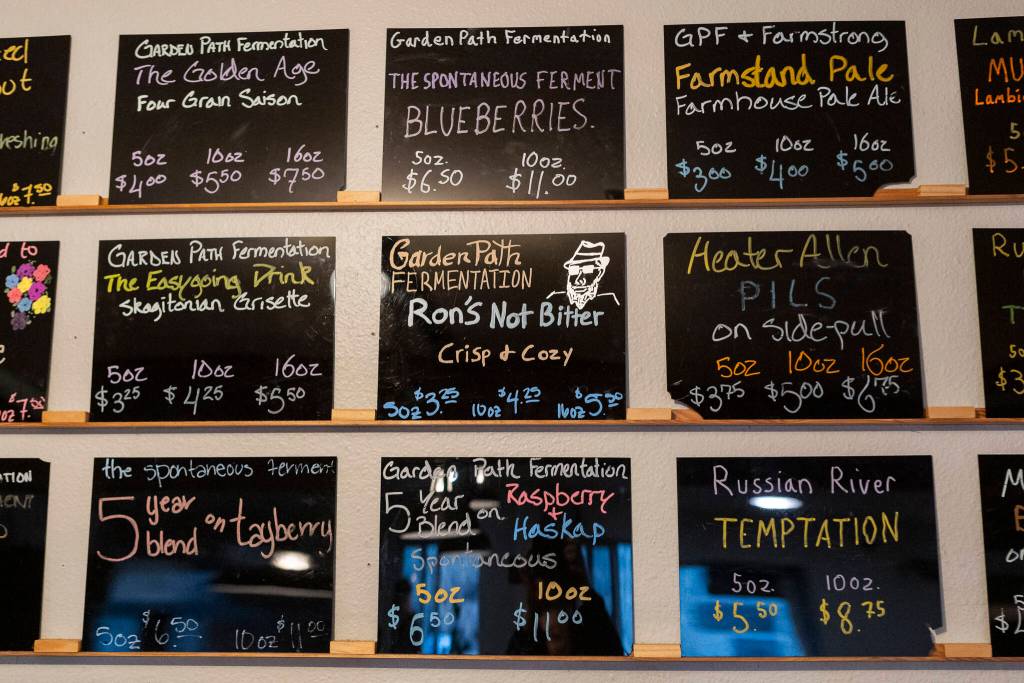


BURLINGTON — For most breweries, consistency is king. The goal is to produce the same beer over and over again, so customers know what to expect when they pick up a six pack or a pint. Comfort food in liquid form.
But for Skagit Valley’s Garden Path Fermentation, consistency is overrated. Brewing in a world of open fermentation, mixed cultures and native yeast, every Garden Path beer is different, depending on the year, the bottle or the blend.
“Most breweries look to eliminate the variables so they can control the finished product,” said Ron Extract, who owns Garden Path Fermentation with his partner Amber Watts. “We embrace them. We see every batch as a unique experience, like going to a concert or a play. More of a reinterpretation of the beer than a strict recreation.”
Extract and Watts opened Garden Path Fermentation near the Skagit Regional Airport in Burlington in 2018 after arriving in Washington via Texas. Both had been integral parts of the growth of Austin brewery Jester King, a giant in the world of wild fermentation beer, and together had two decades’ worth of experience in the industry.
What drew them to Skagit Valley was the chance to create something hyperlocal that stretched beyond beer. They were attracted to the diversity and abundance of agricultural opportunities in the valley, with a dream to brew beer, make cider and press wine. The couple’s original plan was to build a destination brewery/winery/restaurant all located on an idyllic farm setting where the ingredients were grown, harvested, fermented and consumed.
“We called it a seed-to-glass experience,” Watts said.
Unfortunately, reality stepped in the way. The property they found and the land-use codes attached to it didn’t allow agricultural areas to co-exist with breweries and taprooms. Extract and Watts decided to return to a location in Skagit Valley they had seen early in their search. Though located in a more industrial-style area than they preferred, it allowed for a taproom and a large brewing space.
What they didn’t scrap was their dream to make a diversity of products — beer, cider and wine — with hyperlocal ingredients.
“Skagit Valley is an amazing place to grow a diversity of items for fermentation,” Watts said. “Fruit, barley, hops. We can grow everything right here.”
Garden Path takes pride in its hyperlocal sourcing. Before Skagit Valley Malting, which was a stone’s throw from the brewery, went out of business a few years ago, Garden Path sourced nearly 99% of its ingredients from within 100 miles of the brewhouse. That includes apples it from the Washington State University Skagit County Extension Garden just down the road, hops from Hop Skagit, the only commercial hop farm on this side of the Cascades, and wine-making grapes from a farm in Sedro-Woolley.
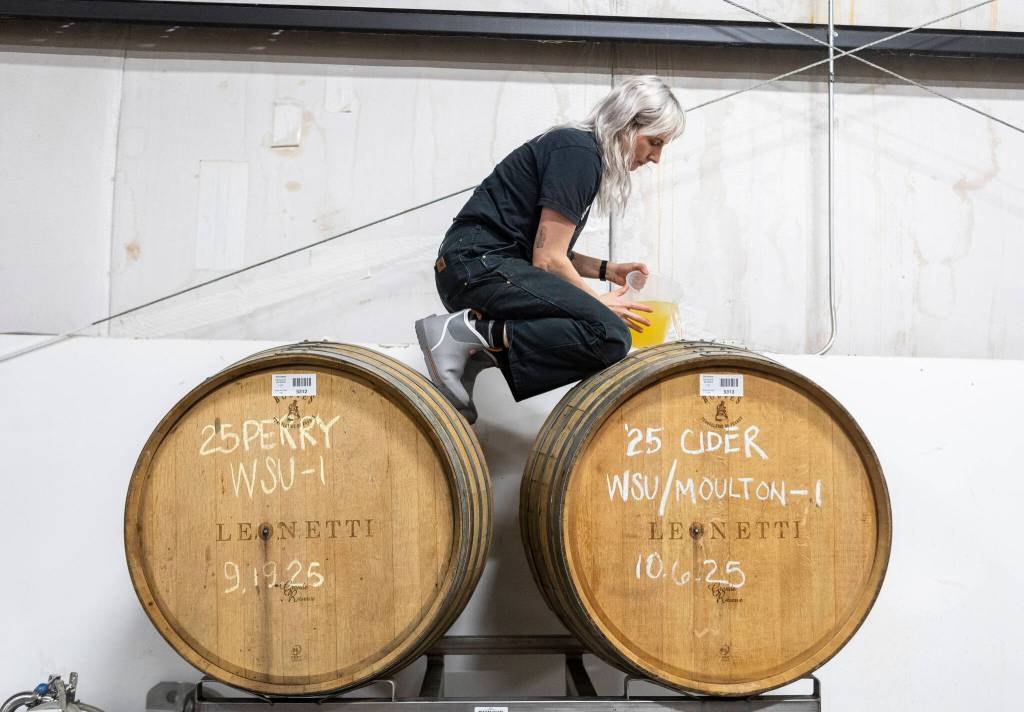
The native yeast, the lifeblood of the fermentation process, was also collected in the valley. Extract and Watts remember, before the brewery opened, collecting the yeast from flowers and leaves in walks near their home or the brewery in April and then placing them in Mason jars to grow.
The yeast from those flowers and leaves turned into the native yeast that became Garden Path’s cultured yeast. All Garden Path beers are made with native yeast, giving them unique flavor profiles. From batch to batch, the yeast continues to feed off the sugars of fruits, malts, barleys and the strains. Saccharomyces and Brettanomyces, big two in wild fermented beers, give Garden Path’s wild fermented ales that typical funk or tart flavor.
Garden Path’s beers are also bottle conditioned, meaning they go through a second refermentation in the bottle. Adding a small amount of yeast to the bottle before filling allows the beer to continue the process of fermentation until it’s opened, softening the tasting notes and adding natural carbonation.
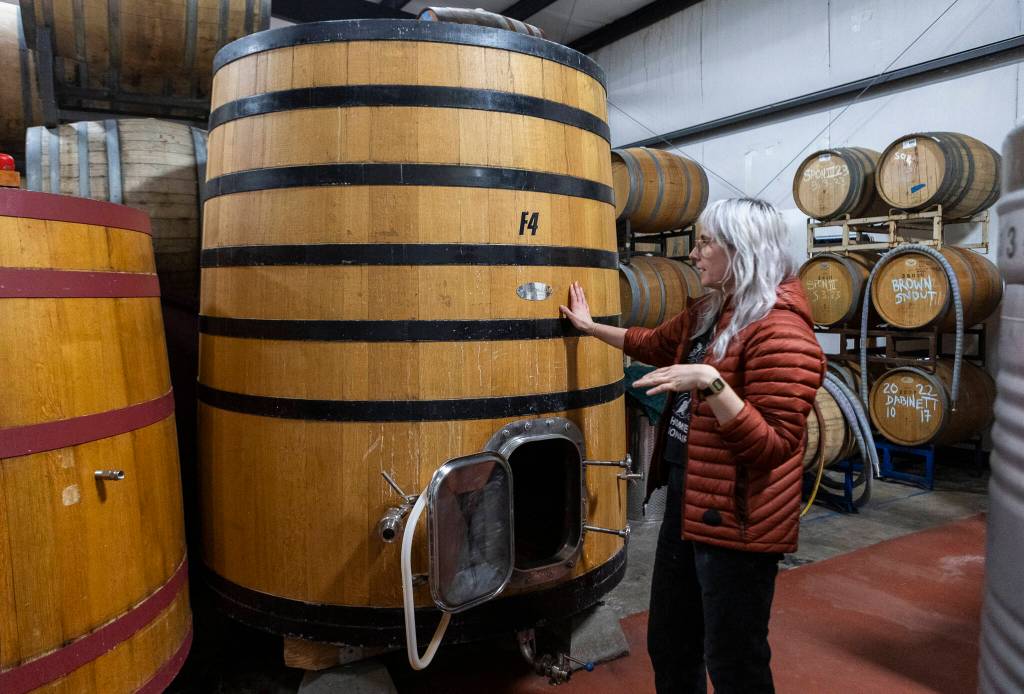
It’s the job of Garden Path’s Head of Fermentation Katie Cochrane to “control” the brewing process, cellar maintenance and blending protocol.
“Quality assurance is so important and Katie does an amazing job through constant testing and retesting, tasting and retasting to ensure the products are meeting our standards,” Extract said. “Blending is a big component of what we do. Finding beers that have rested going back years and blending them to make a beer that is beautiful is a real skill.”
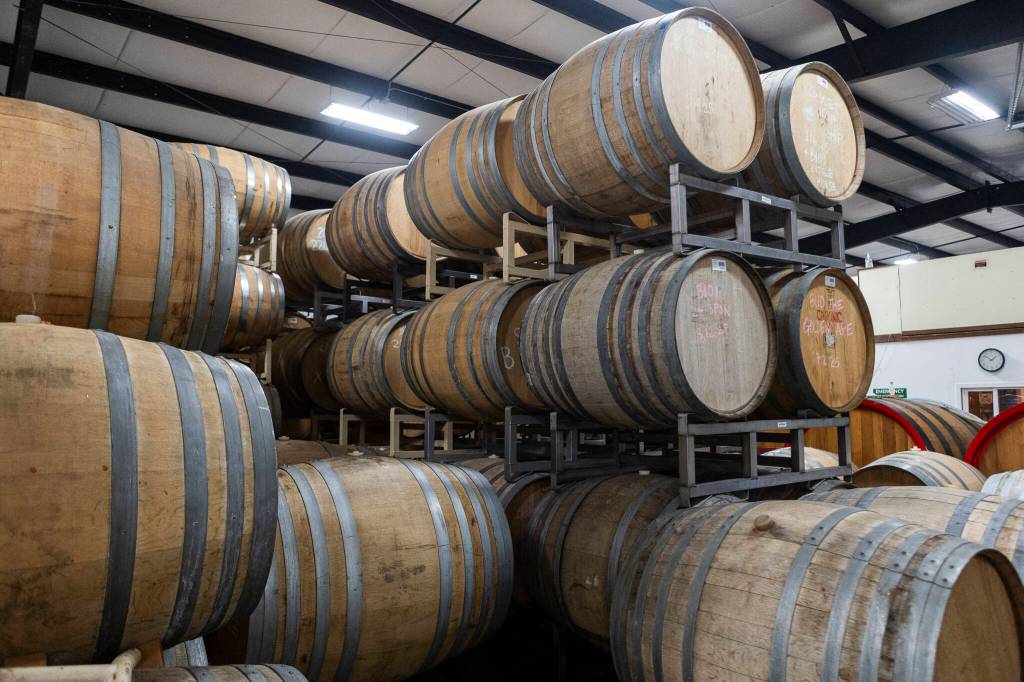
Cochrane is constantly tasting beers as they mature – some more than five years old. Patience can be critical. She keeps an extensive log of the more than 300 barrels of beer stored in Garden Path’s brewhouse. Her sensory memory is nearly visual as she tastes barrel after barrel and judges the results, always thinking about how she might blend one barrel with another.
“You can try a beer that has been resting for a time that you think is long enough and it just doesn’t have the flavor or notes you’re looking for,” Cochrane said, “only to have it come back around and be exactly what you thought it would be after a few more months.”
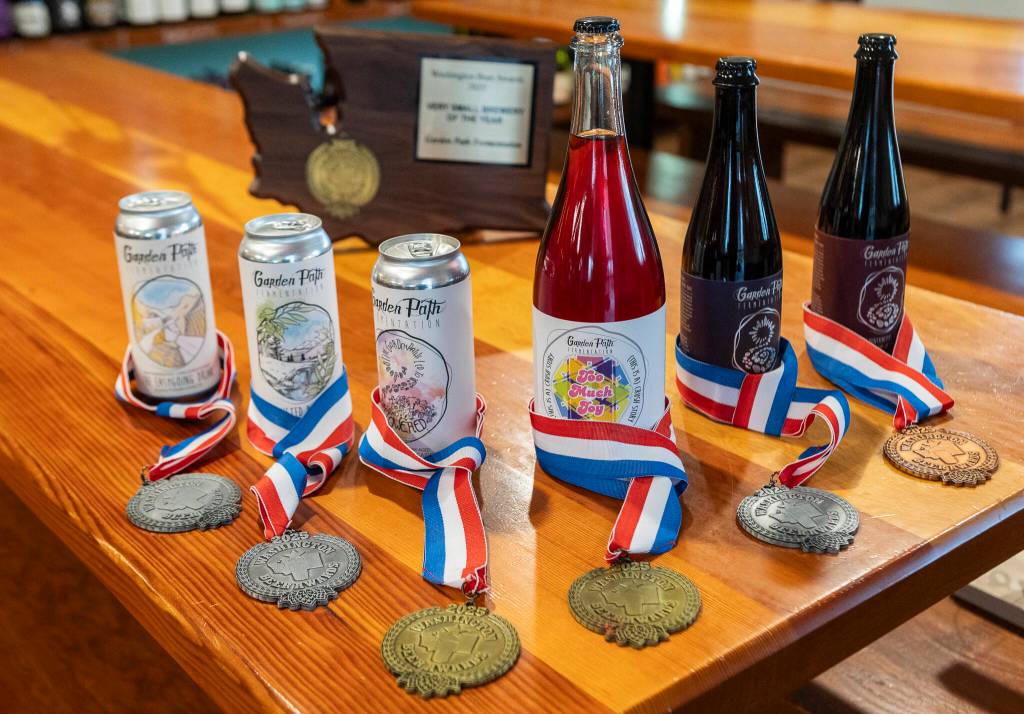
The work has paid dividends. Garden Path has a cult following that visits the out-of-the-way taproom from all over the Pacific Northwest and a full lineup of beers, ciders and wines that it offers. Recently, the brewery took home “Very Small Brewery of the Year” at the Washington Beer Awards competition, winning a substantial six medals, including gold medals for its The Garden Paths Led to Flowered in the Farmhouse category and (This is a) Crush Story, a Belgian-inspired ale.
Contact writer Aaron Swaney at thesplitpint@gmail.com.
TRY THESE BEERS
The Spontaneous Ferment — 5 Year Blend: This beer showcases the history of Garden Path and is a story in a glass. A blend of spontaneously fermented GP beers from five seasons (2018 through 2023), inoculated with young spontaneous beer.
The Easygoing Drink: A grisette, or light farmhouse ale originally made to quench the thirst of miners in Belgium. At just 3.8% abv this is an easy drinker aged in oak and cask-conditioned.
THE PROCESS
What is a spontaneously fermented beer?
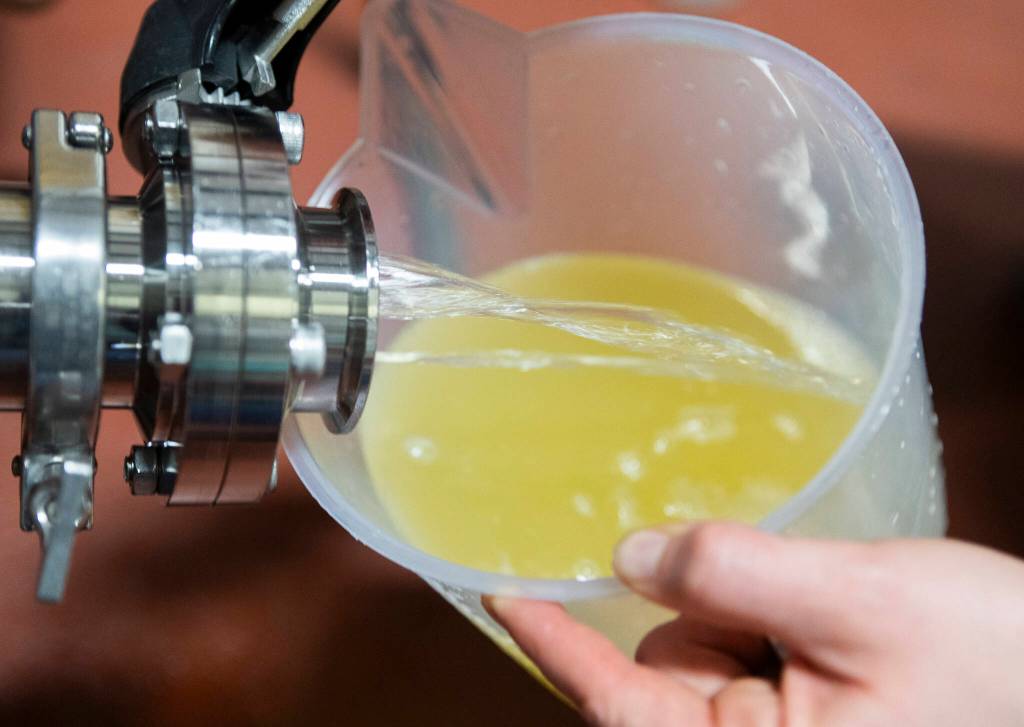
Instead of fermenting wort — the liquid extracted from the mash of malted grains — using cultivated yeast strains in a controlled environment, spontaneous fermentation uses wild yeast and bacteria present in a specific environment like a barrel or open-air container. This leads to extended fermentation times and beers that have fruity, funky and earthy flavor profiles.
IF YOU GO
Garden Path Fermentation
11653 Higgins Airport Way, Burlington
gardenpathwa.com
This story originally appeared in Sound & Summit magazine, The Daily Herald’s quarterly publication. Explore Snohomish and Island counties with each issue. Subscribe and receive four issues for $18. Call 425-339-3200 or go to soundsummitmagazine.com